Uruguay doesn’t make a lot of noise, but it’s been steadily building a presence on the world stage. The country , home to just under 3.5 million people , has put together a concrete plan to promote its artists, cultural exports, and skilled professionals internationally.
The thinking behind it is practical: cultural exchange opens doors for trade, attracts investment, and creates work for Uruguayan creatives. Montevideo’s arts scene and the country’s track record at international trade fairs are already part of that push, and the scope of the effort is growing.
Key Takeaways
Uruguay has set up a Cultural Internationalization Committee that brings together five major institutions to align their efforts around a single, coordinated plan for taking Uruguayan culture to international audiences. Rather than having each body work in isolation, the idea is to pool resources and move in the same direction.
President Orsi’s recent trip to China resulted in concrete agreements across education, media, and culture, opening doors for Uruguayan artists to reach markets that were previously difficult to access. These deals are a practical step forward, not just a symbolic gesture.
The tourism numbers back up the case for cultural investment. Over 3.2 million visitors came to Uruguay in 2025, spending a combined $1.78 billion, and cultural programming played a direct role in driving those figures.
On the export side, Uruguay XXI, the agency responsible for promoting trade and investment, runs workshops and mentorship programs aimed at helping Uruguayan creatives sell their work abroad. The agency also runs gender equity programs designed to make sure those opportunities are accessible across the board.
Uruguay’s reputation for low corruption and clear, consistent regulations also works in its favour. Foreign partners and investors tend to find it easier to commit when they know the rules are stable and enforced, which makes cultural collaborations easier to get off the ground and sustain over time.
Uruguay’s National Strategy for Cultural Internationalization
The strategy leans on what Uruguay already does well: stable democracy, consistent governance, and a reputation for reliability that carries genuine credibility in diplomatic circles. That’s the foundation the committee is working from, particularly in building relationships with Latin American neighbors who share historical and linguistic ties with Uruguay.
The committee has already held its first public working session, which signals the plan has moved past the idea stage. Officials have also tied it directly to Uruguay’s National Development Strategy through 2050, meaning cultural outreach isn’t being treated as a side project , it’s woven into the country’s longer-term ambitions. Domestically, that ambition is backed by a network of National Cultural Centers being established across the country, with a goal of reaching 40 locations by the end of 2024.
Who’s Leading Uruguay’s Cultural Promotion Overseas?
Uruguay’s growing cultural presence abroad isn’t the work of one agency , it’s a shared effort between three institutions. The Ministry of Tourism, the Ministry of Foreign Affairs, and Uruguay XXI each handle different pieces of the puzzle, from opening doors in foreign markets to backing artists and creative businesses at home. Understanding what each one actually does makes it a lot clearer how Uruguay’s culture has been gaining ground internationally. The committee held its first public working session on February 10, 2026, marking a formal step toward coordinated cultural internationalization efforts.
Key Institutional Players
Five institutions make up the committee driving Uruguay’s cultural presence abroad, each with a distinct role in how the country engages with international audiences.
Uruguay XXI, the country’s export and investment promotion agency, leads the effort and keeps coordination moving across the group. The Ministry of Foreign Affairs handles creative collaborations through its Cultural Affairs team, using its diplomatic network to open doors in other countries. The Ministry of Education and Culture focuses on heritage and artistic development, essentially the foundation that gives the other institutions something to work with.
The Ministry of Tourism and Montevideo Audiovisual round out the five. The latter focuses specifically on film and audiovisual content, reflecting Uruguay’s growing reputation in that space internationally.
The five formed the Cultural Internationalization Committee, which held its first working session in February 2026. Those seeking additional details or wishing to reach out directly can do so through the embassy’s Contact Us page.
Driving Cultural Policy Forward
Pushing Uruguay’s culture onto the world stage is a team effort, and right now there are a few key people making it happen.
Pablo Menoni, Uruguay’s Minister of Tourism, is betting that culture and tourism go hand in hand. His thinking is straightforward: when Uruguay puts its creative work in front of international audiences, it draws visitors and builds the country’s reputation abroad. It’s less about prestige and more about practical opportunity.
Fernando Lugris, who leads the Foreign Affairs Ministry’s international cooperation work, treats cultural exchange as a genuine policy tool rather than an afterthought. His team handles how Uruguay presents itself globally, weaving cultural diplomacy into broader efforts around human rights and multilateral partnerships.
President Yamandú Orsi’s trip to China in February 2026 gave these efforts a concrete boost. The visit produced agreements spanning education, media, and culture, giving Uruguayan artists and creators more direct access to Chinese audiences and institutions. Diplomatic visits like this one tend to open doors that are otherwise hard to reach from Montevideo. The trip also marked a milestone in bilateral ties, as the two countries were celebrating 38 years of diplomatic relations at the time of the visit.
How Uruguay XXI Has Opened Global Markets for Creative Industries?
Uruguay XXI functions as the main government agency pushing Uruguayan exports, and for creative industries, it’s been a pretty significant door-opener. Through hands-on export workshops and mentorship programs, local entrepreneurs get practical guidance on breaking into international markets, rather than just general advice that doesn’t translate to action. The agency has also made strides in promoting gender equity in the arts, actively expanding opportunities for women in creative sectors across international platforms.
A few things make this support system worth paying attention to:
- Cost relief , Businesses in global services can get up to 70% of training costs covered when they partner with INEFOP, Uruguay’s national employment and training fund.
- Free export tools , Specialized resources for internationalization are available at no cost, giving smaller businesses access to guidance they couldn’t otherwise afford.
- Streamlined talent access , Fast-track migration pathways let businesses bring in skilled foreign professionals without the usual bureaucratic delays.
What ties this together is a centralized portal that simplifies both business setup and relocation planning, cutting down on the back-and-forth that usually slows things down. For creative professionals looking to scale beyond South America, Uruguay’s combination of institutional support and relatively low barriers makes it a genuinely practical base, not just an appealing one on paper.
Why Montevideo Is the Heart of Uruguay’s Cultural Tourism Push?
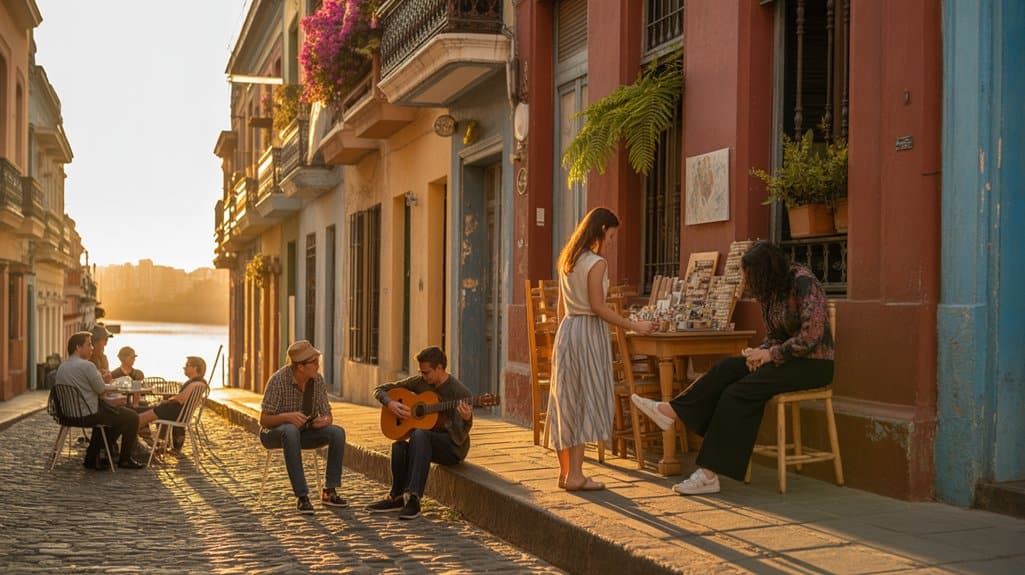
What makes Montevideo stand out isn’t just its location , it’s the way the city packs so much into one place. Over 2.16 million Argentinians crossed the Río de la Plata to visit in 2025 alone, and that kind of repeat traffic from next-door neighbors says something real about the city’s pull.
The cultural roots go back centuries. Tango traces part of its origins here, Carnival runs for 40 days straight , longer than almost anywhere else in the world , and Ciudad Vieja, the old colonial quarter, draws international visitors year-round without much effort to market itself.
None of that means the city is coasting on history. In 2026, Montevideo is set to host world championships, trade expos, and health conferences, which brings a different kind of visitor into the same streets and neighborhoods. The boardwalk, the corner cafés, the old port , they’re all close enough together that a single trip can cover a lot of ground without feeling rushed.
For Uruguay as a whole, Montevideo carries most of the weight when it comes to international tourism. It’s where the infrastructure is, where the events land, and where most visitors spend the bulk of their time. That’s not a limitation , it’s just where things are happening. On the water, around 100 cruise ships are expected to dock in Montevideo in 2026, adding yet another layer to the city’s role as Uruguay’s primary gateway for international arrivals.
How Cultural Diplomacy and Educational Exchanges Strengthen Uruguay’s Reach?
Countries build their reputations through consistent, deliberate effort , and Uruguay has found its footing through cultural exchanges and educational partnerships that quietly extend its reach beyond South America.
The numbers tell part of the story. Over 6,000 Uruguayan students currently study abroad, with 414 enrolled at U.S. universities in 2022 alone. That kind of movement builds real familiarity between people and institutions, which tends to outlast any formal diplomatic agreement.
Younger Uruguayans are also getting early exposure to international environments. The Youth Ambassador Program selects public school students for visits to the United States, prioritising candidates based on leadership qualities and academic performance. It’s a practical way to develop globally minded citizens from communities that might not otherwise have access to those opportunities.
Funding plays a role too. The Cultural Affairs Office provides small grants to Uruguayan organisations working to strengthen mutual understanding with the United States , covering everything from arts initiatives to community projects that might otherwise struggle to get off the ground.
Director General Fernando Lugris has pointed to this as a particularly well-timed moment for Uruguay’s international presence. The country has a young population and is drawing growing interest from abroad, giving these programmes a strong foundation to build on. The connections being made now , through classrooms, grant recipients, and student exchanges , are the kind that tend to stick. Events like the EducationUSA Fair draw an average of 2,000 students annually, reflecting the sustained appetite among Uruguayans for pathways into U.S. higher education.
Which 2026 Events Are Expanding Uruguay’s International Cultural Presence?
Uruguay’s got some interesting moves lined up for 2026. At the Latin American International Tourism Fair in Buenos Aires, the country plans to put its beaches, wine regions, and cultural traditions in front of a regional audience, a straightforward way to remind neighbours that Uruguay offers more than just a quiet alternative to bigger destinations.
On the academic side, the International Cultural Studies Conference, scheduled for January 16 in Montevideo, will bring together scholars from different countries to share research and ideas. That kind of event matters because it positions Montevideo as a place where serious intellectual work happens, not just a stopover.
Taken together, these two events reflect a deliberate push to have Uruguay taken seriously on two fronts, as somewhere worth visiting and as a country with a real cultural identity worth engaging with. Adding to this cultural momentum, Parque Mauá recently opened as a new public space on the historic Mauá Dock, signaling Uruguay’s broader commitment to revitalizing its urban heritage for both locals and international visitors.
National Strategy Launch Events
On February 10, 2026, Uruguay’s Cultural Internationalization Committee held its first working session , a formal step in the country’s effort to bring its creative work to international audiences.
Three institutions anchored the initiative:
- Ministry of Education and Culture , setting the overall cultural direction
- Directorate General for Cultural Affairs , handling international partnerships and coordination
- Uruguay XXI , the government’s trade and investment agency, which has an existing track record of promoting Uruguayan industries abroad
The session was essentially a planning meeting , getting the right people in the same room to agree on a shared path. Minister Pablo Menoni made clear that the strategy only works if different sectors talk to each other, rather than each one pulling in its own direction. Director Fernando Lugris framed the timing as deliberate, suggesting conditions were right to move.
The practical goal is straightforward: create better opportunities for Uruguayan artists and cultural producers to work and be recognised outside the country. This aligns with broader national efforts to elevate Uruguay’s profile internationally, including through events like Expo Turismo Uruguay 2026, which is set to position the country as an emerging tourist destination in South America.
Upcoming Cultural Conferences
Uruguay is quietly becoming a destination for serious international gatherings, and 2026 is shaping up to be a busy year. Montevideo kicks things off in January with a sociology and criminology conference, examining how culture shapes , and is shaped by , social structures and crime. September adds a law and anthropology event to the mix, and December rounds out the year with an African economy and culture conference held in Salto, which is a deliberate choice that spreads the spotlight beyond the capital.
What makes these events worth paying attention to is the practical thinking behind them. Organizers provide invitation letters to help attendees navigate visa applications, offer hybrid attendance for those who can’t travel, and have travel support available. That combination lowers the barriers enough for researchers, legal professionals, and scholars from genuinely varied backgrounds to show up , which is the whole point of running an international conference in the first place. Adding to this momentum, international culture conferences are scheduled for February 2027 in Uruguay, continuing to build on the country’s growing reputation as a hub for global academic exchange.
What Uruguay’s Cultural Internationalization Means for Investors?

Culture doesn’t usually top the list when people think about where to put their money. But the way a country handles its cultural presence abroad can tell you a lot about how it manages everything else.
Uruguay has been quietly building something worth paying attention to. It shows up at international book fairs, maintains trade and cultural agreements with China, and has cultivated a national identity that travels well beyond its borders. That’s not just soft power for its own sake , it reflects a government that plans ahead.
Steady policy is rare, and Uruguay has it. When cultural investment is backed by genuine political commitment, it tends to stick around across administrations. Uruguay’s cultural institutions have maintained consistent support regardless of which party holds office, which is a decent proxy for how it treats other long-term priorities like infrastructure or foreign investment rules.
Multiple markets, not one big bet. Uruguay’s cultural reach spans Latin America, Europe, and Asia. Trade agreements with China, combined with active participation in European cultural circuits, mean the country isn’t dependent on any single partner. For investors, that kind of diversification in a nation’s relationships reduces exposure to regional shocks. A Cultural Internationalization Committee, bringing together Uruguay XXI and key public institutions, was established specifically to coordinate and advance this global cultural strategy.
This sits alongside things Uruguay already has going for it , nearly 100% of its electricity comes from renewables, it consistently ranks among Latin America’s least corrupt countries by Transparency International, and its regulatory environment is predictable. The cultural piece fits into that picture rather than standing apart from it.
References
- https://www.uruguayxxi.gub.uy/en/news/article/uruguay-advances-a-national-strategy-to-promote-its-culture-on-the-global-stage/
- https://usac.edu/study-abroad-programs/uruguay/montevideo/courses/2026/summer/8308
- https://yfuusa.org/study-uruguay/
- https://www.gooverseas.com/study-abroad/uruguay
- https://fulbright.org.uy/en/grants-for-uruguayans/teacher-exchange-program/
- https://internationalconferencealerts.com/uruguay/culture
- https://www.conferenceineurope.org/uruguay
- https://ifacca.org/news/2026/02/16/uruguay-advances-its-internationalisation-of-cultu/
- https://allconferencealert.net/uruguay/culture.php
- https://latinarepublic.com/2024/12/29/uruguay-strengthens-cultural-identity-and-dialogue-across-the-country/