
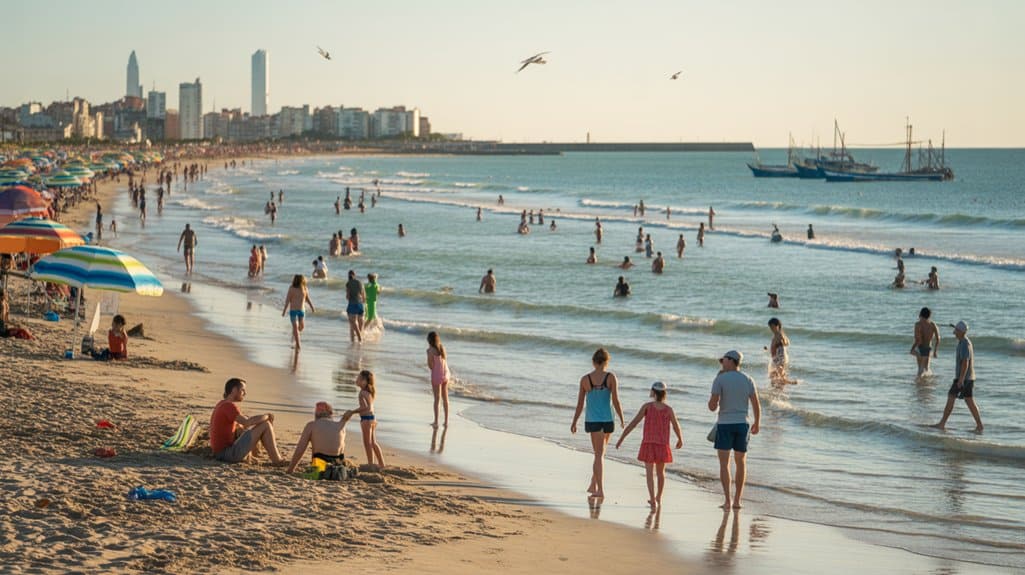
Uruguay just wrapped up a record-breaking year for visitors, welcoming over 3.2 million international tourists between January and November 2025. The country hadn’t seen these numbers since 2017, which signals a strong recovery for the nation’s tourism industry.
The comeback tells a bigger story than simple visitor counts. Understanding who visited, their destinations within Uruguay, and the economic conditions that enabled this growth reveals the true scope of the tourism rebound.
Most visitors came from neighboring Argentina and Brazil, following historical patterns that have shaped Uruguay’s tourism landscape for decades. Argentine tourists made up roughly 60% of arrivals, while Brazilians accounted for another 25%. This regional dependency reflects Uruguay’s position as a natural vacation spot for residents of these larger South American economies.
Punta del Este remained the top destination, drawing nearly 40% of all international visitors to its beaches and resorts. Montevideo captured another 35% of tourist traffic, with visitors drawn to the capital’s colonial architecture, cultural sites, and business opportunities. Coastal towns like Piriápolis and La Paloma saw steady growth, particularly among families seeking more affordable beach destinations.
Economic factors played a crucial role in driving the tourism surge. Argentina’s currency devaluation made Uruguay relatively more expensive for Argentine visitors, yet they continued arriving in large numbers. This suggests that pent-up demand from pandemic restrictions outweighed cost concerns for many travelers.
Brazil’s economic stability contributed to sustained visitor flows throughout the year. The real’s strength against the Uruguayan peso made the country an attractive destination for Brazilian tourists, who typically stay longer and spend more per visit than their Argentine counterparts.
Uruguay’s government lifted most COVID-19 restrictions by early 2025, removing barriers that had deterred international travel. The country’s vaccination rates and health infrastructure gave visitors confidence in safety protocols, while simplified entry requirements made border crossings smoother.
Tourism revenue reached approximately $2.1 billion through November, representing a 15% increase over the same period in 2024. This figure approaches pre-pandemic levels, when annual tourism revenue typically ranged between $2.2 and $2.5 billion.
The accommodation sector showed particular strength, with hotel occupancy rates averaging 78% during peak season months. Vacation rental properties experienced even higher demand, with platforms reporting occupancy rates above 85% in popular coastal areas.
Restaurant and retail businesses in tourist zones reported revenue increases of 20-30% compared to 2024. These gains helped offset losses accumulated during the pandemic years and supported employment recovery in service sectors.
Looking ahead, tourism officials expect 2026 to build on this momentum. Infrastructure improvements at Montevideo’s airport and new direct flight routes from European cities should help diversify the visitor base beyond South American markets.
Key Takeaways
Uruguay’s tourism industry hit remarkable heights in 2025, welcoming over 3.2 million international visitors between January and November. This marks the country’s strongest performance since 2017, signaling a full recovery from previous downturns.
The numbers tell an impressive story about visitor spending patterns. Tourist expenditures reached US$1.784 billion by November, representing a solid 10.45% jump from the year before. This growth reflects both higher visitor numbers and increased per-person spending across different market segments.
The composition of Uruguay’s tourist base has shifted dramatically. European and North American travelers, who typically spend more per visit, have largely replaced the budget backpackers who once dominated the scene. This change has reduced Uruguay’s traditional dependence on visitors from neighboring Argentina and Brazil, creating a more balanced and resilient tourism portfolio.
Argentine tourists made a strong comeback, contributing nearly $500 million to the economy. Their return stems from two key factors: the Argentine government eliminated travel fees that previously discouraged international trips, and improved purchasing power made Uruguay more accessible to middle-class Argentine families.
Looking ahead, the tourism sector shows strong momentum. Industry projections indicate annual growth of 6.18% through 2029, supported by concrete developments like the 139 cruise ships already scheduled for the 2026-2027 season. These bookings provide a solid foundation for continued expansion in Uruguay’s maritime tourism segment.
Uruguay Just Had Its Best Tourism Year Since 2017

Uruguay’s tourism sector just hit a major milestone, welcoming over 3.2 million international visitors between January and November 2025. The country hasn’t seen numbers this strong since 2017, when 4.2 million travelers arrived throughout the entire year.
The real story lies beyond visitor counts. While total arrivals fell short of 2017’s record, the economic impact has been substantial. These visitors pumped US$1.784 billion in foreign currency into Uruguay’s economy through November alone.
Today’s tourists spend more money per person than visitors did eight years ago. This demographic shift explains why fewer people can generate similar economic benefits. January 2025 data shows visitor spending jumped 10.45% compared to the previous year, demonstrating that attracting well-funded travelers beats chasing raw numbers.
The tourism recovery reflects broader changes in how people travel post-pandemic. Visitors now prioritize longer stays and premium experiences over quick, budget trips. This trend has worked in Uruguay’s favor, as the country’s natural attractions and cultural offerings appeal to travelers seeking authentic experiences rather than mass tourism destinations. The government has reinforced this momentum through VAT exemptions for foreigners on gastronomy, car rentals, and hotel accommodations until April 2025.
What the 2025 Visitor Numbers Actually Show
The raw 2025 data reveals something unexpected about Uruguay’s tourism landscape. Total visitor numbers didn’t smash any records, but the type of people choosing Uruguay changed dramatically. These tourists brought significantly fatter wallets, spending 10.45% more than visitors during the previous January.
Three key shifts defined this transformation:
- High-spending tourists displaced budget backpackers compared to the 2017 peak season
- Service exports reached US$2.3 billion, equaling what Uruguay’s meat industry contributes to the economy
- European and North American bookings increased, reducing dependence on Argentine and Brazilian visitors
The 3.2 million people who visited through November injected US$1.784 billion in foreign currency into Uruguay’s economy. This pattern shows Uruguay successfully attracted visitors who spend more money per trip rather than simply maximizing the total number of arrivals.
Tourism officials discovered that revenue per visitor matters more than cramming every hotel room full. Wealthy travelers typically stay longer, eat at higher-end restaurants, purchase local products, and book premium experiences like wine tours or beach resorts. Budget tourists, while valuable, often bring pre-packed meals and limit their spending to basic accommodations.
This shift helped Uruguay’s tourism sector generate serious money without overwhelming infrastructure or creating overcrowding problems that plague other South American destinations. Minister Pablo Menoni anticipates the 2025-2026 summer season will deliver record year-end results for the post-pandemic era.
How 2025 Compares to Uruguay’s 2017 Peak Season
The numbers tell the whole story when you put them side by side. Uruguay welcomed over 4 million visitors during the 2017 season, setting records that remain unmatched. December 2017 alone brought 3.6 million arrivals, that’s more people than visited throughout all of 2024.
Tourism patterns have changed significantly since that peak year. The 2025 summer season expects 1.4 million visitors, which shows solid recovery but falls well short of that historic high. Revenue in 2017 reached $2.3 billion, boosted by favorable exchange rates and government policies that drew large crowds. Tourism accounted for approximately 7% of Uruguay’s Gross Domestic Product that year.
The mix of visitors has changed as well. Argentinians and Brazilians continue to make up most arrivals, just in reduced numbers compared to before. Though 2025 stands as the second-strongest season since 2017, this ranking actually emphasizes how remarkable that peak year was for Uruguay’s tourism industry.
Why Argentina’s Economy and Peso Shifts Drove the Surge
- Argentine tourists no longer had to pay those massive government fees that used to make international travel so expensive
- Their dollars went much further once they crossed into Uruguay, making everything from hotels to restaurants more affordable
- The visitors coming over now had deeper pockets than the budget travelers Uruguay used to see
Brazil’s currency problems meant fewer Brazilian tourists, but Argentina kept the flow going. This combination of factors brought Uruguay US$1.784 billion in tourism revenue through November 2025. By December, tourism revenues climbed to 536,045.30 USD Thousand, reflecting the sustained momentum from Argentine visitors.
Where International Tourists Spent Their Time and Money
All those Argentine visitors arriving with stronger purchasing power had to spend their money somewhere, and Uruguay’s tourism map reveals exactly where the cash landed. Montevideo drew the largest crowds as the capital city, while Punta del Este secured its position as the country’s premier beach destination. Colonia del Sacramento rounded out the top three, pulling visitors with its UNESCO World Heritage colonial charm.
| Destination | Peak Monthly Rent | Starting Daily Rate |
|---|---|---|
| Punta del Este | $20,000 | Premium luxury |
| Canelones | Varied | $100/night |
| Eastern Resorts | High demand | Seasonal pricing |
The coastal strip commanded the highest prices, with beachfront properties in Punta del Este reaching astronomical rates during peak season. Government tourism boards worked to redirect some of this flow toward rural areas and nature reserves, hoping to spread economic benefits beyond the traditional beach hotspots. Travelers could pick between paying top dollar for oceanfront luxury or finding budget-friendly options in the countryside and smaller towns. Tourism Minister Pablo Menoni emphasized the importance of strategic marketing in attracting visitors to these diverse locations.
This spending pattern shows how tourism dollars concentrated in established destinations while newer rural offerings struggled to compete with the magnetic pull of Uruguay’s famous beaches and historic sites.
What 2026 Projections Say About Uruguay’s Tourism Growth
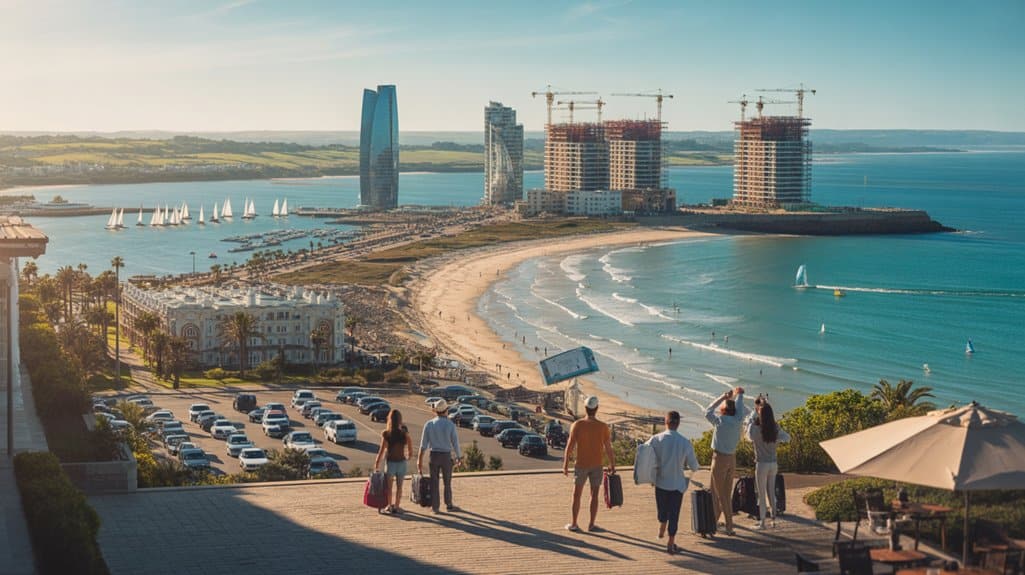
Uruguay’s tourism industry is gearing up for what could be its strongest performance in years. Official projections show the country expects between 1.3 and 1.4 million visitors during the December 2025 to February 2026 summer season. This would make it the second-best tourism period on record.
The numbers reflect several economic trends working in Uruguay’s favor. Currency fluctuations have made the country more affordable for visitors from Argentina and Brazil, who traditionally make up the bulk of tourists. Regional economic pressures have shifted spending patterns, with many travelers finding Uruguay offers better value compared to other South American destinations they might have chosen in previous years.
Tourism officials point to these economic fundamentals as key drivers behind the optimistic forecasts. The country’s stable currency and competitive pricing have created conditions that attract budget-conscious travelers while maintaining appeal for higher-spending visitors seeking quality experiences along Uruguay’s coast and in its historic cities. The government has deployed over 600 additional police officers in key tourist areas to enhance visitor safety and security.
Record-Breaking Summer Season Ahead
As projections roll in for the 2026-2027 summer season, Uruguay appears poised to welcome between 1.3 and 1.4 million visitors to its sun-drenched shores. This puts the nation on track for its second-best summer on record, behind only the stellar 2017-2018 season. The CERES think tank forecasts 1.424 million foreign tourists, a 5% increase from last year’s numbers.
What’s behind this tourism surge?
Cruise ships are flooding Uruguayan ports with 139 vessels scheduled to arrive. Montevideo will host 100 of these ships while Punta del Este receives the remaining 39. These floating hotels bring thousands of passengers who spend money on shore excursions, meals, and shopping.
Argentine and Brazilian visitors make up the largest share of tourists, and they’re responding to Uruguay’s competitive pricing compared to other regional destinations. The government’s cash refund program on airline tickets has made flights more affordable, removing a key barrier for budget-conscious travelers.
Tourism officials expect hotels and restaurants to fill up quickly in early 2026, particularly in the main destinations of Montevideo, Punta del Este, and Colonia. Uruguay’s lower costs compared to its neighbors continue drawing visitors who want quality beach and cultural experiences without breaking the bank.
The country’s tourism industry has recovered steadily since the pandemic disrupted travel patterns, and these numbers suggest Uruguay has found the right mix of pricing and promotion to attract regional visitors. From January to November 2025, Uruguay welcomed over 3.2 million visitors, generating $1.784 billion in revenue and demonstrating the sector’s vital contribution to the national economy.
Sustained Economic Growth Drivers
Uruguay’s tourism sector thrives while other countries still fight to reach their pre-pandemic visitor levels. The country built economic resilience through careful planning that paid off. Tourism brought in $1.78 billion from 3.2 million visitors in 2025, substantial revenue that directly strengthens the economy.
Argentina contributed nearly $500 million in early 2025 alone. Brazilian visitors totaled 432,200 arrivals, with projections showing continued increases. This steady performance stems from competitive pricing, Uruguay became more affordable as neighboring countries dealt with rising inflation.
The sector expects 6.18% annual growth through 2029. Strong infrastructure backs these numbers, with 139 cruise ships planned for 2026. Hotel reservations already surpass last year’s levels, proving that travelers appreciate affordable options that don’t strain their budgets. Uruguay now offers a 22% VAT refund on food and beverages for tourists, making the destination even more economically attractive.
References
- https://www.riotimesonline.com/uruguays-tourism-boom-record-visitor-numbers-in-early-2025/
- https://en.mercopress.com/2025/12/30/over-3.2mn-foreign-travelers-visit-uruguay-through-november-2025
- https://en.mercopress.com/2025/12/30/over-3.2mn-foreign-travelers-visit-uruguay-through-november-2025/comments
- https://tradingeconomics.com/uruguay/tourist-arrivals
- https://www.plenglish.com/news/2025/12/28/expectations-in-uruguay-for-a-good-tourist-season/
- https://www.ceicdata.com/en/indicator/uruguay/tourism-revenue
- https://www.ceicdata.com/en/indicator/uruguay/visitor-arrivals
- https://www.statista.com/outlook/mmo/travel-tourism/uruguay
- https://www.untourism.int/investment/tourism-doing-business-investing-in-uruguay
- https://en.wikipedia.org/wiki/Tourism_in_Uruguay