President Orsi’s trip to China in February 2026 took an unexpected turn when health screenings detected possible chickenpox exposure. Medical staff ran comprehensive tests immediately after his return to Uruguay, and the results came back negative – good news for everyone involved.
This close call shows just how carefully countries watch over their leaders’ health during international visits. Uruguay’s presidential medical team follows strict protocols that kick in the moment Orsi steps on foreign soil. They coordinate with local hospitals, maintain direct communication with Montevideo’s medical facilities, and track any health threats in the regions he visits.
The chickenpox scare wasn’t just about one person getting sick. If a sitting president contracts a contagious disease, it can disrupt diplomatic meetings, delay important decisions, and create uncertainty about government operations. Uruguay learned this lesson during previous health incidents involving public officials, leading to the current robust screening system.
Most Uruguayans don’t realize their president travels with a mobile medical unit that includes specialized equipment for rapid testing. These teams can detect various infections within hours, not days. They also maintain detailed health records of everyone in the presidential delegation and monitor local disease outbreaks in destination countries.
The negative test results allowed normal government functions to continue without interruption. Orsi’s China visit focused on expanding trade relationships and discussing agricultural exports – critical issues for Uruguay’s economy that couldn’t afford delays due to health concerns.
Key Takeaways
President Orsi got the all-clear from doctors who confirmed he wasn’t exposed to chickenpox during his February 2026 diplomatic trip to China. The medical team ran thorough checks as part of routine procedures that all presidents go through after traveling abroad.
Back in Montevideo, Orsi jumped straight into his regular schedule of meetings with government officials and public appearances. His clean bill of health meant no quarantine periods or restrictions on his activities.
These health screenings have become standard practice because international diplomatic missions put leaders at higher risk of picking up infections. When you’re shaking hands with dozens of people, attending packed events, and moving through different countries with varying health standards, the chances of exposure naturally go up.
The Uruguay-China relationship has been heating up lately, which means more official trips back and forth. Their five-year trade deal signed recently has government health officials updating screening procedures to keep pace with the increased travel between the two countries. What used to be occasional visits are now becoming regular exchanges, so the medical protocols need to match that reality.
Did President Orsi Test Positive for Chickenpox After His China Trip?
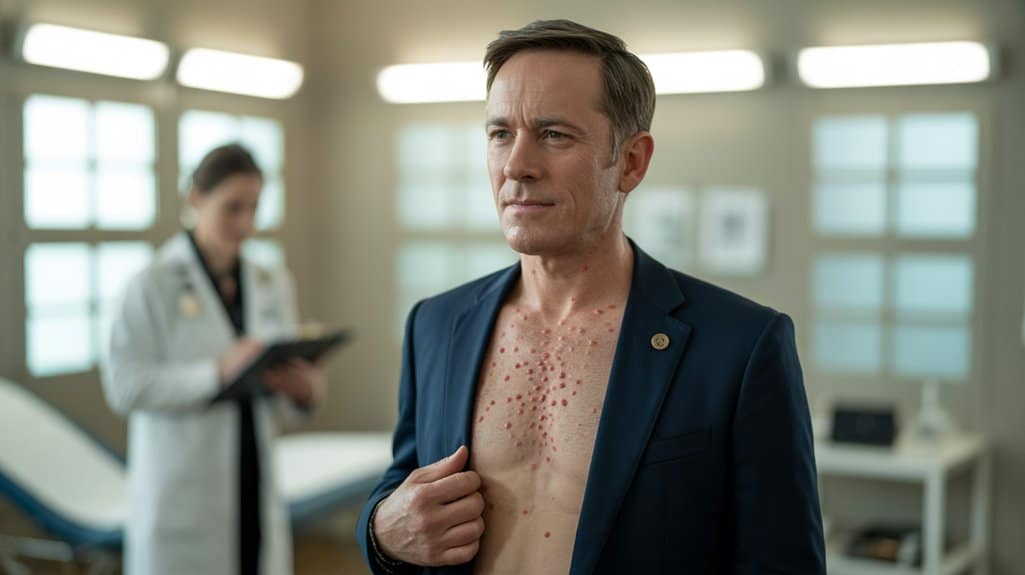
President Orsi’s health stayed solid after his February 2026 China trip – no chickenpox diagnosis whatsoever. The week-long diplomatic mission wrapped up without any medical complications for Uruguay’s leader.
Orsi brought along 150 business executives and academics, making it one of the largest Uruguayan delegations ever to visit Beijing. The group spent their time in high-level meetings with Chinese President Xi Jinping and exploring cultural landmarks like Shanghai’s historic Yuyuan Garden. They also handled the formal stuff – ceremony attendance at the Great Hall of the People and putting signatures on bilateral cooperation deals.
The health protocols put in place for the trip did their job. Orsi came back to Montevideo in good shape and jumped straight back into work on expanding Uruguay’s ties with China. The visit strengthened what both countries call their “comprehensive strategic partnership,” though in plain terms that means deeper trade relationships and diplomatic cooperation between the two nations. The trip demonstrated Uruguay’s commitment to independent decision-making in foreign policy, particularly as the first Latin American head of state to visit China in 2026.
What Exposure Risks Exist During High-Level State Visits?
When presidents and diplomats travel across borders for official business, they encounter health risks that most people never consider. These high-level state visits create unique challenges through crowded airports, packed ceremonies, and endless handshakes, conditions that create ideal pathways for disease transmission. Medical professionals must conduct thorough risk evaluations, though many leaders overlook basic travel health measures because of demanding schedules.
Major health threats during diplomatic missions include:
- Direct interaction with hundreds of people at formal gatherings and public appearances
- Severe jet lag that compromises the body’s natural defenses
- Inconsistent hygiene protocols across different countries, including well-developed regions
Research shows international travelers develop illnesses at rates between 22, 64%, with countries like India and several African nations reporting infection rates above 50%. Presidents receive superior medical care compared to ordinary travelers, but no one escapes vulnerability to pathogens spreading worldwide.
Uruguay’s diplomatic corps learned this lesson during a 2019 trade mission to Southeast Asia, when three cabinet members contracted gastroenteritis despite staying in luxury accommodations. The incident prompted our foreign ministry to implement mandatory pre-travel health briefings and require all officials to carry prescribed medications for common travel-related illnesses.
Smart preparation makes the difference. Vaccination schedules, prophylactic treatments, and portable water purification systems have become standard protocol for Uruguayan delegations. Unlike most international visitors, diplomats traveling to the U.S. face no mandatory medical screening for infections such as tuberculosis. These measures don’t guarantee perfect health, but they significantly reduce the chances of diplomatic embarrassment caused by preventable illnesses.
How Medical Teams Screen Presidents After International Travel
Presidents returning from overseas trips undergo comprehensive medical evaluations that most people never hear about. These protocols safeguard both the commander-in-chief’s wellbeing and public health by preventing the introduction of foreign pathogens.
Medical personnel monitor for infectious diseases that leaders might have encountered during their travels. They conduct thorough physical examinations, record vital signs, and question presidents about any unusual symptoms they’ve experienced. The medical team creates detailed maps of every location visited and catalogs all personal interactions during the trip. When exposure to communicable illnesses like chickenpox occurs, laboratory testing begins immediately.
The screening process operates under stringent medical guidelines established by the White House Medical Unit. Laboratory technicians analyze blood samples to detect potential infections, while nurses take regular temperature measurements to identify fever patterns. Though similar to standard travel health protocols, presidential screenings involve significantly more extensive testing and documentation. Medical staff maintain constant communication with the Centers for Disease Control and Prevention to stay current on emerging disease outbreaks worldwide. Federal agencies also coordinate with National Intelligence to assess whether foreign nationals accompanying the president’s delegation pose any security or health risks. This systematic approach allows healthcare providers to identify and contain health threats before they affect anyone beyond the president.
The Negative Result and Orsi’s Return to Scheduled Duties
Following comprehensive medical screenings after his China trip, President Orsi got the all-clear from doctors. The tests showed no chickenpox exposure, which meant he could get back to his regular presidential schedule right away. These health checks work exactly as they should – protecting both the president and the people he meets daily.
What the medical clearance means for Orsi’s work:
- Face-to-face meetings with government officials and citizens can resume immediately
- Public confidence remains strong knowing their president’s health status is verified
- Uruguay’s government functions continue without disruption from extended quarantine periods
This situation shows how today’s leaders balance international travel with domestic responsibilities. Since Orsi tested negative, he can now focus on putting the China agreements into action rather than dealing with health concerns. The quick turnaround kept Uruguay’s diplomatic momentum going while proving the country’s medical protocols actually work when needed.
The president’s clean bill of health removes any uncertainty about his availability for upcoming government business. Citizens can expect their leader to maintain his full schedule of meetings, policy discussions, and public appearances without health-related interruptions. Uruguay’s political stability and democratic norms ensure continuity in government operations even during health-related concerns.
What Uruguay-China Relations Mean for Future Diplomatic Health Protocols
Uruguay and China’s growing partnership means both countries need to rethink how they screen visiting officials for health issues. When President Orsi traveled to China in February 2026, he brought the largest business delegation in the relationship’s history. More trips like this are coming under their new five-year trade agreement, making health protocols a real priority.
Back in 2023, President Lacalle Pou’s visit to China established what diplomats call a “comprehensive strategic partnership” – basically a formal way of saying the countries work together on major issues. This agreement opened the door for government officials to travel back and forth much more than before. Now both sides are looking at updating their health screening rules to keep everyone safe while preserving the trust they’ve built since establishing diplomatic ties in 1988.
Smart health practices aren’t just about preventing illness – they keep the partnership running smoothly. When officials can travel safely, it’s easier to maintain the momentum on projects like Uruguay’s participation in China’s Belt and Road Initiative, which connects countries through infrastructure and trade investments. The two countries signed over 10 cooperation documents during the visit, covering areas from investment and trade to emerging technologies.
References
- https://www.youtube.com/watch?v=G5mYhTulLXE
- https://us.china-embassy.gov.cn/eng/zgyw/202602/t20260203_11850201.htm
- https://www.youtube.com/watch?v=EysoYCaL4lg
- https://moderndiplomacy.eu/2026/02/11/uruguays-historic-pivot-amidst-great-power-competition/
- https://www.globaltimes.cn/page/202602/1354998.shtml
- https://news.cgtn.com/news/2026-02-04/Orsi-visits-China-amid-growing-U-S-involvement-in-Latin-America-1Ku1ugaPpra/p.html
- https://pmc.ncbi.nlm.nih.gov/articles/PMC2857256/
- https://pmc.ncbi.nlm.nih.gov/articles/PMC5825178/
- https://travel.state.gov/en/international-travel/travel-advisories.html
- https://radio949.iheart.com/content/2026-01-05-outpatient-visits-of-people-reporting-fly-like-symptoms-reach-new-record/