

Uruguay’s President Orsi recently completed a significant weeklong visit to China, bringing along 150 business leaders to explore new economic opportunities.
The trip comes at a time when Uruguay’s domestic economy is showing mixed signals that deserve closer examination.
The country’s inflation rate has fallen to its lowest level in more than twenty years, while the peso has strengthened considerably against the US dollar.
These economic indicators typically signal a healthy economy, but the reality is more nuanced than these headline numbers suggest.
Agricultural producers and export-oriented businesses are expressing growing concern about the peso’s appreciation.
When a country’s currency becomes stronger, its exports become more expensive for foreign buyers.
This means Uruguayan beef, soybeans, and other agricultural products cost more in international markets, potentially reducing demand and cutting into profit margins for producers who depend on overseas sales.
The strengthening peso creates a double-edged situation.
While it helps control inflation by making imported goods cheaper for consumers, it simultaneously makes it harder for exporters to compete globally.
Since agriculture represents a cornerstone of Uruguay’s economy, this shift could have lasting implications for rural communities and the broader economic landscape.
Orsi’s China visit appears strategically timed to address these challenges by potentially opening new markets and investment opportunities that could offset some of the competitive disadvantages created by the stronger peso.
Key Takeaways
President Orsi takes a 150-member delegation to China from February 1-7, 2026, deepening relationships with the country that buys more Uruguayan beef and soybeans than anyone else.
Uruguay’s inflation fell to 3.65% in December 2025, the lowest rate since 2001. This milestone allowed the central bank to cut interest rates for the sixth month running, bringing them down to 6.5%.
The peso gained 11% against the dollar, making imports cheaper for Uruguayan consumers. This strength creates headaches for exporters who now find their goods more expensive for foreign buyers. Farmers particularly feel the squeeze since they earn dollars from the country’s $24 billion in annual exports but see those converted into fewer pesos.
Export businesses worry about shrinking profits as the strong peso makes their products costlier overseas. The agricultural sector employs 133,500 workers nationwide, putting these jobs at risk if export demand drops.
The Central Bank keeps close watch on peso movements and stands ready with backup plans to manage wild swings. Bank officials offer hedging tools to help exporters manage currency risk, especially with the Mercosur-EU trade agreement on the horizon.
President Orsi Leads 150-Member Uruguay Delegation to China
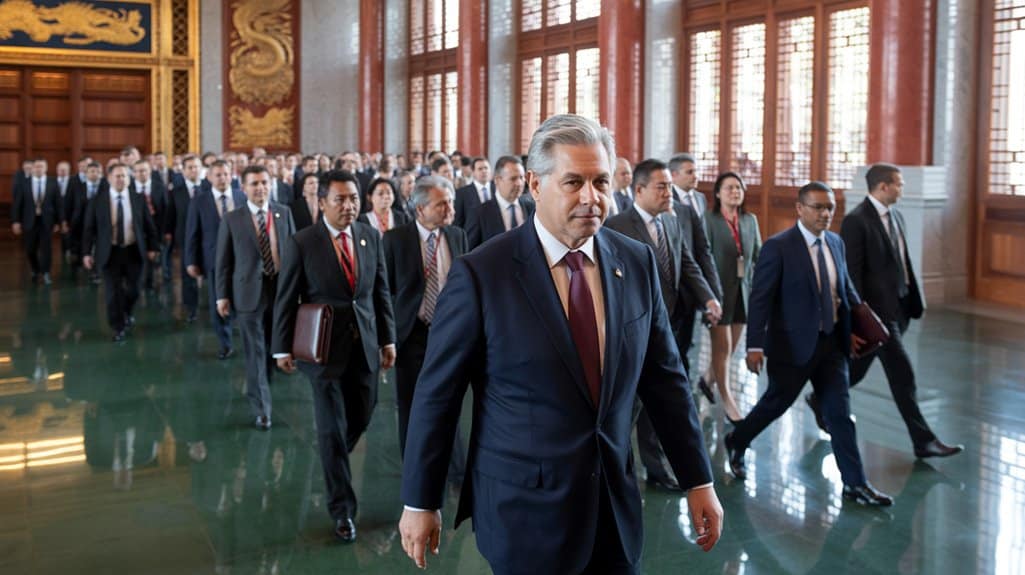
President Orsi’s heading to China with an impressive entourage of 150 people. The delegation’s packed with more than 100 business leaders from the private sector, alongside cabinet ministers, state officials, and provincial representatives who’ll be joining the week-long trip.
The sheer size of this group speaks volumes about Uruguay’s intentions. Foreign Minister Mario Lubetkin pointed out that bringing this many people demonstrates genuine commitment to strengthening ties with Beijing. Representatives from over 70 different businesses and trade chambers have signed up for the journey.
The February 1-7, 2026 visit celebrates nearly four decades of diplomatic relations between the two countries. China’s become Uruguay’s biggest customer, purchasing more goods than any other nation. The trip’s designed to deepen economic cooperation, particularly around Uruguay’s main exports: beef, soybeans, and cellulose, which already flow steadily to Chinese markets.
This business-heavy approach makes strategic sense for a small South American nation looking to expand its global reach. Uruguay’s economy depends heavily on agricultural exports, and China’s massive consumer base offers significant opportunities for growth that the country can’t afford to ignore. While Orsi travels abroad, Vice President Carolina Cosse takes charge of executive authority back home.
Uruguay Inflation Hits Lowest Level Since 2001 at 3.65
President Orsi’s focus on strengthening trade relationships abroad comes at a time when Uruguay’s domestic economy is delivering genuinely positive results. The country’s inflation rate dropped to 3.65% by December 2025 , the lowest year-end figure recorded since 2001. This puts Uruguay well below the Central Bank’s 4.5% target, giving families real relief from rising costs.
The numbers tell a clear story of economic improvement across key areas. Vegetable prices fell 5.8%, making fresh produce noticeably more affordable for households. Electricity bills dropped 4.9% through the UTE Premia program, directly reducing monthly expenses for consumers. Airfares decreased 6.33%, making travel more accessible for people watching their budgets.
Perhaps most significantly, consumer prices actually declined 0.09% from November to December, meaning Uruguayans saw their purchasing power increase rather than erode. This month-over-month improvement represents a meaningful shift from the inflationary pressures that have squeezed household budgets in recent years. The decline reflects deflation deepened in clothing and footwear, which fell 2.6% in December.
Economic forecasters expect inflation to climb back to around 4.52% by late 2026, which would still remain close to the Central Bank’s target range. For now though, Uruguay’s families are experiencing genuine economic breathing room , a development that provides stability while the president works to expand the country’s international trade partnerships.
Central Bank Cuts Rates to 6.5% in Sixth Consecutive Reduction
The Central Bank delivered its most aggressive rate cut yet, dropping the benchmark by a full percentage point to 6.5%. This sixth straight reduction since mid-2025 represents the biggest single move in the current easing cycle.
Bank officials brought forward their February meeting to tackle growing economic pressures. The decision shows policymakers are shifting gears toward looser monetary policy, scheduling an additional March session to keep a close eye on how things develop. The rate adjustment aims to stimulate economic growth as Uruguay faces headwinds in the current economic environment.
Inflation sits at 3.65%, falling short of the 4.5% target and raising concerns among authorities that prices might drop below the 3% floor. The faster pace of rate cuts aims to encourage more lending while keeping price increases in check, offering relief to businesses and families navigating an uncertain global landscape.
Peso Strengthens 11% as Dollar Pressures Mount
Currency traders watched the peso climb steadily higher through January, gaining roughly 11% against the dollar over the past year. This shift represents a meaningful change for Uruguay’s economy, affecting how much citizens pay for imports and what businesses can afford from overseas suppliers.
The numbers paint a clear picture of this currency movement:
The peso rose 12.54% over twelve months, which means imported goods like electronics, fuel, and machinery now cost less in peso terms. Monthly gains hit 3.37%, representing the strongest single-month performance in recent years. Exchange rates shifted from 39.18 to 37.83 pesos per dollar, meaning Uruguayans now need fewer pesos to buy the same amount of dollars. Market analysts project the rate could reach 36.75 pesos per dollar within twelve months, though currency predictions carry inherent uncertainty.
This strengthening trend affects everyday life in practical ways. Uruguayans traveling abroad find their money goes further, while local businesses importing raw materials or equipment see reduced costs. The tourism sector faces mixed effects – while Uruguayan travelers benefit, the country becomes more expensive for foreign visitors.
Financial analysts point to several factors driving this trend, including shifts in global commodity markets and changes in U.S. monetary policy that have weakened the dollar against various currencies. The peso’s performance reflects broader economic patterns affecting emerging market currencies throughout the region. On January 26, 2026, the exchange rate stood at 37.474 pesos per dollar, reflecting the currency’s continued appreciation trajectory.
Uruguay’s Export Sectors Face Competitiveness Crunch
Uruguay’s peso has been climbing against the dollar, and that’s creating real headaches for companies that depend on overseas sales. When your currency gets stronger, your products become more expensive for foreign buyers , it’s basic math that hurts your profit margins.
The pain hits deepest in industries that employ lots of workers, particularly meatpacking and plastics manufacturing. These businesses watch their labor costs eat into already thin profits while they struggle to stay competitive abroad. The country’s export machine churns out $24 billion worth of goods each year, but producers of milk, rice, and wood pulp are dealing with weak global prices that make things even tougher.
A trade deal between Mercosur and the European Union is on the horizon, creating a mixed bag of challenges and opportunities. The agreement would eliminate tariffs on more than 90% of what Uruguay ships overseas, which sounds great in theory. Small cheese producers aren’t celebrating though , they’re worried about European competitors swooping in and undercutting their local market share. Upgrading facilities to meet European standards costs money that many of these smaller operations simply don’t have lying around.
The government sees what’s happening and has started rolling out some relief measures. They’re offering currency hedging tools and peso-denominated financing to help exporters weather the storm. Twenty-six companies have already earned sustainability certifications that prove Uruguayan producers can meet Europe’s strict environmental and quality standards when they get the right backing. The European Union currently accounts for 14% of Uruguayan exports, representing $1,786 million in total trade value for 2024.
Rural Groups Warn Strong Peso Threatens Farm Employment
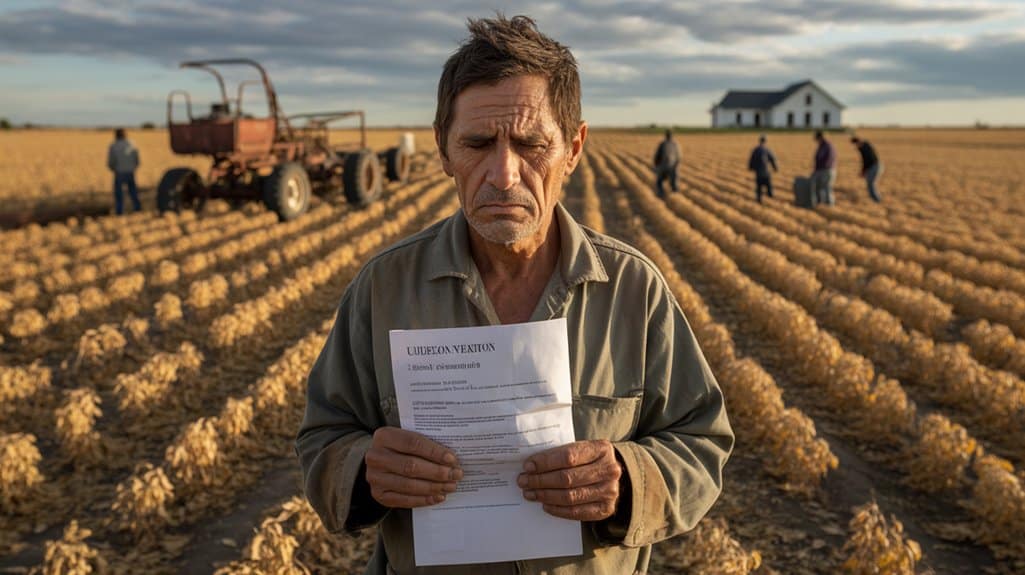
Uruguay’s farm leaders are raising serious concerns about their strengthening peso, which makes their exports less competitive in global markets. When the peso gains value against the dollar, Uruguayan beef, soybeans, and wheat become more expensive for foreign buyers, potentially reducing demand and cutting into farmers’ profits.
The Rural Association has described the situation as reaching a critical threshold. Export-dependent farmers face a double squeeze: their production costs remain the same in pesos, but the revenue they earn from overseas sales drops when converted back to the local currency. This margin compression could force agricultural operations to reduce their workforce to stay viable.
The government has acknowledged these concerns rather than dismissing them. Officials have committed to examining policy options that might help stabilize the exchange rate or provide other forms of support to the agricultural sector. The Economy Ministry has outlined measures aimed at alleviating pressure from the exchange rate situation. Uruguay’s economy relies heavily on agricultural exports, making the farming industry’s health crucial for overall employment and economic stability across rural communities.
This currency appreciation affects different agricultural products unevenly. Commodity producers like cattle ranchers and grain farmers feel the impact most directly since their products compete primarily on price in international markets. The timing proves particularly challenging as global food prices remain volatile following recent supply chain disruptions.
ARU Warns Critical Situation
Rural groups in Uruguay are sounding the alarm about farm employment. The Asociación Rural del Uruguay (ARU) points to the strong peso as the main culprit behind mounting job pressures across agricultural sectors. When Uruguay’s currency strengthens, it makes the country’s farm exports more expensive for foreign buyers, which cuts into profits and forces producers to make tough decisions about staffing.
The numbers tell a stark story. Agriculture employs 133,500 people, that’s 8% of everyone working in Uruguay. These jobs span multiple areas: 24,000 people work in horticulture, tending everything from vegetable fields to greenhouse operations. Another 13,000 focus on crop production, growing the grains and other staples that feed the nation. Agricultural services employ 5,000 workers who keep farming operations running smoothly, while 28,000 bakery workers process farm products into finished goods. The sector encompasses agriculture, hunting, forestry, reflecting its diverse economic contributions to the nation.
The peso’s strength creates a domino effect that hits rural communities hardest. Farmers earning less from exports have fewer resources to maintain their workforce. Since agriculture contributes 6-7% to the country’s GDP, job losses in farming don’t stay contained, they spread through small towns where agricultural work often provides the economic foundation.
Families throughout Uruguay’s countryside built their livelihoods around farm work, viewing it as a path to financial stability. The ARU’s warning reflects genuine concern that currency pressures could undermine this traditional source of rural prosperity, leaving communities scrambling for alternatives in an already challenging economic environment.
Export Competitiveness Under Pressure
Nearly 70% of everything Uruguay’s farmers grow ends up shipped overseas, making the country’s agricultural backbone extremely vulnerable to global market shifts. The peso’s recent strength has farmers sweating , a stronger currency means they pocket fewer dollars for every ton of beef or soybeans sold abroad.
Farm organizations across the country report genuine concern about potential layoffs in rural areas where entire communities depend on export income. The Economy Ministry confirms that exchange rate volatility creates a double burden: exporters earn less while local businesses face tougher competition from cheaper imports.
The math is straightforward but brutal. Foreign buyers see Uruguayan products becoming more expensive when the peso strengthens, making competing countries like Argentina or Brazil more attractive. Since beef, soybeans, wheat, and corn generate most of Uruguay’s export revenue, currency swings don’t just affect individual farms , they impact thousands of families whose paychecks depend on selling to international buyers.
Rural communities feel these changes quickly because agriculture employs roughly 12% of Uruguay’s workforce, with many more jobs connected to farming through processing plants, transportation, and equipment suppliers. The sector’s strong focus on South America, Europe, and China as primary export destinations means currency fluctuations in these markets have immediate effects on farm viability. A farm crisis becomes everyone’s problem in towns where the local economy revolves around getting crops and livestock to foreign markets.
Central Bank Schedules Extra March Meeting for Policy Tools
- Inflation sitting at 3.65%, which stays comfortably under the 4.5% ceiling the bank targets
- The peso getting stronger while the dollar loses ground across global markets
- Stepping into currency trading if the peso’s movement becomes too erratic
- Backup measures ready to go when economic surprises hit
This careful monitoring approach lets Uruguay’s monetary policy adapt quickly to new developments. The bank can respond to market changes without getting trapped by inflexible meeting schedules or predetermined policy paths. The central bank delivered a 100 basis point cut to bring the benchmark rate down to 6.5% as part of its response to shifting economic conditions.
References
- https://en.mercopress.com/2026/01/30
- https://en.mercopress.com/2026
- https://en.mercopress.com/2026/01/06/uruguay-records-lowest-yearly-inflation-in-over-two-decades
- https://en.mercopress.com/uruguay
- https://en.mercopress.com/2026/01/27/uruguay-central-bank-accelerates-easing-cuts-key-rate-to-6.5-as-dollar-hits-lows
- https://en.mercopress.com/2026/01/29
- https://en.mercopress.com/2026/01/23
- https://en.mercopress.com/2026/01/27
- https://en.mercopress.com/2026/01/16
- https://en.mercopress.com/2026/01/26