
Uruguay and China have built a solid partnership that’s grown stronger over nearly four decades. Their relationship got a major boost during President Orsi’s groundbreaking 2026 visit, when both countries committed to deeper cooperation across multiple sectors.
The numbers tell the story of this expanding partnership. Bilateral trade hit $6.59 billion in 2024, making China one of Uruguay’s most important economic partners. The agreements signed during Orsi’s visit focused on three key areas: technology transfer, agricultural development, and renewable energy projects.
China’s investment in Uruguay’s agricultural sector makes perfect sense given Uruguay’s competitive advantages. The country produces high-quality beef and soybeans that Chinese consumers want, while China offers the technology and market access that Uruguay needs to modernize its farming operations.
This isn’t just about selling raw materials – Uruguay is positioning itself as a supplier of premium agricultural products.
The renewable energy component reflects both countries’ practical interests. Uruguay already generates nearly all its electricity from renewable sources, giving it valuable expertise that China can learn from.
Meanwhile, Chinese companies bring capital and advanced technology that can help Uruguay expand its clean energy infrastructure.
What sets this relationship apart is how well it aligns with each country’s strategic goals. Uruguay gets access to China’s massive market and investment capital without compromising its sovereignty.
China gains a reliable partner in South America that can supply food and energy resources while providing a gateway to regional markets.
The partnership works because both sides focus on concrete, measurable benefits rather than grand rhetoric. Trade flows, investment projects, and technology transfers create tangible value that justifies continued cooperation.
Key Takeaways
Uruguay made history in 2018 when it became the first MERCOSUR country to sign onto China’s Belt and Road Initiative, a massive infrastructure development program spanning multiple continents. This decision marked a turning point in the relationship between the small South American nation and the world’s second-largest economy.
The economic numbers tell a compelling story. China now stands as Uruguay’s biggest trading partner, with business between the two countries hitting $6.59 billion in 2024 – that’s a 25% jump from the previous year. This trade relationship covers everything from Uruguay’s beef and soybeans heading east to Chinese manufactured goods and technology flowing west.
President Orsi’s trip to China in 2026 brought home concrete results, with both countries signing forty-three separate agreements. These deals span technology sharing, farming improvements, clean energy projects, and cultural programs that connect people from both nations.
The friendship didn’t happen overnight. Uruguay first recognized China diplomatically back in 1988, but the real breakthrough came in 2016 when both countries upgraded their relationship to what diplomats call a “comprehensive strategic partnership” – essentially agreeing to work together on major long-term projects.
Chinese money is now funding some of Uruguay’s most ambitious infrastructure plans. The country’s new 500kV electrical transmission network relies on Chinese investment, while an even bigger project looms on the horizon: a proposed $6 billion hydrogen production facility that could transform Uruguay into a major clean energy exporter.
President Orsi’s 2026 China Visit: What Uruguay’s Strategic Push Achieves
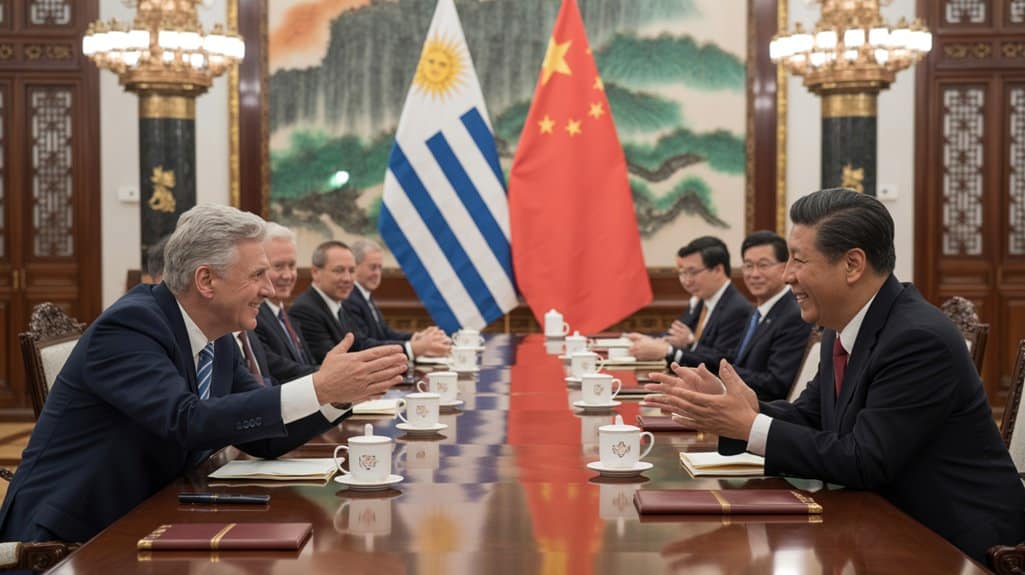
When Uruguay’s President Yamandú Orsi steps off the plane in Beijing on February 1, 2026, he’ll become the first South American leader to visit China after recent diplomatic tensions with Venezuela. His week-long trip represents Uruguay’s calculated effort to diversify its international relationships beyond traditional partners.
The itinerary mixes diplomatic protocol with cultural engagement. Orsi plans to visit the Museum of the Communist Party of China, tour the Great Wall, and explore the Forbidden City. His formal meeting with President Xi Jinping at the Great Hall of the People will include full state honors and a ceremonial 21-gun salute.
Traveling with Orsi, a 150-person delegation includes cabinet ministers, university researchers, and sixty representatives from Uruguay’s private sector. The group expects to finalize more than twelve agreements spanning technology transfer, agricultural trade, and renewable energy projects. These deals aim to elevate Uruguay-China relations from their current level to what diplomats call a “comprehensive strategic partnership,” creating new pathways for Chinese investment in Uruguay’s infrastructure and technological development.
This diplomatic initiative reflects Uruguay’s pragmatic approach to foreign policy. The small South American nation seeks to expand its economic options while maintaining relationships with the United States and European Union. China already ranks as one of Uruguay’s top trading partners, particularly for beef and soybeans. Approximately one-quarter of Uruguay’s goods exports went to China in 2025, resulting in a trade surplus.
China as Uruguay’s Top Trade Partner: $2.5 Billion in Annual Exchange
President Orsi’s upcoming visit strengthens ties that already run deep economically. China has become Uruguay’s most important trading partner, with deals between the countries hitting US$6.59 billion in 2024, a 25% increase from the year before. This growth shows how trade patterns between the nations have shifted over time.
| Year | Uruguay Exports | China Exports | Trade Balance |
|---|---|---|---|
| 2023 | US$2.92B | US$2.49B | Surplus |
| 2024 | US$3.27B | US$3.32B | US$50M surplus |
| 2025 H1 | US$1.57B | US$1.39B | US$187M surplus |
Wood pulp, soybeans, and beef drive Uruguay’s sales to China, making up a quarter of everything the country sells overseas. The numbers show Uruguay keeps earning more from China than it spends there, proving Uruguayan products find eager buyers in Chinese markets. Uruguay’s position as the first MERCOSUR member to sign a Belt and Road Initiative Memorandum of Understanding in 2018 has facilitated this expansion of bilateral commerce.
Uruguay’s Belt and Road Role: First MERCOSUR Member to Join
Uruguay broke new ground in August 2018 when it became the first MERCOSUR nation to sign onto China’s Belt and Road Initiative. The timing wasn’t coincidental – both countries were celebrating three decades of diplomatic relations, making the agreement particularly symbolic.
The Belt and Road Initiative represents China’s massive global infrastructure program, connecting countries through trade routes, ports, railways, and energy projects. For Uruguay, joining meant access to Chinese funding and expertise for large-scale development projects that the small South American nation couldn’t easily finance on its own.
The partnership focuses heavily on infrastructure improvements and environmental projects. Chinese investment has targeted Uruguay’s port facilities, renewable energy sector, and transportation networks. These aren’t just abstract commitments – concrete projects have emerged from the agreement, including upgrades to port infrastructure and investments in wind energy development.
Uruguay’s decision created ripple effects throughout MERCOSUR, the South American trade bloc that includes Argentina, Brazil, Paraguay, and Venezuela. Other member countries watched closely as Uruguay navigated this new relationship with China, weighing their own potential participation in Chinese-led development initiatives.
The move reflects Uruguay’s pragmatic approach to international relations. With a population of just 3.5 million people, the country has historically maintained relationships across the political spectrum to maximize economic opportunities. Joining the Belt and Road Initiative fits this pattern of strategic diversification in foreign partnerships. Despite this diplomatic breakthrough, Chinese investments in Uruguay remain relatively low compared to the scale of trade relations between the two nations.
Historic 2018 BRI Signing
On August 19, 2018, Uruguay broke new ground as the first MERCOSUR country to sign onto China’s Belt and Road Initiative. Foreign Minister Rodolfo Nin Novoa led the ceremony in Beijing, timing the agreement with the 30th anniversary of diplomatic relations between the two nations. This move gave Uruguay a unique position as China’s entry point into South American markets.
The agreement went beyond symbolic gestures. It established concrete frameworks for infrastructure projects and improved transportation links between the countries. Uruguay could now diversify its economy away from its heavy reliance on beef and soy exports to Europe and North America.
What Made This Signing Historic:
- Only MERCOSUR member to join China’s global infrastructure program
- Coincided with three decades of formal diplomatic partnerships
- Matched Uruguay’s commitment to sustainable development goals
- Established ongoing committees to oversee collaborative projects
- Led to Uruguay’s participation in China’s Smart China Expo that same month
This strategic choice gave Uruguay greater flexibility in international affairs while maintaining its relationships with traditional Western partners. The small South American nation demonstrated it could chart its own course in global trade relationships. The recent memorandum between Uruguay XXI and CCPIT builds on this foundation by establishing a permanent working mechanism to coordinate joint activities and strengthen bilateral business ties.
Infrastructure and Green Development
Uruguay’s partnership with China shifted from paperwork to actual construction when Chinese companies broke ground on a massive 500kV electrical transmission network in May 2021. This project stands as the largest infrastructure undertaking between the two countries since they established diplomatic relations. The transmission lines do more than carry electricity, they represent a working model of international cooperation that creates concrete benefits for ordinary Uruguayans.
Chinese investment has spread across multiple sectors, touching railways, ports, and renewable energy projects. Plans for a US$6 billion hydrogen production facility in Paysandú demonstrate the scale of these green energy commitments. Chinese port construction expertise is expanding capacity at Montevideo and Nueva Palmira to accommodate increased trade volumes. Uruguay’s telecommunications infrastructure, already among the region’s most developed, is positioning itself for 5G deployment with technical support from Chinese firms. These projects illustrate how bilateral cooperation can generate measurable benefits while allowing Uruguay to maintain control over its strategic priorities.
The Belt and Road Initiative, which celebrated its 10th anniversary in 2023, has served as the framework for these infrastructure achievements and continues to open new avenues for cooperation between the two nations.
Green Energy and Digital Infrastructure Projects Linking Both Nations
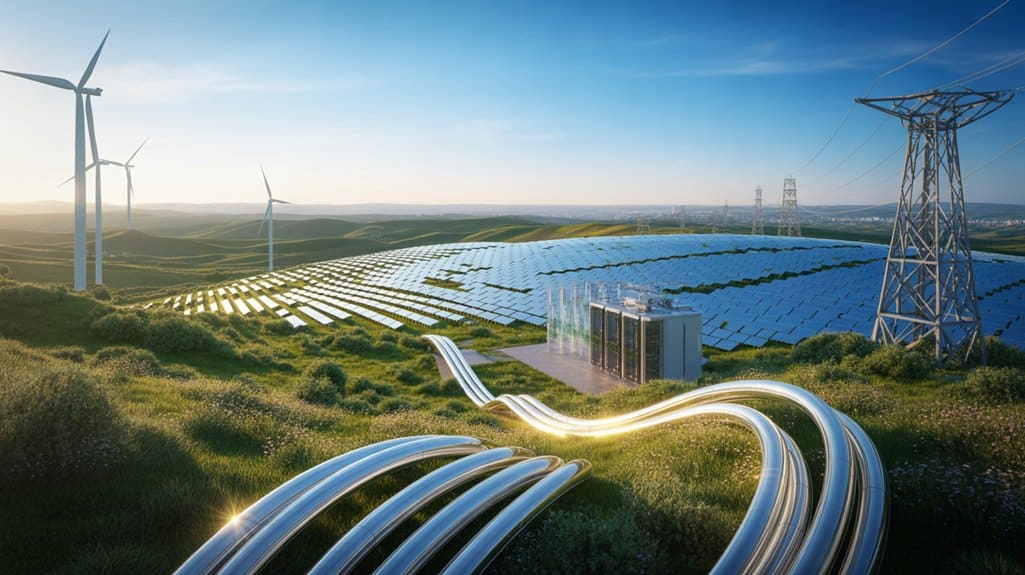
Uruguay and China have forged a partnership that centers on clean energy and digital infrastructure. Chinese companies are now integral to Uruguay’s renewable energy sector, providing expertise and investment for solar installations and grid modernization projects across the country.
The collaboration extends beyond energy into telecommunications and smart city development. Chinese firms are helping Uruguay upgrade its internet infrastructure and implement digital solutions for urban management. These projects range from improved broadband networks in rural areas to traffic management systems in Montevideo.
Uruguay brings valuable assets to this partnership. The country generates nearly all its electricity from renewable sources – primarily wind, hydroelectric, and solar power. This achievement, reached over the past two decades, makes Uruguay an attractive testing ground for Chinese companies looking to refine their clean energy technologies.
China contributes substantial financial resources and technical expertise that Uruguay’s smaller economy cannot match independently. Chinese state-owned enterprises and private companies have invested hundreds of millions of dollars in Uruguayan infrastructure projects, providing both equipment and engineering knowledge. Two major solar projects currently underway will add a combined 100 MW of capacity through Chinese solar panels, with the Punta del Tigre and Melo installations requiring a total investment of USD 91 million.
The arrangement allows both nations to advance their strategic goals. Uruguay accelerates its infrastructure development while maintaining its commitment to environmental sustainability. China gains experience in Latin American markets and demonstrates its capacity to support renewable energy transitions in developing economies.
Renewable Energy Collaboration
Uruguay generates more than 97% of its electricity from renewable sources like wind and hydroelectric power, making this small South American nation a surprising leader in clean energy. The country’s growing partnership with China is transforming how electricity flows to homes and businesses nationwide.
Chinese solar panels dominate nearly every major installation because they deliver significant cost savings compared to other options. Lower equipment costs translate directly into more affordable electricity for consumers. The partnership goes well beyond solar technology.
The country currently operates 1,500 MW of wind power capacity and has already installed 300 MW of solar energy systems. Plans call for adding another 1,100 MW of solar capacity by 2040. Chinese companies are also constructing new transmission networks to carry this power efficiently across Uruguay’s grid. Collaboration opportunities extend to power equipment and grid technologies that support the country’s renewable infrastructure. A massive $6 billion green hydrogen production facility is planned for the port city of Paysandú.
This approach allows Uruguay to strengthen its energy independence while maintaining some of the lowest electricity rates in South America. The combination of abundant natural resources and strategic international partnerships has created a sustainable energy model that other small nations are now studying closely.
Digital Technology Investments
Uruguay’s clean energy success story extends into the digital realm, where Chinese technology partnerships are reshaping how the country operates day-to-day. Telecommunications networks, logistics chains, and banking systems are getting practical upgrades that most people notice in small but meaningful ways.
The collaboration brings concrete changes you can actually see. Clearing goods through customs takes less time thanks to digital processing systems. Mobile payments work reliably across more locations. Government services that once required multiple office visits now happen online. These improvements might not make headlines, but they save people hours every week.
Uruguay approaches this partnership with clear priorities – advancing its infrastructure while maintaining control over key decisions. The agreements allow Chinese firms to provide technical expertise and funding for projects like fiber optic networks and data centers. Local authorities retain oversight of how these systems integrate with existing services.
This digital buildout connects Uruguay’s interior regions more effectively to global markets. Farmers can access real-time commodity prices on their phones. Small manufacturers find new export opportunities through improved logistics platforms. The technology creates pathways for economic growth that weren’t possible with older infrastructure. The partnership emphasizes emerging sectors including artificial intelligence and the digital economy as areas for deeper collaboration.
BRI Infrastructure Development
Since Uruguay formally joined China’s Belt and Road Initiative in 2018, the partnership has transformed from blueprints into concrete infrastructure projects. As the first MERCOSUR country to embrace BRI investment, Uruguay opened its doors to large-scale modernization that affects everyday citizens.
The changes span multiple sectors:
Power Grid Reinforcement
A 500kV transmission ring network now strengthens Uruguay’s electrical system, reducing blackout risks and improving energy distribution across the country.
Port Capacity Expansion
Montevideo and Nueva Palmira ports have undergone significant upgrades to handle increased cargo volumes, particularly agricultural exports and manufactured imports that drive Uruguay’s economy. Shipping and port infrastructure cooperation has been a central focus of the bilateral partnership since President Tabaré Vazquez’s October 2016 state visit to China.
Railway Network Modernization
Central railway lines now move pulp and freight more efficiently between production centers and ports, cutting transport costs for key industries.
Renewable Energy Investment
Chinese companies have committed $6 billion to green hydrogen production facilities, while new solar and wind installations expand Uruguay’s already impressive clean energy capacity.
These projects represent active construction sites where Uruguayan workers earn paychecks today while building infrastructure that will support economic growth for decades. The investments target practical needs – reliable electricity, efficient cargo movement, and energy independence – rather than prestige projects.
How Uruguay Leverages MERCOSUR and CELAC in China Diplomacy
Uruguay’s diplomacy with China runs on two parallel tracks. The country strikes bold bilateral deals while simultaneously working through regional blocs, and this double-barreled approach amplifies Uruguay’s influence far beyond what its size might suggest.
When 2026 arrives, Uruguay will chair both CELAC and Mercosur simultaneously. These leadership positions put Uruguay in the driver’s seat for shaping Latin America’s entire relationship with China. The country uses this platform to encourage cooperation that lets each nation make its own sovereign decisions about Chinese partnerships.
Back in 2018, Uruguay became the first Mercosur member to join China’s Belt and Road Initiative. This move wasn’t just symbolic, it opened doors for concrete infrastructure projects including roads, ports, and renewable energy facilities that help balance trade flows between the regions.
The partnership hit its highest point when both countries established a Comprehensive Strategic Partnership, which represents China’s most advanced diplomatic relationship category. This top-tier status proves that smaller nations can wield outsized influence when they deploy clever diplomatic strategies rather than relying solely on economic or military power.
Uruguay advocates for a Mercosur-China trade agreement that would formalize economic ties across the entire trading bloc. Foreign Affairs Minister Luis Almagro emphasizes that the economies of China and Mercosur are complementary, making such an agreement mutually beneficial despite the complexity of negotiations.
38 Years of Uruguay-China Relations: From Recognition to Partnership
When Uruguay and China first recognized each other diplomatically on February 3, 1988, few could have predicted the depth of cooperation that would emerge. That initial handshake has evolved into one of Uruguay’s most important international relationships over nearly four decades.
The partnership moved through several key stages. Between 1988 and 2000, trade grew as China’s expanding economy needed Uruguay’s agricultural products and raw materials. President Mujica’s 2013 visit to Beijing marked a turning point, producing bilateral agreements and a structured five-year trade plan that gave both countries clear goals.
Three years later in 2016, the relationship gained formal recognition as a “strategic partnership” – diplomatic language that signals deeper cooperation beyond basic trade. The period from 2019 to 2025 saw this partnership expand into new areas, with joint projects in infrastructure development and even military cooperation.
President Orsi’s 2026 state visit represented the relationship’s maturity, yielding forty-three separate agreements covering everything from technology transfer to cultural exchange. These weren’t just ceremonial documents but practical frameworks for ongoing collaboration. As the first Latin American head of state to visit China in 2026, Orsi’s trip underscored Uruguay’s prioritization of this bilateral relationship.
The numbers tell the story clearly. Annual trade between the two countries now reaches $5.8 billion, making China one of Uruguay’s largest trading partners. For a country of just 3.5 million people, this economic relationship provides crucial export markets for beef, soybeans, and wool while bringing in manufactured goods and investment capital.
This transformation from basic diplomatic recognition to comprehensive partnership shows how sustained engagement between nations can create lasting benefits. Both countries approached the relationship with patience, building trust gradually rather than rushing into complex arrangements.
References
- https://www.china-briefing.com/news/china-uruguay-trade-investment-opportunities/
- https://www.chinadaily.com.cn/a/202602/04/WS69827d32a310d6866eb3748e.html
- https://socialistchina.org/2026/02/10/china-and-uruguay-pledge-closer-bilateral-and-multilateral-cooperation/
- https://us.china-embassy.gov.cn/eng/zgyw/202602/t20260203_11850201.htm
- https://en.wikipedia.org/wiki/Timeline_of_diplomatic_relations_of_the_Republic_of_China
- https://www.fmprc.gov.cn/eng/gjhdq_665435/3447_665449/3533_665148/
- https://www.uruguayxxi.gub.uy/en/news/article/uruguay-celebrates-30-years-of-diplomatic-relations-with-china/
- https://news.cgtn.com/news/79556a4d31677a6333566d54/share.html
- http://www.chinacelacforum.org/eng/zgtlmjlbgjgx_1/202602/t20260204_11851164.htm
- https://moderndiplomacy.eu/2026/02/11/uruguays-historic-pivot-amidst-great-power-competition/