
Uruguay’s energy landscape is shifting in ways that matter well beyond the power sector.
HIF Global, the company driving one of the world’s most ambitious green hydrogen projects, is actively reconsidering the location of its $5.3 billion megaplant, and that decision carries real weight for the surrounding property market.
The original site created friction, and in this country, location is everything.
Uruguay’s regions each carry distinct characteristics, infrastructure access, land tenure history, community dynamics, and choosing the wrong one can stall even the most well-funded project.
A site change isn’t just a logistical move; it signals a recalibration toward a location with stronger long-term foundations.
What’s holding the deal in place right now is an energy pricing gap.
That’s a known pressure point in Uruguay’s development environment, where negotiating the cost of locally generated energy against global benchmarks requires patience and precise timing.
The country’s renewable energy framework is among the most advanced in Latin America, which is exactly why the numbers need to align carefully, not quickly.
Anyone tracking land and commercial real estate in Uruguay’s industrial corridors should be paying close attention.
When a project of this scale commits to a specific location, surrounding land values respond accordingly, and access to adjacent infrastructure becomes a defining asset.
The window to position before that decision is announced is narrowing.
Key Takeaways
HIF Global is weighing a significant site relocation for its green hydrogen megaplant, shifting focus from Constancia, near Colón, to Paysandú , and from a real estate standpoint, this move makes considerable sense. Argentine environmental objections have stalled progress at the original location, and when a project of this scale hits regulatory friction, finding the right alternative site quickly becomes the priority.
Paysandú’s proposed location carries a distinct advantage: the land is owned by state oil company Ancap, which cuts through the usual complexities of private land acquisition that can delay industrial projects for months, sometimes years. Anyone familiar with large-scale industrial real estate in Uruguay knows that land ownership clarity is half the battle. The site also benefits from strong freight connectivity along the Uruguay River corridor , a logistical asset that shouldn’t be underestimated for a $5.3 billion operation dependent on efficient export channels.
The project’s sticking point right now is energy pricing. HIF is seeking $40/MWh, while competing offers are coming in as low as $25/MWh. That gap needs to close, because without a viable energy agreement, even the most strategically positioned site loses its appeal.
Paysandú itself stands to gain enormously. The megaplant represents $1.012 billion in projected annual exports and roughly 3,000 construction jobs for a city carrying 14.8% unemployment. These numbers matter when evaluating the long-term economic health of a location.
June 2026 is the contract deadline, and HIF’s CEO has been direct: unresolved pricing terms could push production entirely out of Uruguay. That’s a timeline worth taking seriously.
Why HIF Global Is Reconsidering Its Original Uruguay Site
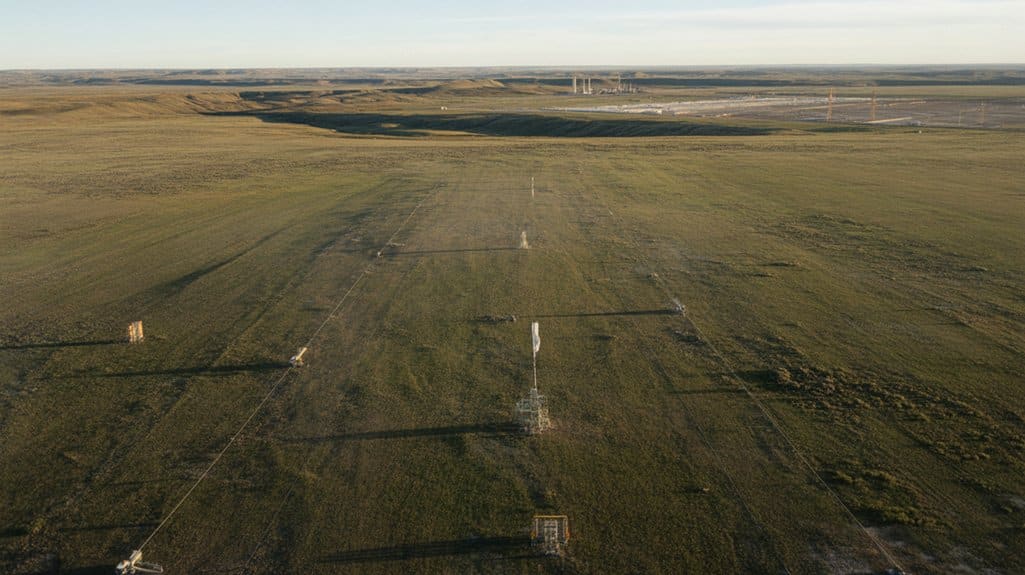
Large-scale projects in Uruguay often require flexibility, and HIF Global’s green hydrogen venture is a good example of that reality playing out in real time. The original site in Constancia, positioned just a few kilometers from the Argentine shore near Colón, sits in a sensitive stretch of the Uruguay River corridor , and that geography matters more than many outside investors initially anticipate.
Argentine officials, including the local mayor and regional governor, have raised consistent concerns about environmental risks along the river. Those objections held firm even after HIF Global redesigned the plant in August 2025, and the regulatory landscape on the Uruguayan side hasn’t made things easier. Anyone who has worked along that border region knows the binational dynamics there carry real weight and shouldn’t be underestimated during site selection.
What’s encouraging is that both parties are now looking at alternative paths that keep the project moving forward rather than letting it stall. Paysandú’s mayor has formally proposed relocating the plant to land owned by state oil company Ancap, a move that could ease diplomatic tensions while keeping the project’s economic benefits within the department. That kind of pragmatism is exactly what experienced developers learn to embrace when working in Uruguay , the country rewards patience and local knowledge, and the right site makes all the difference between a project that advances and one that gets tied up indefinitely.
Why the $40/MWh Energy Dispute Is Still Blocking the HIF Deal
Relocating a plant is one thing , sorting out the energy costs is another matter entirely, and that’s exactly where the HIF deal keeps getting stuck.
The core issue is straightforward: HIF wants to pay $40 per MWh for electricity, and UTE isn’t budging on its pricing. For anyone who’s spent time understanding how operating costs shape major investment decisions in Uruguay, that gap is significant. Electricity accounts for 70% of this plant’s running costs, which means every unresolved negotiation on energy pricing translates directly into financing uncertainty , and skittish investors tend to walk.
The regional competition isn’t helping matters. Paraguay is offering $25, Chile $32, and Brazil $36 per MWh. Those figures are sitting on the table, and experienced investors read them clearly.
The Orsi administration’s position , no subsidies, no special treatment , reflects a consistent principle that Uruguayans generally respect. Uruguay has always played by its own rules, and that integrity is part of what makes this country attractive to serious, long-term investors in the first place. That said, principled positions still need workable outcomes.
A deal that keeps this investment in Uruguay strengthens the entire landscape , infrastructure, employment, and long-term economic confidence all move together. The project is already projected to generate US$1.012 billion in annual export earnings once operational, which makes the cost of losing it to a competitor far more than symbolic. The window to close this gap is open, but it won’t stay that way indefinitely.
The New Paysandú Site and What It Offers HIF’s E-Fuels Plant
Paysandú has been on my radar for a while now, and this latest development confirms what many of us in the industry have sensed , the department is positioning itself as a serious player for large-scale industrial investment.
Mayor Nicolás Olivera took the proposal directly to President Yamandú Orsi on April 8, 2026, and the site in question sits on land owned by Ancap, Uruguay’s state oil company. From a real estate standpoint, that detail carries significant weight. State-owned land tends to streamline acquisition timelines considerably, cutting through the kind of ownership complexities that can stall major projects for months or even years.
The proposal is already well advanced and receiving favorable attention at the leadership level, which tells you something. Officials are deliberately targeting the same logistical profile as the original Constancia site near the Argentine border , and that’s a smart benchmark. Border-adjacent locations in Uruguay have consistently attracted investment precisely because of their freight connectivity and cross-border commercial flow.
What makes this package genuinely attractive is the combination of factors on the table: potential tax incentives, space for workforce training infrastructure, and an easing of the cross-border friction with Argentina that had been quietly complicating the broader conversation. In my experience, sites that align fiscal benefits with operational readiness and regional stability don’t come together like this very often. When they do, serious investors pay attention.
Paysandú has the bones. This proposal gives it a compelling reason to move. The construction phase alone is projected to generate ~3,000 direct jobs, creating immediate downstream pressure on local housing inventory that forward-looking investors would be wise to get ahead of.
Why Paysandú’s 14.8% Unemployment Makes This Investment Critical
Paysandú’s 14.8% unemployment rate , nearly double Uruguay’s national average , tells you something important about this market before you even look at a single property listing. That kind of gap doesn’t stay invisible for long when you’re evaluating where serious infrastructure investment lands next.
Wages in the region tend to run lower than the national benchmark, which reflects how competitive the local labor market really is. Businesses setting up there can build skilled teams from the ground up, often with stronger retention than you’d find in Montevideo or the coast. HIF’s megaplant has the potential to shift that dynamic considerably, and quickly.
Youth unemployment nationally hovers around 24-25%, and in mid-sized interior cities, that figure typically runs higher. Paysandú families have been navigating limited formal employment options for some time now, which is exactly why anchor investments of this scale carry so much weight locally.
Green hydrogen projects generate registered, formal employment , positions that come with full social security coverage. That’s the kind of stable income base that supports household formation, mortgage eligibility, and sustained demand for housing. For anyone watching Paysandú’s real estate fundamentals, that shift in employment quality matters as much as the raw job numbers. It’s the difference between speculative interest and genuine, durable demand. Uruguay’s national unemployment held at 7.4% in February 2026, underscoring that even the broader labor market has room to absorb the kind of skilled workforce mobilization a project of this scale demands.
Will Uruguay Close the Deal Before June Runs Out?
Uruguay’s real estate market is sitting at a crossroads right now, and the stakes couldn’t be higher. A $5.3 billion private investment opportunity is on the table, but the window to close it is shrinking fast. The contract deadline has already slipped from March to June 2026 , and in this market, extensions don’t come twice.
The core issue holding things back is energy pricing. HIF is asking for $40 per MWh, while neighboring markets are offering considerably less. That gap isn’t just a number , it’s the difference between Uruguay becoming a landmark destination for large-scale investment or watching that capital move across the border.
From years of working in this country, I can tell you that Uruguay’s appeal is genuine. Stable institutions, strong infrastructure, and a track record of honoring agreements make it a compelling place to put money. What the market needs right now is smart policy that bridges competitive pricing with long-term viability , because investors weighing their options will always go where the numbers make sense.
HIF’s CEO has already signaled that production could shift elsewhere if progress stalls. That kind of public warning deserves to be taken seriously. Confidence from government officials is a start, but buyers , whether they’re purchasing a home or committing billions to an energy project , close deals based on terms, not optimism.
The fundamentals here are strong. Getting the pricing structure right is what turns a promising opportunity into a signed agreement. Projects of this scale, including the proposed Lucía Solar Park spanning over 1,162 MWp in Cuchilla de Fuego, demonstrate just how transformative a secured deal could be for the region’s land and infrastructure landscape.
References
- https://en.mercopress.com/2026/04/09/uruguay-considers-relocating-hif-global-s-green-hydrogen-megaplant-to-ease-tensions-with-argentina
- https://www.gasworld.com/story/paysandu-site-cleared-for-hif-globals-hydrogen-based-e-fuels-facility/2243915.article/
- https://riojaya.com.ar/uruguay-considers-relocating-hif-globals-green-hydrogen-megaplant-to-ease-tensions-with-argentina/
- https://www.oecd.org/content/dam/oecd/en/about/programmes/cefim/green-hydrogen/HIF-global-case-study.pdf
- https://hifglobal.com/docs/default-source/default-document-library/our_sustainability_journey_2024_digital.pdf?sfvrsn=caf831c6_1
- https://hifglobal.com/media/news-description/2025/11/27/hif-global-receives-environmental-location-feasibility-approval——————–for-e-fuels-project-in-uruguay
- https://evrimagaci.org/gpt/uruguay-and-hif-global-launch-major-e-fuels-project-520659
- https://news.mongabay.com/2025/09/uruguays-green-hydrogen-plans-raise-ecological-concerns-in-argentina-at-home/
- https://www.qcintel.com/biofuels/article/colon-authorities-push-for-hif-global-e-fuel-plant-relocation-despite-redesign-46942.html
- https://hifglobal.com/media/news-description/2025/12/19/hif-global-and-government-of-uruguay-sign-agreement-to-accelerate-e-fuels-project-in-paysandú