
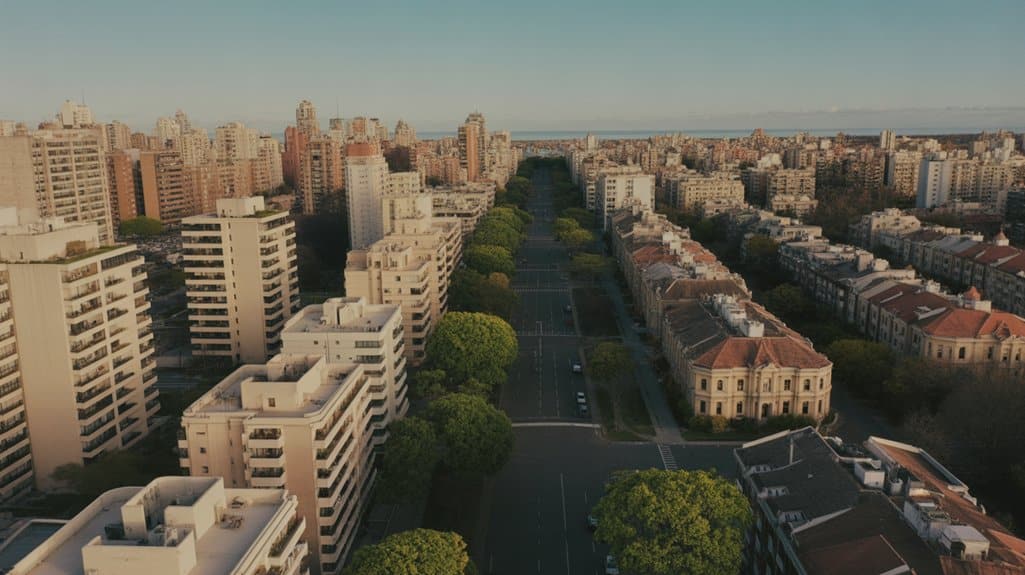
Uruguay’s housing market presents contradictory trends. Prices increased 5.88% in the first half of 2025. However, inflation of approximately 4% reduces real purchasing power gains to roughly 1%. This modest growth offers limited wealth-building potential.
Premium coastal locations such as Punta del Este demonstrate stronger performance with double-digit price increases. Regular neighborhoods lag significantly behind these premium areas. The disparity raises questions about the drivers of market segmentation and the sustainability of gains in non-premium segments.
Key Takeaways
- Nominal house prices increased 5.88% in H1 2025, generating real purchasing power gains of only 1.44% following inflation adjustment.
- Inflation at 4% consistently offsets nominal gains, constraining national real price growth to 0%, 1% despite higher headline figures.
- Premium coastal markets including Punta del Este demonstrate stronger performance, achieving 10%+ annual gains compared to flat national real growth.
- GDP growth of approximately 2.5% annually limits wealth creation. Fiscal deficits and rising debt levels strain economic fundamentals.
- Five-year real appreciation projections range from 4%, 5.5% annually, finally surpassing inflation. Near-term conditions through 2026 remain stable.
Uruguay’s Housing Market Stagnates

Nominal price gains obscure a weaker underlying reality in Uruguay’s real estate sector. House prices rose 5.88% in the first half of 2025, yet inflation consumed most gains, leaving only 1.44% in real purchasing power. Over the past year, real price growth has remained flat to minimal at 0% to 1%, indicating that property values have barely kept pace with rising living costs.
The situation deteriorated further in 2024. Nationwide prices contracted 6.06% in inflation-adjusted terms, despite a nominal decline of only 0.91%. Montevideo reflected this pattern: nominal growth of 2.9% in 2024 masked a 2.73% real contraction. The market demonstrates stability rather than collapse, but generates minimal returns for investors.
Analysts characterize current conditions as “active stability and consolidation”, a market experiencing stagnation. From January through September 2025, prices remained essentially flat, shifting -0.2% in dollars and +0.3% in UI currency units. Transaction activity fluctuated periodically as sellers reduced asking prices to facilitate sales. Meanwhile, total real estate purchase transactions increased by 3.3% year-on-year to 52,246 units in 2024, suggesting underlying demand despite price stagnation. The 2026 outlook projects continuation of these conditions: stable markets with selective activity, but without meaningful real appreciation for investors treating property as a wealth-building vehicle.
Market Growth Remains Underwhelming
Uruguay’s property market displays nominal strength that conceals underlying weakness. Prices climbed 5% in USD terms over the past year, yet real growth, adjusted for inflation, barely registered at 0% to 1%.
Persistent inflation around 4% erodes purchasing power gains. Montevideo illustrates this stagnation most clearly. Nominal prices reached UYU 117,000 per square meter in Q2 2025, while real values for new houses declined 1% to 1.01% during the same period. The 2024 data proved grimmer, showing a 4% real decrease as sellers lost negotiating strength.
Nationally, new house sales averaged UYU 90,000 per square meter in Q2 2025, posting a 5.88% year-over-year increase in nominal terms. Inflation adjustment reduced this to just 1.44% real growth.
Transaction prices rose 5% by early 2026, reflecting nominal momentum rather than genuine appreciation. Central Bank rate cuts to 7.5% in December 2025 provided psychological support, though economic fundamentals remain modest. GDP growth hovers around 2.5% annually, limiting broader wealth creation. Improved buyer sentiment from lower interest rates has increased mortgage financing accessibility across the market.
Premium coastal areas perform differently. Punta del Este surged 10% annually, with luxury beachfront climbing over 12%. Supply constraints in these neighborhoods support faster appreciation, reaching 10% in some locales.
Five-year projections promise 4% to 5.5% annual appreciation, finally exceeding inflation. Near-term outlooks suggest 0% to 7% USD growth nationally through 2026. The lower band reflects realistic expectations for established markets without dramatic catalysts for expansion.
Conclusion: Economic Headwinds Persist Ahead
Property prices demonstrate modest gains, yet the broader economic picture reveals significant challenges facing the nation. Uruguay’s economic outlook remains constrained by sluggish growth, persistent inflation, and widening deficits that impede substantive progress. Growth projections of approximately 2% through 2026 fall short of requirements for meaningful development. The BCU’s cautious easing stance, with anticipated rate cuts expected through 2026, reflects underlying monetary policy challenges in balancing growth support against inflationary pressures.
Government policy implementation confronts substantial obstacles. Inflexible spending patterns complicate fiscal adjustment efforts, while labor market concerns jeopardize the adjustment strategy’s effectiveness. Rising debt levels reduce margins for policy error.
Current account pressures and trade uncertainties compound these difficulties. Although property values remain relatively stable, underlying economic fundamentals warrant caution. Deeper structural trends warrant greater attention than surface-level price stability during this period of uncertainty.
References
- https://www.globalpropertyguide.com/latin-america/uruguay/price-history
- https://valoraconsultora.com/en/reflections-on-the-real-estate-sector-in-uruguay/
- https://thelatinvestor.com/blogs/news/uruguay-good-time
- https://thelatinvestor.com/blogs/news/uruguay-price-forecasts
- https://www.laciteuruguay.com/news/why-is-uruguay-considered-stable-compared-to-other-latin-american-countries-la-cite-real-estate
- https://www.benoitproperties.com/news/the-rise-of-uruguay-why-u-s-and-european-buyers-are-flocking-to-south-americas-most-stable-market/
- https://www.youtube.com/watch?v=J4IZ5GXtA8A
- https://www.jarniascyril.com/international-real-estate/invest-in-real-estate-uruguay-market-guide/uruguay-real-estate-market-trends/
- https://real-estate-uruguay.com/real-estate-demand-in-uruguay-remains-stable/
- https://www.statista.com/outlook/fmo/real-estate/uruguay?currency=USD