
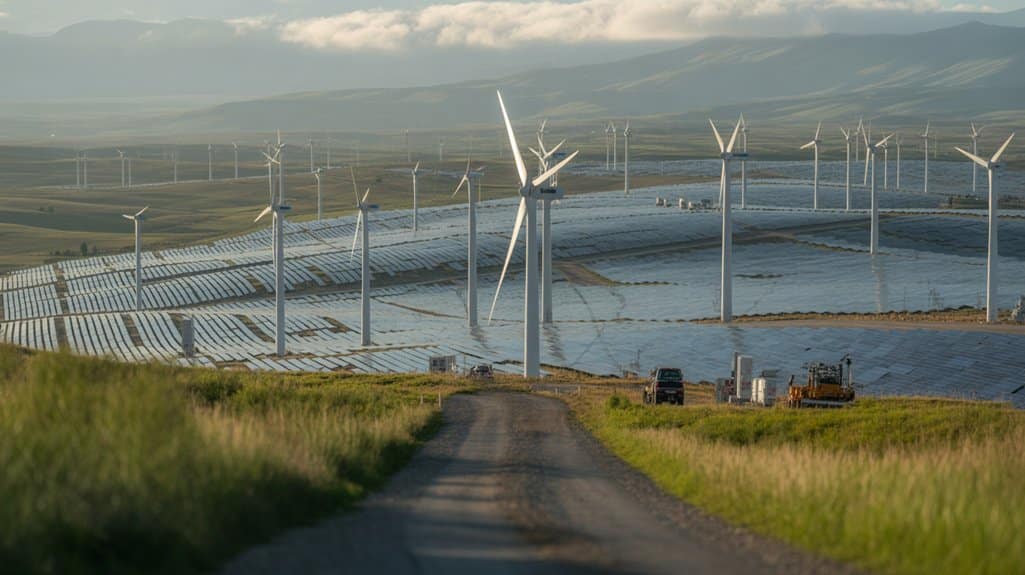
A green energy dispute between Chile and Argentina reveals how renewable power projects can create unexpected diplomatic headaches. Solar panels got installed on what everybody thought was Argentine soil, but the land actually belonged to Chile across the border.
This territorial mix-up happened near the Strait of Magellan, where both nations have clashed over boundaries for decades. The strait cuts through the southern tip of South America, making it strategically valuable for shipping routes.
Border demarcation in this remote region gets complicated because of harsh terrain and incomplete historical surveys.
Argentina’s government quickly admitted the error once Chile raised objections through official diplomatic channels. They committed to dismantling the solar installation and moving it to the correct side of the frontier.
Harsh Patagonian weather has made removal work slow and dangerous, though, leaving the panels sitting in disputed territory longer than anyone wanted.
The incident shows how renewable energy expansion can bump into old territorial sensitivities. Both countries are racing to build clean power infrastructure, but remote locations often lack clear boundary markers.
What seemed like a straightforward solar project turned into a reminder that even green energy development needs careful attention to sovereignty issues.
Key Takeaways
Argentine military crews accidentally placed solar panels three meters inside Chilean territory near the Strait of Magellan. The installation error sparked immediate diplomatic discussions between the neighboring countries.
Chile’s government called for swift removal of the misplaced equipment. Argentina quickly accepted responsibility and promised to relocate the panels without delay. Both nations approached the situation through established diplomatic channels rather than escalating tensions.
Weather conditions in the remote southern region have complicated removal efforts. Harsh winds and unpredictable storms make equipment transport dangerous. The operation requires specialized permits allowing workers to cross international boundaries, plus environmental protocols to protect the sensitive Patagonian ecosystem.
This solar installation represents part of Argentina’s broader push into renewable energy. The country recently launched a $211 million solar facility that adds 100 megawatts to the national grid. These projects aim to diversify Argentina’s energy portfolio beyond traditional fossil fuels.
Both governments treated this incident as a technical mistake rather than a territorial dispute. Their cooperative response contrasts sharply with past border tensions, particularly the 1978 Beagle Channel crisis that nearly led to armed conflict. Today’s diplomatic maturity reflects decades of improved relations between Chile and Argentina since democratic transitions in both countries during the 1980s.
Solar Panels Installed Inside Chile Trigger Argentina Border Dispute
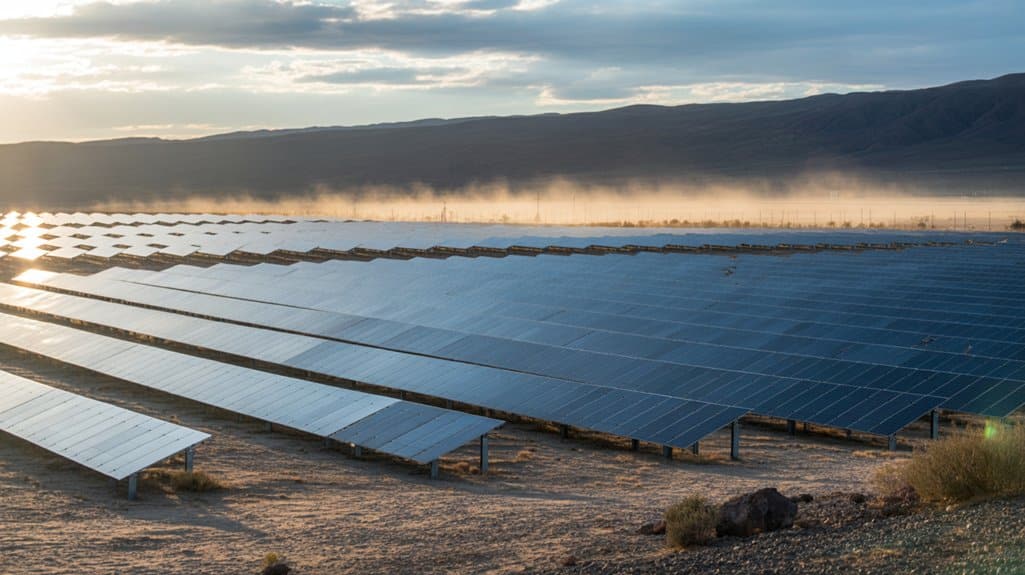
A simple solar energy installation at an Argentine navy post turned into a diplomatic headache when workers accidentally placed 18 panels three meters inside Chile. The April 2024 incident happened near the Strait of Magellan, where the crew followed a ranch fence line instead of using proper GPS coordinates to mark the border.
The solar array, designed to generate 9.9 kilowatts for the remote military outpost, crossed into Chilean territory without anyone initially realizing the mistake. Both countries take their border demarcation seriously, especially in Patagonia where territorial boundaries have historical significance.
Chilean President Gabriel Boric called for immediate removal of the panels, emphasizing that national borders require precise respect. His government’s response reflected standard protocol for territorial incursions, regardless of size or intent.
Argentina’s foreign ministry quickly acknowledged the error and committed to relocating the equipment. The swift diplomatic response prevented what could have escalated into a larger bilateral tension. Argentine Defense Minister Luis Petri assured that the panels would be dismantled shortly.
This mix-up demonstrates how infrastructure projects in border regions demand extra precision. Even routine installations like renewable energy systems can trigger international incidents when proper surveying gets overlooked. The episode serves as a reminder that good neighborly relations depend on attention to seemingly minor details that can have outsized consequences.
Argentina Admits Error and Begins Removing Panels From Chilean Territory
Argentina’s government jumped into action the moment Chile flagged the issue. Foreign Minister Diana Mondino and Defense Minister Luis Petri gave their word that the solar panels would be gone within days. The whole mess started when construction crews installed 18 panels roughly three meters into Chilean territory, mistaking a ranch fence for the international boundary line.
Ambassador Jorge Faurie owned up to the blunder, saying his team “didn’t pay enough attention” during the installation process. Argentina followed proper diplomatic channels by sending an official note to Santiago acknowledging what went wrong. The two nations made sure this border mishap wouldn’t damage their long-standing relationship while maintaining respect for each other’s sovereignty.
President Boric drew a clear line in the sand about territorial boundaries between democratic countries. Argentina took the message to heart and dispatched a Navy crew on June 18 to dismantle the equipment. The solar panels had been donated by Mirgor Foundation and Total Energies to support personnel monitoring the Strait of Magellan. Bad weather slowed down the removal operation, but both sides stayed committed to fixing the situation completely.
Why the Strait of Magellan Makes This Border Incident Strategically Sensitive
Though the solar panel mix-up might seem like a small mistake, it happened along one of the most significant water passages on Earth. The Strait of Magellan connects the Atlantic and Pacific Oceans through a 350-mile channel that cuts through the southern tip of South America. Ships carrying everything from Patagonian wool to Asian electronics rely on this route to avoid the treacherous waters around Cape Horn.
Chile controls this narrow waterway under international maritime law, requiring all vessels to take on Chilean pilots who know how to navigate the tricky currents and unpredictable weather. The country earns substantial revenue from these mandatory services while maintaining strict oversight of who passes through its territorial waters.
Border disputes near strategic waterways create ripple effects that extend far beyond the immediate neighbors involved. Argentina’s accidental equipment placement on Chilean soil demonstrates how quickly administrative oversights can escalate into diplomatic incidents when they occur near chokepoints that handle billions of dollars in trade annually. Nations guard these passages jealously because losing access or influence means losing leverage over global commerce routes that keep their economies running. The strait served as the main maritime route until the Panama Canal opened in 1914, cementing its historical importance in global shipping networks.
What Chile’s President Demanded and How Argentina Responded
Chilean President Gabriel Boric made his position crystal clear after discovering the solar panels on his nation’s territory. The 18 units had to go, and borders couldn’t tolerate any gray areas. His message was direct, Argentina could remove them, or Chile would handle it themselves.
Argentina’s Foreign Ministry quickly issued an apology once they learned about the placement mistake. Foreign Minister Diana Mondino and Defense Minister Luis Petri both promised the panels would be gone within days. Ambassador Jorge Faurie admitted the installing company had failed to check the coordinates before setting up the equipment.
The mix-up showed why territorial boundaries matter, no matter how small the installation. Both countries understood that respecting established borders stays at the heart of their relationship. What could have become a serious dispute instead became proof that neighbors can resolve problems when they communicate openly and act quickly. The incident highlighted concerns about water-scarce areas where future binational mining projects are likely to be located.
Panel Removal Timeline: Weather Delays and Current Status
The panel removal project kicked off in early 2024 with an ambitious timeline that assumed favorable weather conditions throughout the operation. Strong winds exceeding 25 mph forced work stoppages on multiple occasions, as safety protocols require crews to halt operations when conditions become hazardous for workers handling large equipment at height.
Unexpected storm systems moving through the region created additional setbacks beyond the typical seasonal weather patterns. These disruptions pushed the completion date back by approximately six weeks from the original projections. Work crews have adapted by scheduling operations during calmer morning hours and adjusting their approach to account for the challenging conditions.
Current progress reports indicate teams have successfully removed 60% of the targeted panels despite the weather-related obstacles. The revised timeline now extends completion into the fourth quarter, reflecting a more realistic assessment of both seasonal weather patterns and the technical requirements of safe panel extraction. The project aims to support infrastructure that will integrate renewable energy capacity similar to Chile’s northern region developments.
Initial Removal Operations Launched
Initial Removal Operations Launched
Teams started taking apart solar panels at the contested energy facility last month, creating a major change in this border dispute. The first week brought unexpected problems with moving the panels around. Heavy machinery showed up behind schedule, which really slowed things down.
The removal ran into several snags right away:
- Moving equipment across borders meant getting special paperwork from both governments
- Warehouses had to be built bigger fast to hold all the incoming panels
- Work crews needed extra safety training before they could start
Project leaders still think they can hit their target dates despite these roadblocks. Every single panel has to be handled with care so nothing leaks into the soil or water. This whole operation represents a major shift for towns that wanted to control their own power supply. People living nearby are crossing their fingers that sorting this out will make it easier for both countries to work together on clean energy down the road. Argentina’s renewable energy sector has seen substantial growth, with projects like the El Quemado Solar Park receiving approval for a $211 million investment to inject 100 megawatts into the national power system.
Weather Impact on Dismantling
Extreme weather has disrupted dismantling operations across central Buenos Aires province, where flooding affects nearly 4 million acres of agricultural land. Workers cannot access project sites due to impassable terrain created by persistent heavy rainfall.
La Niña drives these challenging conditions throughout the region. This climate pattern typically brings intense rainfall followed by extended dry periods and extreme heat. Current forecasts indicate this cycle will continue through January 2026, creating unpredictable working conditions for field operations.
Inadequate drainage systems worsen the situation significantly. Waterlogged fields stay unusable for months at a time, leaving crews with no choice but to postpone scheduled work. The region’s infrastructure simply wasn’t designed to handle such sustained precipitation levels.
Meteorologists project La Niña will weaken by early spring, which should create better opportunities for resuming operations. A 75% chance of transitioning to ENSO-neutral conditions exists by January-March 2026, which would help stabilize weather patterns. Teams must remain adaptable since weather patterns will ultimately determine when sites become accessible again.
How This Incident Compares to Past Chile-Argentina Border Conflicts
Past border tensions between Chile and Argentina nearly sparked full-scale warfare, particularly during the 1978 Beagle Channel crisis when both countries mobilized troops and prepared invasion strategies. Pope John Paul II’s direct intervention prevented what could have been South America’s bloodiest modern conflict.
Those earlier disputes had devastating human costs that went far beyond diplomatic disagreements. The Picton and Lennox islands crisis forced approximately 4,000 Chilean residents from their homes, while border closures separated families and destroyed cross-border trade relationships that had existed for generations.
The current environmental and energy disputes represent a completely different approach to bilateral relations. Both countries now resolve disagreements through established diplomatic channels rather than military posturing, reflecting the democratic institutions each nation built after their respective military dictatorships ended in the 1980s. The 1881 Treaty established a border through the Andes and defined control around the Strait of Magellan, yet omitted crucial waterways like the Beagle Channel that later became sources of serious contention.
This evolution from potential warfare to structured negotiation shows how neighboring democracies can transform their relationship patterns when both sides commit to peaceful conflict resolution.
References
- https://www.pv-magazine.com/2024/06/19/pv-installation-triggers-border-dispute-between-chile-and-argentina/
- https://buenosairesherald.com/world/international-relations/chile-demands-argentina-withdraw-military-solar-panels-from-its-territory
- https://www.solardaily.com/reports/Argentina_starts_removing_solar_panels_from_Chilean_border_999.html
- https://www.foxnews.com/world/indigenous-communities-argentina-chile-grapple-soaring-demand-lithium
- https://msi2.substack.com/p/borders-bases-and-balance-chiles
- https://energy.economictimes.indiatimes.com/news/renewable/argentina-starts-removing-solar-panels-from-chilean-border/111078151
- https://www.batimes.com.ar/news/latin-america/argentina-starts-removing-solar-panels-from-chilean-border.phtml
- https://www.batimes.com.ar/news/latin-america/boric-demands-action-from-argentina-in-row-over-military-base-border.phtml
- https://www.youtube.com/watch?v=h6x8yOp3Gbc
- https://en.mercopress.com/2024/06/17/argentina-installs-solar-panels-in-chilean-territory-by-mistake