
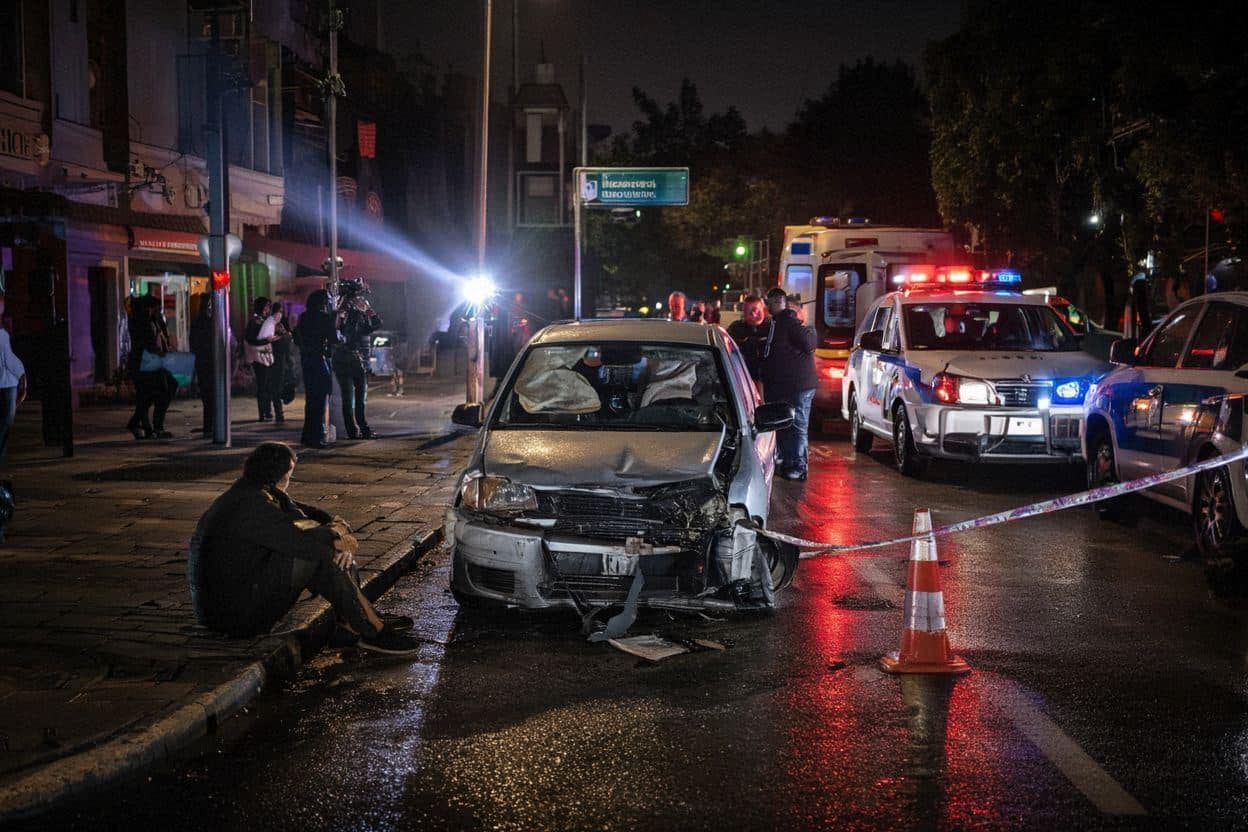
Reality TV fans got a scare when news broke that Santiago “Tato” Algorta, the winner of Gran Hermano Argentina, was involved in a serious car accident. The 28-year-old, born in Uruguay, had his vehicle roll over on a stretch of road near Dolores on March 3, 2026.
What happened next says a lot about split-second decisions and basic safety choices that genuinely matter.
Dolores sits in the Soriano department of western Uruguay, roughly 270 kilometres from Montevideo along Ruta 2, one of the country’s main inland highways. That road corridor is well-travelled but has a history of serious crashes, largely due to long straight sections that encourage speeding and a landscape flat enough to make drivers complacent.
Algorta walked away from the rollover, and according to reports, wearing a seatbelt played a direct role in that outcome.
Uruguay has invested heavily in road safety campaigns over the past decade, with the national agency Unasev tracking crash data and pushing seatbelt compliance as the single most effective individual measure a driver can take.
The numbers back that up: seatbelts reduce the risk of death in a rollover by roughly 45 percent, according to World Health Organization data.
Algorta’s case, as reported across Uruguayan media, became an unplanned illustration of exactly that point.
Key Takeaways
Santiago “Tato” Algorta, winner of the twelfth season of Gran Hermano Argentina, was involved in a car accident on March 3, 2026, near Dolores, a small city in the Soriano department of southwestern Uruguay. The stretch of road where the crash happened was poorly lit and curved, with little in the way of signage to warn drivers , the kind of conditions that make it easy to lose control, especially at night.
Tato’s car rolled over, which sounds alarming, but the outcome was far less serious than it might have been. His seatbelt was fastened and the airbags deployed, both doing exactly what they’re designed to do. He walked away in stable condition.
Gran Hermano host Santiago del Moro addressed the incident on air, confirming Tato was okay and pushing back against early rumours that had blown the situation out of proportion. Given how quickly unverified information spreads on social media, his clarification mattered.
The crash is a reminder of a persistent problem on Uruguayan roads. While Uruguay is generally considered one of the safer and better-governed countries in Latin America, road infrastructure outside major urban centres like Montevideo and Punta del Este can lag significantly behind. Around 18% of Uruguayan roads fall below the three-star safety threshold set by the United Nations , a benchmark that measures things like road markings, barriers, lighting, and signage. Below that threshold, the risk of serious accidents rises considerably.
Who Is Santiago “Tato” Algorta?
Santiago “Tato” Algorta is a 28-year-old from Montevideo, Uruguay, who became widely recognised after winning the twelfth season of Gran Hermano Argentina. Before entering the house, he was a relatively unknown young man looking for a bigger stage , something not uncommon for Uruguayans, given how closely the country’s culture is tied to its larger neighbour Argentina, sharing the same language, many of the same TV channels, and a long history of cross-border migration for work and opportunity.
He spent seven months inside the Gran Hermano house, outlasting every other contestant to claim an 85 million peso prize, beating finalist Ulises in the end. Walking out with a Uruguayan flag draped over his shoulders, he turned his win into a moment of national pride back home.
Warm and grounded throughout the competition, he kept his personal life largely to himself while still managing to connect with audiences. He later summed up his approach simply , he just wanted to last as long as possible inside the house. As it turned out, no one lasted longer. During the final, he also triumphed in the Pasapalabra challenge, finishing with 20 correct answers and edging out Ulises to claim the two million peso prize.
What Happened the Night of the Crash?
Late at night on March 3, 2026, Santiago “Tato” Algorta was driving through Dolores, Uruguay, when he came up on a poorly lit curve with almost no road signs to warn him. With so little light and no markings to guide him, he simply didn’t have enough time to react , and lost control of the vehicle. His seatbelt was on, which almost certainly saved his life. Algorta, who rose to fame as a Big Brother champion, spoke publicly for the first time after the accident to share updates on his recovery and future plans.
Poorly Lit Curve
A dark stretch of road in Soriano, Uruguay, turned dangerous one night when a poorly lit curve caught a driver off guard. Rural roads in this department, like many across Uruguay’s interior, often lack consistent street lighting, which makes reading the road ahead genuinely difficult. The driver lost control and the vehicle rolled over.
Road lighting on rural routes in Uruguay has long been a known gap. According to the country’s road safety agency, UNASEV, a significant share of fatal crashes occur at night on secondary roads, where infrastructure investment has historically been limited. A single well-placed light at a hazard point like a sharp curve can reduce crash risk considerably, and it’s a relatively low-cost fix compared to the consequences of doing nothing.
What makes curves like this one particularly dangerous is the combination of poor visibility and little to no advance warning for drivers. There’s usually no signage, no reflective markers, and no lighting to signal that the road is about to bend. Emergency responders reached the scene quickly, which likely made a real difference in the outcome. Still, the crash itself was avoidable. Uruguay has recently faced another tragedy involving emergency response, as seven residents died in Young while participating in a reality TV show fundraiser for a local hospital.
Seatbelt Saves Life
One small click changed everything. When the car flipped on that dark curve in Dolores, the seatbelt did what it was built to do, it kept the driver from being thrown around inside the vehicle, which is where most serious injuries happen in a rollover.
The outcome reflected that. Doctors reported stable condition with no serious injuries after the initial evaluations, and the police specifically noted seatbelt use in their official report. That detail matters, because Uruguayan traffic authorities don’t flag that kind of thing unless it’s relevant to how the incident played out.
Uruguay has made road safety a measurable priority over the past two decades, and seatbelt compliance is a core part of that. Buckling up isn’t a technicality, it’s the single most reliable thing a driver or passenger can do to stay alive when a crash happens. This case is a straightforward illustration of that. Airbags deployed effectively during the collision as well, providing an additional layer of protection that further contributed to Algorta walking away from the wreck without harm.
What Road Conditions Put Tato Algorta at Risk?
Uruguay’s roads have some real challenges that can catch drivers off guard, even careful ones. Poor lighting, faded lane markings, and rough surfaces all make driving harder than it needs to be, and when you throw in drivers ignoring speed limits and traffic signs, the risks add up fast.
Route 1, which runs from Montevideo toward Colonia del Sacramento, has a long track record of serious accidents. Heavy traffic and aggressive driving behaviour make it one of the country’s most consistently dangerous stretches of road. If Tato’s accident happened anywhere near that corridor, the conditions were already working against him.
Summer makes things considerably worse. Between December and March, domestic and international tourism pushes traffic volumes up sharply, and more vehicles on already-strained roads means more opportunities for things to go wrong. The freedom to travel is real, but so are the numbers behind Uruguay’s seasonal accident spike. A recent national assessment found that 18% of Uruguay’s roads still fall below the three-star safety standard recognised by the United Nations as the minimum benchmark for road safety.
How Tato’s Seatbelt and Airbags Saved His Life?
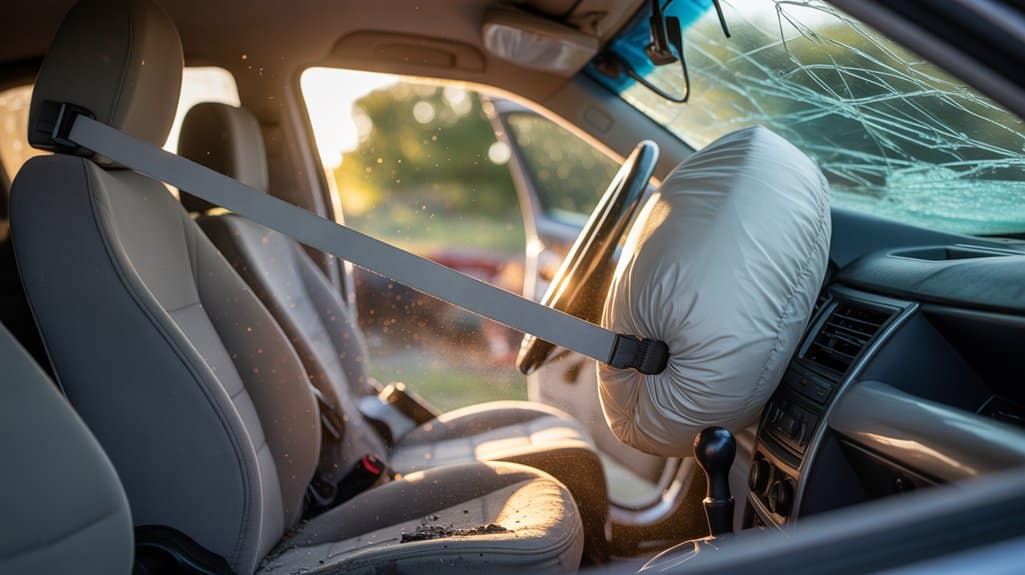
Tato Algorta came out of a serious crash in Dolores, Soriano, in one piece, and his seatbelt deserves a lot of the credit. The strap held him in place when the vehicle lost control, stopping him from being thrown out , something that, at highway speeds, rarely ends well. When the airbags deployed on impact, they cushioned the hit against the steering wheel and dashboard, and because the seatbelt had already kept him positioned correctly, the two systems did exactly what they were designed to do together, keeping his injuries minor. Santiago del Moro later confirmed that Algorta was in good health following the incident.
Seatbelt Prevented Fatal Ejection
Tato Algorta’s car lost control on a poorly lit curve in Uruguay’s Soriano department , and the seatbelt he was wearing made all the difference. Had he not been buckled in, he likely would have been thrown from the vehicle, turning a frightening crash into something potentially fatal.
The numbers back this up pretty clearly:
- Ejection happens in 30% of unbelted crashes but drops to just 1% when a seatbelt is worn
- Front seat passengers cut their fatality risk by 45% simply by buckling up
- The odds of severe injury fall by 50% with proper use
- In serious crashes, restrained occupants are 90% more likely to survive
Roads in Soriano, like many rural stretches across Uruguay, often lack adequate lighting and safety barriers , conditions that make an already dangerous situation harder to recover from. When a crash happens on that kind of road, the seatbelt becomes the last line of defence between the driver and the ground rushing past at speed.
Tato walked away without serious injuries. That wasn’t luck. A single strap kept him in his seat when everything around him stopped working the way it should , and that’s exactly what it was designed to do. The danger of inadequate restraints was made painfully clear when a jury ordered Toyota to pay $12.5 million to Chelsie Hill, a teenager left paraplegic after a crash in which her seat provided only a lap-only belt.
Airbags Absorbed Collision Impact
When the car crashed, the airbags quietly did their job too. In just milliseconds, the system kicked in and helped keep Tato from taking the full force of the impact.
The way it works is pretty straightforward. Sensors inside the car picked up the sudden stop and fired a signal almost instantly. The airbags inflated in around 60 to 80 milliseconds , quicker than a blink. The bags spread the force of the crash across a wider area of Tato’s body, so instead of one concentrated hit, the impact was softened and drawn out. Then the bags deflated, easing him to a stop rather than leaving him slammed against a rigid surface.
These systems are built with one purpose , to give the person inside the car a real chance of walking away. The airbags themselves are made from nylon 66 yarns, a material chosen for its high tensile strength and ability to withstand the extreme conditions of a deployment. For Tato, that’s exactly what happened.
Safety Gear Ensured Survival
Safety gear saved Tato’s life that night, and the numbers back it up , seatbelts reduce the risk of death in a crash by about 45%, according to the World Health Organization.
When his vehicle rolled, the seatbelt kept him from being thrown around inside or ejected entirely. The airbags did their part a split second later, softening the blow at the exact moment of impact. Neither one alone would’ve been enough , it’s the combination that made the difference.
A few things lined up in his favour:
- The seatbelt held him in his seat through the full rollover
- Airbags deployed on contact, taking the worst of the force
- Together, they kept serious injury off the table even with the car badly damaged
- Doctors cleared him shortly after he arrived at the hospital
Uruguay has made real strides on road safety , the country has gradually lowered its traffic fatality rate over the past decade through stricter enforcement and public awareness campaigns. Still, buckling up remains the most basic and reliable protection anyone has access to, and Tato’s case is a straightforward example of why it matters. Not every accident ends this way , Mexican culinary blogger Yanin Campos crashed into a parked car in Chihuahua on August 2 and died two days later despite being taken to hospital immediately.
Is Tato Algorta Okay After the Crash?
Tato Algorta walked away from the crash in better shape than early reports suggested. In his own words: “Accidente bastante grande, pero nada grave… estoy bien” , a big crash, nothing serious, he’s fine.
Doctors checked him over for minor impacts to his knee and ribs, with a follow-up appointment booked as a precaution. No serious injuries were confirmed.
The reaction from fans and media came quickly, and the relief was obvious once accurate details started circulating. Santiago del Moro publicly confirmed Tato was “muy bien,” helping to calm the speculation that had been running ahead of the facts. Early rumours had painted a much grimmer picture, which is what drove so much of the initial concern.
Tato described the whole experience as something that made him stop and think , one of those moments that reminds you things can shift fast. The accident happened on a poorly lit curve in Dolores, Uruguay, where road conditions played a significant role in the vehicle losing control.
How Did Gran Hermano Respond to the News?
Once word got out that Tato was okay, people naturally started paying attention to how Gran Hermano’s team handled things behind the scenes. Host Santiago del Moro was quick to confirm Tato’s stable condition on air, which helped keep the mood calm without letting rumours spiral out of control.
A few things stood out about how the show managed the situation. Panelist Laura Ubfal stepped in early to push back on reports claiming the car had fully rolled over, making it clear that wasn’t what happened. Del Moro’s statement wasn’t just a dry update either , he kept the tone warm and made sure fans felt like they were being looked after, not just informed. The team also pointed out that the seatbelts and airbags did their job, which is a straightforward but important detail that often gets lost in the noise of breaking news. Production also made clear they’d share more as soon as it became available, rather than going quiet.
All up, it was a solid response to a genuinely stressful moment , clear, measured, and focused on the facts. Notably, Algorta himself contacted production after the accident, which allowed the team to get accurate information out quickly rather than relying solely on secondhand reports.
References
- https://www.youtube.com/watch?v=LSAJtN7DSpo
- https://www.oreanda-news.com/en/v_mire/the-reality-tv-star-who-got-into-an-accident-could-not-be-saved/article1568519/
- https://ground.news/article/tato-algorta-big-brothers-last-winner-had-a-car-accident-in-uruguay_738f34
- https://podcasts.apple.com/pa/podcast/kliq-this-the-kevin-nash-podcast/id1631431106
- https://www.ktm.com/en-us/ktm-world/stories/how-to-hit-supercross-whoops-with-double-250-sx-champ-tom-vialle.html
- https://www.husqvarna-motorcycles.com/es-uy/news.html
- https://imaginecommunications.com
- https://www.sae.org/publications/technical-papers
- https://www.infobae.com/teleshow/2025/06/28/tato-le-volvio-a-ganar-un-mano-a-mano-a-ulises-luego-de-la-final-de-gran-hermano/
- https://www.youtube.com/watch?v=0IWgqWbkIK0


