
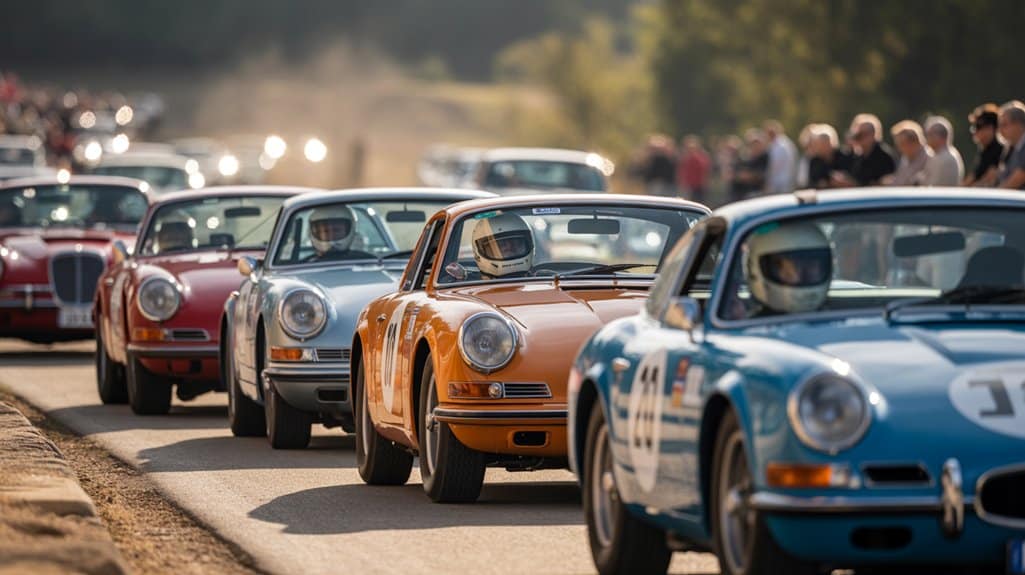
Uruguay’s streets will soon echo with the distinctive growl of classic engines as the 22nd Gran Premio del Uruguay gets underway on February 22, 2026. This year’s event draws 73 teams from across the globe, each piloting vintage machines manufactured between 1968 and 1985.
The competition covers 2,700 kilometers of diverse terrain, linking all 19 of Uruguay’s departmental capitals in a comprehensive tour of the country. Drivers navigate everything from coastal roads along the Atlantic to interior routes through cattle-ranching territory and wine regions.
Speed takes a backseat to precision in this rally. The Promedio System determines winners based on how closely teams maintain predetermined average speeds over each stage. Think of it as automotive golf, the goal is hitting your target time exactly, not finishing first.
Teams that arrive too early face the same penalties as those running late, making strategy and navigation skills more valuable than horsepower.
The vintage vehicle requirement creates a unique technical challenge. These cars lack modern GPS systems, electronic fuel injection, or sophisticated suspension technology. Crews rely on traditional rally equipment: paper route books, mechanical stopwatches, and analog speedometers to maintain their required averages across varying road conditions.
Teams traverse departments ranging from Montevideo’s urban sprawl to Rocha’s rural coastline, each presenting distinct challenges. Mountain passes in Rivera test engine performance at altitude, while the flat pampas of Soriano demand different pacing strategies entirely.
Key Takeaways
The 22nd Gran Premio del Uruguay “19 Capitales” Histórico takes place February 22-28, 2026, sending drivers across roughly 2,700 kilometers of Uruguayan terrain. This endurance rally connects every departmental capital in the country, creating a comprehensive tour through Uruguay’s diverse landscapes.
Classic automobiles built between 1968 and 1985 make up the field, though organizers enforce strict rules about authenticity. Cars must feature original components or period-correct replacements that match what manufacturers actually produced during those years. This keeps the event true to its historical focus rather than allowing modern modifications.
Competition centers on the Promedio System, which rewards drivers for maintaining precise target speeds instead of racing flat-out. Rally organizers assign specific average speeds for different sections, then penalize teams that arrive too early or too late at checkpoints. The system tests driving skill and navigation rather than just horsepower.
Five competitive stages make up the route, beginning with ceremonial activities in Montevideo on February 22. From there, teams navigate through Uruguay’s interior, hitting each of the 19 departmental capitals before returning to the coast. The rally covers everything from coastal plains to rolling hills in the interior.
Entry caps at 40 vehicles split across several categories. Pre-1976 models form one class, while classic 4×4 vehicles compete separately to account for their different capabilities. A special 1948 American Grand Prix revival class adds variety, featuring cars that represent that specific era of motorsport history.
Uruguay’s 22nd Gran Premio: Six Stages, 19 Capitals, 2,700 Kilometers

Classic car enthusiasts have something special to look forward to as Uruguay gears up for its 22nd Gran Premio del Uruguay “19 Capitales” Histórico, running February 22-28, 2026. This isn’t your typical road trip , drivers will cover roughly 2,700 kilometers connecting every single departmental capital in the country, weaving through national highways, back roads, and rural paths that showcase Uruguay’s varied landscape.
The event kicks off with a ceremonial start in Montevideo on February 22, but the real action begins the next day. Teams will make their way from the capital to Colonia, then continue north to Salto before heading east to Rivera, down to Cerro Largo, and finally to Maldonado on the coast before heading back to Montevideo. This route effectively creates a loop around the entire country, giving participants a complete tour of Uruguay’s geography and culture.
Seventy-three international teams from six different countries have signed up to participate. The Automóvil Club del Uruguay runs the show, and the government has officially recognized the rally as an event of national importance. What makes this rally particularly interesting is its focus on automotive history , only cars built between 1968 and 1985 can compete, putting vintage machines from racing’s most celebrated decades back on the road where they belong. The rally has partnered with Rotary Club Punta Gorda to launch Ruedas Solidarias, a social assistance program focused on collecting donations for local organizations working in food security and education.
The six-stage format breaks down what could be an overwhelming journey into manageable daily segments. Each stage connects different capitals while taking drivers through distinct regions of Uruguay, from the wine country near Colonia to the cattle ranches up north and the beach towns along the Atlantic coast.
Classic Cars From 1968 to 1985 Take the Road
The Gran Premio Del Uruguay restricts entry to vehicles manufactured between 1968 and 1985, creating a unique snapshot of automotive evolution. This seventeen-year period encompasses significant technological shifts in car manufacturing, from the height of American muscle car production through the oil crisis years that reshaped the industry.
Participants roll up in everything from Detroit powerhouses like the Oldsmobile 442 to European exotics such as the Ferrari Daytona. The rally also attracts owners of practical daily drivers from the era – Volvo wagons and sedans that families actually used for grocery runs and school pickups. This mix gives spectators a complete picture of what people were driving during those transformative decades.
The event serves a dual purpose beyond entertainment. Classic car rallies like this one document automotive history in motion, preserving knowledge about vehicles that might otherwise sit in garages or museums. The 1968 Oldsmobile 442 sold over 33,000 units that year, making it one of the most successful muscle cars of the era. Rally organizers maintain strict authenticity standards, requiring original or period-correct components that keep these machines true to their factory specifications.
Eligible Vehicle Models
Classic car owners looking to compete in Uruguay’s historic rally can choose from vehicles spanning seventeen years of automotive production. Cars manufactured between 1968 and 1985 meet the basic eligibility requirements, creating a diverse field that maintains the event’s traditional spirit.
The competition structure divides participants into distinct categories based on their vehicle’s age and specifications. Pre-1976 models form the main entry group, while cars from the full 1968-1985 period compete in a special invitation class with separate recognition opportunities. Classic 4×4 vehicles get their own dedicated category, accommodating drivers who prefer off-road capable machines.
| Vehicle Era | Class Type | Special Notes |
|---|---|---|
| Pre-1976 | Main Entry | Primary eligibility category |
| 1968-1985 | Special Invitation | Separate awards available |
| Classic 4×4 | Dedicated Class | Off-road capable vehicles |
| 1948 American | Revival Category | Grand Prix heritage models |
| Pre-1990 | Extended South America | Regional event variation |
Rally organizers use three main criteria to place vehicles into appropriate classes: manufacturing year, engine displacement, and technical specifications. This classification system prevents newer or more powerful cars from dominating older vehicles, giving every participant a realistic chance at competitive placement. The participant field is limited to a maximum of 40 cars to ensure manageable competition and preserve the event’s exclusive character.
Regional variations of the event extend eligibility to pre-1990 vehicles in certain South American competitions, while a revival category specifically honors 1948 American Grand Prix heritage models. These additional classes reflect Uruguay’s broader automotive culture and the rally’s connection to international racing history.
Preservation of Motorsport Heritage
When motorsport enthusiasts bring their vintage cars to Uruguay’s historic rallies, they’re doing something bigger than chasing trophies. These drivers become living keepers of automotive history, making sure classic racing doesn’t get forgotten by younger generations. The focus shifts to heritage conservation as meticulously restored vehicles from the 1968-1985 era fire up their engines on Uruguay’s winding mountain roads and coastal routes.
The sound of those old engines takes people back to a time when cars felt more connected to their drivers. You could feel every gear change, hear the engine’s mood, and sense the road through the steering wheel. Each polished chrome bumper and hand-tuned carburetor represents hundreds of restoration hours. These car owners are preserving mechanical skills that modern computerized vehicles don’t require anymore.
Uruguay’s rally scene proves that people still value the freedom of the open road. Drivers get to experience real competition without electronic assists or safety systems that modern racing requires. They’re making a conscious choice to celebrate automotive craftsmanship from an era when engineers built cars you could actually fix in your garage. The rallies show how the past can drive us toward new adventures, even as technology reshapes what it means to race. The Lavalleja Department continues to serve as a vital hub for these international rally events, connecting Uruguay’s rich motorsport tradition with contemporary classic car competitions.
73 International Teams Race Across Uruguay in February 2026
From six countries across the Americas, 73 racing teams will converge on Montevideo this February for an extraordinary adventure. Drivers and navigators arrive from Uruguay, Argentina, Colombia, Ecuador, the United States, and Paraguay, bringing their classic vehicles to test precision across the country’s varied landscapes.
The rally draws enthusiasts who treasure historic automobiles and embrace the challenge of long-distance touring. Teams will cover 2,724 kilometers while visiting all 19 departmental capitals, showcasing Uruguay’s deep-rooted automotive culture that dates back to the early 20th century.
Uruguay’s compact size makes it ideal for such events, drivers can experience coastal plains, rolling hills, and river valleys within relatively short distances. The route design takes advantage of this geographic diversity, offering participants everything from seaside roads to rural farmland crossings. Participants are encouraged to dress in period style, though modern materials are allowed for comfort.
| Stage | Route | Distance |
|---|---|---|
| 1 | Montevideo to Colonia | 530 km |
| 2 | Colonia to Salto | 566 km |
| 3 | Salto to Rivera | 443 km |
| 4 | Rivera to Melo | 328 km |
| 5 | Melo to Maldonado | 351 km |
Each stage presents distinct challenges. The opening leg from Montevideo to Colonia combines urban navigation with countryside touring along the Río de la Plata. Stage two heads northwest to Salto, crossing agricultural heartlands and approaching the Uruguay River. The third stage moves east toward the Brazilian border at Rivera, while stage four drops south through cattle country to Melo. The final push reaches the Atlantic coast at Maldonado, completing a comprehensive circuit of the nation.
How Does the Promedio System Reward Precision Over Speed?
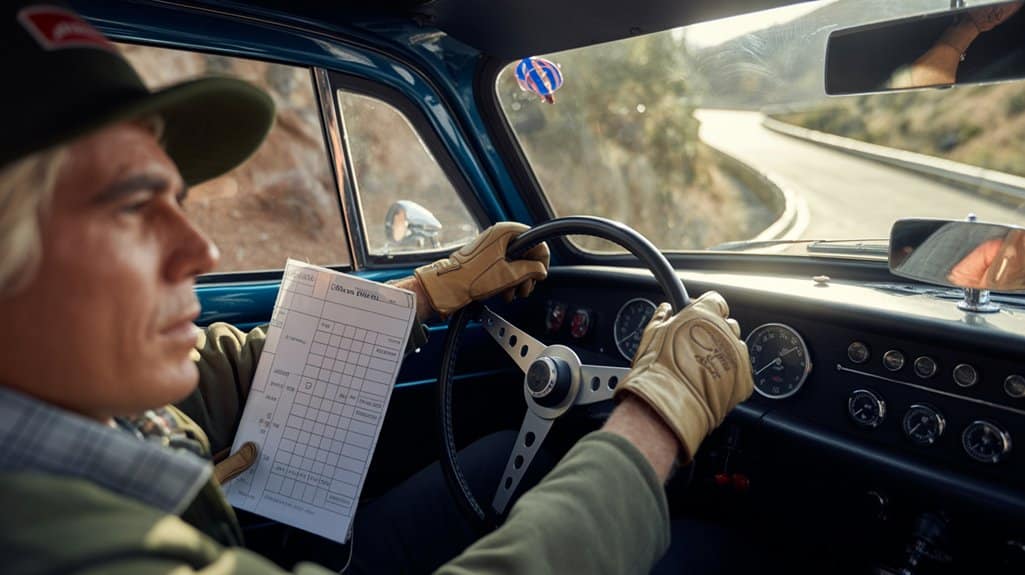
Unlike traditional motorsports where crossing the finish line first means victory, Uruguay’s Gran Premio follows a promedio system that transforms racing into a precision challenge. Teams abandon the pursuit of maximum speed and instead focus on hitting exact average speed targets that organizers establish for each stage.
Penalty seconds accumulate for every kilometer driven above or below the prescribed pace. Drivers who excel at throttle control and maintain steady speeds earn the greatest rewards. The concept resembles driving at precisely the posted speed limit, not faster, not slower.
This scoring method prevents dangerous overtaking while highlighting driving expertise. Vintage automobiles with varying performance capabilities compete on equal footing because engine power alone cannot secure a win. Championship teams regularly achieve target accuracy within 0.5 percent, demonstrating that calculated restraint consistently outperforms aggressive tactics.
The promedio approach originated from Uruguay’s rally community in the 1950s as a way to level competition between different vehicle classes. Modern GPS timing systems now track speed deviations to the second, making precise navigation and pace calculation essential skills for success.
Following the Route: Montevideo to Maldonado Stage by Stage
The Gran Premio del Uruguay enters its closing chapters as drivers tackle the demanding route from Maldonado back to Montevideo. Stage 5 sends competitors on a 351-kilometer stretch that cuts straight through Uruguay’s interior landscape. Teams depart Melo at 10:00 AM, navigating through the departments of Treinta y Tres and Lavalleja. The route passes through Minas, the capital of Lavalleja known for its mineral springs, and continues to Pan de Azúcar before drivers reach Punta del Este’s coastal boulevard by late afternoon.
The sixth and final stage begins at 8:00 AM from Punta del Este with the longest single stretch of the rally: 506 kilometers back to the capital. Crews drive through Rocha’s wetlands and cattle country, then cross through Velázquez and the historic town of Solís de Mataojo, where Spanish colonists first landed in 1516. This concluding push demands both mechanical reliability and driver concentration after five days of competition. Teams roll into Kibón in Montevideo by evening, having covered 2,724 kilometers and visited all nineteen departmental capitals that make up Uruguay’s administrative regions. Spectators are encouraged to arrive early at designated viewing areas to secure the best vantage points along the route.
What Makes Historic Rallying Different From Modern Motorsport?
The cars from the Gran Premio del Uruguay represent motorsport’s analog age, when drivers wrestled mechanical steering systems instead of monitoring digital displays. Engine sounds provided the primary feedback rather than electronic warning signals. Historic rally regulations deliberately maintain this simplicity, teams use mechanical differentials where modern cars employ computer-controlled systems, and the vintage technology prohibits GPS-assisted ride height adjustment or electronically managed suspension.
Navigation skills follow traditional methods. Drivers interpret handwritten pace notes while controlling machines that require constant physical input. Uruguay’s rally scene embraces this approach, reflecting the country’s broader motorsport culture that values mechanical knowledge over technological dependence.
Public road stages defined rally competition during its early decades. Night stages through small Uruguayan towns were common until safety concerns moved events to closed courses. The older cars feature basic safety equipment, simple roll cages and standard harnesses without the electronic monitoring systems found in contemporary vehicles. Four-wheel-drive wasn’t available on most rally cars until the 1980s, making vehicle control significantly more challenging. The Group B era of the early 1980s required manufacturers to produce only 200 units for homologation, creating some of rallying’s most legendary machines before the regulation ended in 1986.
This unassisted driving experience explains historic rallying’s appeal. Drivers develop genuine mechanical sympathy, understanding how their cars respond through direct physical feedback rather than computer interpretation. The sport preserves an era when success required upper body strength to manage heavy steering and the ability to diagnose mechanical issues by sound and feel alone.
Why Uruguay Protects This 95-Year Racing Tradition
Racing through nearly a century of history requires more than nostalgia, it demands national commitment. Uruguay’s motorsport heritage began in 1913, establishing deep roots in the country’s cultural identity. The sport’s significance extends far beyond trophies and checkered flags.
Motorsport became a symbol of freedom and national pride. Uruguayan driver Héctor Suppici Sedes made history by becoming the first non-Argentine to win major regional competitions. His victories proved that Uruguay could compete on equal terms with its larger neighbors. The 1948 Grand Prix de la América del Sur drew 138 vehicles across 6,000 miles of challenging terrain, demonstrating South America’s growing motorsport independence from European racing circuits.
Contemporary events pay tribute to these early pioneers who raced alongside legends such as Juan Manuel Fangio. Uruguay maintains this motorsport legacy because it embodies core national values of resourcefulness and determination. The racing tradition shows how smaller countries can challenge established powerhouses through innovation and dedication rather than size or resources. The regional series that began in 1939 established the foundation for organized motorsport competition that continues to inspire modern rallies. This enduring message connects with each new generation, ensuring the motorsport culture survives for future participants and fans.
References
- https://motorsports.com.uy/2026/01/inscripciones-abiertas-para-el-gran-premio.html
- https://motorsports.com.uy/2026/02/asi-sera-el-xxii-gran-premio.html
- https://www.xn--lamaana-7za.uy/deportes/abrieron-las-inscripciones-para-el-gran-premio-del-uruguay-19-capitales-historico-2026/
- https://www.montevideo.com.uy/Negocios-y-Tendencias/Gran-Premio-del-Uruguay-19-Capitales–Historico-2026-anuncia-su-largada-simbolica-uc953602
- http://www.19capitaleshistorico.com
- http://www.19capitaleshistorico.com/edicion/2026/rutas-y-etapas
- https://www.autoanuario.uy/post/el-automóvil-club-lanza-gran-premio-del-uruguay-19-capitales-histórico-2026
- https://www.montevideo.com.uy/Airbag/Gran-Premio-del-Uruguay-19-Capitales–Historico-2026-anuncia-su-largada-simbolica-uc953602
- http://www.19capitaleshistorico.com/edicion/2026/galerias
- https://www.youtube.com/watch?v=Qj6S2iso1N0