
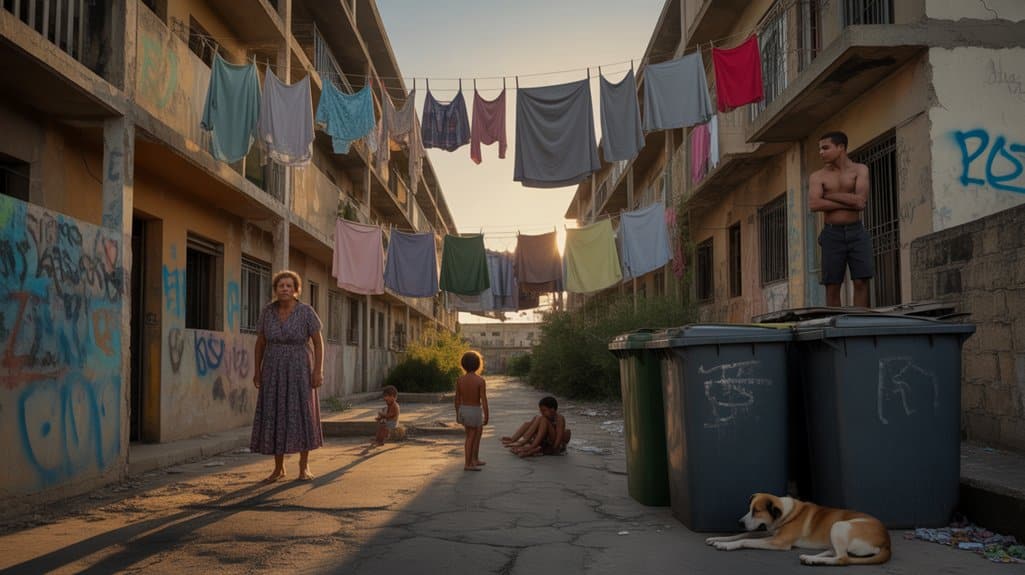
Marconi is a neighborhood where daily life presents significant challenges. Over 60% of residents live in serious poverty, and most children do not complete their schooling. The situation appears bleak in many respects.
Yet unexpected developments are occurring. Communities are building small networks of hope from the ground up. These efforts take concrete forms in the lives of residents.
Life Amid Danger in Marconi
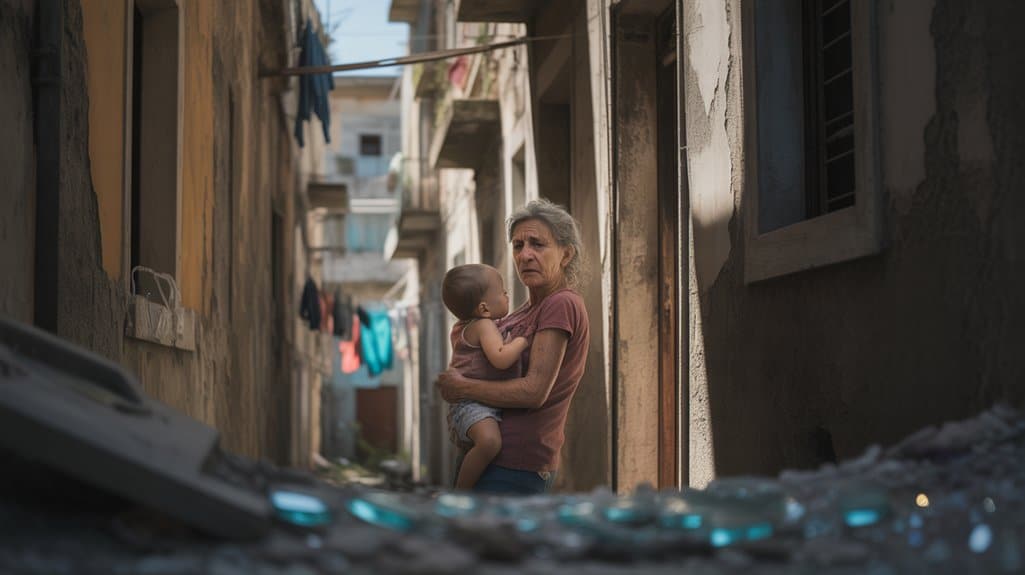
Montevideo carries a reputation as one of South America’s safer capitals, yet this image changes drastically in Marconi. Located on the city’s northern outskirts, this neighborhood presents a different reality , one that most Uruguayans prefer to avoid confronting.
Marconi’s crisis began in 1954, when the state distributed land plots and basic shacks to economically marginalized families. The goal was straightforward: house the poor and contain the problem. Decades later, that containment has become permanent. Extreme poverty affects approximately 60% of inhabitants. School dropout rates exceed 70% among children. Unemployment has eliminated realistic opportunities for entire generations.
This vacuum has filled predictably. Drug dealing operates openly as an economic lifeline. Rival gangs conduct nightly shootouts. Stray bullets kill bystanders uninvolved in any conflict. Minors commit violent crimes with minimal legal consequences. Police presence, rather than providing security, functions as another form of threat according to local residents.
Marconi did not reach this state through chance. Political neglect, structural poverty, and governance prioritizing removal over rehabilitation shaped the neighborhood. Understanding how a city’s most dangerous neighborhood developed requires examining this history and the residents living there now.
Marconi’s 1954 Government Origins
The Marconi neighborhood sits on the northern edge of Montevideo, Uruguay’s capital. The Uruguayan government established it in 1954 as a direct response to a housing crisis: thousands of households in extreme poverty lacked stable shelter, and the state sought an immediate solution.
The approach was straightforward, transfer land plots and basic housing structures to disadvantaged households with no other options. These were not conventional homes. Most were shacks, built quickly and without infrastructure common to established neighborhoods. Running water, sewage systems, and paved roads were either minimal or absent.
What “State-Donated Housing” Actually Meant
A common misunderstanding holds that the government built a functioning residential area. The donation of houses meant transferring ownership of rudimentary structures, often single-room constructions made from lightweight or recycled materials, to households effectively removed from the city’s visible spaces.
Glossary of pertinent terms:
- Disadvantaged households , Households at the margins of economic and social life, with limited access to employment, education, and healthcare.
- Shack (rancho in local terminology) , An improvised dwelling built from available materials, not designed for long-term habitation.
- State donation , Transfer of property from the government to private individuals without monetary exchange, as a social welfare measure.
- Urban periphery , The outer zones of a city, typically less developed and receiving fewer public services than central areas.
The Logic Behind the Location
Placing the neighborhood on the northern outskirts was not accidental. Latin American governments during the mid-20th century frequently relocated impoverished communities away from city centers to facilitate urban development and reduce their visibility. Marconi followed this pattern.
The name derives from Guglielmo Marconi, the Italian engineer credited with developing wireless radio transmission. Naming neighborhoods after figures associated with progress and modernity was common practice in that era, though such naming bore no relation to actual conditions inside those neighborhoods.
Structural Failures of the 1954 Initiative
The original plan assumed that providing shelter would suffice. Several structural problems were present from the start:
- No significant investment in schools or employment infrastructure.
- No long-term maintenance plan for the donated structures.
- No integration with Montevideo’s broader urban development.
Households received shelter but lacked surrounding conditions necessary for sustainable living. Over decades, as population grew and resources remained scarce, neighborhood conditions deteriorated. What began as a government welfare measure gradually became one of Montevideo’s most economically isolated zones, with approximately 60% of residents living in extreme poverty.
Causality and Historical Accuracy
Some accounts attribute Marconi’s problems primarily to its residents. This reverses actual causality. The structural decisions made in 1954, neighborhood location, construction standards, and investment priorities, created the conditions that shaped subsequent developments. The arriving households responded to a housing crisis they did not create. Deterioration resulted from sustained neglect rather than the characteristics of original residents.
State-Donated Shacks Spark Inequality
When a government donates a house, it appears to be a gift. The reality becomes more complex when that house is a shack, and an entire neighborhood is built on this foundation.
In 1954, the Uruguayan state donated plots of land and rudimentary housing to marginalized families on Montevideo’s northern outskirts. The neighborhood received the name of Guglielmo Marconi, the Italian engineer credited with developing wireless communication. The irony is striking: a neighborhood named after a man who connected the world now struggles to connect its residents to basic opportunities.
The Architecture of Disadvantage
State-sponsored housing initiatives operate through complex mechanisms that extend far beyond simple assistance. When Marconi was established, families received shacks rather than transitional housing with clear upgrade paths or subsidized apartments with maintenance support. The structures were modest, economically symbolic, and socially isolating.
Physical housing structures shape psychological outcomes. Environmental psychology research demonstrates that overcrowded, deteriorating living conditions correlate directly with increased stress levels, reduced educational motivation, and higher susceptibility to substance dependency. Marconi became a laboratory for this reality without intentional design.
Case Study 1: The School Dropout Spiral
Marconi currently experiences a school dropout rate exceeding 70% before students complete basic education.
A twelve-year-old resident grows up in a deteriorating structure her grandparents received from the state in the 1950s. The roof leaks during Montevideo’s rainy winters. Her parents are unemployed. The streets outside offer immediate economic alternatives , running errands for drug dealers generates faster income than diploma prospects promise.
The dropout rate reflects structural failure rather than cultural failure. When states provide substandard housing without accompanying investment in schools, healthcare, and economic infrastructure, compounding cycles emerge. Poor housing produces poor health outcomes. Poor health hinders school attendance. Hindered schooling limits employment options. Limited employment prospects make illegal economies appealing. The cycle perpetuates across generations.
The Political Economy of Charitable Neglect
A documented pattern exists in Latin American urban policy: marginalized neighborhoods receive sufficient intervention to generate political loyalty but insufficient investment to generate actual independence. Housing donations without infrastructure investment create dependency. Dependency produces predictable voting behavior. Reduced urgency to invest further follows. Political science identifies this cycle as clientelism.
The original 1954 housing initiative was not malicious in design. Intentions and outcomes remain different currencies. A policy beginning as social welfare can calcify into social control when follow-through fails to materialize.
Case Study 2: The Neighborhood Redefined by Crisis
Marconi is now widely recognized as Montevideo’s most dangerous neighborhood. Shootouts between rival groups occur routinely after dark. Stray bullets have claimed innocent lives. Drug addiction, particularly smokable cocaine paste known locally as pasta base, has altered entire streets’ social fabric.
The neighborhood’s identity has been fundamentally rewritten. Named after an inventor, it is now discussed primarily through crime statistics and danger warnings. This rebranding occurred through decades of insufficient state response to consequences of its own original policy.
Communities cannot sustain dignity when physical environments signal neglect consistently. Crumbling infrastructure communicates to residents that they are not worth maintaining. This message shapes behavior, aspiration, and self-perception across generations.
What Inequality Looks Like Up Close
Inequality manifests in texture rather than abstract terms. In Marconi, it appears as the distance between a state-donated shack in 1954 and a functional home in 2024. It exists in the gap between a child who drops out at twelve and one who graduates at eighteen. It occupies the space between a neighborhood named after innovation and one defined by survival.
Sixty percent of Marconi’s population currently lives in extreme poverty. This figure contrasts with Uruguay’s broader reputation as one of Latin America’s most progressive and socially developed nations. The contrast is not paradoxical but consequential , resulting from decisions made, investments withheld, and promises that stopped at shack doorsteps.
States that create conditions for neighborhood decline through policy decisions bear ongoing responsibility for the outcomes, even seventy years later. This determination establishes whether places like Marconi are treated as problems to be managed or failures to be repaired.
Poverty Rooted in Structural Neglect
Marconi, a neighborhood on Montevideo’s northern outskirts, was established in 1954 to provide housing for struggling families. The government distributed modest shacks with well-intentioned but poorly executed plans. Decades of structural inequality followed, trapping residents in cycles of hardship. Meaningful government accountability did not materialize.
| Factor | Impact |
|---|---|
| Inadequate housing | Intensified poverty |
| Limited schooling | Higher dropout rates |
| Scarce employment | Fueled drug trade |
Initial problems evolved into significant challenges. The effects of this neglect persist today.
Daily Survival Through Drug Dealing
Surviving in Marconi presents significant challenges. For many families, drug dealing has become a primary income source when legitimate employment opportunities remain scarce. This local drug economy functions as a survival strategy for struggling households rather than a chosen profession.
The decision to engage in drug dealing reflects desperation rather than ambition. Families facing food insecurity prioritize immediate needs over personal safety. Many community members acknowledge this reality, though they may not endorse it.
Systemic neglect over years created conditions that pushed residents toward dangerous alternatives. Limited economic opportunities and persistent unemployment left ordinary individuals with few viable options for supporting their families.
Minors Exploiting Legal Leniency
Drug dealing extends beyond adults. In Marconi, juvenile delinquency is prevalent, with children as young as ten participating in criminal activities.
Legal protections for minors reduce serious consequences, making them attractive to gangs:
- Minors receive lighter sentences than adults.
- Gangs deliberately recruit children to exploit these legal gaps.
- Young offenders often return to the streets quickly following arrest.
This cycle perpetuates itself. Families experience instability, schools lose students, and gangs acquire recruits. An entire generation becomes trapped in this pattern before reaching adulthood.
Bleak Outlook for Marconi Youth
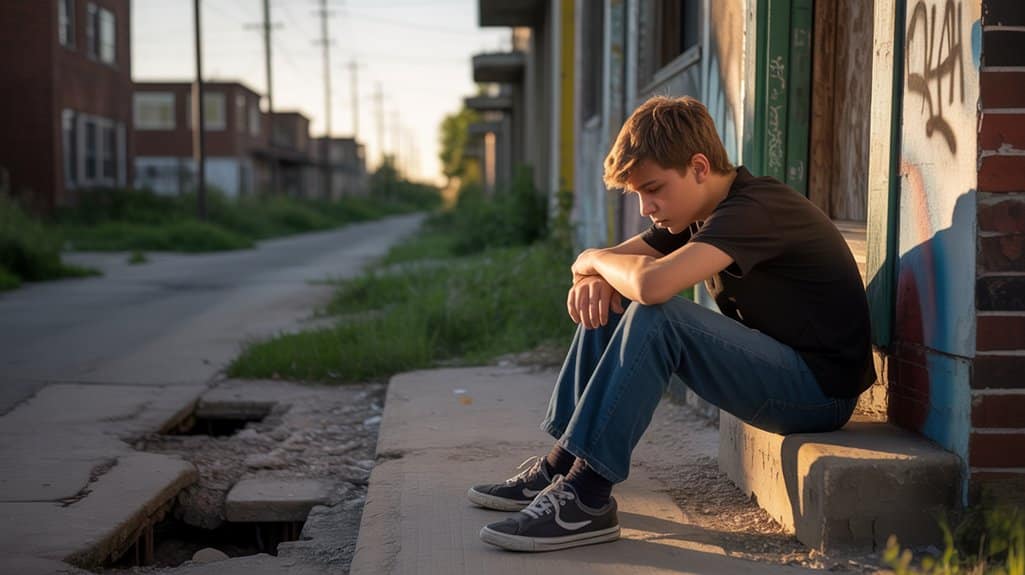
What happens to a child who grows up believing that the street corner is more dependable than the classroom? In Marconi, this is not a philosophical question , it is Tuesday morning.
Over 70% of children in this northern Montevideo neighborhood abandon school before completing their basic education. If ten children from Marconi are lined up, seven will enter adulthood without the credentials most employers require to schedule an interview. The remaining three become statistical anomalies, quietly celebrated as proof that escape is *possible*, even when it rarely is.
The dropout rate is not simply a symptom of laziness or indifference. It is the logical response to an environment where drug dealing provides faster, more reliable income than any career path requiring years of attendance and sacrifice. A fourteen-year-old watching an older cousin earn in one night what his mother earns in a week cleaning houses faces a genuinely difficult choice to stay in school.
The Economics of the School Door
A family of four in Marconi , a single mother, two teenage boys, and a younger daughter , illustrates this dynamic. The mother works informal jobs, earning inconsistently. The older boy, sixteen, drops out after repeated absences triggered by nighttime disturbances from nearby shootouts. Sleep and punctuality become luxuries. Within months, he gravitates toward peripheral gang activity , not out of admiration for violence, but because the alternative is watching his family eat less.
This story repeats with enough regularity that local residents describe it with the exhausted tone of someone narrating weather patterns. The tragedy is not that it happens. The tragedy is that almost everyone in the neighborhood can predict it happening before the child turns twelve.
Minors involved in violent crimes face considerably lighter legal consequences than adults , a structure designed for rehabilitation. In practice, it signals to organized crime that young recruits carry lower operational risk. Gang organizations understand this calculus better than most social workers.
An institution that repeatedly fails through underfunded schools, absent employment opportunities, and punitive streets creates a logical question: should individuals continue honoring their obligations to that institution? Most adults, if honest, would pause before answering.
The Scholarship That Never Arrived
A youth worker in Marconi attempted to connect a genuinely talented fifteen-year-old girl , sharp, curious, with notable mathematical aptitude , to an external educational program. The paperwork existed. The funding existed. Bureaucratic coordination between municipal offices did not. By the time the opportunity was processed, the girl had moved in with a boyfriend, become pregnant, and the window had closed.
The youth worker described this with the flat affect of someone who had watched the same sequence too many times to feel surprised by the outcome.
The generational dimension compounds everything else. Parents who dropped out raise children who drop out, not because they want that fate, but because the scaffolding required to imagine alternatives , stable housing, consistent nutrition, safety, access to networks outside the neighborhood , is simply not present in sufficient quantity.
Some older residents speak with cautious optimism about growing consciousness among younger individuals, a collective restlessness that might eventually translate into pressure for real change. The productive outlet for that restlessness depends almost entirely on forces that no individual child in Marconi controls.
This, perhaps, is the most uncomfortable truth of all.
Rising Violence, Shrinking Futures
In Marconi, children face significant obstacles from the outset. Over 70% abandon school early. Without formal education, many turn to drug dealing for survival. The cycle perpetuates poverty and limited opportunity.
Violence permeates daily existence. Nighttime shootouts occur regularly. Young people encounter dangers inappropriate for their age. Minors enter criminal networks with minimal accountability or intervention.
Community resilience persists despite these challenges. Some residents actively resist despair and work toward change. Desire for improved futures remains present among segments of the population, though progress advances slowly.
Demanding Community-Led Reform Initiatives
Many young individuals in Marconi carry heavy burdens before reaching adulthood. Community enhancement appears distant when survival demands immediate attention. Grassroots movements are nonetheless pushing for substantive change. Residents are demanding reform through three key efforts:
- Establishing neighborhood-led youth mentorship programs
- Creating safe spaces free from gang influence
- Pressuring local leaders for educational investment
These initiatives represent essential interventions. Without structured support, children face heightened risk of involvement in criminal activity. The community has identified its needs clearly. The critical question concerns whether decision-makers will respond appropriately to these demands.
Community Support Networks
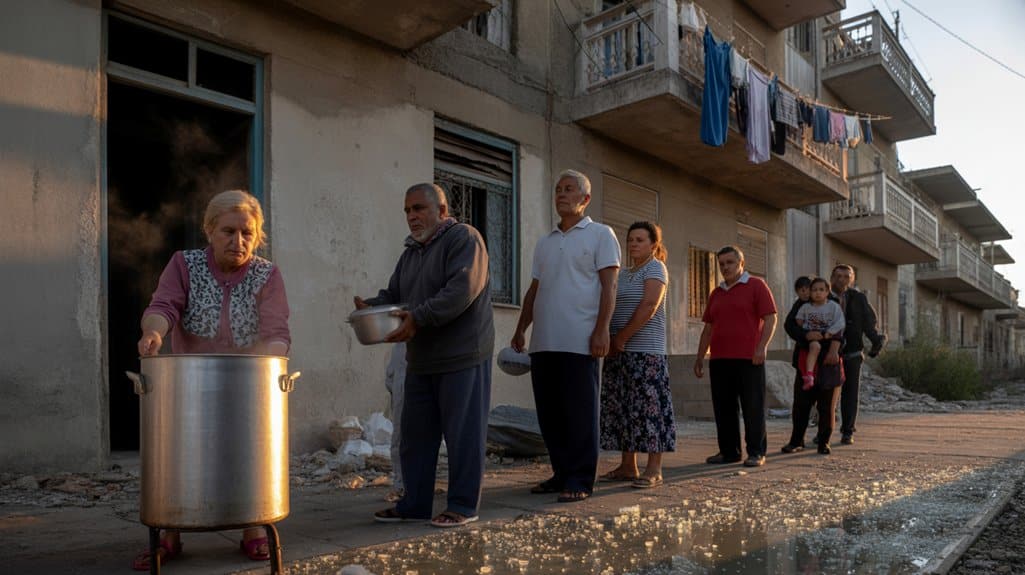
Informal Networks and Neighborhood Resilience
Official systems designed to support neighborhoods have largely withdrawn from places like Marconi. The answer to what holds these communities together exists in the space between neighbors, in shared meals, warnings before entering dangerous alleys, and grandmothers who know every family on their block by name.
Community support networks function like spider webs. Individual threads appear fragile enough to break under minimal pressure. Together, the structure bears weight far beyond what any single strand could support. Networks in Marconi operate with the same logic: informal, often invisible, and surprisingly resilient.
Formal Systems and Community Reorganization
With over 70% of children dropping out of school early and unemployment rates that drive families toward drug economies for survival, Marconi exists in a space where institutional support has become largely ceremonial. The state established the neighborhood in 1954, provided houses, and then, from many residents’ perspectives, left them to manage alone.
This pattern is not unique to Uruguay. Research on informal social networks in high-poverty urban areas consistently demonstrates that when formal institutions retreat, communities do not simply collapse. They reorganize. Sociologists term this phenomenon *social capital*: the value generated by trust, reciprocity, and shared norms within a group.
When legitimate institutional support disappears, individuals and families rely on their closest networks, not on state systems or financial institutions, as their actual safety net. This reality becomes more acute under conditions of violence, drug activity, and economic desperation.
The Unofficial Neighborhood Watch
Marconi residents have developed warning systems that function with notable efficiency. Locals alert each other about recent violence, dangerous areas, and movements of rival groups. This information spreads through doorstep conversations, messages passed between houses, and the heightened awareness that develops after years of navigating violent environments.
Local residents possess contextual knowledge about alley dynamics and established reputations. This information functions as community property. Outsiders without access to this knowledge become immediately identifiable as vulnerable. Those embedded in local networks move through the same streets with mental maps absent from official city planning documents.
This informal safety structure has genuine limitations. It does not stop violence. It does not protect all residents equally. However, it operates as a functional harm-reduction mechanism in the absence of reliable policing, particularly given local perceptions of police conduct as abusive and largely unaccountable.
The Drug Economy as Survival Structure
Drug dealing has become, for some families in Marconi, a survival mechanism embedded within social networks. When young people enter distribution structures, they often gain simultaneous access to income, identity, community, and protection.
This does not make the drug economy beneficial. It makes it functional within a broken system, a more uncomfortable reality than simple condemnation allows.
The sociologist Philippe Bourgois documented similar patterns in East Harlem in *In Search of Respect*, demonstrating how underground economies fill voids left by absent legitimate opportunities. In Marconi, minors involved in violent crimes face lenient legal consequences, a detail reflecting a justice system uncertain how to process children structurally failed long before committing any crime.
Mutual Aid and Community Bonds
Quieter forms of mutual aid persist alongside survival mechanisms. Residents supervise each other’s children. Older community members maintain institutional memory about neighborhood history, original families, and decades of change. Despite widespread caution toward outsiders, a rational protective response, locals demonstrate clear trust and loyalty within their community.
Residents’ refusal to engage with outside observers functions as a boundary and a form of community protection.
Implications for Marginalized Communities
Marconi exemplifies extreme conditions but represents a typical human response. Every marginalized community develops parallel support structures when official systems fail. The critical question is not whether these networks exist, they always do. Rather, the question concerns whether broader society will strengthen them with actual resources or continue documenting them through academic observation while conditions remain unchanged.
The informal resilience already present in communities like Marconi could serve as a foundation for genuine development. Converting this resilience into sustainable opportunity requires substantive institutional commitment rather than documentation alone.
Surveillance Cameras Monitoring Crime
Surveillance cameras have become allies in Marconi’s fight against crime. Installed across key areas, they monitor activity continuously. While their effectiveness has limitations, they provide valuable evidence. When violence occurs, footage helps identify suspects, critical in a neighborhood where witnesses remain silent due to fear. Cameras alone cannot rebuild community trust. Residents must see that footage leads to concrete outcomes: arrests and justice. Without this follow-through, even advanced technology loses its impact. Real change depends on the response to what cameras record.
Books on Urban Poverty
Books addressing urban poverty have become significant community tools in Marconi. Residents share these titles among neighbors, sparking conversations about systemic inequality and urban resilience.
Three titles demonstrate measurable impact:
- *Pedagogy of the Oppressed* , Paulo Freire
- *The Working Poor* , David Shipler
- *Evicted* , Matthew Desmond
Each work articulates what residents experience but rarely encounter in written form. This recognition proves consequential. When individuals encounter their own struggles reflected in text, meaningful change occurs. Communities begin formulating more substantive questions. Such questions create pathways toward concrete progress.
Vocational Skills Workshops Offered
Vocational skills workshops represent a significant development in Marconi. These programs provide practical skill development to residents facing employment barriers.
| Workshop | Duration | Outcome |
|---|---|---|
| Carpentry | 3 months | Furniture building |
| Electrical Work | 4 months | Home wiring skills |
| Sewing | 2 months | Garment production |
Vocational training equips participants with applicable skills and hands-on experience. Participants gain confidence through competency development. Young adults access viable career pathways. The workshops address immediate employment needs while building long-term prospects through structured skill acquisition.