
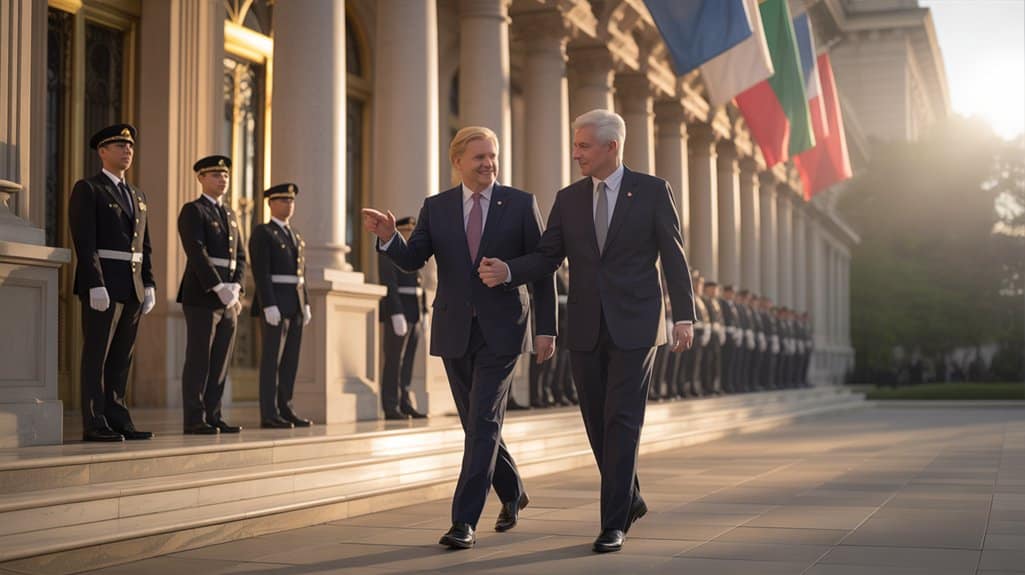
Uruguay’s President Orsi is heading to China this February, drawing significant attention from diplomatic circles. This marks the first visit by a Latin American leader to China in 2026, positioning Uruguay at the center of regional trade discussions.
The delegation includes 150 people, a mix of government officials and business representatives who plan to explore concrete trade agreements. Uruguay’s economy relies heavily on agricultural exports, particularly beef and soybeans, making China’s market of 1.4 billion consumers an attractive destination for these products.
China already ranks as Uruguay’s second-largest trading partner after Brazil. Bilateral trade between the countries reached $3.2 billion in 2025, with Uruguay exporting primarily raw materials while importing manufactured goods and machinery. The upcoming meetings could expand these existing commercial relationships.
The visit comes as Uruguay seeks to diversify its export markets beyond traditional partners in South America and Europe. President Orsi’s administration has prioritized strengthening ties with Asian economies as part of this strategy.
The business leaders accompanying him represent sectors including agriculture, logistics, and renewable energy, areas where both countries see potential for collaboration.
Chinese investment in Latin American infrastructure projects has grown substantially over the past decade. Uruguay’s port facilities and strategic location could benefit from similar partnerships, potentially improving the country’s position as a regional trade hub.
Key Takeaways
President Orsi’s weeklong trip to China from February 1-7, 2026 breaks new ground as the first Latin American presidential visit there this year. The timing signals Uruguay’s eagerness to deepen ties with its second-largest trading partner while other regional leaders focus on domestic priorities.
The delegation traveling with Orsi tells the story of Uruguay’s economic ambitions. Ninety companies joined the 150-member group, spanning everything from traditional cattle ranchers to tech startups looking for Chinese investment. This business-heavy approach reflects Uruguay’s practical diplomacy, the country’s leaders prefer deal-making to grand speeches.
Trade numbers explain why China matters so much to this small South American nation. Bilateral commerce jumped from $2.5 billion in 2018 to $7.5 billion today, making China Uruguay’s gateway to Asian markets. Beef exports drive much of this growth, though Uruguayan officials expect the visit to open new sectors beyond traditional agriculture.
Uruguay’s unique position in 2026 gives Orsi unusual diplomatic clout during these talks. The country simultaneously chairs three major international groups, the G77 developing nations bloc, the Latin American CELAC forum, and the MERCOSUR trade alliance. China values partnerships with countries that can influence broader regional policies, not just bilateral deals.
Negotiators from both sides expect to sign more than a dozen agreements during the visit. The package includes expanded beef quotas, joint university research programs, technology transfers, and Chinese funding for Uruguay’s aging infrastructure. Each agreement builds on existing partnerships rather than creating entirely new frameworks, suggesting both countries see this as deepening an established relationship rather than launching something unprecedented.
What’s Happening: President Orsi’s February 2026 State Visit to China
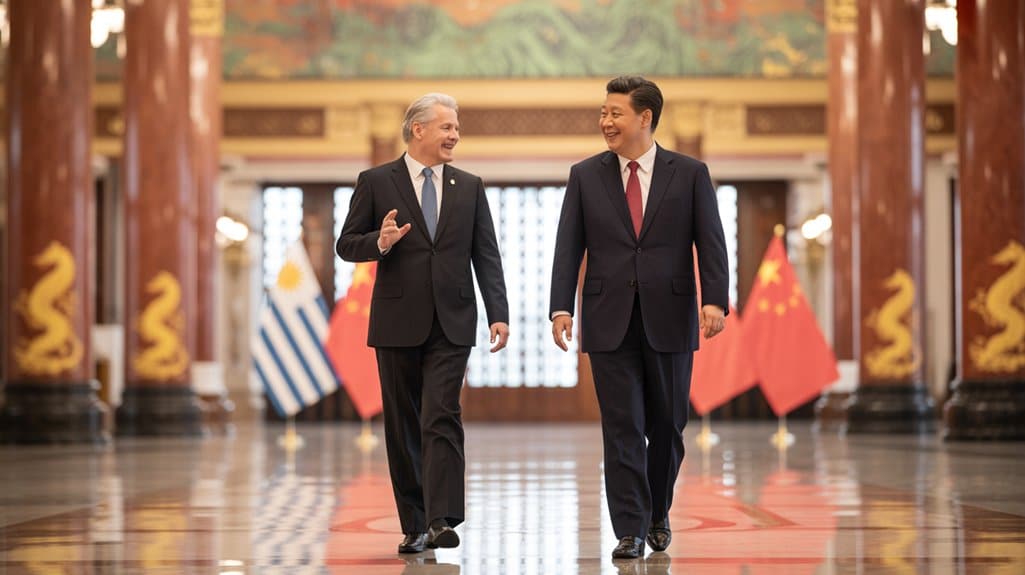
Uruguay’s President Yamandú Orsi heads to China this February for his first state visit, a week-long trip from February 1-7 that puts him in the spotlight as the year’s first Latin American leader to make the journey. Beijing tops his agenda with direct talks alongside President Xi Jinping, then he moves on to Shanghai for additional meetings.
The itinerary mixes serious diplomacy with cultural immersion. Orsi will walk the Great Wall and explore the Palace Museum on day two, getting a firsthand look at thousands of years of Chinese history. The real business happens around the conference table, where both countries plan to ink deals on scientific cooperation, technology sharing, and environmental projects.
This visit matters for Uruguay’s economic future. Orsi wants to boost trade flows between the nations and draw Chinese investment into Uruguayan projects. The small South American country of 3.4 million people has built a reputation for punching above its weight diplomatically, and Orsi aims to keep that tradition alive by securing benefits for his country without compromising Uruguay’s ability to chart its own course internationally. Discussions will address international and regional issues of mutual interest to both nations.
Who’s Coming: Uruguay’s 150-Person Delegation of Officials and Business Leaders
President Orsi’s Beijing trip includes roughly 150 people, making this the largest business delegation any Uruguayan president has taken on a state visit. The group brings together cabinet ministers, foreign affairs officials, and leaders from multiple provinces across the country.
What sets this delegation apart is the strong business presence. Representatives from around 90 companies are making the journey, covering sectors from agriculture to manufacturing. These business leaders want direct access to Chinese markets and investment partners.
The delegation breaks down into several key groups. Government officials focus on building strategic partnerships between the two nations. Business representatives prioritize opening new trade channels and securing investment deals. Provincial leaders see opportunities for regional development projects, while the diplomatic team works on strengthening bilateral relations.
Agricultural companies make up a significant portion of the business contingent. Uruguay’s beef, soybeans, and dairy products already have markets in China, but these exporters want to expand their reach and negotiate better terms. Manufacturing and service companies are also well-represented, looking to either sell into Chinese markets or attract Chinese investment back home. The visit aims to deepen ties through political dialogue and economic cooperation, particularly focusing on the Belt and Road Initiative.
| Delegation Type | Number of Members | Primary Focus |
|---|---|---|
| Government Officials | Cabinet ministers & agencies | Strategic partnership |
| Business Leaders | Representatives from 90 firms | Trade opportunities |
| Provincial Leaders | Multiple provinces | Regional development |
| Foreign Affairs | Diplomatic team | Bilateral relations |
| Agricultural Sector | Export-focused enterprises | Market access |
Why Uruguay Holds Triple Leverage in 2026 Negotiations
Uruguay enters 2026 talks holding an extraordinary diplomatic hand. The small South American nation chairs the G77 and China coalition, which brings together 134 developing countries that represent roughly two-thirds of UN membership. This role puts Uruguay at the center of major global negotiations on trade, climate, and development issues.
The country’s influence extends well beyond this global platform. Uruguay currently holds the rotating presidency of CELAC, the Community of Latin American and Caribbean States, giving it direct coordination power over 33 nations in the Western Hemisphere. At the same time, Uruguay maintains a prominent leadership position within MERCOSUR, the trade bloc that includes Brazil, Argentina, Paraguay, and Bolivia.
This triple alignment creates something rarely seen in international diplomacy. Uruguayan negotiators can speak for developing nations worldwide through the G77, coordinate regional Latin American positions through CELAC, and leverage the economic weight of MERCOSUR’s combined markets. Few countries have ever held such overlapping spheres of influence simultaneously, especially nations with Uruguay’s modest size of just 3.5 million people. Uruguay’s commitment to sovereignty and multilateralism positions the nation to resist hegemonic pressures while expanding its strategic space in negotiations.
G77 and China Chair
Timing can be everything in international diplomacy, and Uruguay just stepped into a remarkable moment. The country assumed the G77+China chairmanship at UN Headquarters in New York on January 14, 2026, taking over from Iraq. This coalition brings together developing nations to advance their shared economic and political interests on the global stage.
China’s Foreign Ministry spokesperson Guo Jiakun immediately voiced support, expressing hopes for strengthened solidarity among member countries. The diplomatic backing signals continuity in the group’s approach to tackling global challenges together.
Uruguay has outlined clear priorities for its leadership term. The country plans to focus on poverty eradication and reducing inequality between nations, strengthening health and education systems across the developing world, coordinating how countries implement the UN’s 2030 Sustainable Development Goals, and ensuring all decisions respect each nation’s unique circumstances while building consensus.
Foreign Minister Mario Lubetkin stressed that Uruguay will defend the group’s collective interests while working to strengthen the United Nations’ overall effectiveness. His comments reflect Uruguay’s longstanding commitment to multilateral diplomacy and international cooperation. The organization plays an irreplaceable role in international affairs as a pillar defending multilateralism and improving global governance.
UN Secretary-General Antonio Guterres praised Uruguay as a “strong pillar of multilateralism,” pointing to the country’s natural alignment with peace and social justice values. This recognition builds on Uruguay’s reputation as a bridge-builder in regional and international forums, where it consistently advocates for dialogue over confrontation.
CELAC Presidency Powers
Beyond its new role at the United Nations, Uruguay just secured another major leadership position that amplifies its diplomatic reach. Come March 2026, the country takes over the rotating CELAC presidency, putting this small nation in charge of coordinating meetings for 33 countries that represent over one billion people across Latin America and the Caribbean.
CELAC’s influence stems from Uruguay’s ability to shape the agenda. The presidency means they’ll host the Summit of Heads of State and determine which regional issues get top billing. This timing works perfectly with their other diplomatic roles, creating what analysts describe as overlapping spheres of influence.
Uruguay’s approach makes sense when you look at the bigger picture. Managing three significant positions at once, G77 Chair, CELAC presidency, and SELA Vice-Chair, gives them outsized influence in trade talks and regional policy discussions. Uruguay will chair Mercosur simultaneously in 2026, providing unprecedented coordination across multiple platforms. For a country of 3.4 million people, this concentration of leadership roles represents an exceptional opportunity to punch above its weight in international affairs.
Mercosur Leadership Role
Power concentrates when multiple leadership roles align under one nation’s control. Uruguay finds itself in exactly this position during 2026, simultaneously holding the G77 chairmanship while directing Mercosur’s rotating presidency. President Yamandú Orsi will oversee key diplomatic events, including the signing of the long-awaited EU trade agreement. These overlapping responsibilities amplify Uruguay’s influence in international negotiations.
Uruguay’s 2026 strategic position encompasses:
- G77 leadership representing 134 developing countries
- Mercosur presidency coordinating regional economic policy
- EU agreement implementation creating new trade pathways
- Diplomatic leverage during heightened global trade disputes
The small South American nation uses this convergence to advance regional integration within Mercosur. Uruguay continues pushing cooperation initiatives even while pursuing independent trade discussions with China, a move that has created friction with some regional partners. The country’s ability to balance these competing interests while managing both hemispheric and continental trade relationships demonstrates how strategic timing can multiply a nation’s diplomatic reach beyond its economic size. Foreign Affairs Minister Mario Lubetkin emphasized that 2026 represents a critical moment for the UN as Uruguay assumes its leadership position.
Regional cooperation takes on new dimensions when a single country coordinates developing world advocacy alongside continental trade bloc management. Uruguay’s dual role positions it as a bridge between global south interests and Latin American economic integration.
What Uruguay Wants Beyond Agricultural Exports
Uruguay’s economy has evolved well past its agricultural foundation. Services exports now represent nearly 30% of total exports, bringing in $6.95 billion in recent years. This shift demonstrates how the country has diversified its economic base.
The government actively seeks partnerships that can strengthen its technology sector and create access to international markets. Uruguay’s leaders recognize that strategic alliances in specific areas could accelerate economic transformation.
Information technology presents significant opportunities for growth. The country has invested in digital infrastructure and education, creating a skilled workforce that can compete globally. Professional consulting services have also expanded, with Uruguayan firms offering expertise to regional clients. The telecommunications sector has achieved 100% digitalization of main lines, supporting the country’s technological advancement.
Renewable energy represents another area where Uruguay has made substantial progress. The country generates nearly all its electricity from renewable sources, primarily wind and hydroelectric power. This achievement positions Uruguay to export both energy and technical knowledge to neighboring countries.
These developments point toward Uruguay’s potential to become a regional center for innovation and foreign investment. The transition from an agriculture-dependent economy to a diversified, service-oriented one creates new possibilities for international collaboration.
Technology and Innovation Cooperation
The country is building its tech future around four main pillars: computer chips and AI systems, life sciences research, digital security frameworks, and the physical networks that connect everything together.
What sets Uruguay apart is its complete fiber-optic coverage – every corner of the country has high-speed internet access. The government actively welcomes experimentation with new technologies, creating an environment where startups can test ideas without excessive red tape. Companies can launch operations quickly through the Single Window for Investments, a streamlined system that cuts through bureaucratic delays.
Uruguay’s geographic position and trade relationships give it unique advantages. The country maintains strong commercial ties with both North American and European markets, while sitting at the heart of South America’s economic zone. This connectivity, combined with political stability and tech-friendly policies, positions Uruguay as a testing ground where innovations can be developed and refined before expanding across the region.
The focus on biotechnology leverages Uruguay’s agricultural expertise, while cybersecurity initiatives aim to establish the country as a trusted hub for data processing and digital services. These aren’t just government ambitions – they reflect real investments in education, infrastructure, and regulatory frameworks designed to support long-term technological development. The recently launched Uruguay Innovates program aims to streamline these efforts by strengthening connections between the state, academia, and private sector to boost research and entrepreneurship.
Market Diversification and Investment
Market Diversification and Investment
Beef and dairy farms shaped Uruguay’s economy for generations, but the country’s leaders are charting a new course. The numbers tell the story, cellulose now makes up 20% of all goods exports in 2024, pulling ahead of traditional beef sales for the first time.
The government set up a new agency that cuts through red tape for entrepreneurs starting businesses. Companies that expand into international markets get tax breaks, and foreign scientists moving to Uruguay receive special residency benefits that make relocation smoother.
| Sector | Progress |
|---|---|
| Cellulose | $2.54 billion in exports |
| Pharmaceuticals | Growing steadily |
| Software | Expanding rapidly |
| Forestry | 6,000 new jobs created |
| Energy Projects | $500 million approved |
Trade officials are working to establish partnerships with 160 countries. Two new deep-water ports are under construction to speed up cargo movement. Free trade zones give companies tax advantages when they use Uruguay as a base for distributing products across South America. Officials have reduced trade concentration in Mercosur from 50% to 27% over a decade, spreading commercial relationships across more markets.
The strategy balances innovation with tradition, building new industries while maintaining the agricultural foundations that still employ thousands of families. Cellulose production alone generated $2.54 billion in export revenue, proving that processed wood products can compete with livestock on the global stage. The forestry sector created 6,000 jobs, many in rural areas where economic opportunities were previously limited to farming.
Energy projects worth $500 million received government approval, positioning Uruguay to export clean electricity to neighboring countries. Software companies are expanding their operations, taking advantage of Uruguay’s educated workforce and stable internet infrastructure.
Why China-Uruguay Relations Matter Despite U.S. Concerns
Despite growing pressure from Washington, Uruguay has chosen to enhance its relationship with China, and this choice reflects practical realities rather than political ideology.
China’s appeal lies in concrete benefits, not political pressure. Economic diversification strengthens Uruguay’s position rather than creating dependency.
The partnership brings measurable results:
- Trade volume tripled from $2.5 billion in 2018 to $7.5 billion today
- China buys Uruguay’s beef, soybeans, and wool, products that form the backbone of the economy
- Infrastructure projects focus on renewable energy and port modernization
- Student exchange programs and Confucius Institutes create new academic pathways
Every administration since 2013 has deepened ties with Beijing, regardless of party affiliation. This consistency across the political spectrum demonstrates national consensus. Uruguay continues robust relationships with the United States, European Union, and fellow MERCOSUR members Brazil and Argentina. The country isn’t picking winners and losers, it’s maximizing opportunities through strategic partnerships that serve its citizens’ interests.
Small nations like Uruguay survive by staying flexible. With only 3.5 million people, the country cannot afford to limit its options based on great power rivalries that don’t directly concern its welfare. Uruguay’s strategic geographical position along the Uruguay River and Río de la Plata, combined with natural deep-water ports, makes it an invaluable logistics hub for regional trade.
What Deals and Announcements to Expect From the Visit

President Orsi’s weeklong state visit to China will produce over a dozen concrete agreements covering beef exports, university partnerships, and technology cooperation. The 150 business leaders accompanying him are securing deals that extend Uruguay’s economic reach beyond its traditional agricultural exports.
Meat producers stand to gain the most immediate benefits through expanded access to Chinese markets. The agreements open new channels for Uruguay’s beef industry, which has built a strong reputation for quality among international buyers.
Universities and research institutions will establish formal partnerships that connect Uruguayan academics with their Chinese counterparts. These collaborations focus on practical applications in science and technology rather than abstract research projects.
The visit produces a specific roadmap for diversifying what Uruguay sells to China. While soybeans, beef, and cellulose remain core exports, the agreements identify new products that could find markets among Chinese consumers. This expansion helps reduce Uruguay’s dependence on a narrow range of agricultural commodities.
Technical cooperation receives particular emphasis, giving Uruguay’s smaller economy access to Chinese expertise in areas like environmental protection and industrial development. China already ranks as Uruguay’s largest trading partner, making these deeper ties a natural progression of an existing relationship. The visit aligns with Uruguay’s triple chairmanship in 2026 of the G77 and China, CELAC, and Mercosur, positioning the country as a regional bridge for broader cooperation initiatives.
References
- https://english.xzxw.com/xwzx/2026-02/02/content_6757866.html
- https://en.dahe.cn/2026/02-02/2051161.html
- https://en.chinadiplomacy.org.cn/2026-02/01/content_118311173.shtml
- https://news.jschina.com.cn/yw/202602/t20260202_s6980594be4b0263ab0669ed8.shtml
- https://www.youtube.com/watch?v=WK_97VGF_J8
- https://latinamericannewsdigest.com/white-house-closely-watches-uruguayan-presidents-visit-to-china/
- https://news.cgtn.com/news/2026-01-31/What-to-expect-from-Uruguayan-president-s-state-visit-to-China-1Ko63ocG82Q/p.html
- https://www.youtube.com/watch?v=68h65BlM1hw
- https://en.people.cn/n3/2026/0202/c90000-20421626.html
- https://english.news.cn/20260201/cb77acf788ee4fa793eb74386abc51bc/c.html