
The Cambridge Centre for Alternative Finance has positioned Argentina and Uruguay among the world’s top 10 Bitcoin mining destinations, a ranking that highlights South America’s aggressive push into cryptocurrency infrastructure despite persistent regulatory uncertainties. Both nations are leveraging abundant renewable energy resources, particularly Uruguay’s hydroelectric capacity, to attract mining operations fleeing China’s restrictions. However, Argentina’s inflation crisis complicates long-term investment strategies, while Uruguay faces infrastructure limitations that could throttle expansion plans.
Note: *Cambridge Centre for Alternative Finance* – A research institute that tracks global cryptocurrency adoption and mining activity through comprehensive data collection and analysis.
South America’s Emergence as a Global Bitcoin Mining Hub

While traditional mining powerhouses like China and Kazakhstan have dominated headlines with their restrictive policies and infrastructure challenges, South America has quietly positioned itself as an increasingly attractive destination for Bitcoin mining operations. The region’s abundant renewable energy resources, particularly hydroelectric, wind, and solar power, provide miners with sustainable alternatives to fossil fuel-dependent operations elsewhere. Geographic diversity across varied climates offers operational flexibility that miners desperately need as regulatory pressures mount globally. The market potential remains largely untapped, with several countries still developing cryptocurrency frameworks rather than imposing outright bans. Investment growth has accelerated significantly, evidenced by major partnerships like Tether’s collaboration with Adecoagro and MARA Holdings’ infrastructure expansion, signaling institutional confidence in the region’s long-term viability for large-scale mining operations. The South American bitcoin mining server market is experiencing robust expansion with projections showing 12.6% annual growth through 2033.
Cambridge University Data Reveals Regional Mining Dominance
The Cambridge Centre for Alternative Finance has released comprehensive data that fundamentally reshapes understanding of global Bitcoin mining distribution, surveying 49 mining firms across 23 countries to capture nearly half of all network activity. The study reveals a stark concentration of mining power, with North America dominating through capital-intensive operations and advanced infrastructure access. However, the data exposes critical gaps in documenting South American mining developments, particularly Argentina’s Growth and Uruguay’s Strategy in leveraging unique energy economics.
While 41% of surveyed firms are publicly listed, the research methodology struggles to capture decentralized operations across emerging markets. The industry’s transition toward sustainable energy has reached 52.4% globally, representing a significant shift from previous fossil fuel dependence. The 138 TWh annual consumption figure likely underrepresents regional players who operate outside traditional tracking systems, frustrating efforts to accurately measure the true scope of global mining distribution and energy impact.
Paraguay’s Renewable Energy Advantage and Regulatory Challenges
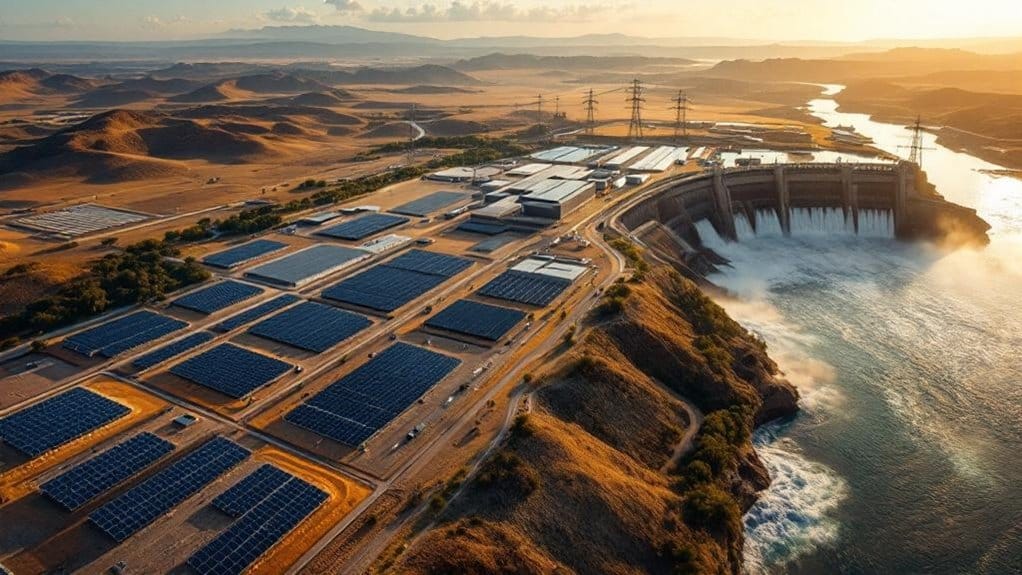
Paraguay’s hydroelectric abundance positions the landlocked nation as South America’s most compelling Bitcoin mining destination, yet regulatory turbulence threatens to undermine this natural advantage. The Itaipu Dam powers over 90% of the country’s electricity grid with renewable energy, delivering some of the world’s lowest electricity costs. HIVE Digital Technologies operates a 100 MW facility entirely on hydroelectric power, demonstrating the sector’s energy sustainability potential. The government-owned ANDE generates approximately $12 million monthly from cryptocurrency mining operations across the country.
However, regulatory hurdles multiply as lawmakers grapple with infrastructure strain. Forty-five licensed operations seek 2,000 MW capacity while illegal miners cost $60 million annually in the Alto Paraná region alone. April 2024’s proposed 180-day mining moratorium, citing fifty power interruptions, exemplifies government uncertainty. Despite Senate support for mining investments, policy direction remains frustratingly fluid, leaving operators navigating an increasingly intricate bureaucratic maze.
Tether’s $2 Billion Investment Strategy Across Latin America
Beyond Paraguay’s regulatory uncertainties, Tether has committed over $2 billion to reshape Latin America’s financial environment through strategic acquisitions and infrastructure investments that position the stablecoin issuer as the region’s dominant digital asset force. The tether investment strategy spans multiple fronts across Latin America, including a Series A funding round for Chilean exchange Orionx, which operates payment infrastructure across Chile, Peru, Colombia, and Mexico. Tether’s aggressive expansion targets the region’s massive unbanked population, leveraging USDT integration to bypass traditional banking limitations that plague millions of citizens. The company’s diversification extends beyond crypto, acquiring a 70% stake in Adecoagro, a $1.5 billion agriculture and energy conglomerate, demonstrating how digital asset companies are infiltrating real-world economic sectors to establish comprehensive financial ecosystems.
Uruguay’s Mining Infrastructure Expansion and Strategic Positioning
Momentum toward sustainable cryptocurrency operations has propelled Uruguay into Latin America’s spotlight as Tether establishes its ambitious mining infrastructure across the small nation’s renewable energy terrain. The strategic positioning leverages Uruguay’s 98% renewable electricity production, creating a compelling foundation for energy sustainability that attracts global mining operations seeking competitive advantages.
Uruguay mining expansion demonstrates three critical strategic benefits:
- Political stability and regulatory clarity that reduces operational risks compared to volatile neighboring markets
- Advanced grid infrastructure supporting seamless integration into global mining networks
- Geographic diversification that strengthens Bitcoin’s hash rate distribution against centralization threats
This infrastructure growth positions Uruguay as a regional hub, where mining facilities contribute to network security while capitalizing on abundant wind and hydropower resources that frustrated miners elsewhere cannot access. Tether’s recruitment of energy experts and technical professionals signals the company’s commitment to building local expertise and strengthening Uruguay’s position in the global mining ecosystem.
Adecoagro’s Integration of Agriculture With Bitcoin Mining Operations
Adecoagro’s innovative partnership with Tether Holdings converts agricultural waste into Bitcoin mining power, creating a game-changing model that frustrates traditional energy companies watching surplus renewable capacity generate consistent revenue streams. The company operates across 210,400 hectares in Argentina, Brazil, and Uruguay, leveraging 230+ MW of renewable energy from sugarcane processing and solar installations. This agricultural collaboration alters bagasse waste into mining fuel, while energy diversification shields operations from volatile commodity markets. Their mining capacity could generate approximately 6.9 exahashes per second, representing 1.6% of Bitcoin’s global network. The closed-loop system demonstrates how agricultural firms can dominate digital asset mining, establishing new revenue channels that bypass traditional energy market constraints. The partnership allows Adecoagro to transition from selling excess energy on spot markets to securing more stable long-term mining contracts.
Energy Resources and Competitive Advantages in the Region
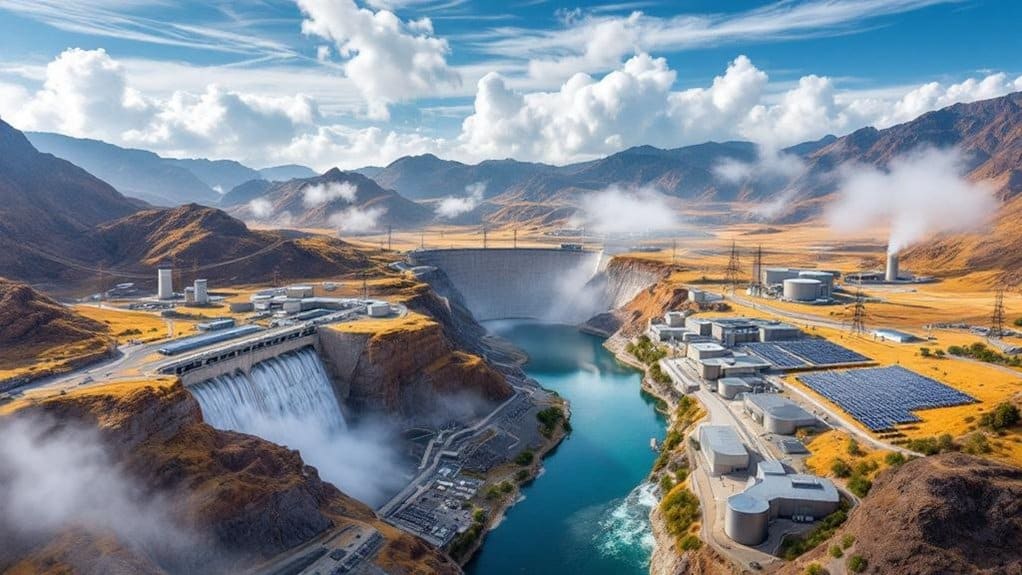
The region’s energy terrain reveals a pattern of untapped potential that major mining operations have only begun to exploit, with Paraguay’s massive hydroelectric surplus standing as perhaps the most underutilized resource in South America. While Argentina alters waste gas into profitable mining operations and Uruguay leverages its near-complete renewable grid, the broader regional infrastructure investments continue to outpace the crypto industry’s ability to capitalize on these competitive advantages. The cost benefits of renewable energy across these neighboring countries create an obvious pathway for expansion, yet regulatory uncertainties and infrastructure gaps persist in preventing the full realization of what could become the world’s most sustainable Bitcoin mining corridor. Argentina’s state-owned YPF subsidiary has demonstrated this potential through its partnership with Genesis Digital Assets, achieving up to 63% reduction in emissions while monetizing previously wasted gas resources.
Paraguay’s Hydroelectric Power Surplus
While Argentina and Uruguay have captured attention for their Bitcoin mining potential, Paraguay stands as the region’s true hydroelectric powerhouse, generating nearly 100% of its electricity from renewable sources and maintaining a massive energy surplus that dwarfs domestic consumption.
Paraguay’s dominance stems from strategic partnerships operating major facilities:
- Itaipu Dam – Joint operation with Brazil providing 7,000 MW capacity
- Yacyretá Dam – Shared with Argentina, contributing 900 MW to Paraguay’s grid
- Acaray Dam – Domestic facility adding 210 MW with ongoing modernization efforts
With domestic consumption at merely 5.01 TWh compared to energy exports reaching 43.8 TWh in 2005, Paraguay’s hydroelectric surplus creates unprecedented opportunities for energy-intensive industries. This abundance, coupled with the country’s central location facilitating regional energy exports, positions Paraguay as an untapped giant for Bitcoin mining operations seeking cheap, renewable electricity.
Despite this energy wealth, Paraguay faces infrastructure challenges with 16.4 average interruptions per subscriber annually, highlighting the need for transmission system improvements to fully capitalize on its hydroelectric advantages.
Renewable Energy Cost Benefits
Beyond Paraguay’s hydroelectric dominance, Argentina and Uruguay have carved distinct paths toward renewable energy cost advantages that directly benefit Bitcoin mining operations, though each faces unique challenges in maximizing their potential. Uruguay’s remarkable 98% renewable electricity generation creates exceptional renewable cost stability, with wind and hydropower eliminating volatile fossil fuel imports that previously cost over $1 billion annually during shortages. The country’s energy efficiency converts it from importer to exporter, generating $70+ million in foreign currency revenues. Argentina, despite economic turbulence hampering financing, advances toward its 20% renewable target through distributed generation and mini-projects that reduce transmission losses. Argentina’s renewable sector has demonstrated strong momentum with 373MW of new renewable capacity added in the first three quarters of 2024, bringing actual renewable contribution to 15% of demand. Both nations leverage domestic wind, solar, and hydropower resources to escape imported energy price volatility, creating predictable operational costs essential for Bitcoin mining profitability.
Regional Energy Infrastructure Investments
Strategic infrastructure investments across Argentina and Uruguay reveal an aggressive expansion trajectory that positions both nations to capitalize on their renewable energy advantages for Bitcoin mining operations. These renewable investments demonstrate remarkable commitment, despite persistent grid challenges that threaten to derail progress.
Uruguay’s alteration into a net energy exporter showcases what decisive action achieves, while Argentina’s ambitious 700 MW expansion signals serious intent to compete globally. Both countries leverage public-private partnerships to accelerate development, though economic constraints continue hampering Argentina’s pace.
Uruguay’s commitment to energy diversification extends beyond traditional sources, with plans to add 200 MW of solar capacity by 2025 to complement its existing hydropower and wind energy foundation.
Key infrastructure developments include:
- Grid modernization enabling renewable integration and export capabilities
- Diversified energy portfolios combining wind, hydro, and solar resources
- Strategic export networks connecting surplus capacity to neighboring markets
These nations understand that energy independence equals economic freedom, positioning themselves advantageously in the competitive Bitcoin mining environment.
Political Dynamics and Regulatory Frameworks Shaping the Industry
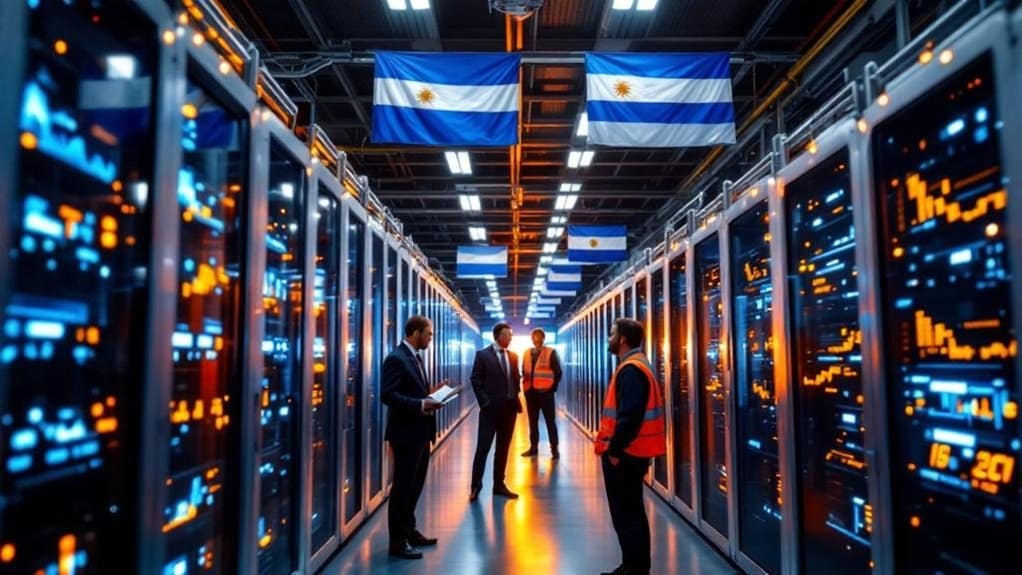
Argentina’s government has aggressively pushed forward with comprehensive cryptocurrency regulations, implementing mandatory registration for virtual asset service providers (VASPs) and strict anti-money laundering protocols that align with international FATF standards. This regulatory framework, coupled with the recent liberalization of foreign exchange controls, creates unprecedented political stability for mining operations seeking regulatory compliance without excessive government interference.
The Unidad de Información Financiera now oversees crypto-related financial crimes, while Law 27,743 mandates crypto asset declarations for tax purposes. Penalties for non-compliance remain severe, including operational bans that could devastate mining ventures.
Uruguay mirrors Argentina’s approach, though both nations face mounting pressure from regional competitors who offer more streamlined regulatory environments. Local community engagement remains critical, as grassroots support often determines project viability despite favorable government policies. With crypto user penetration projected to reach 22.80% in 2025, Argentina’s expanding digital asset market provides a growing foundation for bitcoin mining infrastructure development.
Mining Equipment Requirements
When selecting Bitcoin mining hardware, focus on hash rate, power consumption, and energy efficiency. The Bitmain Antminer S21 Hyd offers 335 TH/s hash rate while consuming 5,360W. Energy efficiency is measured in joules per terahash (J/TH), with models like the MicroBT Whatsminer M60S achieving 18.5 J/TH. Consider weight for portability, as the Antminer S21 Hyd weighs 12.3 kg. Sophisticated cooling systems, particularly hydrocooling technology, are essential for maintaining optimal performance and extending hardware lifespan.
How much should I budget for professional Bitcoin mining equipment?
Bitcoin mining hardware costs vary significantly based on specifications and capabilities. High-end models like the Bitmain Antminer S21e XP Hyd 3U cost around $17,210 USD, while cost-effective options like the Goldshell KD Box II offer lower entry points with 400W power consumption. Mining equipment ranges from a few thousand to tens of thousands of dollars. Prices fluctuate based on market demand and supply conditions, so profitability depends on balancing initial hardware costs with energy efficiency and potential mining rewards.
What cooling systems are most effective for Bitcoin mining operations?
Liquid cooling and hydrocooling systems are the most effective for Bitcoin mining equipment. The Bitmain Antminer S21 XP Hyd uses liquid-cooled innovation to achieve higher hash rates while maintaining stability. Hydrocooling technology offers significant advantages including quieter operations, more stable performance, and better temperature control. These sophisticated cooling systems are essential for maintaining hardware lifespan and preventing thermal damage. Power consumption varies significantly between models, ranging from 400W to 5,360W, making efficient cooling systems critical for optimal performance.
Which software requirements are necessary for Bitcoin mining equipment?
Bitcoin mining software must be compatible with specific ASIC hardware to function properly. Essential features include user-friendly interfaces, like those found on the Bitmain Antminer S21 Pro, and support for integration with mining pools for collaborative mining. Software should allow configuration of parameters such as fan speed and hash rate optimization. Regular firmware updates are necessary for maintaining performance and security. The software must also provide monitoring capabilities to track equipment health and mining efficiency throughout operations.
What monitoring and maintenance tools are essential for mining operations?
Comprehensive monitoring solutions are essential for tracking performance and health of Bitcoin mining equipment. Software tools help monitor and optimize mining efficiency through real-time data analytics, enabling operators to refine their mining strategies. Alert systems notify users immediately of potential issues or performance drops, preventing costly downtime. Regular physical checks and hardware maintenance are necessary alongside digital monitoring for optimal performance. These tools provide essential data analytics that help operators maximize profitability and extend equipment lifespan through proactive maintenance scheduling.
How do I determine the energy efficiency of Bitcoin mining hardware?
Energy efficiency in Bitcoin mining is measured in joules per terahash (J/TH), indicating how much energy is required to produce each terahash of computing power. Lower J/TH values indicate better efficiency. For example, the MicroBT Whatsminer M60S achieves approximately 18.5 J/TH efficiency. Compare power consumption against hash rate output to calculate efficiency ratios. Consider total power consumption, which varies significantly between models from 400W to 5,360W. Energy-efficient hardware reduces operational costs and improves profitability, especially in regions with higher electricity costs.
What are the leading manufacturers of Bitcoin mining equipment?
Bitmain and MicroBT are the leading manufacturers of Bitcoin mining equipment, offering various models with different specifications and price points. Bitmain produces popular models including the Antminer S21 series with advanced hydrocooling technology and user-friendly interfaces. MicroBT manufactures the Whatsminer series, known for energy efficiency. Goldshell also offers cost-effective options for smaller operations. These manufacturers continuously develop new technologies to improve hash rates, energy efficiency, and cooling systems. Choose manufacturers with proven track records, reliable customer support, and regular firmware updates.
How important is portability in Bitcoin mining equipment selection?
Portability varies significantly among Bitcoin mining equipment and depends on your operational needs. The Antminer S21 Hyd weighs approximately 12.3 kg, making it relatively portable for individual miners who may need to relocate equipment. Consider weight, dimensions, and setup requirements when planning mining operations. Portable units offer flexibility for changing locations based on electricity costs or regulatory environments. However, larger operations often prioritize hash rate and efficiency over portability. Balance portability needs with performance requirements and cooling system complexity when selecting equipment.
What factors affect Bitcoin mining equipment pricing and availability?
Bitcoin mining equipment prices fluctuate based on cryptocurrency market conditions, supply chain factors, and technological advancements. Market demand increases during Bitcoin price surges, driving hardware costs higher. Supply constraints from manufacturers like Bitmain and MicroBT affect availability and pricing. New technology releases can impact older model prices, creating opportunities for cost-effective purchases. Seasonal demand patterns, regulatory changes in major markets, and global semiconductor shortages also influence pricing. Monitor market trends and consider timing purchases during lower demand periods for better pricing opportunities.
How do I calculate the profitability of Bitcoin mining equipment?
Calculate Bitcoin mining profitability by considering hardware costs, energy consumption, electricity rates, and current Bitcoin prices. Factor in hash rate capabilities, such as the 335 TH/s from Antminer S21 Hyd, against its 5,360W power consumption. Include initial equipment investment, ongoing electricity costs, and pool fees in calculations. Use online profitability calculators that incorporate current network difficulty and Bitcoin prices. Consider energy efficiency ratios and cooling costs for accurate projections. Profitability changes with market conditions, so regularly reassess calculations and factor in equipment depreciation over time.
Regional Mining Landscape Shifts
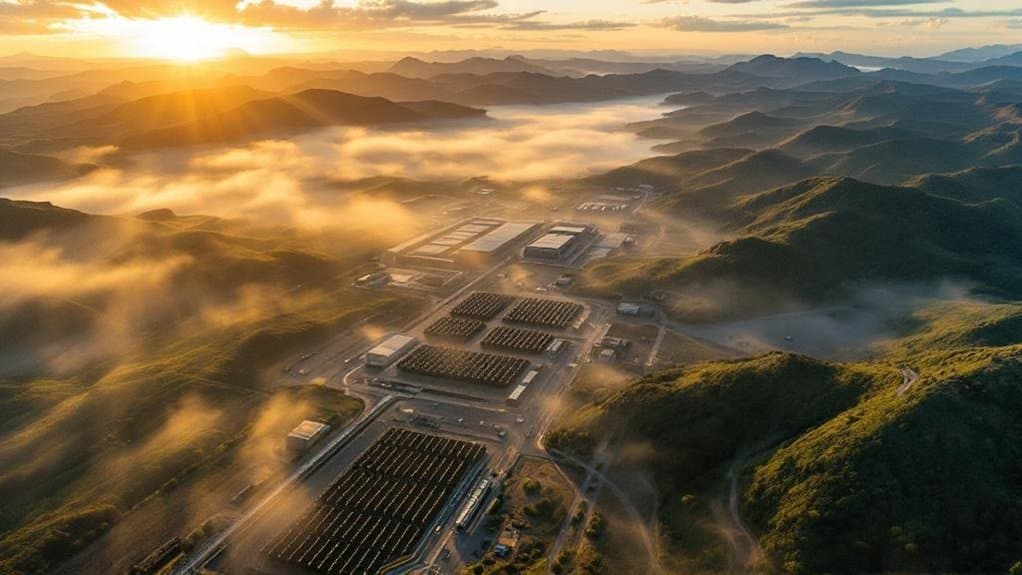
Beyond the technical specifications and financial investments required for mining hardware, the global distribution of Bitcoin mining operations continues to experience significant upheaval across different regions. Argentina mining currently commands only 0.75% of the global Bitcoin hash rate, a frustratingly modest position despite the nation’s energy potential. Uruguay mining remains absent from top-tier rankings, though Tether’s infrastructure investments signal growing confidence in the region’s capabilities.
The broader South American terrain reveals promising developments:
- Brazil’s advanced renewable energy sector drives aggressive green mining expansion
- Regional abundant renewable resources enable environmentally sustainable operations
- Economic policies increasingly favor mining operations that utilize surplus clean energy
This continental shift toward renewable-powered mining represents a determined push for energy independence, reducing reliance on traditional fossil fuel sources while capturing economic opportunities that centralized systems have historically monopolized. However, power supply disputes continue to challenge major operations, as demonstrated by recent facility shutdowns affecting significant portions of mining capacity across the region.