
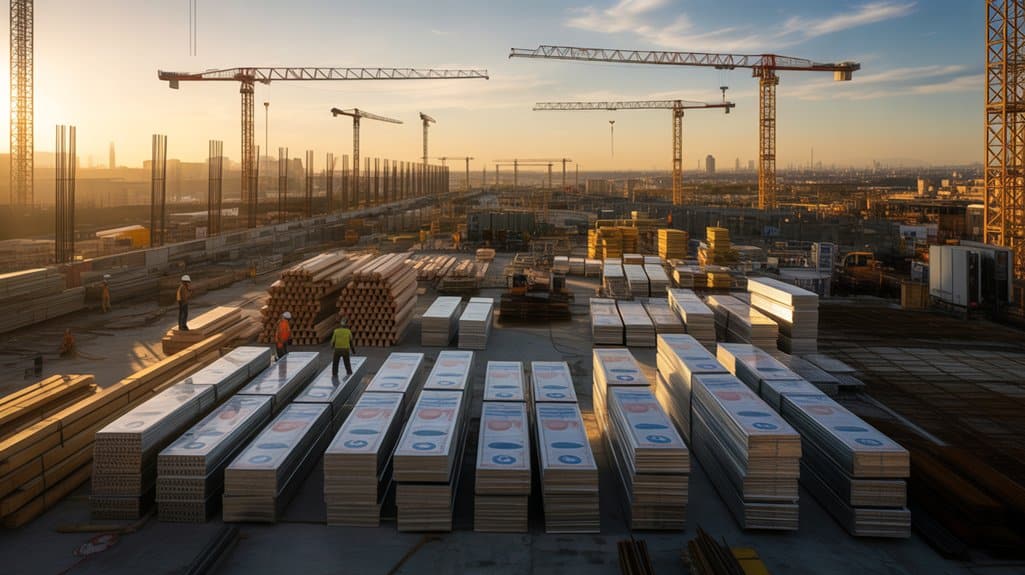
Uruguay’s construction industry is experiencing a meaningful shift driven by cheaper imports. New trade agreements and lower steel prices are trimming project costs significantly. Workers complete jobs faster, and companies retain higher profit margins.
The reduction in material expenses stems from improved access to international markets and commodity price decreases. Lower input costs allow construction firms to complete projects within tighter timelines while maintaining profitability. The extent of these savings depends on sustained trade conditions and commodity market stability.
These cost reductions expand the scope of what builders can undertake within existing budgets. Projects previously deemed financially unfeasible may now move forward. The construction sector’s competitiveness improves as operational expenses decline.
Key Takeaways
- EU-Mercosur tariff reductions of 14, 35% on European machinery and materials compress project costs and improve developer margins.
- Prefabrication technology reduces on-site labor hours, offsetting 50, 70% of social security overhead while sustaining profitability despite wage pressures.
- Historic low heavy machinery import costs and tariff-free European finishes enable budget repricing across Montevideo and Maldonado regions.
- Import-led cost compression lowers capital goods expenses for HVAC, smart-home technology, and specialized equipment, boosting project returns.
- Accelerated project timelines from prefabrication and stable domestic material supplies strengthen competitive advantage through 2026 before margin pressures increase.
Construction Costs Plummet Nationwide
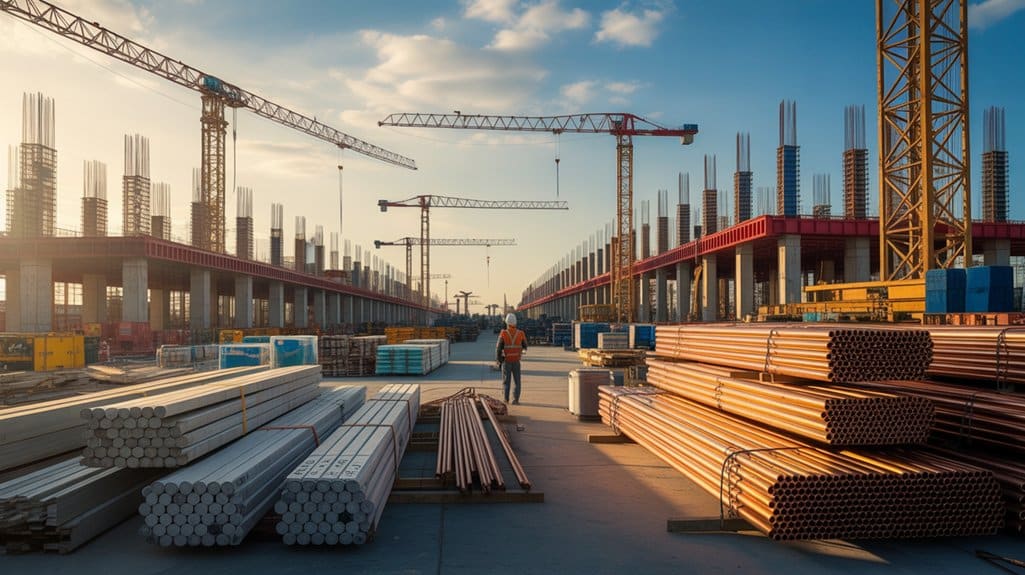
Uruguay’s construction sector is experiencing a dramatic cost reset. The EU-Mercosur trade pact reduced tariffs on European machinery and materials by 14-35%, triggering significant changes across project budgets nationwide. Prefabrication technology that reduces on-site labor hours has amplified these effects, creating savings unavailable six months ago.
National construction costs rose 2.8% year-over-year in January 2026. When adjusted for inflation, this gain disappears, real construction expenses remain essentially flat despite wage pressures. The substantive shift occurs in material costs. Imported steel-framing systems and prefab components now cost substantially less than pre-pact prices, enabling developers to offset wage overhead while maintaining profitability. This trajectory mirrors cost patterns observed in high-ranked European markets where tariff harmonization has similarly compressed material expenses.
Montevideo and Maldonado present distinct cost structures. Montevideo’s baseline of $2,700 per square meter offers limited compression room, while Maldonado’s $2,900 rate reflects regional demand patterns. Both regions benefit equally from tariff elimination. European-standard finishes previously subject to tax premiums now enter tariff-free. Heavy machinery imports have reached historic low costs.
Prefabrication delivers particular advantages. Mandatory social security overhead represents 50-70% of labor costs. Each hour removed from the job site translates directly to margin recovery.
This cost environment carries limited duration. As developers exploit tariff savings and project timelines contract, supply dynamics will shift. The opportunity to secure construction cost advantages before competitive pressure erodes margins extends through 2026.
Materials Sourcing Strategy Shifts
Uruguay’s construction sector is recalibrating supply chains following the EU-Mercosur trade pact signed in January 2026. The agreement eliminates tariffs on European machinery and equipment up to 20%, fundamentally altering procurement decisions for developers.
Import-Led Cost Compression
European construction firms gain immediate advantages through reduced capital goods expenses. High-tech machinery, HVAC systems, and smart-home technology now enter at substantially lower costs. This compression expands project budgets, allowing developers to redirect savings toward expansion or margin improvement. The strengthened euro accelerates ROI calculations for foreign investors operating in the region. CW Group reports that rising materials costs and labor differences continue to influence regional construction economics alongside tariff reductions.
Domestic Production Prioritization
Uruguay’s government backs local cement production through public procurement initiatives. The strategy prioritizes ANCAP Portland cement for infrastructure projects, supporting the domestic supplier’s 280,000-ton annual capacity. This dual approach, importing finished machinery while anchoring materials locally, creates cost efficiency across supply chains.
The Paysandú plant currently operates at 200,000 tons annually. Restructuring discussions consider reducing workforce capacity while converting operations toward logistics functions. The Minas facility covers full domestic demand independently.
Sourcing Tenders and Regional Positioning
Government construction material tenders remain open through March 27, 2026, emphasizing e-procurement and public bidding. Specifications increasingly reflect traceability systems meeting EU and Asian standards. This positions Uruguay as a regional export hub for construction materials.
The strategy aligns with 3.5% annual growth projections through 2029, combining lower import costs with strengthened domestic sourcing capabilities.
Construction Sector Gains Competitive Advantage
South America’s construction sector gains competitive advantage through reduced import costs and stable domestic material supplies. Uruguay’s builders operate without heavy tariff burdens, while the EU-Mercosur agreement significantly lowers machinery expenses and increases labor productivity on job sites. Equipment efficiency and affordable material delivery enable workers to accomplish more per project hour.
Policy stability attracts capital and talent to the market. Predictable regulatory frameworks allow developers to plan long-term projects with confidence. Political strength and fair business practices eliminate unexpected shifts in operational conditions. The government’s commitment to green energy infrastructure projects, including plans to add 200MW of solar energy by 2025, further strengthens investor confidence in the sector’s future.
These combined factors produce measurable benefits: accelerated project completion, extended budgets, and sustainable growth. The construction sector expands with genuine competitive advantages across the region.
References
- https://worldpopulationreview.com/country-rankings/construction-cost-index-by-country
- https://www.6wresearch.com/industry-report/uruguay-building-construction-market
- https://tradingeconomics.com/uruguay/housing-index
- https://thelatinvestor.com/blogs/news/uruguay-price-forecasts
- https://www.realestate-in-uruguay.com/blog/uruguay-real-estate-eu-mercosur-construction-roi/
- https://www.statista.com/outlook/io/construction/uruguay
- https://urbanland.uli.org/capital-markets-and-finance/economist-snapshot-forecasting-construction-costs-outlook-for-2026
- https://mail.cwgrp.com/bmweeknew/construction-news/construction/uruguays-construction-costs-rise-again-in-february?highlight=WyJtb250aGx5Il0=
- https://www.realestate-in-uruguay.com/blog/eu-mercosur-trade-agreement-uruguay-real-estate-2026/
- https://businessfocus.org.uk/reports/Uruguay_report_2026.pdf