
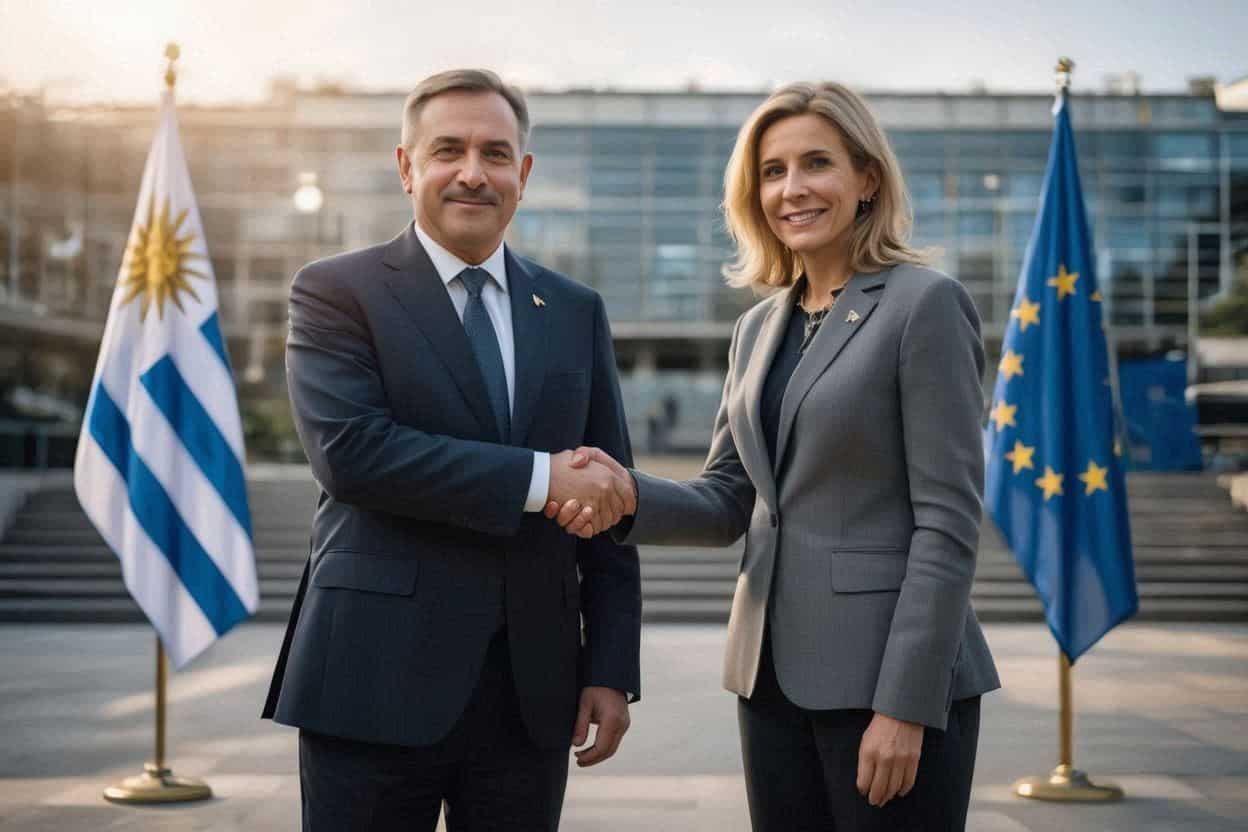
Uruguay just made history. The small South American nation became one of the first Mercosur members to ratify a landmark trade deal with the European Union , a deal that took 25 years of stop-start negotiations to reach.
Its neighbors are still working through their own approval processes, so Uruguay’s quick move stands out.
What pushed the country to act so decisively, and what does it actually mean for its farmers, businesses, and long-term economic prospects?
Key Takeaways
Uruguay didn’t wait around. On February 26, 2026, the Chamber of Deputies voted to ratify the EU-Mercosur trade agreement, making the country one of the first in the bloc to formally sign off on a deal that’s been in the works for over two decades.
The process moved quickly. A special parliamentary committee gave it unanimous approval on February 23, and both the Senate and Deputies followed suit within days , a rare show of cross-party consensus in a country that takes its institutions seriously.
So what does the deal actually do? At its core, it removes tariffs on more than 90% of goods traded between the EU and Mercosur. For European exporters, that translates to roughly €4 billion in annual savings , money previously lost to import duties. For Uruguay, the gains are more targeted but equally meaningful. Beef, soy, and leather , the backbone of the Uruguayan export economy , will face lower barriers entering European markets, giving local producers a real edge over competitors who don’t have the same access.
Uruguay’s quick move sends a clear message to Brussels: this is a country that wants the relationship to work. With Argentina, Brazil, and Paraguay still working through their own ratification processes , Paraguay being the last to complete the step , Uruguay has positioned itself as the eager partner at the table, ready to trade before the ink is fully dry elsewhere in the bloc.
How Uruguay Fast-Tracked Its EU-Mercosur Ratification
The sequence moved quickly. A special parliamentary committee gave unanimous approval on February 23, 2026. The Senate voted two days later, and the Chamber of Deputies followed on February 26, passing the deal 91 votes to 2. The whole thing was done before most people had time to notice it had started.
That speed wasn’t an accident. Five different governments, spanning a range of political ideologies, had spent a quarter century negotiating this agreement. By the time the vote came around, most lawmakers already knew where they stood. There wasn’t much left to debate. Being the first Mercosur country to ratify sent a clear signal to Brussels that Uruguay was serious about getting the deal done. The EU-Mercosur agreement had originally been signed in Asunción on January 17, following more than two decades of stop-and-start talks between the two blocs.
What the EU-Mercosur Deal Covers
The EU-Mercosur agreement covers two regions with a combined population of over 700 million people, making it one of the largest trade deals ever negotiated. The bulk of it comes down to tariffs , basically the taxes governments charge on imported goods , and the deal scraps them on more than 90% of products traded between both sides. For Uruguay, that means Argentine beef, Brazilian soybeans, and Uruguayan wool all move more freely into European markets, while European cars, machinery, and dairy face fewer barriers coming the other way. Prices shift on both ends, and businesses that previously absorbed those costs get a bit more room to breathe. The agreement also includes a dedicated annex on trade and sustainable development, with both sides committing to prevent deforestation and enhance forest cover by 2030.
Tariff Elimination Scope
Covering more than 90% of all goods traded between the EU and Mercosur, this deal ranks among the broadest of its kind ever signed. The numbers break down like this: 91-92% of EU exports heading into Mercosur countries will no longer face import taxes, while 93% of the tariffs Mercosur nations currently pay on EU goods will be scrapped entirely.
For a country like Uruguay, that’s meaningful across the board , from factory-made products to food. Agricultural goods that currently carry import taxes anywhere between 20% and 35% are included in the deal, which gives Uruguayan exporters a real shot at competing on price in European markets they were previously priced out of.
None of this is exclusive to large corporations. When the cost of moving goods across borders drops, prices at the consumer level tend to follow. People end up with more options and, in many cases, pay less for them. The deal is also expected to remove €4 billion in tariffs, with particularly significant reductions applied to sectors like car parts, dairy, and wine.
Key Traded Goods
Behind those tariff numbers are actual products , things that get made, grown, shipped, and sold every day, and the EU-Mercosur deal touches a pretty wide range of them on both sides.
European cars, machinery, chemicals, textiles, and pharmaceuticals all get better access to Mercosur markets. For producers who were previously locked out by high import taxes, that’s a meaningful shift.
Mercosur, for its part, sends beef, poultry, sugar, rice, and honey to Europe , though not in unlimited quantities. These products move through set quotas, which is basically an agreed ceiling on how much can be traded at the lower tariff rate. Once that ceiling is hit, normal rates apply again.
There’s also a layer of protection for food and drink products through what are called geographical indications , think Champagne, which can only legally come from that specific region in France, or Roquefort cheese. Over 300 European products and around 200 from Mercosur fall under this kind of label protection. For Uruguay specifically, this matters because it opens the door for products tied to particular regions or production methods to carry that recognition into European markets, which helps smaller producers compete on something other than just price. The deal also strengthens the EU’s access to critical raw materials like lithium, aluminum, and natural graphite, which are predominantly sourced from Mercosur countries.
Economic Scale Impact
Numbers can tell a powerful story when they’re big enough, and this deal has some big ones.
The EU-Mercosur agreement creates a free-trade zone covering over 700 million people and roughly 20% of global GDP , making it one of the largest trade deals ever completed.
The benefits break down like this:
- European exporters save €4 billion annually in tariffs
- The EU economy gains nearly €80 billion upon full implementation
- EU exports to Mercosur could increase by 39% annually
What that means in practice is more businesses on both sides gaining access to markets that were previously too expensive or too restricted to enter. For a country like Uruguay , whose economy runs on exports, from beef and soybeans to software , lowering those barriers is the difference between a product sitting in a warehouse and actually reaching a buyer in Berlin or Barcelona. More trade, in that sense, means more breathing room for businesses to grow and hire.
The agreement also carries significant geopolitical weight, as it strengthens the EU’s position against China’s growing influence in the Mercosur region.
Why Uruguay Ratified the EU-Mercosur Deal Before Anyone Else
Five governments, spread across 25 years and very different political philosophies, each played a role in building this agreement. That kind of continuity is unusual in trade negotiations, where a change in leadership often means starting over. What it produced here was something rarer still: lawmakers from opposite ends of the political spectrum actually agreeing on something. When the final vote came, 91 out of 93 members of parliament said yes.
The speed of ratification reflected that unity. The committee signed off on Monday. The Senate passed it Tuesday. The Chamber of Deputies wrapped it up Wednesday. Three days from start to finish.
Getting there first carries real weight. Uruguayan businesses now have early access to one of the world’s largest consumer markets, and the country has signalled to European partners that it’s a place that follows through. That reputation, built through decades of consistent engagement with the deal, is not easy to manufacture quickly , Uruguay earned it incrementally, one administration at a time. The broader agreement is projected to save EU exporters €4 billion per year by eliminating or reducing tariffs on more than 90% of bilateral trade.
Where Argentina, Brazil, and Paraguay Stand Right Now
Argentina’s Senate voted 69 to 3 on February 26, 2026, to approve the deal, making it the second founding member to fully ratify. Brazil’s lower house passed it the day before, on February 25, and the Senate is expected to follow within weeks. Paraguay is the last of the three to move, with lawmakers there set to take up the vote in early March 2026. The agreement, which took 25 years of negotiations to finalize, will gradually eliminate tariffs on 92% of bilateral trade between the two blocs.
Argentina’s Senate Status
Argentina’s Senate made its position crystal clear on February 26, 2026, voting 69 to 3 in favor of the EU-Mercosur trade deal. Those numbers don’t leave much room for debate , lawmakers were firmly behind opening up trade with Europe.
President Javier Milei signed it into law shortly after, sealing the deal officially. What does that actually mean in practice? The agreement wipes out tariffs on 92% of Mercosur exports, scraps duties on chemicals, pharmaceuticals, and machinery, and connects both blocs into a combined market of around 700 million people.
Argentina is now the second country to fully ratify the agreement, following Uruguay, which moved first. With two of Mercosur’s member states locked in, the deal is picking up real traction , and the remaining members are watching closely. Brazil and Paraguay are currently working through their own parliamentary ratification processes, with both nations yet to complete formal approval.
Brazil’s Chamber Progress
Brazil moved fast. With Uruguay and Argentina already done, Brazil’s lower house , the Chamber of Deputies , voted to approve the EU-Mercosur trade deal without a single recorded objection. When an agreement clears a chamber that size without any pushback, that tells you something about the political appetite for it.
A week later, the Senate followed with a unanimous vote. Both houses, no dissent, done.
That leaves Paraguay as the only one of Mercosur’s four founding members yet to complete its own approval process, with lawmakers there expected to take up the deal shortly. The agreement itself was signed on January 17, 2026, bringing to a close more than two and a half decades of on-and-off negotiations between the two blocs.
Paraguay’s Parliamentary Process
Paraguay is the last of the four founding members still working through its own approval process. Hosting the signing ceremony in Asunción on January 17, 2026 was a significant moment, but it didn’t mean the hard work was finished.
What’s still left on Paraguay’s plate:
- The national parliament needs to hold a formal vote on the agreement
- European Commission procedures are expected to follow once signing is complete
- Full ratification is still up in the air, despite the progress made so far
A useful way to think about it: signing the agreement is a bit like putting pen to paper on a lease, when you still need the landlord to countersign before you can actually move in. The process is moving in the right direction, but how quickly Paraguay’s lawmakers act will determine what comes next.
Successful ratification would give Paraguayan exporters access to a market representing 15% of global economic output, making the stakes of parliamentary action considerably high.
Which Sectors Gain Most on Both Sides of the EU-Mercosur Deal
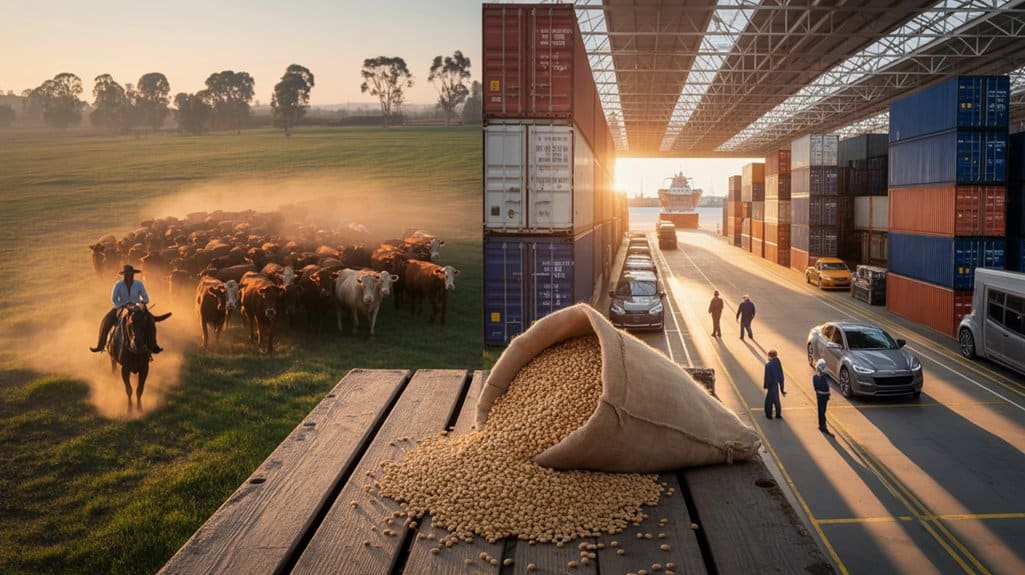
When a big trade deal lands, everyone wants to know who’s walking away better off.
For the EU, the clearest winners are carmakers, pharmaceutical companies, and dairy producers. Dairy exports alone are projected to grow by around 50%, while wines and cheeses get stronger legal protections in Mercosur markets , meaning fewer cheap imitations eating into sales. That’s tangible money in the pockets of European farmers and manufacturers.
Mercosur countries, which include Brazil, Argentina, Paraguay, and Uruguay, bring serious strengths to the table. Beef, soy, and raw materials like lithium , essential for electric car batteries , now have direct access to a market of roughly 700 million people. For Uruguay specifically, this matters a great deal. The country punches well above its weight in beef and agricultural exports, and fairer competition rules mean Uruguayan producers aren’t undercut by subsidies or arbitrary tariffs on the other side.
Services are also part of the picture. Both regions stand to gain from increased investment flows, particularly in technology-related industries that don’t rely on physical goods crossing borders. For EU companies, the deal eliminates over €4 billion in annual tariffs , costs that were quietly making European products harder to sell in South America.
The deal doesn’t hand everything to one side. It creates real, measurable openings for both regions, built on what each already does well. The agreement also protects 357 geographical indicators for European specialty products, giving exporters of items like Champagne and Parmigiano-Reggiano a legally enforceable advantage in Mercosur markets.
Why the European Parliament Paused Full EU Ratification
The EU-Mercosur deal looked like it was finally getting over the line , then the European Parliament pumped the brakes. On January 21, 2026, lawmakers voted 334 to 324 to pause full ratification and ask for a legal review first.
The vote came down to a left-Green coalition that pushed the motion through, and their concerns were pretty specific. They want to know whether all 27 national parliaments need to sign off on the deal, whether the agreement quietly limits the EU’s ability to set its own environmental and consumer standards, and whether the whole structure is actually compatible with EU law.
That last point is where things get interesting for a country like Uruguay. When the Court of Justice of the European Union weighs in , which could take up to two years , its opinion will carry real weight on whether this deal moves forward as written or needs to be renegotiated.
What this doesn’t mean is a total freeze. In areas where the EU has sole authority, like customs and trade rules, provisional application can still go ahead. The sticking point is full consent, and that’s what’s sitting on hold until the legal picture clears up. The Council had already authorized the Commission to sign the agreement on January 17, meaning provisional entry into force remains a live possibility even as the legal review proceeds.
For Uruguay, a country whose economy leans heavily on agricultural exports , beef, soybeans, dairy , the delay matters. Every month of uncertainty is a month without the preferential access to European markets that this deal was supposed to deliver.
What Early EU-Mercosur Ratification Means for Uruguay’s Exporters
Uruguay jumping ahead on the EU-Mercosur trade deal is a practical win for the country’s export sector. Rather than waiting for the full Mercosur bloc to complete ratification, Uruguay’s move gives its businesses earlier access to a market of roughly 450 million EU consumers , the figure of 700 million appears to conflate the EU with broader European populations, so it’s worth being precise here.
Tariff reductions kick in sooner for early ratifiers, which makes Uruguayan goods cheaper to buy in Europe from the start. Beef, soy, and leather , three of Uruguay’s biggest exports , have historically faced stiff EU import duties, so even modest reductions translate into real price advantages on European shelves. Competing exporters from outside Mercosur, like the US or Japan, don’t get those same preferential rates, which is a concrete edge rather than a theoretical one.
The deal also covers services and government contracts, not just physical goods. Uruguayan firms can bid on EU public procurement tenders and operate more freely in European service markets, which matters for a country that has steadily grown its software and professional services exports over the past decade.
For smaller businesses, cutting through the usual delays means less time tied up in uncertainty and more time planning actual sales strategies. That said, the benefits depend on Uruguayan companies actively preparing , knowing EU product standards, labelling rules, and buyer expectations. The open door only helps if businesses are ready to walk through it. The agreement itself represents a landmark outcome, arriving after 25 years of negotiations between the two blocs finally concluded with a signed deal in Paraguay in 2026.
References
- https://en.mercopress.com/2026/02/24/uruguay-moves-toward-ratifying-eu-mercosur-deal-after-special-committee-approval
- https://efe.com/en/latest-news/2026-02-26/uruguay-becomes-first-country-to-ratify-eu-mercosur-agreement/
- https://www.youtube.com/watch?v=UsS_OI5vRtw
- https://tass.com/economy/2092385
- https://www.youtube.com/watch?v=zJySpai3vuo
- https://www.isds.bilaterals.org/?uruguay-and-argentina-ratify-the
- https://www.upi.com/Top_News/World-News/2026/02/27/latam-mercosur-trade-agreement-EU/6961772211433/
- https://www.bilaterals.org/?uruguay-and-argentina-ratify-the
- https://www.riotimesonline.com/uruguay-is-the-first-country-to-ratify-the-eu-mercosur-deal/
- https://www.squirepattonboggs.com/media/0cpjjh4j/eu-mercosur-trade-agreement-signed-starting-ratification-process.pdf