
Uruguay’s upcoming elections on May 11, 2025, represent a critical juncture in the nation’s political evolution. Five major parties are locked in an unusually tight race, each offering distinct visions for tackling pressing issues like economic reforms and public security. The traditionally stable South American democracy finds itself at a crossroads, with polls suggesting the closest presidential contest in three decades. Recent shifts in voter demographics and mounting economic pressures have changed what was once a predictable two-party affair into a genuinely suspenseful political drama.
Key Takeaways
- Uruguay will hold its general elections on May 11, 2025, with presidential, parliamentary, and local positions being contested.
- Yamandú Orsi leads early polling, with major contenders representing Frente Amplio, Partido Nacional, and other established parties.
- The election will use Double Simultaneous Vote system, requiring runoffs if no presidential candidate achieves absolute majority.
- Economic growth, security reform, and pension system changes are central campaign issues driving voter decisions.
- Analysts predict approximately 90% voter turnout from 2.7 million registered voters under Uruguay’s compulsory voting system.
Political Landscape Ahead of the May Election
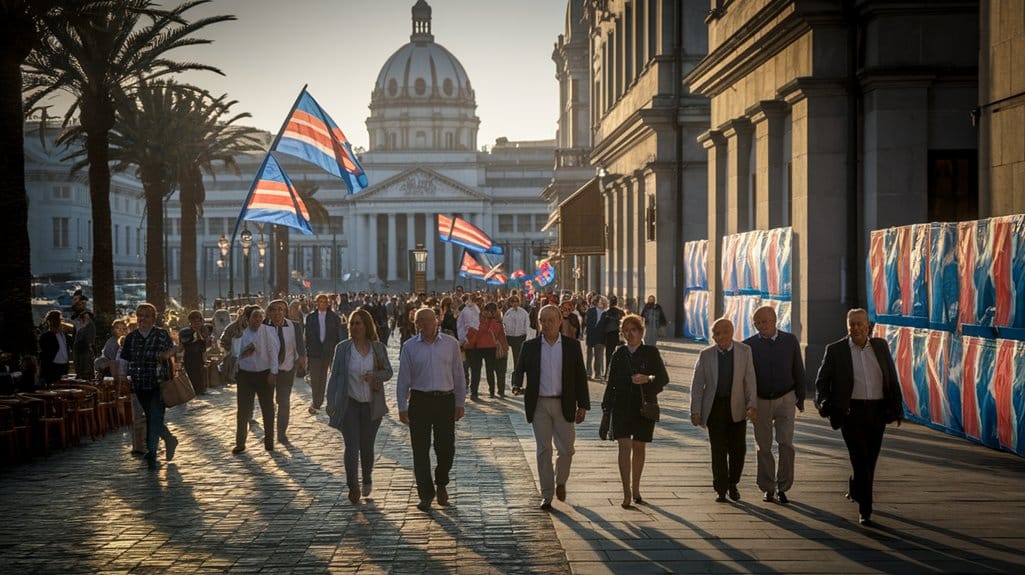
The political terrain in Uruguay has evolved into a intricate mosaic of traditional forces and emerging challengers as the country approaches its May municipal elections. Following the 2024 general elections, political fragmentation has become increasingly evident, with no party securing a clear majority in the House.
The backdrop is dominated by the left-wing Frente Amplio, which maintains strong urban support in Montevideo and Canelones, while the center-right Partido Nacional commands rural regions. Coalition dynamics have gained prominence, with traditional parties adapting to new political realities. The Partido Colorado’s declining influence and the emergence of newer parties like Cabildo Abierto reflect the evolving nature of Uruguayan politics. This shifting backdrop sets the stage for intense municipal contests, where local governance will intersect with national political ambitions. With a remarkable 89.60% voter turnout in the previous general election, Uruguay continues to demonstrate strong civic engagement in its democratic processes.
Key Campaign Issues and Voter Priorities
As Uruguay approaches its May elections, the tension between promoting economic growth and addressing inequality has emerged as a central campaign flashpoint, with candidates offering contrasting visions for the nation’s financial future. The ongoing debate over security reform has intensified, particularly regarding controversial proposals for nighttime police raids and expanded law enforcement powers to combat organized crime. Social program priorities have taken center stage as voters weigh competing proposals for pension reform and healthcare access, reflecting broader concerns about maintaining Uruguay’s traditionally strong social safety net while ensuring fiscal sustainability. Recent polling indicates that Yamandú Orsi leads among potential voters, though the race remains competitive with multiple candidates vying for support.
Economic Growth Vs Inequality
While Uruguay’s projected GDP growth of 2.84% for 2025 signals economic vitality, the nation grapples with a classic development dilemma that has become central to its electoral discourse: achieving robust economic expansion while addressing persistent inequality.
As voters weigh their choices, key economic disparity and growth challenges have emerged:
- Income gaps remain substantial despite agricultural and energy sector gains
- Access to quality education and healthcare varies significantly across socioeconomic groups
- Tourism and private consumption drive growth but benefits aren’t equally distributed
- Social welfare programs struggle to keep pace with wealth concentration
Following a dramatic GDP decline of -7.36% in 2020 during the pandemic, the economy has shown resilience but questions remain about sustainable long-term growth.
The intersection of these issues has sparked intense debate among candidates, with some advocating for market-driven solutions while others push for expanded social programs to ensure economic gains benefit all Uruguayans.
Security Reform Debate
Beyond economic concerns, Uruguay’s electoral terrain has shifted dramatically toward security reform as a defining issue for voters in 2024. With organized crime becoming increasingly sophisticated, candidates are proposing divergent approaches to combat this growing threat. With the Frente Amplio leading polls at 44%, the party’s security platform has drawn particular scrutiny from voters.
| Party | Security Reform Proposals |
|---|---|
| Frente Amplio | Comprehensive crime-fighting system |
| Focus on civil liberties protection | |
| National Party | Specialized security taskforces |
| Expanded police raid authority |
The debate has crystallized around a controversial referendum on nighttime police raids, initially garnering strong public support but facing growing resistance from civil liberties advocates. While Yamandú Orsi advocates for a systemic approach to fighting organized crime, his opponents champion more aggressive enforcement measures. This ideological divide reflects a broader national conversation about balancing effective law enforcement with individual rights.
Social Program Priorities
Several critical social program priorities have emerged as defining issues in Uruguay’s upcoming elections, with child poverty and pension reform taking center stage. Political discourse has centered on balancing social welfare needs with economic sustainability, particularly focusing on:
- Addressing persistent child poverty through targeted support programs and improved education access
- Contentious pension reforms, including proposals to lower retirement age and eliminate private administrators
- Tackling youth unemployment through expanded vocational training and job creation initiatives
- Strengthening health services and social security systems amid demographic pressures
The intersection of these priorities reflects broader debates about Uruguay’s social welfare model. While the Broad Front champions expanded social protections, opposition candidates emphasize fiscal responsibility. Labor unions and advocacy groups continue pushing for comprehensive welfare reforms, highlighting the need to balance social equality with economic growth. Polling data indicates that support for major pension system changes ranges from 33 to 43 percent, with significant voter uncertainty affecting potential reform outcomes.
Electoral System and Voting Mechanics
Uruguay’s electoral system employs strict security measures around ballot design and handling, with standardized formats that must meet precise specifications to prevent tampering or confusion. Each polling station follows rigorous vote counting protocols, where officials meticulously verify and tally votes under the watchful eyes of party representatives and electoral observers. The process culminates in a thorough cross-verification system where results from individual stations are transmitted to the Electoral Court, which conducts final validations before announcing official tallies. The upcoming elections will determine leadership positions for 127 local governments, representing a significant administrative reorganization at the municipal level.
Ballot Design and Security
While many nations grapple with electronic voting controversies, Uruguay maintains a robust paper-based electoral system centered on physical ballots and comprehensive security measures. The country’s approach to ballot security involves multiple safeguards, while tackling design challenges inherent in a multi-party democracy.
Key features of Uruguay’s ballot system include:
- Physical ballots sealed in tamper-evident envelopes
- Voting conducted in secret rooms (“Cuarto secreto”)
- Centralized voter registration through the National Civic Registry
- Chain-of-custody protocols for ballot transportation and storage
The system accommodates intricate electoral needs, managing presidential, legislative, and local elections while maintaining clarity for voters. With Uruguay’s compulsory voting requirement, citizens are legally obligated to participate in the electoral process. The Electoral Court’s oversight ensures standardized procedures nationwide, making Uruguay’s paper-based approach a model of electoral integrity.
Vote Counting Process Rules
The comprehensive vote counting process in Uruguay operates through an intricate system of checks and balances, combining traditional paper balloting with modern verification methods. Vote counting procedures follow strict protocols overseen by the Electoral Court, ensuring electoral transparency at every step.
Under the Double Simultaneous Vote system, each ballot serves multiple purposes, simultaneously counting toward presidential, senatorial, and representative selections. Officials meticulously verify voter identities and registration at polling stations before allowing access to the cuarto secreto, where citizens cast their confidential votes. For presidential races, if no candidate secures an absolute majority, a runoff election between the top two contenders determines the winner. The electoral law mandates that presidents serve five-year terms with no possibility of immediate re-election. Legislative seats are distributed through proportional representation, with votes carefully tallied according to party lists and factions.
Major Party Platforms and Promises
Political diversity characterizes Uruguay’s electoral arena, with five major parties presenting distinct visions for the nation’s future. The electoral promises and party ideologies range from progressive social policies to conservative fiscal approaches, reflecting Uruguay’s vibrant democratic backdrop. With voter turnout over 90%, Uruguayans demonstrate exceptional commitment to their democratic process.
Key platform distinctions include:
- Frente Amplio champions social welfare and targets a 2% primary surplus
- National Party emphasizes private sector growth and fiscal responsibility
- Colorado Party maintains centrist positions on economic and social issues
- Open Cabildo advocates for conservative governance and stricter law enforcement
- Independent Party seeks balance between economic growth and social reforms
Each party’s platform addresses vital challenges facing Uruguay, from pension reform to environmental conservation, while maintaining their unique ideological perspectives on governance and economic management.
Regional Impact of Uruguay’s Electoral Process

As Uruguay’s electoral process unfolds, its influence reverberates throughout Latin America, shaping regional dynamics in economic, political, and social spheres. The country’s reputation for democratic stability makes it an attractive destination for foreign investment, while its political decisions can significantly impact regional trade agreements, particularly within Mercosur.
Uruguay’s moderate political climate and successful social policies serve as a blueprint for neighboring nations. The transition from FA’s governance from 2005-2020 demonstrates the nation’s ability to maintain stability through power shifts. Its approach to addressing challenges like organized crime and social security reform often influences policy discussions across borders. The country’s consistent democratic transitions and low political polarization stand in stark contrast to regional turbulence, offering valuable lessons for other Latin American nations seeking to strengthen their democratic institutions and attract international partnerships.
Voter Demographics and Turnout Predictions
While Uruguay’s population hovers around 3.5 million individuals, its electoral terrain encompasses approximately 2.7 million registered voters who consistently demonstrate remarkable civic engagement. The nation’s voter engagement strategies reflect its mature democratic culture, with compulsory voting laws maintaining turnout rates above 85%. Based on data from recent presidential elections, the two-round system ensures broad consensus in selecting national leadership.
Key demographic shifts influence electoral patterns:
- Aging population drives pension reform priorities
- Urban concentration, particularly in Montevideo, shapes political discourse
- Youth participation remains essential despite slight underperformance
- Socioeconomic disparities affect voter preferences across regions
Looking ahead to May 2025, analysts predict turnout will maintain its historically high levels near 90%, despite potential voter fatigue from consecutive elections. The combination of legal obligations and deeply rooted democratic values continues to ensure robust electoral participation across demographic segments.
Economic Factors Shaping Electoral Choices
Economic conditions in Uruguay have emerged as critical forces shaping voter preferences ahead of the 2025 elections, with inflation rates hovering at 5.7% and GDP growth projecting at 2.8%. The interplay between economic stability and voter sentiment has become particularly pronounced as rising food prices impact consumer confidence and household budgets. The Central Bank’s move to raise the monetary policy rate by 25 basis points signals efforts to control inflationary pressures.
Recent employment trends paint a mixed picture, with technology and manufacturing sectors showing resilience while income inequality persists. A 3% increase in real household incomes has helped reduce poverty rates to 6%, though voters remain concerned about sustainable growth. Trade relations, particularly with Brazil, continue to influence Uruguay’s economic outlook, while candidates’ investment strategies and electoral policies face scrutiny from voters seeking solutions to inflation pressures and structural challenges in the economy.
Media Coverage and Campaign Strategies

The media environment in Uruguay’s electoral process reflects a dynamic interplay between traditional outlets and emerging digital platforms, with candidates leveraging both channels to reach voters effectively. Media narratives shape public discourse while campaign dynamics evolve through innovative social media strategies and traditional public events.
Key aspects of Uruguay’s electoral media environment include:
Uruguay’s electoral landscape showcases a diverse media environment where traditional and digital platforms converge to shape political discourse.
- Candidates like Álvaro Delgado emphasizing continuity through targeted messaging about “good governance”
- Strategic use of digital platforms by figures such as Andrés Ojeda to connect with younger demographics
- Integration of data analytics to refine campaign strategies and voter outreach
- Balance between traditional media coverage and emerging digital campaign tools
Despite Uruguay’s relatively low political polarization, media coverage occasionally reflects underlying tensions between ruling and opposition parties, influencing how candidates craft their messages and engage with voters across multiple platforms. The exceptional 89% voter turnout demonstrates the effectiveness of media outreach strategies in mobilizing the electorate.
Historical Context and Democratic Traditions
Beyond the modern media framework of Uruguay’s electoral system lies a rich mosaic of democratic traditions spanning two centuries. From its independence struggles between 1811-1828 to its evolution into a beacon of democratic values, Uruguay’s historical elections reflect a nation’s commitment to political freedom. The early formation of the League of Free People under Artigas’ leadership established foundational principles of autonomy and reform that would shape Uruguay’s democratic future.
| Era | Democratic Milestone |
|---|---|
| 1828 | Independence Achieved |
| 1903 | Batlle’s Modernization |
| 1942 | Constitutional Reform |
| 1984 | Return to Democracy |
| 1996 | Electoral System Reform |
The democratic progression of Uruguay showcases remarkable resilience, from José Batlle y Ordóñez’s revolutionary presidency to the peaceful transition from military rule in 1984. Even during challenging periods, like the “Golpe Bueno” of 1942, Uruguay maintained its distinctive approach to governance, prioritizing stability over repression and setting the stage for today’s robust electoral system.