

Uruguay’s positioned itself as one of South America’s premier stargazing destinations, and there’s solid science behind why it works so well. The country sits at latitude 35°S, putting it in the perfect spot to view both northern and southern hemisphere constellations throughout the year.
Cabo Polonio stands out as the crown jewel for astronomy enthusiasts. This coastal village has no electrical grid, which means zero light pollution after sunset. The Bortle Scale rates light pollution from 1 to 9, with 1 being pristine dark skies. Cabo Polonio consistently measures between 1 and 2, matching some of the world’s best astronomical sites like Chile’s Atacama Desert.
Villa Serrana takes a different approach in the country’s interior hills. Located 120 kilometers from Montevideo, it’s far enough from the capital’s urban glow but still accessible for weekend trips. The elevation here reaches 350 meters above sea level, which doesn’t sound like much, but it puts you above the atmospheric haze that obscures faint objects.
The government’s invested in real infrastructure to support this growing sector. The Observatorio Astronómico Los Molinos operates a 40-centimeter reflecting telescope and runs public programs three nights per week. They’ve trained local guides who can explain why the Southern Cross appears upside down compared to how Northern Hemisphere visitors expect it, or point out the Magellanic Clouds, two small galaxies visible only from the southern latitudes.
Weather patterns favor stargazers here too. Uruguay experiences clear skies roughly 200 nights per year, with the best conditions falling between March and September when humidity drops and atmospheric turbulence calms down. During these months, you can easily spot Jupiter’s moons through basic binoculars or trace the Milky Way’s dense core as it stretches across the sky.
What sets Uruguay apart from neighboring countries is its combination of accessibility and authenticity. You don’t need specialized equipment or extreme physical fitness to reach these dark-sky locations. A standard rental car can get you to Villa Serrana, while Cabo Polonio requires just a short 4WD shuttle from the main road.
Key Takeaways
Uruguay’s rural areas deliver some of the darkest skies in South America, with most interior regions scoring below 4 on the Bortle Scale – the measurement astronomers use to rate light pollution levels. These conditions put Uruguay on par with renowned stargazing spots across the continent.
Cabo Polonio National Park stands out as a rare find. This coastal reserve operates without any electrical grid, creating completely natural darkness that’s becoming increasingly hard to find. The absence of artificial light makes it ideal for both casual stargazing and serious astrophotography year-round.
The southern hemisphere’s winter months from April to September bring the best celestial shows. During this period, you can see the Milky Way’s galactic center stretching across the sky. July and August deliver the most spectacular views when the galaxy’s brightest regions appear highest overhead.
Two established observatories welcome visitors looking to explore beyond what the naked eye can see. The Los Molinos Observatory and Montevideo’s facilities provide public telescope access and run educational programs designed for tourists wanting to deepen their understanding of astronomy.
Dedicated stargazing trips typically span several days and include visits to multiple dark-sky locations. Villa Serrana offers mountain elevation advantages, while Quebrada de los Cuervos provides canyon protection from distant city lights. Arequita Hill rounds out these circuits with its elevated plains and consistently clear conditions.
Best Stargazing Locations in Uruguay’s Interior
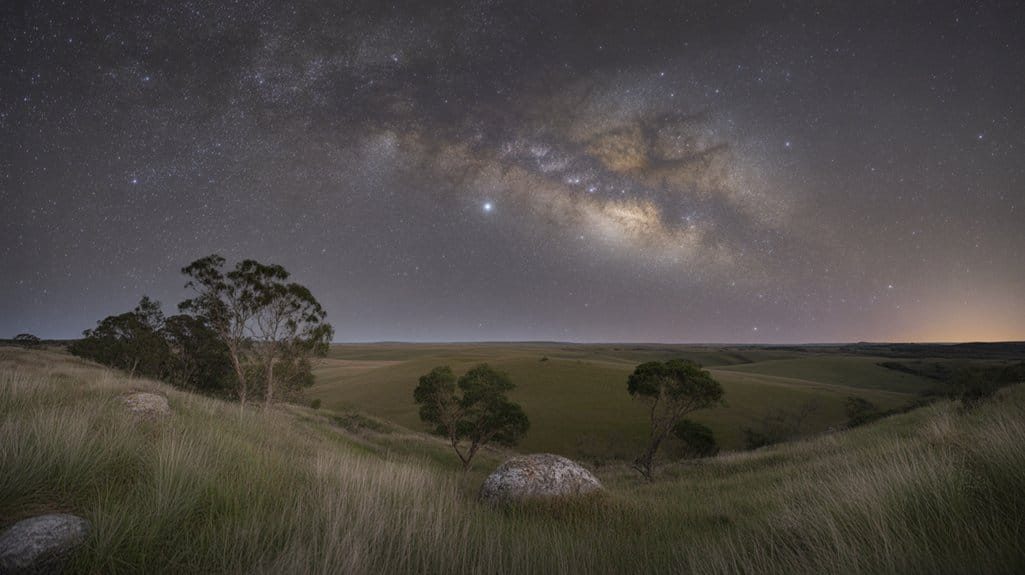
Uruguay’s interior regions provide exceptional opportunities for observing the night sky. The country’s open plains, located well away from major population centers, allow stargazers to see celestial objects that remain hidden in urban areas. Rocha Lagoon exemplifies this advantage, its remote location creates the dark conditions necessary for viewing faint constellations and deep-sky objects.
Villa Serrana offers similar benefits for those interested in astrophotography. The area’s elevation and distance from artificial lighting make it particularly suitable for capturing long-exposure images of the Milky Way and other astronomical phenomena. Photographers can achieve results here that would be impossible near cities.
The key factor making these locations effective is their lack of light pollution. Urban areas produce artificial brightness that washes out fainter stars and celestial features. Uruguay’s interior escapes this problem due to low population density and minimal industrial development. Lower humidity levels inland also contribute to clearer atmospheric conditions compared to coastal areas, where moisture can blur astronomical observations.
These remote locations offer practical advantages beyond just darkness. Unobstructed horizons allow observers to track celestial objects from rise to set, while the quiet environment helps people focus on detailed observations. Amateur astronomers regularly choose these spots for serious viewing sessions because the conditions rival those found at professional observatories in other countries. These destinations also support sustainable rural development by attracting visitors who contribute to local economies through star tourism activities.
When to Visit for Optimal Night Sky Viewing
Timing a stargazing trip to Uruguay can transform your experience from spotting a few dim stars to watching thousands of celestial objects paint the night sky. Three key elements determine viewing quality: seasonal positioning of the Milky Way’s galactic center, lunar brightness, and weather patterns.
The galactic center, the brightest, most star-dense portion of our galaxy, reaches its highest point in Uruguay’s sky from April through September. During these months, this spectacular region climbs directly overhead after sunset, displaying the iconic dark dust lanes and bright star clouds that make the Milky Way so recognizable. Outside this window, the galactic center sits low on the horizon or remains hidden below it.
Moon phases drastically affect how many stars you’ll see. A full moon can overpower faint stars and wash out the Milky Way entirely, while a new moon provides the darkest skies. Plan visits around new moon periods, or arrive after moonset during other phases. Astronomical calendars show exact moon phases and setting times for any given month.
Weather patterns across Uruguay follow predictable seasonal trends. Winter months (June through August) typically offer the most consistent clear skies, with high-pressure systems dominating and fewer storm fronts moving through. The colder atmosphere during winter also enhances visibility of celestial objects. Spring and fall present mixed conditions, some excellent nights interrupted by occasional cloud cover from passing weather systems. Summer brings more frequent storms and humidity, though clear nights still occur regularly.
Peak Galactic Center Months
When planning a stargazing adventure, timing matters just as much as location. Uruguay sits in the Southern Hemisphere, giving stargazers clear access to the galactic core during specific months. The best viewing period spans mid-March through mid-October, when our galaxy’s dense center rises above the horizon.
July and August deliver the most dramatic shows. During these months, the bright galactic bulge sits directly overhead around midnight, ideal conditions for both naked-eye observation and astrophotography. The high angle reduces atmospheric interference, making faint details easier to spot.
Early birds can catch the galactic center before sunrise from February through June, though this requires getting up well before dawn. The winter months of November through January offer no viewing opportunities since the sun’s position blocks the galactic center completely.
June’s winter solstice creates Uruguay’s premier stargazing conditions. The combination of long nights, typically clear skies, and the galactic center’s peak elevation produces optimal visibility. During this period, the core remains visible for up to 10 hours, giving observers extended time to study the region’s star clouds and dark dust lanes that define our galaxy’s structure. The galactic center appears brightest in the constellations of Sagittarius, Ophiuchus, and Scorpius, which dominate the winter sky from Uruguay’s viewing locations.
Lunar Phase Timing Tips
The moon’s brightness dramatically affects what you can see in Uruguay’s night sky. When it’s full, that intense lunar glow washes out delicate star clusters, galaxies, and nebulae that would otherwise be visible to the naked eye. You’ll want to check moon phases before planning your stargazing trip to get the most out of Uruguay’s exceptional dark skies.
New moon periods give you the blackest possible nights, these are your best bet for photographing the Milky Way or spotting those hard-to-find deep space objects. The moon simply isn’t there to compete with starlight.
Quarter moons create interesting opportunities if you know how to work with them. A first quarter moon sets right around midnight, so your evening viewing gets interrupted, but you’ll have pristine dark skies from midnight onward. Last quarter moons do the opposite, they rise near midnight, keeping your evening hours moon-free while lighting up the pre-dawn sky. Since quarter moons only show half their illuminated face, they produce much less interference than a full moon’s overwhelming brightness.
Uruguay’s remote locations away from major cities already give you a huge advantage for astronomy. Timing your visit to work with natural moon cycles means you won’t have to battle unnecessary light pollution from above while you’re exploring the southern hemisphere’s stellar highlights. If you’re interested in lunar observation specifically, the period from new moon to two days past first quarter offers optimal viewing conditions with enhanced surface detail visibility.
Seasonal Weather Considerations
Seasonal Weather Considerations
Moon phases matter, but Uruguay’s weather patterns play an equally important role in determining whether stargazers actually get to see those stars. Seasonal variations create distinct windows for night sky viewing adventures.
The dry season from May through October delivers the clearest skies, with cloud cover dropping significantly during these months. Winter nights bring biting cold and strong winds that challenge comfort levels for extended outdoor viewing sessions.
Best viewing periods include:
- Late February through early June for balanced temperatures
- August through early December as a secondary window
- Avoiding the wet season from December through March when clouds arrive
- Planning around July’s coldest temperatures that can drop near freezing
Summer’s heat creates atmospheric distortion that makes stars appear to shimmer and dance, reducing viewing quality despite clearer daytime conditions. Spring brings dramatic thunderstorm buildups that can quickly block celestial views just when conditions seemed perfect for stargazing. Stargazers should bring equipped photography gear to capture celestial moments during optimal viewing windows.
Dark Skies and Unique Natural Landscapes
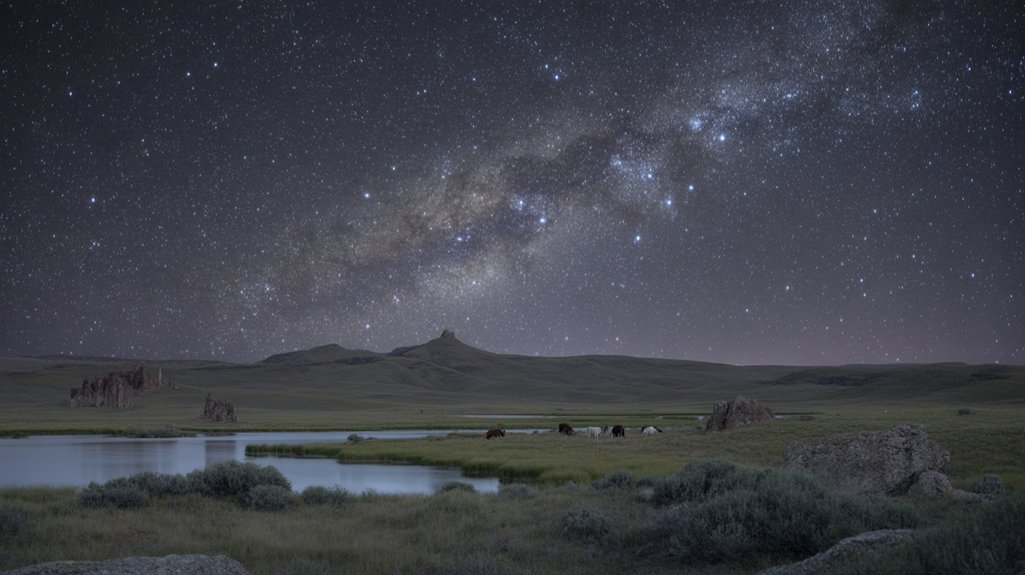
Uruguay’s geography creates outstanding conditions for stargazing. Cabo Polonio National Park stands out as one of the country’s best dark sky locations. The park operates without electrical infrastructure, meaning campfires provide the only artificial light while brilliant stars shine overhead. This coastal sanctuary allows visitors to see constellations that remain invisible from cities.
Villa Serrana and Quebrada de los Cuervos deliver similarly excellent viewing conditions for anyone interested in celestial photography. The ancient rock formations at Arequita Hill serve as striking foregrounds when photographing star-filled skies. Light pollution measurements at these locations register below 4 on the Bortle Scale, a scientific rating system where lower numbers indicate darker skies.
Rural cattle ranches scattered across the pampas grasslands function as natural astronomy retreats, often sitting just hours from Montevideo. The flat terrain near Sacromonte provides clear, unobstructed views of the Milky Way galaxy. Remote areas in Tacuarembó and Paysandú departments maintain the kind of darkness that has become uncommon in most developed regions. Estancias throughout the countryside are converting from agriculture to dedicated dark-sky tourism retreats that cater to astro-curious visitors. Visitors to these locations can observe stars whose light has traveled across space for thousands of years, reaching Earth through skies that remain largely unchanged since pre-industrial times.
Uruguay’s Observatories and Astronomy Events
Where can stargazers find telescopes and experts to guide their astronomical journeys? Uruguay’s observatories work closely with educational and scientific groups to welcome visitors seeking cosmic discoveries.
The Los Molinos Observatory, run by the Ministry of Education and Culture near Montevideo, provides public access to professional-grade equipment. International astronomy organizations have recognized the Montevideo National Observatory for its long history of celestial research. The modern Kappa Crucis Observatory supports sky observations across the region, while Cagigal Observatory connects Uruguay to South America’s broader stargazing community. The Argentine Radio Astronomy Institute in Villa Elisa extends collaborative research opportunities throughout the southern continent.
Two permanent planetariums operate year-round programs that bring space closer to earth-bound audiences. The Ministry of Tourism promotes specific dark-sky locations including Cabo Polonio and Cerro Arequita, where minimal light pollution creates ideal conditions for night sky events.
Uruguay’s naturally dark skies complement these scientific facilities, offering both guided experiences with experts and opportunities for independent exploration. The combination of professional observatories, educational planetariums, and designated viewing areas provides multiple pathways for astronomical discovery across the country.
What to Know Before Your Stargazing Trip
Planning a successful stargazing adventure in Uruguay means working with the moon’s natural cycle. New moon phases eliminate lunar brightness that normally washes out faint celestial objects, allowing you to spot distant galaxies, nebulae, and star clusters that remain invisible during brighter nights.
The country’s location in the Southern Hemisphere opens up viewing opportunities for constellations like the Southern Cross and the Magellanic Clouds – astronomical features that northern observers never see. Rural areas away from Montevideo’s light pollution provide the clearest skies, with locations like Cabo Polonio and the interior departments offering exceptional visibility.
Weather patterns play a crucial role in your success. Uruguay’s clear, dry winter months from June to August typically deliver the most stable atmospheric conditions for astronomy. Coastal areas can experience sudden fog banks rolling in from the Atlantic, while inland locations tend to maintain clearer conditions throughout the night.
Essential equipment includes a red flashlight to preserve your night vision, warm clothing since temperatures drop significantly after sunset, and a comfortable chair or blanket for extended observation sessions. Binoculars reveal details invisible to the naked eye without requiring the setup complexity of telescopes, making them ideal for beginners exploring Uruguay’s southern skies. Bringing along snacks and water helps maintain energy and hydration during lengthy observation sessions under the stars.
Best Moon Phase Windows
Best Moon Phase Windows
When you’re planning a stargazing adventure, the moon’s phase determines what you’ll actually see in the sky. Uruguay’s low light pollution levels across much of the country create ideal conditions, but only when lunar brightness doesn’t interfere.
Optimal Viewing Windows:
- New Moon , Complete darkness occurs once monthly for 2-3 nights, allowing clear views of the Milky Way’s galactic center and distant star clusters
- Waxing Crescent , Moon sets around 9-10 PM, giving you several hours of dark sky viewing afterward
- Waning Crescent , Moon rises after 2-3 AM, so midnight stargazing sessions remain unobstructed
- Full Moon Periods , Lunar brightness reduces visible stars by up to 90%, making deep-sky observation nearly impossible
Astronomy apps like SkySafari or PhotoPills provide accurate moon rise and set times for your specific location. Uruguay’s interior regions, particularly around Tacuarembó and the northern departments, offer some of South America’s darkest skies when timed with these darker lunar phases. The difference between moonlit and moonless nights transforms your view from seeing perhaps 50 bright stars to observing thousands, plus nebulae and galaxies invisible during brighter periods. Remember to check weather forecasts before finalizing your stargazing plans, as cloud cover can eliminate visibility regardless of the moon phase.
Essential Gear and Preparation
Uruguay’s exceptionally dark skies give stargazers a natural edge, but the right equipment transforms a casual evening into something truly memorable. Quality optics form the foundation of any stargazing kit, binoculars with 7x or 10x magnification excel at revealing moon craters and star clusters that remain invisible to the naked eye. New astronomers often prefer simple Dobsonian telescopes since they’re straightforward to set up and use.
Beyond telescopes and binoculars, several practical items make the difference between frustration and success. Red flashlights protect your night vision while you consult star charts or adjust equipment. Digital apps like SkyPortal prove invaluable for identifying constellations and planets overhead. A solid tripod eliminates the hand shake that turns steady stars into dancing points of light. Traditional star maps complement digital tools by providing reliable, location-specific guidance for learning constellations.
Uruguay’s Atlantic winds create surprisingly cool conditions, particularly along the coast where many of the country’s best viewing spots are located. Summer temperatures can drop 15-20 degrees Celsius after sunset, making layered clothing essential. Pack a warm hat, windbreaker, and portable chair for comfort during multi-hour sessions. A moon filter becomes crucial equipment when observing lunar details, without one, the moon’s brightness overwhelms most telescopes and washes out surface features. Smart preparation elevates casual sky-watching into serious astronomical observation.
Building a Multi-Day Stargazing Itinerary

Building a Multi-Day Stargazing Itinerary
Stringing together several dark-sky locations across Uruguay transforms a simple stargazing trip into an unforgettable adventure. You’ll want to start at Cabo Polonio in Rocha, where the complete absence of public lighting provides exceptional conditions for both naked-eye observation and astrophotography. From there, head inland to Villa Serrana’s former Eta Carinae observatory site, which hosts regular Open Sky Planetarium events.
Your multi-day route could flow like this:
- Night one: Cabo Polonio for pristine coastal darkness
- Night two: Salto del Penitente park with secure overnight camping
- Night three: Arequita Hill near established municipal campsites
- Night four: Quebrada Laureles, positioned well away from urban light pollution
Timing your trip between March and October gives you the best view of our galaxy’s central region, which appears most prominently during these months. New moon periods offer the darkest skies, so plan your dates accordingly. Each location provides full camping facilities, which means you can explore the night sky at your own pace without worrying about rigid tour schedules or accommodation bookings. For a coastal alternative, the Barrancas de San Pedro stretch offers 8 km of cliffs where light pollution from nearby cities has minimal impact on viewing stars and the Milky Way.
References
- https://en.travel2latam.com/news-78178-five-places-to-enjoy-the-night-sky-in-uruguay
- https://www.guruguay.com/stargazing-places-in-uruguay/
- https://uruguaynatural.com/en/experiences/un-paseo-por-el-cielo-y-las-estrellas/
- https://trips-southamerica.com/travel-theme/astronomical-tourism/
- https://evendo.com/locations/uruguay/aigua/attraction/observatorio
- https://www.foratravel.com/guides/S3FZSN/amazing-trips-to-uruguay-explore-art-adventure-and-nature-marc-scholnick
- https://www.youtube.com/watch?v=p_6sJDdSjOw
- https://samiraholma.com/4-weeks-in-uruguay-7-beautiful-places-to-visit/
- https://www.tripadvisor.com/Attractions-g294064-Activities-c49-t40-Uruguay.html
- https://www.travelandtourworld.com/news/article/bolivia-unites-chile-argentina-peru-ecuador-colombia-uruguay-and-paraguay-as-travel-leaps-into-the-stratosphere-with-south-americas-stellar-escapes-transforming-into-the-worlds/