
Finding the right country to call home requires careful thought and planning. Most individuals start by looking at practical needs like safety, healthcare, and cost of living. Uruguay stands out among South American nations for its unique blend of benefits that attract families worldwide. The country offers something special that goes beyond basic requirements. What makes this small nation so appealing to those seeking a fresh start abroad?
From 195 Countries to One Perfect Match

When faced with the life-changing decision to leave their home country, one couple took an unusually thorough approach to finding their perfect new home. They didn’t just pick a place that sounded nice or somewhere friends had visited. Instead, they carefully studied 195 countries around the world.
Their process began with a simple brainstorming session using cards and markers. They talked through what mattered most to them in their new life abroad. This wasn’t about finding any destination—it was about discovering where they truly belonged.
The couple created a detailed list of must-have features for their future home. They wanted to drive on the right side of the road, enjoy four distinct seasons, and have access to excellent healthcare as they aged. Safety was essential, so they looked for places with low crime rates and minimal corruption. They also valued equality, stable democracy, and communities that welcomed newcomers with open arms.
Research became their daily routine for weeks. They discovered how little they actually knew about countries beyond the obvious tourist destinations. Political stability, crime statistics, and healthcare systems became their primary focus areas. Using a large world map, they systematically marked potential countries with different colors, eliminating those that didn’t meet their standards.
The process was methodical but exciting. Each eliminated country brought them closer to their ideal match. Countries that seemed perfect on paper sometimes failed when examined more closely. Denmark and the Netherlands made their short list but were ultimately rejected because the couple craved more significant change and adventure.
Uruguay emerged as their clear winner. This South American nation checked every box on their carefully crafted list. The combination of political stability, welcoming culture, good healthcare, and pleasant climate made it irresistible. More importantly, Uruguay offered the chance to experience something genuinely new and different.
Their story shows that finding where you belong doesn’t happen by chance. It requires honest reflection about what matters most to you and careful research to match those needs with reality. Sometimes the perfect place isn’t where you’d expect—but that makes discovering it even more special.
Medical Care for Aging
Uruguay offers high-quality medical care with a well-developed healthcare system that ranks among the best in Latin America. The country has both public and private healthcare options, with modern facilities and well-trained medical professionals. Many doctors speak multiple languages, and the healthcare infrastructure is particularly strong in urban areas like Montevideo and Punta del Este. The system provides comprehensive coverage and is known for its accessibility and affordability compared to many developed countries.
How does Uruguay’s healthcare system work for expatriates?
Expatriates in Uruguay can access healthcare through both public and private systems. Residents contribute to the national health insurance system, which provides coverage through various healthcare providers called “mutualistas.” Private health insurance is also available and popular among expats, offering shorter wait times and additional services. Foreign residents can typically join the public system after establishing legal residency, making healthcare accessible and affordable for aging immigrants.
Are there specialized medical services for elderly patients in Uruguay?
Uruguay has well-developed geriatric care services with specialized facilities and professionals trained in elderly care. The country offers comprehensive services including home healthcare, assisted living facilities, and specialized medical centers focused on age-related conditions. Many healthcare providers offer specific programs for chronic disease management, rehabilitation services, and preventive care tailored to older adults. The healthcare system recognizes the needs of an aging population and continues to expand specialized services.
What are the costs of medical care for retirees in Uruguay?
Medical care costs in Uruguay are significantly lower than many developed countries, making it attractive for retirees on fixed incomes. Private health insurance typically costs between $100-300 per month depending on coverage level and age. Public healthcare through the national system is very affordable, with monthly contributions based on income. Prescription medications are generally less expensive than in North America or Europe, and routine medical visits are reasonably priced even for private care.
How accessible are hospitals and medical facilities in Uruguay?
Uruguay has good medical infrastructure with hospitals and clinics distributed throughout the country, though the highest concentration of specialized facilities is in Montevideo. Most major cities have well-equipped hospitals with modern technology and emergency services. Rural areas are served by smaller clinics and mobile health services. The compact size of the country means that specialized care in the capital is relatively accessible from anywhere, with good transportation connections facilitating medical travel when needed.
Do doctors in Uruguay speak English?
Many doctors in Uruguay, particularly in private practice and urban areas, speak English along with Spanish and often Portuguese. Medical professionals frequently receive international training and many have studied abroad, making them comfortable communicating in multiple languages. However, learning basic Spanish is recommended for daily healthcare interactions and to communicate with support staff. Translation services are available at major hospitals and many healthcare facilities cater specifically to international residents and medical tourists.
What preventive healthcare services are available for aging expatriates?
Uruguay’s healthcare system emphasizes preventive care with regular health screenings, vaccination programs, and wellness check-ups included in most health plans. The system offers comprehensive annual physical exams, cancer screenings, cardiovascular monitoring, and bone density tests appropriate for aging adults. Many healthcare providers offer wellness programs focusing on nutrition, exercise, and chronic disease prevention. Mental health services and social support programs are also available to address the comprehensive health needs of older residents.
How does Uruguay’s healthcare compare to other South American countries?
Uruguay consistently ranks at the top of South American countries for healthcare quality and accessibility. The World Health Organization recognizes Uruguay’s healthcare system as one of the most efficient in the region. Life expectancy in Uruguay is among the highest in South America, and the country has successfully eliminated many tropical diseases common in neighboring countries. The healthcare infrastructure is more developed and accessible than most regional counterparts, with better doctor-to-patient ratios and modern medical equipment.
Are prescription medications readily available in Uruguay?
Prescription medications are widely available throughout Uruguay through an extensive network of pharmacies. Many international pharmaceutical brands are available, and generic alternatives help keep costs reasonable. Pharmacies are well-stocked and professionally managed, with pharmacists able to provide medication counseling. Some specialized medications may require ordering from larger cities, but the distribution system ensures availability. Import regulations allow residents to bring personal medications, and many common medications are available over-the-counter that might require prescriptions elsewhere.
What emergency medical services exist in Uruguay?
Uruguay has a reliable emergency medical system with ambulance services available throughout the country. The emergency number 911 connects to medical, fire, and police services. Major hospitals have 24-hour emergency departments with trauma care capabilities. Emergency helicopter services are available for serious situations requiring rapid transport to specialized facilities in Montevideo. Response times are generally good in urban areas, and the emergency medical technicians are well-trained. Most emergency services can handle communication in multiple languages when needed.
Uruguay’s Cultural Appeal
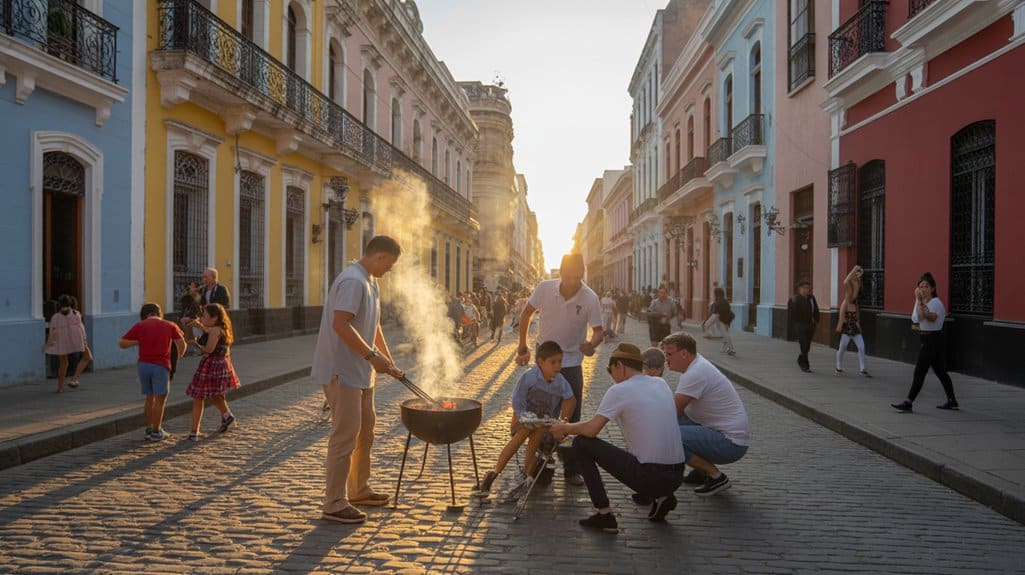
Beyond the practical benefits of quality healthcare, many individuals find themselves drawn to Uruguay’s rich cultural scenery that blends European sophistication with Latin American warmth. This small nation offers an inviting atmosphere where newcomers can feel at home while experiencing something wonderfully different.
| Cultural Element | European Influence | Latin Spirit |
|---|---|---|
| Architecture | Colonial buildings | Vibrant colors |
| Food Scene | Wine culture | Asado traditions |
| Arts | Classical music | Tango rhythms |
| Social Life | Café culture | Family gatherings |
| Festivals | Traditional events | Carnival energy |
Uruguay’s welcoming nature makes it easier for families to build meaningful connections and welcome their new adventure.


