
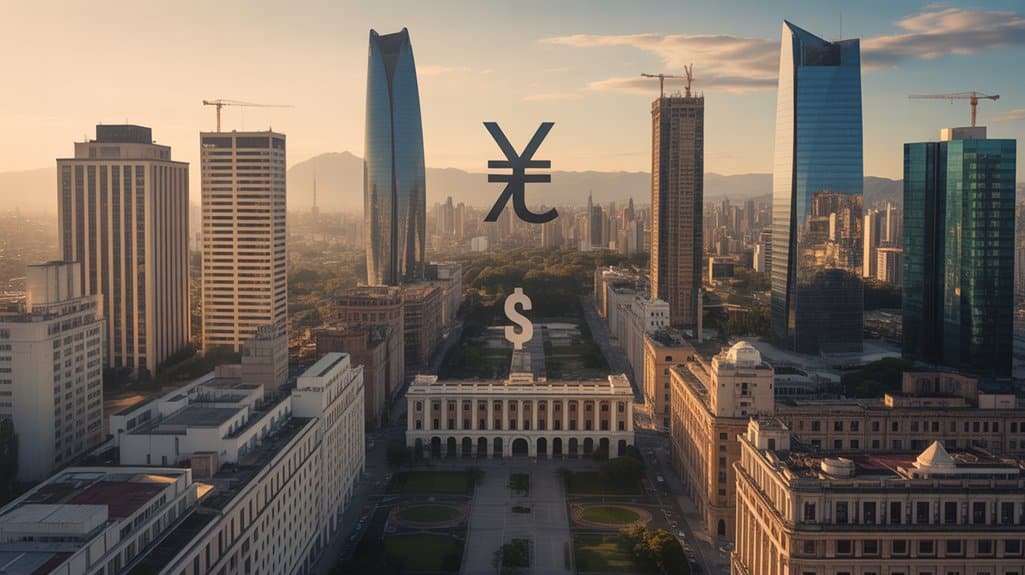
Since May 2026, the EU, Mercosur trade agreement has quietly begun reshaping real estate investment across South America. Reduced tariffs have triggered demand for warehouses, factories, and farmland positioned near major transportation routes. European businesses are expanding operations in the region, making strategically located properties increasingly valuable assets.
The most significant shifts in land values are driven by improved logistics infrastructure and proximity to export hubs. Investment opportunities are concentrating in areas that facilitate efficient trade flows between South America and Europe.
Key Takeaways
- Tariff elimination on 91, 92% of goods drives demand for logistics hubs, warehouses, and manufacturing facilities across Mercosur regions.
- Strategic property near ports and industrial zones appreciates due to anticipated 40% surge in EU exports, which requires expanded infrastructure capacity.
- Agricultural land values shift as European farming companies evaluate relocation or expansion within South American markets.
- The automotive sector seeks assembly plant locations while raw material access spurs processing facility construction and supply chain infrastructure development.
- Infrastructure bonds tied to trade corridors offer medium, high growth potential with reduced cross-border risk from regulatory harmonization.
Trade Agreement Reshapes Property Markets

The EU-Mercosur trade deal has opened access to 800 million new consumers for European businesses. Beyond export opportunities, the agreement is redirecting investment patterns in real estate development and infrastructure across the region.
Tariff elimination on industrial goods and preferred access to Mercosur’s public procurement sector are driving demand for commercial property. Argentina, Brazil, Paraguay, and Uruguay are attracting European logistics hubs, manufacturing facilities, and distribution centers. Companies capitalizing on the projected 40% surge in EU exports require immediate warehouse, land, and infrastructure capacity.
The automotive sector demonstrates this trend most clearly. European carmakers are scouting locations for assembly plants and parts manufacturing to serve growth markets beyond existing production capacity. Simultaneously, access to raw materials such as Bolivian lithium is spurring construction of processing facilities and supply chain infrastructure throughout the region.
Strategic property near ports, highways, and industrial zones is appreciating as developers and investors position themselves for incoming European capital flows. Agricultural land values are also shifting as European farming companies evaluate relocation or expansion within Mercosur countries, where lower production costs and tariff-free market access improve financial viability. The sustainability chapter’s non-binding language on environmental protections may also reduce regulatory risk premiums for land development in sensitive ecosystems.
The property market movements reflect fundamental capital reallocation. The trade framework has eliminated barriers on 91% of goods traded between the two blocs, creating sustained structural change rather than speculative activity.
EU-Mercosur Trade Pact Details
The European Union and Mercosur finalized their largest trade deal on January 17, 2026, with provisional application beginning May 1. The agreement eliminates 91-92% of tariffs over 15 years, creating unprecedented market access between 780 million consumers across both regions.
Tariff Elimination Framework
Mercosur removes 93% of tariffs for EU exporters, while the EU eliminates comparable rates for South American goods. EU manufacturers gain progressive tariff removal on vehicles, pharmaceuticals, chemicals, and machinery. Mercosur exporters benefit from EU tariff elimination on footwear, textiles, and automotive parts.
Agricultural Market Access
European dairy producers receive zero-duty access to Mercosur markets for cheese, milk powder, and infant formula within established quotas. South American beef receives annual import quotas of 99,000 metric tons in Europe. Mercosur gains increased access for sugar, ethanol, honey, and rice.
An enhanced safeguard regulation approved February 10, 2026, permits temporary suspension of tariff preferences on agricultural imports if volumes exceed sustainable levels for EU producers.
Trade Volume and Scope
Annual trade between regions ranges from €40 billion to €45 billion. The Interim Trade Agreement entered provisional application without requiring full European Parliament consent, streamlining implementation across member states. The agreement will eventually be replaced by the EMPA once the comprehensive EU-Mercosur Partnership Agreement completes ratification by all 27 EU Member States and Mercosur signatories.
Product Protections
The pact establishes legal protection for 344 European products, including roquefort, comté, and champagne, preventing imitation in Mercosur markets. The automotive sector receives significant tariff reductions for vehicles and parts.
Long-term Portfolio Diversification Opportunities
The EU-Mercosur agreement creates investment opportunities in real estate markets across Europe and South America. Emerging agribusiness zones are developing rapidly in the region. Infrastructure bonds tied to trade corridors present attractive options for portfolio allocation. Direct real estate investments in these emerging markets offer low correlation to equities, providing meaningful diversification benefits for long-term portfolios navigating volatile market conditions.
| Investment Type | Region | Growth Potential |
|---|---|---|
| Emerging agribusiness | South America | High |
| Infrastructure bonds | EU-Mercosur corridor | Medium-High |
| Commercial property | Major cities | Medium |
| Industrial facilities | Border regions | High |
Cross-border real estate ventures carry reduced risk in this environment. Currency shifts and regulatory changes create new investment openings. Long-term portfolios benefit from geographic diversification. The agreement redirects capital flows toward emerging markets and infrastructure development.
Diversification across continents becomes achievable through this expanded framework. Investors can access markets previously considered less accessible. This pact fundamentally alters capital allocation patterns in both regions.
References
- https://www.globalpolicy.org/en/news/2026-01-28/why-eu-mercosur-agreement-bad-news-global-sustainability
- https://think.ing.com/articles/eu-mercosur-deal-a-strategic-milestone/
- https://ukandeu.ac.uk/the-mercosur-agreement-exposes-dangerously-divided-eu/
- https://www.csis.org/analysis/what-are-implications-eu-mercosur-free-trade-agreement
- https://www.usitc.gov/publications/332/working_papers/2022-07-b_bethmann_gracia_ec_eu-mercosur_fta.pdf
- https://dobetter.esade.edu/en/mercosur-deal-promise-challenges
- https://www.whitecase.com/insight-alert/eu-provisionally-apply-eu-mercosur-interim-trade-agreement-pending-cjeu-opinion
- https://fortune.com/2026/03/23/eu-mercosur-deal-25-years-negotiatiations/
- https://en.wikipedia.org/wiki/EU, Mercosur_Partnership_Agreement
- https://policy.trade.ec.europa.eu/eu-trade-relationships-country-and-region/countries-and-regions/mercosur/eu-mercosur-agreement/text-agreement_en