
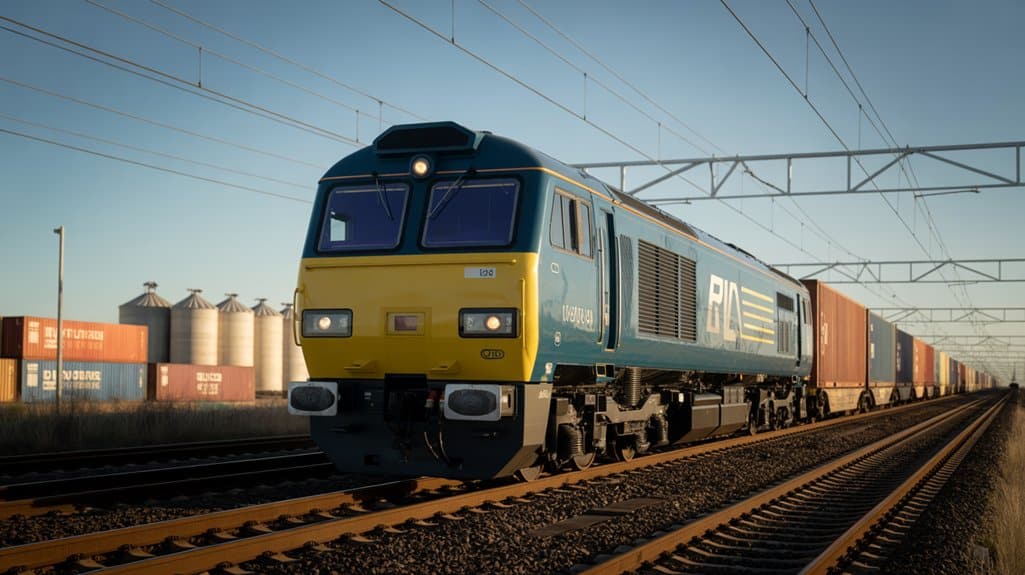
Uruguay’s freight transport system just got a major upgrade. Seven brand-new locomotives arrived at Montevideo port, ready to change how goods move across the country. These Brazilian-built machines aren’t just bigger, they’re smarter, greener, and built for the future. Each one can pull up to 25 wagons while cutting down road traffic and emissions. This isn’t just about moving cargo faster. It’s about reshaping Uruguay’s entire logistics framework in ways that could surprise everyone.
Key Takeaways
- Seven Brazilian-made locomotives, each weighing 102 tons with 2,500 horsepower, will transform Uruguay’s freight transport by 2026.
- Each locomotive can haul 25 wagons carrying up to 40 containers, significantly expanding cargo capacity for agro-industrial sectors.
- Modern tracking systems will provide real-time cargo updates, reducing road congestion and emissions through sustainable rail transport.
- Public-private partnerships between government infrastructure provider AFE and RAS Group enhance efficiency and competitiveness for businesses.
- Full deployment by March 2026 positions Montevideo as a logistics hub, attracting investment and creating jobs through improved freight capabilities.
Historic Arrival at Montevideo Port

A powerful hum filled the air as three massive locomotives rolled off the ship at Montevideo’s port, signaling a new chapter for Uruguay’s transport network. Transport Minister Lucía Etcheverry joined railway authorities to witness this meaningful moment. The arrival represents progress in overcoming logistical challenges that have long limited freight movement. These Brazilian-made machines join the RAS Group fleet, marking serious infrastructure investment in the nation’s railways. Four more locomotives will follow, creating fresh opportunities for businesses and workers alike. This event demonstrates Uruguay’s commitment to building a modern system that serves everyone’s needs while strengthening economic independence through better connections.
Modernizing Uruguay’s Railway Infrastructure
Seven powerful locomotives stand ready to alter how goods move across Uruguay’s terrain. These Brazilian-built machines represent more than metal and horsepower, they embody a shift toward sustainable transport choices. Each 102-ton unit can haul up to 25 wagons, reducing road congestion and emissions.
The railway revival connects digital innovations with traditional infrastructure. Modern tracking systems will monitor cargo movement, giving businesses real-time updates. This blend of old and new creates opportunities for entrepreneurs seeking efficient shipping routes.
Uruguay’s investment signals confidence in rail’s future. By March 2026, these locomotives will strengthen the nation’s logistics backbone, offering freedom from dependence on single transport methods.
Technical Capabilities of the New Fleet
Power defines these new locomotives in ways that change Uruguay’s transport environment. These Brazilian-built machines bring remarkable locomotive specifications that promise real change for freight transport efficiency.
What makes these units special:
- Each locomotive generates 2,500 horsepower, enough muscle to haul 20-25 wagons
- At 102 tons per unit, they balance strength with smart engineering
- They can move up to 40 containers per wagon, altering cargo possibilities
These zero-kilometer units offer agro-industrial sectors newfound freedom in moving goods. Fresh equipment means reliable service, letting businesses plan routes confidently. Uruguay’s logistics network gains genuine capability here.
Timeline for Full Operational Deployment
While impressive technical features draw attention, real change happens when these machines actually start working. The complete fleet of seven locomotives won’t begin full operation until March or April 2026. This timeline gives crews time to handle logistical challenges like training operators and preparing track systems. Each operational milestone brings Uruguay closer to a modernized freight network that serves everyone’s needs. The wait might seem long, but careful preparation ensures these powerful machines will run smoothly for years. Good things take time, especially when building transportation systems that support economic freedom and growth across the nation.
Strengthening Montevideo as a Regional Logistics Hub
As these locomotives roll into Montevideo, they bring more than just freight capacity, they carry the promise of altering Uruguay’s capital into a true logistics powerhouse. With logistics innovations driving progress, the city stands ready to serve as a vital connection point for trade across South America.
Three ways Montevideo benefits:
- Enhanced port capabilities link rail and sea transport seamlessly
- Regional collaboration opens new trade routes with neighboring countries
- Stronger competitive edge attracts international business partnerships
This alteration gives Uruguay freedom to chart its own economic course, building prosperity through smart infrastructure choices that serve everyone.
Economic Benefits for Public and Private Sectors

Collaboration converts what could be a simple railway upgrade into a shared victory for Uruguay’s entire economy. Public private partnerships create opportunities that benefit everyone involved. The government provides essential infrastructure through AFE, while businesses gain better freight transport strategies to move their products efficiently.
This teamwork approach strengthens both sectors simultaneously. Companies can ship goods faster and cheaper, boosting their competitiveness. Meanwhile, the state builds valuable infrastructure that serves the nation for decades. Regional producers gain improved access to markets, enhancing their ventures’ visibility. Montevideo’s growing role as a logistics hub attracts more investment, creating jobs and economic growth throughout Uruguay.
Enhanced Efficiency for Agro-Industrial Transport
Uruguay’s farmers and agro-industrial producers gain powerful new tools with these modern locomotives. Each 2,500-horsepower unit alters how goods move from field to market, creating faster routes and lower costs for everyone involved.
Key advantages for agricultural logistics:
- Massive capacity , Each locomotive pulls 20-25 wagons carrying up to 40 containers
- Supply chain optimization , Faster delivery times mean fresher products reach destinations quicker
- Cost savings , Moving larger volumes in single trips reduces fuel expenses and environmental impact
These locomotives open new possibilities for rural communities, connecting remote farms to international markets with unprecedented efficiency.
Prospects for Passenger Rail Service Expansion
While freight locomotives change how goods travel across Uruguay, individuals may soon enjoy modern rail service too. Officials are exploring whether passenger trains could return to daily life. A feasibility study examines which routes make sense and what repairs they need. The Rivera-Tacuarembó line shows promise for upgrades. Leaders want impact analysis completed before making big choices. Better railways mean more freedom to travel without relying only on cars or buses. These studies help ensure investments serve inhabitants well. Passenger rail could connect communities in ways that respect both tradition and progress.