
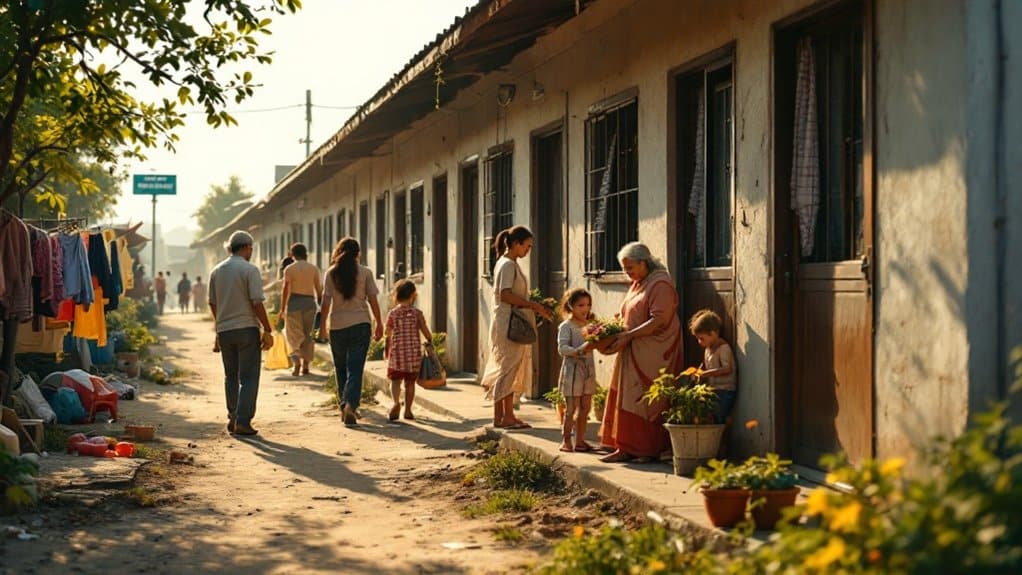
Getting a roof over your head in rural Uruguay is a different kind of challenge than what most people in Montevideo or the coast deal with. Land access, infrastructure gaps, and scattered populations make the housing market thin in departments like Rivera, Artigas, or Cerro Largo, and that’s exactly where MEVIR tends to show up.
Backed by the Uruguayan government, MEVIR targets rural and semi-rural families who genuinely can’t access housing through conventional means. It’s not just about low income, it’s about geographic isolation, informal employment, and the kind of vulnerability that doesn’t always show up cleanly on paper. The program looks at the full picture before deciding who qualifies.
Once a family is identified as eligible, the process moves toward a direct housing allocation. That means a real unit, built or assigned specifically for them, not a subsidy they have to figure out how to spend. For families in dispersed rural areas, that distinction matters a great deal.
What’s worth understanding, especially if you’re advising a family in this situation, is that MEVIR operates within a broader social housing framework that complements, not competes with, the private market. It fills a gap that no private developer would find commercially viable. Knowing where that line sits helps you guide clients toward the right option from the start.
Key Takeaways
MEVIR’s direct allocation program is one of the most practical pathways to homeownership for rural families in Uruguay, particularly those earning between 12 and 60 UR monthly. What makes this program stand out is how it goes beyond basic income thresholds , social vulnerability plays a central role in selecting beneficiaries, meaning the families who genuinely need housing the most move to the front of the line.
Families who don’t own land are placed in clustered rural settlements, which are built through community mutual aid participation. This model has proven remarkably effective in Uruguay’s interior, where tight-knit communities make collective construction both practical and sustainable.
The financial structure is equally compelling. The National Housing Fund covers up to 70% of costs, and there’s no down payment required , a significant advantage in markets where upfront capital is often the biggest barrier to ownership.
MEVIR specifically focuses on towns with fewer than 5,000 residents, and that’s no accident. In smaller localities across Uruguay, private developers simply don’t find it viable to build affordable housing, leaving low-income families with very few options. This program fills that gap directly, bringing structured, subsidized homeownership to the communities that need it most.
What Is MEVIR and Who Does It Serve?
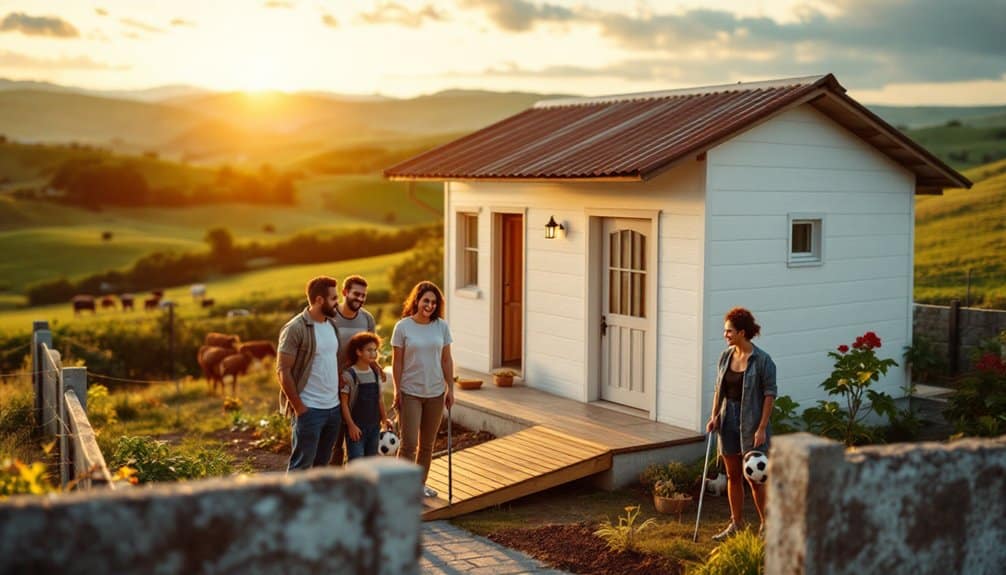
Uruguay has always had a unique relationship with its rural communities, and MEVIR is one of the clearest examples of that. Founded in 1967, this public institution was designed with a straightforward purpose , giving rural families access to safe, dignified housing. If you’re exploring Uruguay’s property landscape, understanding MEVIR helps you see how deeply the country values housing as a right, not a privilege.
The institution started by focusing on rural workers living in genuinely difficult conditions , inadequate shelter, no basic services, limited access to support. Over the years, its reach expanded to include small family farmers and other vulnerable households spread across Uruguay’s interior, where distance from urban centers can make even basic needs hard to meet.
What makes MEVIR stand out is that it goes beyond construction. Families receive access to water, electricity, and community infrastructure , the kind of foundation that turns a house into a real home. For anyone working in Uruguayan real estate, that distinction matters, because property value is always tied to what surrounds it.
The families MEVIR serves are those facing economic hardship in rural areas, far from the resources that city residents often take for granted. Uruguay has made a clear commitment to making sure that distance doesn’t mean disadvantage , and that’s worth keeping in mind when you’re thinking about the country’s broader real estate values and priorities. To date, MEVIR has built over 33,000 homes across nearly every small town in Uruguay, representing roughly 3% of the country’s entire population.
Which Families Qualify for MEVIR Housing?
MEVIR housing isn’t for everyone, and honestly, that’s what makes it work. The program is designed to reach families who are genuinely stuck , people who need a real solution and don’t have the means to get there on their own.
There are a few concrete requirements families need to meet before anything else:
- Age and need: Applicants must be over 18 and facing an unresolved housing situation.
- Residency: You’ll need to show at least three years of living or working in the designated area.
- Income range: Household income needs to fall between 12 and 60 UR monthly , the program is built for middle-low income families, not the extremes on either end.
Checking those boxes gets you in the door, but selection goes deeper than that. Social vulnerability and available units both factor into the final decision, so meeting the minimum criteria is a starting point, not a guarantee. The process is careful and deliberate, which is exactly why MEVIR has managed to make a real difference in rural and small-town Uruguay over the decades. Property managers conduct income eligibility verification to confirm that applicants fall within the designated thresholds before any unit assignment is finalized.
How MEVIR Assigns Homes Through Two Construction Models
Once a family meets MEVIR’s eligibility requirements, placement comes down to one straightforward factor: whether or not they already own land.
For families without property, MEVIR assigns homes within clustered rural settlements , small, close-knit communities built through a mutual aid model where future residents participate directly in construction. In Uruguay’s interior, this kind of community-driven approach has proven remarkably effective at creating stable, rooted neighborhoods where people genuinely invest in their surroundings.
Families who do own land work through a separate track. MEVIR channels support directly to their existing property, financing construction or improvements on-site. No relocation, no disruption , just targeted assistance that meets families where they already are.
What makes this two-track structure worth understanding is how well it reflects Uruguay’s rural reality. Land ownership patterns across departments like Rivera, Tacuarembó, or Rocha vary considerably, and a one-size-fits-all housing solution simply wouldn’t hold up. MEVIR’s model accounts for that variation in a way that feels both pragmatic and genuinely respectful of each family’s circumstances. Similarly, housing schemes elsewhere have adopted structured delivery frameworks, with some governments allocating as many as 7,500 flats under rent-to-own models designed to expand access for lower-income residents.
How MEVIR’s 20-Year Payment Path Leads to Ownership
What makes MEVIR different from a traditional mortgage is the starting point. Families do not hand over a down payment or lock themselves into rigid monthly figures from day one. The program opens with a 20-year path toward full ownership, and the payments along the way adjust annually based on household income. Earn less in a given year, and the cost of your home reflects that reality.
Sweat equity is also part of the equation. Many families contribute real construction hours to build within their own community, and those hours count toward the process. It is a practical arrangement that reflects how rural Uruguay actually works , people here invest in their surroundings with their hands, not just their wallets.
The structure itself is straightforward:
- The National Housing Fund covers up to 70% of housing costs through a state subsidy
- The remaining balance is distributed across 20 years, with payment amounts tied to annual salary
- Once the final payment clears, the deed transfers to the family outright
A default rate of just 5% over the life of the program is not a number to gloss over. In the Uruguayan housing market, where affordability pressures are real, that figure reflects a model designed with the buyer’s actual circumstances in mind , not against them. When homes are finally allocated, families gather for a sorteo, or drawing, a celebrated community ceremony that marks the moment the path to ownership formally begins.
Why MEVIR Reaches Rural Communities Other Programs Miss
Most housing programs follow the people , and the people, as you might expect, tend to gather in cities. Small towns end up quietly left behind.
MEVIR works differently. Rather than waiting for demand to concentrate, it goes directly into Uruguay’s smallest communities , towns of 5,000 residents or fewer , where the private market rarely shows up and affordable options are hard to come by. That’s something I’ve seen firsthand across the interior: builders follow profit margins, and thin margins mean thin supply.
What makes this meaningful is that rural families shouldn’t have to uproot themselves just to find a decent place to live. In my experience, urban migration from places like Cerro Largo or Rivera isn’t always a lifestyle choice , it’s often a housing problem in disguise. When stable options don’t exist locally, Montevideo becomes the default.
MEVIR changes that equation. Over five decades, it has delivered more than 33,000 homes in places the market overlooked , solid proof that geographic distance doesn’t have to mean being forgotten. Research tracking rural housing conditions across multiple decades, such as the Housing Assistance Council’s Taking Stock, consistently confirms that geographic isolation remains one of the most persistent barriers to affordable housing access.
References
- https://www.fema.gov/sites/default/files/2020-07/Direct_Housing_Guide_Feb2020.pdf
- https://hcr.ny.gov/ehv
- https://www.international.ucla.edu/lai/article/283417
- https://assets.publishing.service.gov.uk/media/691c4c2984a267da57d7067f/allocation_of_accommodation_guidance_19_July_2025.pdf
- https://www.sinnfein.ie/files/2018/20171218-Record-10-Review-of-Ministerial-Direction-on-Housing-Allocations_-for-homeless–other-Vulnerable-households1.pdf
- https://www.youtube.com/watch?v=6eaxSzuubtc
- https://www.midsussex.gov.uk/housing-council-tax/apply-for-social-housing/housing-allocation-scheme/
- https://housingjusticeforall.org/our-platform/housing-access-voucher-program/
- https://www.abtglobal.com/sites/default/files/files/insights/white-papers/2024/direct_rental_assistance.pdf
- https://winnyc.org/wp-content/uploads/2023/04/HAVP-A-Lifeline-for-the-Most-Vulnerablev2.pdf