
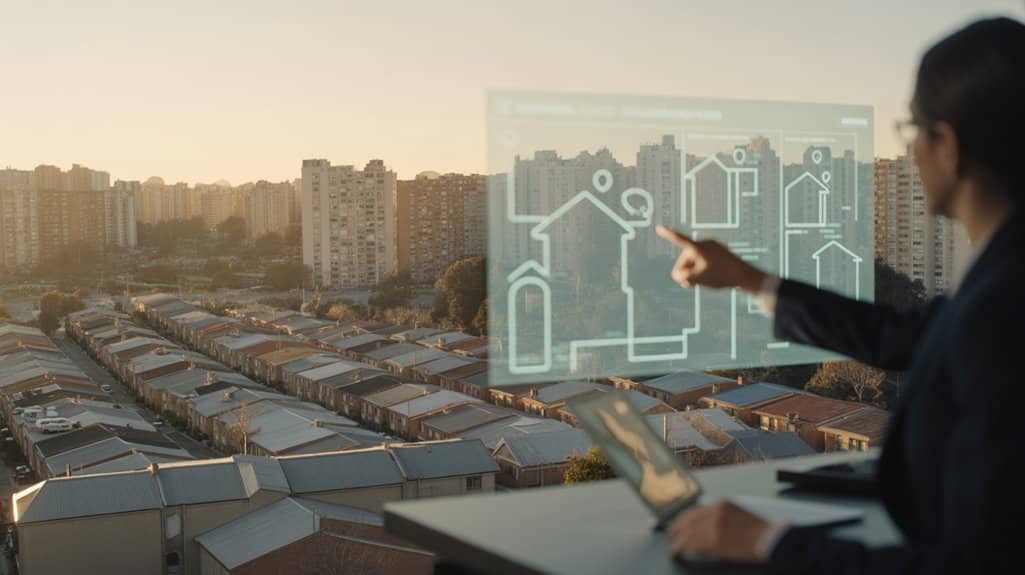
Uruguay’s government has started using AI to identify vacant properties across the country, and as someone who’s spent years working in this market, I can tell you this is a significant development worth paying attention to.
The system pulls together land registry data, utility consumption patterns, and satellite imagery to flag properties sitting empty. What makes this particularly relevant for buyers and investors is that it’s not just a rough scan , teams review the findings carefully, and the methodology is kept transparent, which matters a lot in a market where trust drives decisions.
Early pilot programs are already producing results, and the potential to reshape housing availability in cities like Montevideo and Punta del Este is real.
Uruguay has always had a structured, legally solid property environment, so integrating this kind of technology fits naturally into how the country manages its real estate ecosystem.
If you’re watching this market, understanding where vacant stock is concentrated could open up opportunities , whether you’re looking to purchase, invest, or simply understand where neighborhoods might shift in the coming years. Keep an eye on how this rolls out.
Key Takeaways
Uruguay’s AI system brings together parcel records, tax data, and utility usage to flag vacant properties and track how neighborhoods shift over time. Satellite and aerial imagery, along with night-time light data, add a visual layer that cross-checks what the administrative records are telling us. For anyone working in real estate here, that combination is genuinely useful , it surfaces opportunities that would otherwise take months of legwork to uncover.
The program got its start in 2019 with pilot scans across selected areas, and from the beginning, the approach has been careful. Bias audits and human oversight are built into the process, which matters a lot when decisions about property end up affecting communities. The technology flags, but people still decide , and that balance is worth appreciating.
Local officials go through capacity-building training so they can read the AI alerts accurately and translate them into sound real-estate decisions. That kind of ground-level competence makes the whole system more reliable, especially in a market like Uruguay’s, where context , whether you’re looking at Montevideo’s Pocitos neighborhood or a rural parcel in Salto , changes everything.
Public-private partnerships and dedicated funding are keeping the expansion on track without sacrificing transparency or privacy protections. For buyers, sellers, and investors operating in this market, that infrastructure signals something important: Uruguay is building the tools to make its property data more honest and more accessible, and that tends to move markets in the right direction.
Uruguay’s AI Strategy Driving Vacant-Property Scanning

Uruguay’s 2019 national AI strategy quietly changed how we think about vacant properties here, and if you’ve been watching the market as long as I have, you’ll understand why that matters. The plan doesn’t just throw technology at the problem , it builds ethical guardrails that protect individual rights while actually opening up more housing options for buyers and renters alike.
What makes this work in practice is the capacity-building side of things. Local officials across Montevideo and the interior departments are being trained to use these scanning tools in plain, straightforward terms , no dense technical language, just clear steps that get results. That kind of training means vacant homes get identified faster and without the usual bureaucratic drag.
Privacy is handled carefully here, which is something Uruguayans genuinely care about. The strategy’s built-in protections mean residents feel comfortable participating in the process, and that community trust is honestly hard to put a price on in this market. When neighbors engage rather than resist, the data becomes far more reliable.
From a real estate standpoint, the practical payoff is significant. Matching empty properties to families who need space creates movement in a market that can otherwise stagnate, particularly in secondary cities like Salto or Paysandú where vacancy rates tell a very different story than the capital. Uruguay has always had a strong sense of civic responsibility baked into its housing culture, and this strategy leans into that rather than working against it.
Done right, smart policy and good technology don’t compete , they complement each other, and Uruguay is showing exactly how that balance works. The AI Observatory will soon oversee algorithmic transparency for these scans.
Data Sources for Vacant-Property Scanning
Identifying vacant properties in Uruguay takes some digging, but the right data sources make it manageable. The Dirección Nacional de Catastro holds parcel records with ownership details and boundary information , a solid starting point for any serious search. From there, cross-referencing with the Dirección General Impositiva’s property tax records quickly reveals which owners have gone quiet on their payments, which is often your first real flag.
Utility data from UTE and OSE tends to be where things get interesting. Near-zero consumption on water and electricity meters is one of the strongest indicators of an empty dwelling, especially in neighborhoods like Pocitos or Ciudad Vieja where seasonal use can otherwise blur the picture. Pairing that with satellite and aerial imagery , increasingly accessible through platforms used by municipal governments , lets you spot overgrown lots, neglected rooftops, or structures that simply look untouched.
Night-time light mapping adds another layer, particularly useful in secondary cities like Salto or Melo where street activity patterns are easier to read. Undeliverable mail records and outdated voter registration data from the Corte Electoral round out the picture at the address level, pointing to genuine absence rather than just low activity.
Bringing these sources together gives a genuinely reliable read on vacancy, and in a market like Uruguay’s , where underutilized urban land is a real opportunity , acting on that intelligence early puts you in a strong position. Google’s $-million investment in a new data center near Canelones will further boost regional connectivity.
Transparent Algorithms: Impact Analysis, Audits & Human Oversight
Before any government agency in Uruguay moves forward with AI-powered tools, say, for identifying vacant properties or flagging irregularities in the real estate market, the first serious question has to be: is this genuinely safe and fair for everyone involved? That’s what impact analysis is all about, and having worked in this market for years, I can tell you that skipping that step creates real problems down the line.
Uruguay’s regulatory approach treats impact analysis as a true gatekeeper. It requires bias detection built into the process from the start, along with clear accountability frameworks that don’t leave room for ambiguity. Any model being deployed needs documented justification, why it exists, what data feeds it, and how it actually reaches its conclusions. In a market like ours, where property records, ownership histories, and neighborhood dynamics vary enormously between Montevideo, Punta del Este, and rural departments, that kind of documentation isn’t just good practice, it’s essential.
Audits play a key role here too, regularly checking those records to make sure the system remains honest as conditions change. Real estate data shifts constantly, and an algorithm that worked well two years ago may no longer reflect current market realities.
What ties all of this together is human oversight. Difficult cases need a person in the loop, someone who can review what the algorithm flags and step in when something doesn’t add up. Smart tools are genuinely useful, but they work best when paired with experienced judgment and a commitment to protecting people’s rights throughout the process.
AI governance is essential for aligning technology with public interest.
How We Build Trust: Campaigns & Citizen Participation
Trust in Uruguay’s real estate market is something you build over time, and a big part of that comes down to how clearly you communicate with buyers and sellers about the tools shaping the industry today. AI is becoming a genuine part of how properties are evaluated, neighborhoods are analyzed, and decisions get made , and people deserve to know that upfront, in plain language, without technical jargon clouding the picture.
Uruguay’s government has been doing something smart here. By running public awareness campaigns that explain how AI supports community planning and housing security, they’re helping everyday citizens feel informed rather than left behind. When someone in Pocitos or Maldonado understands that these tools are working to protect property values and improve urban life, confidence grows naturally.
What makes this approach work is the invitation to participate. Town-hall conversations, online consultations, and open feedback channels give residents a real voice in shaping the policies that govern privacy, fairness, and data use in the market. That’s not a small thing , it means the rules around these technologies reflect actual community input, not just institutional decisions made behind closed doors.
Publishing guidelines through an open observatory takes it one step further. Buyers, sellers, and investors can see exactly how decisions are being made, which matters enormously in a market built on trust. Uruguay’s real estate sector has always relied on transparent relationships between parties, and this approach extends that same principle into the digital space , keeping everyone informed, engaged, and genuinely part of the process. The National AI Strategy ensures that all AI deployments comply with ethical guardrails and transparency requirements.
Scaling the System: Pilots, Funding & Regulatory Roadmap
When people watch AI quietly working in the background , flagging vacant properties, tracking shifts in neighborhood values , something shifts in how they relate to the market. Confidence builds, and that matters enormously in a country where property represents most families’ largest financial decision.
Uruguay’s approach here is measured and deliberate. Pilots begin with vacant-property scans, a contained and manageable starting point that gives agencies room to learn before committing to anything larger. That careful pace isn’t timidity , it’s how sound policy gets built in this country, and frankly, it’s how sound real estate decisions get made too.
Funding is structured around dedicated budget lines and public-private partnerships, which keeps the tools, data infrastructure, and trained staff properly resourced rather than dependent on shifting political priorities. The institutional side matters just as much. Strengthening bodies like AGESIC gives the oversight framework real teeth , clear ethical guidelines, meaningful privacy protections, and the capacity to enforce both.
The regulatory roadmap anchors itself to Uruguay’s 2019 National AI Strategy, building out concrete legal standards from that foundation rather than starting from scratch. What makes this architecture work is the way pilots, financing, and regulation reinforce each other. None of the three functions well in isolation, and Uruguay isn’t treating them that way. Scaling becomes possible precisely because trust , in the tools, in the institutions, and in the process itself , has been built into the design from the beginning. The country’s advanced fiber network ensures that the high-speed data pipelines needed for real-time property scans are reliably supported.
References
- https://oxfordinsights.com/insights/spotlight-series-uruguay/
- https://dig.watch/resource/uruguays-artificial-intelligence-ai-strategy-for-digital-government
- https://unesdoc.unesco.org/ark:/48223/pf0000391491
- https://intellectual-property-helpdesk.ec.europa.eu/news-events/news/recent-developments-artificial-intelligence-and-ip-latin-america-pt-iii-2026-05-04_en
- https://pulitzercenter.org/projects/tech-anxiety-how-uruguay-deploys-ai-without-clear-legal-framework
- https://www.trade.gov/country-commercial-guides/uruguay-strategic-technologies
- https://ferrere.com/en/news/europe-simplifies-its-ai-rules-a-key-signal-for-uruguay-and-the-region/
- https://www.facebook.com/OpenGovernmentPartnership/videos/-how-uruguay-is-opening-up-ai-use-in-government-in-this-video-ninoschka-dante-fr/722292880819221/
- https://americasbd.org/en/abd-members-share-key-perspectives-during-the-uruguay-innovation-and-artificial-intelligence-forum/
- https://www.facebook.com/OpenGovernmentPartnership/posts/how-can-governments-use-ai-and-algorithms-in-a-way-that-people-can-trustthe-open/1363547609140592/