
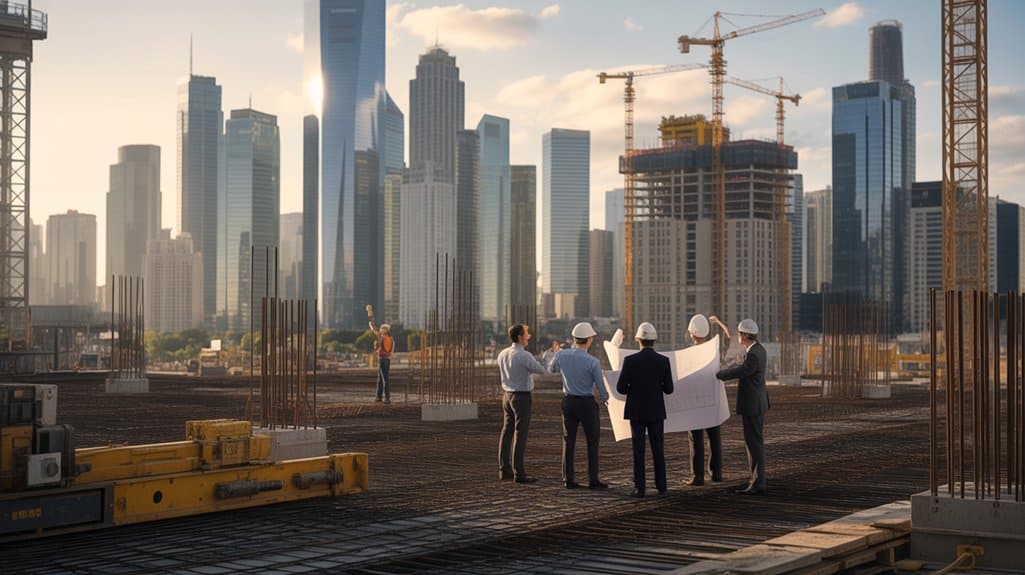
The EU, Mercosur trade pact reduces tariffs on steel, cement, and construction equipment, thereby lowering building costs and facilitating project financing.
Developers have identified opportunities to convert former warehouses into residential and mixed-use neighborhoods and to establish office spaces near ports and transportation hubs.
Lower material costs accelerate supply chain efficiency, which attracts businesses seeking modern commercial facilities.
The resulting accessibility of affordable construction materials may drive substantial real estate development in urban centers and coastal regions.
Key Takeaways
- Tariff reductions on construction materials and machinery lower building costs and encourage new residential and commercial projects.
- Investment incentives and tax holidays attract foreign developers to high-demand zones, particularly near logistics hubs and mining districts.
- Port and infrastructure improvements in Brazil and Argentina expand warehouse and mixed-use development opportunities.
- Streamlined licensing and strengthened patent protection accelerate industrial park expansion and generate employment and housing demand.
- EU-backed financing and SME support programs reduce administrative obstacles and enable faster project implementation and market entry.
EU-Mercosur Trade Deal , Real-Estate Demand Shifts

The EU-Mercosur trade deal is set to reshape residential and occupational patterns. With tariffs on cars and machinery reduced, EU firms will expand cross-continental goods distribution, streamlining supply chains and spurring urban revitalization initiatives. Port-adjacent cities may experience warehouse conversions into mixed-use neighborhoods combining residential and commercial spaces. Employment opportunities will expand in logistics and retail sectors. Former industrial sites could transition into public gathering spaces. Increased trade activity generates additional municipal revenue for education and infrastructure, enhancing neighborhood amenities and services. The agreement drives economic growth with tangible effects on local communities. Projected EU GDP increase is modest, at roughly 0.1 %.
EU-Mercosur Trade Deal , Sector Drivers of Post-Tariff Commercial-Property Growth
The removal of tariffs on industrial goods triggers commercial-property expansion as investors establish new facilities across the region. Eliminated trade duties streamline supply chain routes, enabling faster movement of components and finished goods. Improved trade conditions enhance property valuations through increased demand for warehouses and distribution centers.
The trade agreement’s investment incentives attract companies pursuing market access and regional integration. Governments expand infrastructure projects to accommodate commercial activity growth. Urban planning initiatives convert districts into modern logistics hubs with contemporary workspace facilities.
Tariff elimination transforms former trade barriers into tangible opportunities for commercial real estate development, facilitating business expansion and market entry. National treatment ensures foreign investors receive the same IP protection as domestic firms, further encouraging confidence in long-term commercial projects.
EU-Mercosur Trade Deal , Logistics Hub Hotspots in Brazil, Argentina, and the EU
Brazil’s freight corridors function as major transportation routes for machinery and automobiles destined for Europe. Argentina’s ports are undergoing modernization to increase capacity for beef and other food products. The European Union is establishing new green logistics hubs designed to transport minerals and agricultural goods with reduced environmental impact. These infrastructure developments collectively create an efficient trade network across the Atlantic, benefiting consumers in both regions. Rising demand stretches existing port and distribution capacity in Mercosur.
Brazil’s Freight Corridors
The EU-Mercosur trade agreement reduces tariffs on most goods, enhancing freight efficiency and cargo optimization across Brazil’s logistics network. Rail utilization increases along mineral routes connecting mines to ports, while digital customs systems reduce operational costs and accelerate trade facilitation. Infrastructure improvements at Santos port support growing demand for machinery, chemicals, and automobiles. FOCEM funding finances the development of bridges, highways, and waterways that connect agricultural and manufacturing regions to European markets. These developments strengthen Brazil’s freight corridors as critical trade arteries, enabling faster goods movement and creating real estate opportunities along transportation routes. The deal’s $2.3 trillion Brazilian GDP underscores the scale of potential investment in logistics infrastructure.
Argentina’s Port Modernization
The government plans to upgrade ten major ports by 2030, targeting a 50 percent increase in cargo capacity. The initiative requires $5 billion for dredging, new terminals, and digital infrastructure.
Buenos Aires will add berths capable of accommodating 20,000 TEU (Twenty-foot Equivalent Unit) container ships, facilitating smoother EU import flows. Rosario’s grain export facilities will receive updated equipment, while Bahía Blanca’s deep-water docks will expand capacity for liquid bulk cargo.
The modernization reduces vessel turnaround times and decreases truck waiting periods. Improved port efficiency enables ships to complete loading, unloading, and departure within a single operational day. Lower tariffs and streamlined customs procedures enhance port competitiveness as international trade hubs.
These enhancements strengthen overall cargo capacity and support economic development for regional businesses. The EU-Mercosur agreement aims to diversify trade and reduce reliance on China and the U.S., trade diversification benefits.
EU Green Logistics Hubs
Upgraded ports in Argentina establish the foundation for green logistics hubs linking the EU with Mercosur. The trade pact reduces tariffs on 91% of goods, enabling increased transport volume between São Paulo, Santos, Montevideo, and European ports. Sustainability initiatives and infrastructure investments form core components of each hub plan, incorporating low-carbon zones and renewable energy corridors. The agreement also aims to strengthen economic cooperation by providing legal protection for approximately 350 European specialties in the Mercosur region.
| Region | Key Hub | Main Focus |
|---|---|---|
| Brazil | São Paulo / Santos | Green rail links for lithium, copper |
| Argentina | Montevideo | Low-carbon storage for nickel, manganese |
| EU | Rotterdam / Hamburg | Distribution centers for EU-made machinery |
These hubs combine efficient goods movement with environmental protection. Cargo trains operate alongside wind turbines, demonstrating the integration of logistics infrastructure with renewable energy systems.
Eu-Mercosur Trade Deal , Industrial-Park Expansion From Lower Raw-Material Tariffs
Lower raw-material tariffs are set to reduce costs for factories in new industrial parks across Brazil. Cuts in duties on equipment and intermediate goods decrease expenses, allowing firms to increase profit margins while improving supply chain efficiency and creating investment opportunities for European brands in a market of over 700 million consumers.
Industrial parks and cost reduction
Lower input costs enable companies to allocate more resources to expansion rather than imports. Factories can increase in size, employ local workforce, and accelerate production cycles.
Investment conditions
Simplified licensing and strengthened patent protection establish Brazil as an attractive location for long-term ventures. Industrial parks are expected to generate employment, economic growth, and enhanced market competition.
The agreement also includes a tariff preference for transition minerals, further lowering input costs for manufacturers.
How to Mitigate Agricultural Opposition and Meet Environmental Safeguards?
The plan proposes fair compensation for farmers experiencing income loss and establishes robust environmental monitoring systems. Routine assessments of agricultural and forest areas ensure equitable trade practices and environmental protection. Structured payment mechanisms combined with transparent monitoring address farmer concerns and environmental objectives. The protests have seen 350 tractors block roads in Paris, highlighting the scale of farmer mobilization.
Agricultural Compensation Mechanisms
A modest safety net addresses farmer concerns during EU market opening to Mercosur. The plan establishes a €1 billion reserve within the CAP budget, functioning similarly to the existing €450 million emergency fund. This precautionary mechanism addresses worst-case agricultural scenarios rather than anticipated payouts. Additionally, €45 billion in CAP funds are released early to support farmers.
When imports depress prices beyond five percent, tariff preferences pause to protect sensitive goods including beef, poultry, and rice. Tariff-rate quotas restrict cereal imports to one million tons, maintaining market share stability. The Commission conducts market reviews every six months and activates safeguards as needed. This tiered approach provides reassurance, preserves producer autonomy, and maintains trade agreement equilibrium without excessive intervention.
The EU’s long-term budget proposal includes a reserve of at least €1 billion to finance this mechanism.
Robust Environmental Monitoring Framework
A safety net for farmers establishes a new priority: maintaining land health while expanding trade. A robust environmental monitoring framework can address agricultural concerns and fulfill stringent environmental policy requirements. The framework connects sustainability metrics to real-time data, enabling traders to verify forest preservation and water quality. Dashboards provide clear indicators of farm compliance with the precautionary principle, Paris climate commitments, and biodiversity regulations. When performance metrics decline, the system activates corrective measures to protect both agricultural output and ecosystems.
The agreement’s environmental safeguards are fragile and need independent verification.
| Metric | Source | Action |
|---|---|---|
| Deforestation rate | Satellite imagery | Halt imports |
| Emission level | Sensor networks | Adjust quotas |
| Species count | Field surveys | Enforce CITES |
Transparent monitoring mechanisms enable agricultural expansion while safeguarding environmental integrity.
Ready-to-Deploy Investment Strategies for Developers

Investment Opportunities Under the EU-Mercosur Agreement
The EU-Mercosur trade pact reduces tariffs on most construction materials, creating favorable conditions for development projects. Foreign investment incentives and expanded market access spanning 260 million consumers present significant opportunities.
Coastal Development Sites
Prime beachfront plots in Uruguay function as low-cost, high-yield assets. Tariff reductions of up to 20 % on machinery lower construction expenses substantially, enabling rental returns of 5, 8 % in dollars. Equal property rights for foreign buyers ensure a level playing field.
Industrial Zones Near Mineral Resources
Land parcels positioned near lithium and cobalt mining operations support green infrastructure development. An 11-year tax holiday combined with a flat 12 % capital gains tax maintains robust cash flow dynamics.
Implementation Steps
- Register a local entity to access tax benefits.
- Leverage the interim trade agreement for expedited customs processing.
- Pursue SME support programs to minimize administrative requirements.
The agreement’s provisions enable developers to capitalize on tariff reductions and tax incentives, converting policy advantages into measurable returns.
References
- https://www.socialeurope.eu/the-eus-landmark-mercosur-deal-promises-much-but-delivers-little
- https://www.wita.org/blogs/eu-mercosur-deal/
- https://www.atlanticcouncil.org/dispatches/eu-and-mercosur-are-creating-one-of-the-worlds-largest-free-trade-areas/
- https://think.ing.com/articles/eu-mercosur-deal-a-strategic-milestone/
- https://en.wikipedia.org/wiki/EU, Mercosur_Partnership_Agreement
- https://www.usitc.gov/publications/332/working_papers/2022-07-b_bethmann_gracia_ec_eu-mercosur_fta.pdf
- https://policy.trade.ec.europa.eu/eu-trade-relationships-country-and-region/countries-and-regions/mercosur/eu-mercosur-agreement_en
- https://ukandeu.ac.uk/the-mercosur-agreement-exposes-dangerously-divided-eu/
- https://commission.europa.eu/topics/trade/eu-mercosur-trade-agreement_en
- https://carnegieendowment.org/europe/strategic-europe/2023/11/the-eu-mercosur-deal-is-about-more-than-trade