
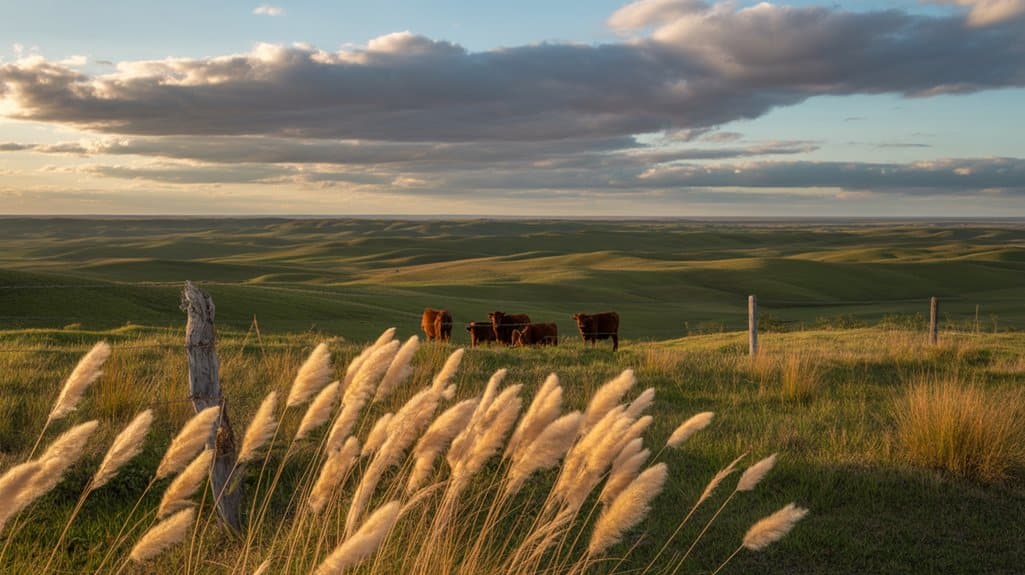
Uruguay’s countryside tells a story that often surprises visitors. Rolling green hills stretch far into the distance, creating waves across the land. The Campo isn’t just empty space, it’s a working environment where cattle graze freely and nature thrives alongside farming. This grassland region holds secrets about how inhabitants and the ecosystem can work together. What makes these plains so different from other grasslands around the world?
Understanding the Campo: Uruguay’s Rolling Grasslands
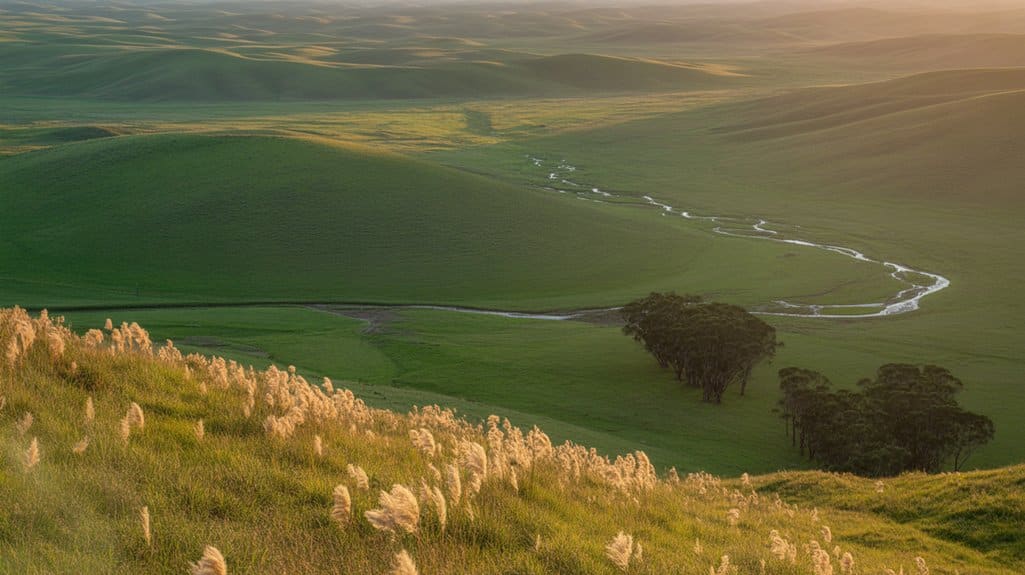
When visitors first encounter Uruguay’s countryside, they often expect endless flat plains stretching to the horizon. Instead, they discover gentle rolling hills called cuchillas, creating a scenery unlike Argentina’s flatter terrain. This Campo supports wildlife conservation through traditional grazing methods passed down as cultural heritage. Local ranchers practice sustainable approaches, letting cattle roam freely across native grasses. These same practices shape Uruguay’s renowned local gastronomy, particularly its grass-fed beef. The undulating green expanse, dotted with tree clusters, attracts those seeking ecological tourism experiences that connect them with authentic pastoral traditions still thriving today.
From Steppe to Savanna: Ecological Classification of the Pampa
Although many individuals picture Uruguay’s grasslands as simple steppe, scientists see something more intricate at work. The Campo represents ecological transitions between pure grassland and wooded areas. Over 60% of Uruguay showcases this temperate wet grassland, one of Earth’s largest. Plant adaptations vary based on soil composition, creating distinct communities across the region.
| Feature | Traditional Steppe | Uruguay’s Campo |
|---|---|---|
| Tree Coverage | Minimal to none | Scattered patches |
| Plant Diversity | Limited species | Rich variety |
| Moisture Level | Dry conditions | Temperate wet |
| Soil Variation | Uniform | Diverse types |
| Classification | Pure grassland | Moist savanna |
Cuchillas and Gentle Hills: Topographical Features
The rolling terrain of Uruguay’s Campo tells a story written in gentle curves and flowing ridges. These vistas feature distinctive *cuchillas*, low hill ranges that create natural boundaries across the countryside. Unlike dramatic mountain peaks, the hill elevation here remains modest and welcoming. The *cuchillas formation* developed over millions of years, shaping valleys and ridges that guide water flow and define regional character. This undulating terrain offers practical benefits too, natural drainage patterns support healthy grasslands while creating microclimates where diverse plants thrive. The gentle slopes make the land accessible for livestock, fostering Uruguay’s renowned ranching traditions.
Vegetation Patterns: Where Grasslands Meet Woodlands
Across Uruguay’s Campo, nature creates a beautiful patchwork where grasses and trees share the same space. These transitional zones make the scenery special and different from typical grasslands. Forest patches dot the rolling hills like islands in a green sea. Each cluster shelters unique tree species adapted to local soil conditions.
Scientists recognize these areas as biodiversity hotspots where many plants thrive together. The mixing of woodland and grassland habitats supports countless organisms. This blending creates richer ecosystems than pure grasslands alone. Visitors notice how trees gather in groups, adding depth and character to the sweeping views across the fertile countryside.
The Economic Foundation: Livestock Farming on Open Plains
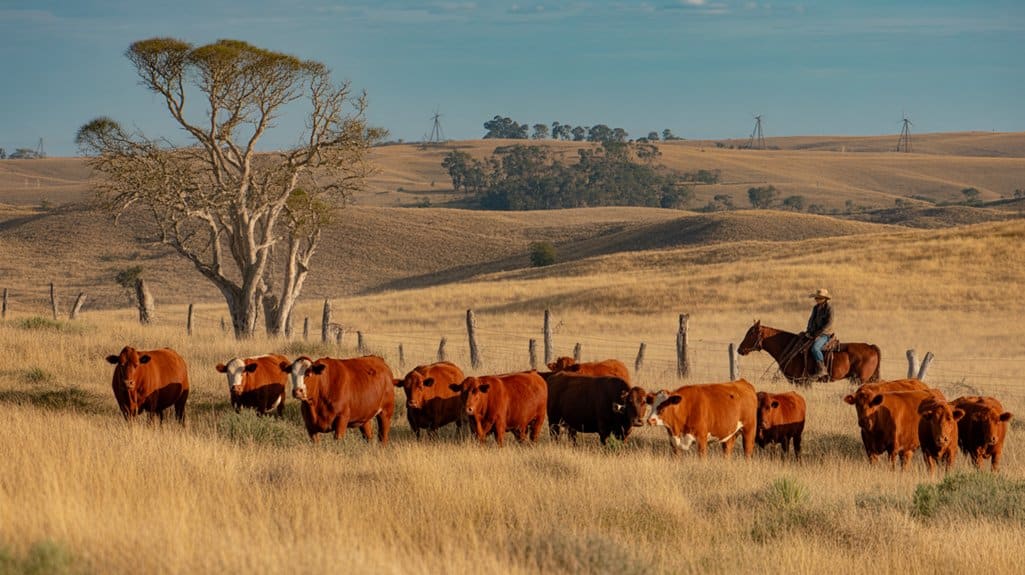
Beyond their beauty, these wide grasslands serve a practical purpose that has shaped Uruguay for generations. The open plains naturally support vast herds of cattle and horses, forming the backbone of the nation’s prosperity. This isn’t industrial farming, it’s something gentler and more traditional.
What makes Uruguay’s livestock management special:
- Animals graze freely across extensive pastures year-round
- Pasture rotation allows land to rest and regenerate naturally
- Minimal use of chemicals or intensive feeding practices
- Herds move with the seasons across rolling countryside
This approach honors both the land and the animals that call it home.
Climate Dynamics: The Pampero Wind Phenomenon
Without mountains or forests to block its path, Uruguay’s open terrain invites dramatic weather shifts that can change a sunny afternoon into something quite different. The Pampero sweeps across from Argentina, bringing cold, dry air that arrives without warning. Pampero effects include sudden temperature drops and strong gusts that ripple through the grasslands. This wind variability shapes daily life, influencing everything from farming schedules to outdoor plans. The area’s openness means nothing slows these air masses down. Locals have learned to read the sky, watching for the telltale signs that announce the Pampero’s swift approach across the rolling plains.
Soil Diversity and Plant Communities Across the Region
The ground beneath Uruguay’s grassy plains tells its own story. Different soil types shape what grows where, creating biodiversity hotspots across the terrain. In the north, basalt-rich earth nurtures distinct plant adaptations you won’t find elsewhere.
Key Soil-Based Ecological Niches:
- Basalt soils in northern regions support unique tree species
- Clay-heavy areas favor moisture-loving grasses and shrubs
- Sandy patches encourage drought-resistant vegetation
- Fertile lowlands become natural grazing zones
Modern agricultural practices now balance productivity with conservation efforts. Farmers recognize these natural patterns, working with the land rather than against it. Each soil type creates its own little world.
A Living Tapestry: The Visual Character of Uruguay’s Landscape
When observers first encounter Uruguay’s countryside, they often describe it as rolling waves frozen in time. The gentle hills showcase remarkable texture contrasts throughout the year. Grasslands shift through seasonal colors, from bright green in spring to golden brown in summer.
| Landscape Element | Visual Description |
|---|---|
| Gentle hills | Soft, undulating green carpet |
| Tree clusters | Colorful embroidery patches |
| Open grasslands | Vast, flowing expanses |
| Forest patches | Dark green accents |
| Ground undulations | Natural structural variety |
This living fabric creates an intimate connection between land and sky. Groups of trees dot the horizon like artistic brushstrokes.