

Uruguay’s asado culture operates on principles that clash with modern efficiency expectations, where success measures in hours rather than minutes, and the parrillero’s reputation hinges on managing wood selection, coal timing, and meat placement with scientific precision. The gaucho heritage demands authentic techniques that most weekend grillers would find impractical, yet these methods produce results that standard barbecue approaches simply cannot replicate, creating a cultural paradox that reveals something essential about patience.
The Ancient Roots and Cultural Heritage of Uruguayan Asado
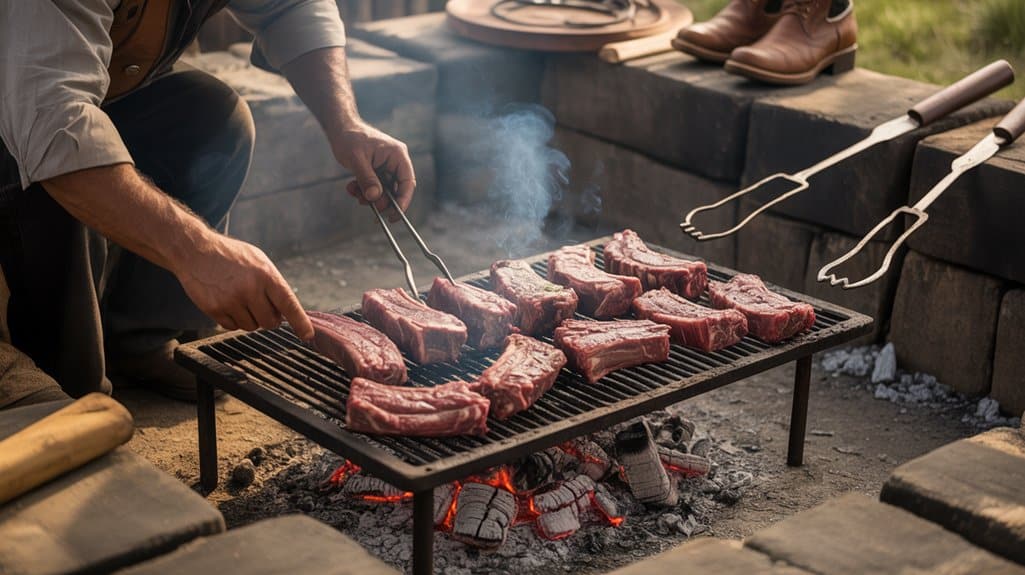
Tradition, it seems, has a way of surviving even when empires crumble and societies evolve beyond recognition, and Uruguay’s asado culture stands as a particularly robust example of this phenomenon. The practice traces its lineage back to ancient humans who first discovered fire’s changing power over meat, though the more immediate ancestors were the gauchos of the 18th century, those horseback wanderers who perfected the art of communal grilling across South American plains. These cultural roots run deep enough that modern Uruguayans still gather around fires, maintaining rituals their great-grandparents would recognize.
Distinctive Grilling Traditions: Uruguay’s Approach Versus German Methods
While these ancient practices shaped Uruguay’s grilling philosophy, the contrast becomes particularly sharp when compared to how barbecuing developed in other parts of the world, especially in places like Germany where the entire concept arrived through completely different circumstances. German barbecuing, popularized by Americans after World War II, relies heavily on gas grills and pre-seasoned meats, which frankly misses the point entirely. Uruguayans prefer wood fires, brick parrillas, and simple salt preparations that let the meat speak for itself, demonstrating patience that would probably frustrate anyone accustomed to quick, convenient grilling methods.
Essential Flavors: Chimichurri, Provoleta, and Time-Honored Family Recipes
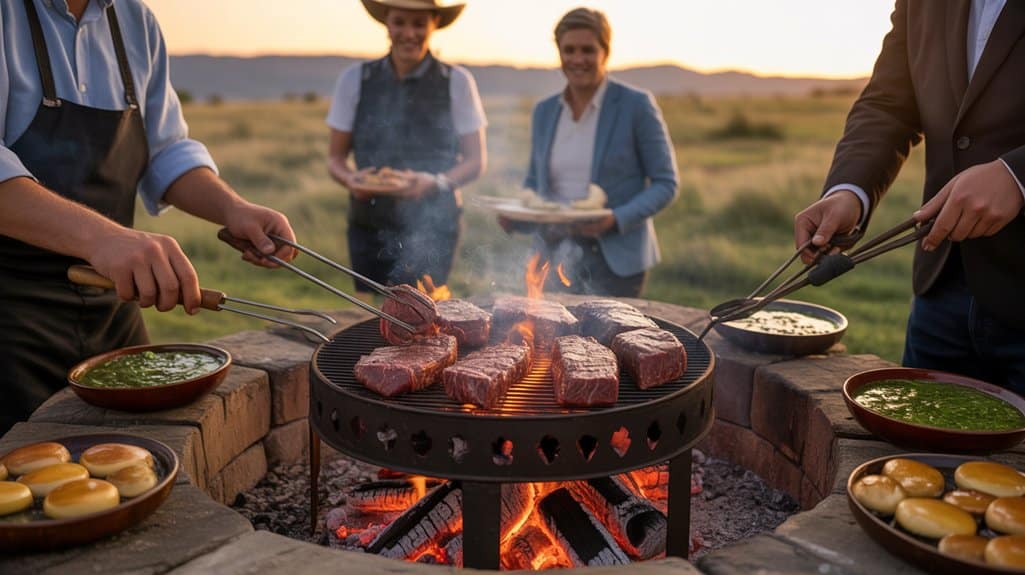
Beyond the grilling techniques that set Uruguay apart, the real magic happens when families start pulling out their jealously guarded bottles of chimichurri, each one supposedly containing the secret recipe that Grandma Rosa perfected back in 1953 and absolutely refused to share with the neighbors. This herb-based marinade, combining garlic, olive oil, and red wine vinegar, alters simple grilled meat into something worth arguing about for generations.
- Chimichurri recipes vary wildly between families, with some including oregano while others swear by parsley
- Provoleta, grilled provolone cheese, serves as the appetizer that nobody can resist
- Family marinade recipes get passed down like heirlooms, complete with dramatic origin stories
- Herbs and seasonings reflect personal preferences rather than standardized measurements
- Traditional preparation methods emphasize patience over convenience
Mastering the Art of Fire: Traditional Techniques and Parilla Equipment
Having the perfect chimichurri recipe means absolutely nothing if someone cannot properly manage the fire that turns raw meat into the kind of asado that makes neighbors suddenly remember they need to borrow something from the backyard. The traditional brick parilla, a permanent fixture in most Uruguayan homes, demands patience and genuine skill in ember management rather than the quick-fix mentality of gas grills. Wood selection matters, fire timing requires careful attention, and the slow development of proper coals separates weekend warriors from those who understand that authentic asado cannot be rushed, regardless of hungry guests.
Record-Breaking Achievements and the Social Customs of Asado Gatherings
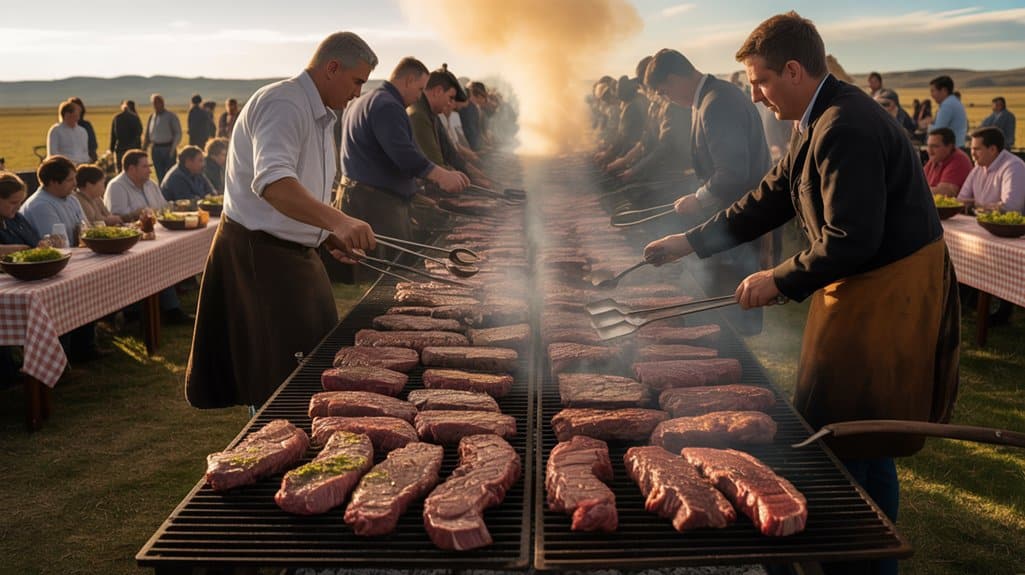
What happens when a country decides to prove its barbecue supremacy on a global stage involves considerably more logistics than most individuals imagine, as Uruguay discovered in 2017 when they claimed the barbecue world championship using a 1.5-kilometer-long grill that required 16.5 tons of meat, 60 tons of wood, and the kind of organizational prowess typically reserved for military operations.
- 4 tons of potato salad accompanied the massive grilling event
- Spectators witnessed the spectacle alongside participating in the communal meal
- Traditional asado customs include guests contributing side dishes or beverages
- Family marinade recipes remain closely guarded secrets passed through generations
- Cultural norms dictate patient fire management and respect for the grilling process