
Uruguay once felt like one of South America’s safest havens. Now, families in neighborhoods like Casavalle watch their streets change into battlegrounds. The murder rate has nearly doubled in twenty years, climbing from 6.0 to 11.2 deaths per 100,000 individuals. Criminal organizations wage fierce wars over drug routes while youth get pulled into danger. What changed in this small nation, and why are prisons becoming command centers for crime instead of places of reform?
The Doubling of Murder Rates: A Statistical Alarm
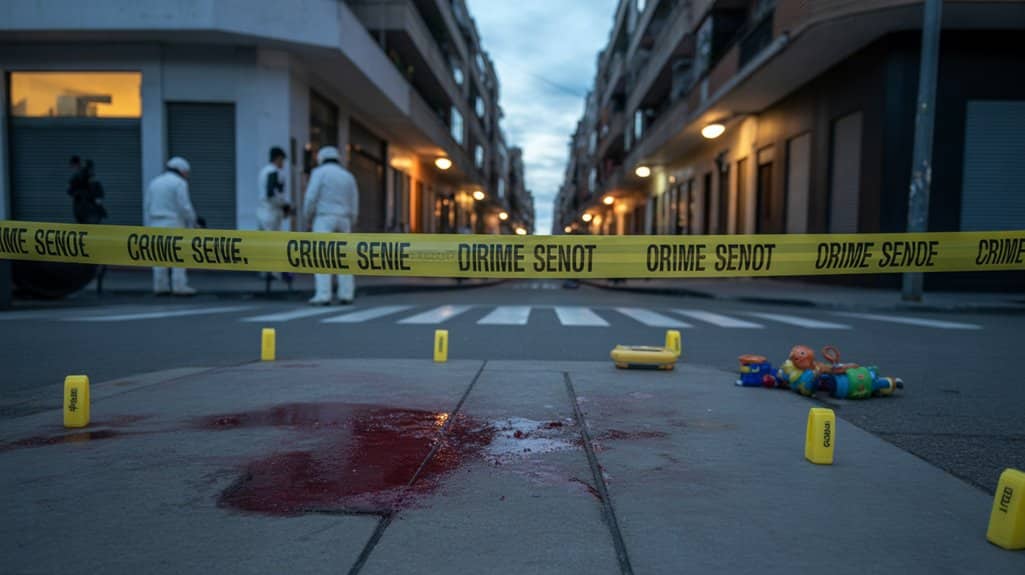
Uruguay once enjoyed a reputation as one of South America’s safest countries. That image has changed dramatically. Between 2003 and 2024, the murder rate doubled from 6.0 to 11.2 per 100,000 individuals. These crime statistics tell a troubling story. Over half of these deaths stem from battles between criminal groups fighting for drug territory. Murder prevention efforts face serious challenges. Three Montevideo neighborhoods—Casavalle, La Paloma, and Tomkinson—bear the heaviest burden. More than 30% of the capital’s murders happen in these areas. Families who once felt secure now worry about their safety every day.
Territorial Wars: Criminal Groups Fighting for Drug Control
Several powerful criminal organizations now treat Uruguay as their battleground. Territorial disputes have exploded as groups fight to control drug routes and sales areas. These criminal alliances shift constantly, creating dangerous situations for everyday individuals caught in the middle.
Key Groups Fighting for Control:
- Brazilian PCC expanding their cocaine trafficking networks
- Comando Vermelho (CV) competing for smuggling routes
- Italian ‘Ndrangheta coordinating international operations
- Local Primer Cártel Uruguayo (PCU) defending home territory
About 56% of murders now stem from these battles. Communities watch helplessly as their neighborhoods become war zones between rival factions.
Montevideo’s Most Dangerous Neighborhoods
Three neighborhoods in Montevideo now shoulder more than 30% of the capital’s murders. Casavalle, La Paloma, and Tomkinson have become hotspots where territorial battles rage daily. These areas face unique challenges that demand urgent attention.
| Neighborhood | Primary Challenge |
|---|---|
| Casavalle | Drug distribution networks |
| La Paloma | Youth recruitment by gangs |
| Tomkinson | Pasta Base consumption zones |
| All Three | Weakened community safety |
| Citywide Impact | Diminished crime prevention |
Families living here watch their streets change. Children witness violence that shapes their futures. Neighbors once felt connected. Now, fear replaces trust. Addressing these concentrated danger zones requires targeted support and genuine commitment.
The Port of Montevideo: Gateway for Cocaine Trafficking to Europe
While violence tears through Montevideo’s neighborhoods, a larger operation unfolds just blocks away at the city’s waterfront. The Port of Montevideo has become an essential gateway for cocaine heading to Europe. Modern facilities and weak port security make it attractive to international cartels.
Criminal groups exploit this route in several ways:
- Brazilian gangs like PCC coordinate shipments through local contacts
- Italian ‘Ndrangheta networks receive cocaine bound for European markets
- Containers hide drugs among legitimate cargo exports
- Corruption among port workers facilitates trafficking routes
These trafficking routes connect Uruguay to global drug networks, altering the nation into something more troubling than anyone imagined.
Transnational Cartels Establishing Operations in Uruguay

As global drug networks expand their reach, Uruguay has evolved from a peaceful bystander into an active battleground. Major groups now see this small nation as prime territory. Brazil’s PCC and CV have established firm footholds, coordinating drug trafficking operations through local networks. Italy’s ‘Ndrangheta also operates here, using sophisticated methods to move cocaine. Most alarming is the increase of Primer Cártel Uruguayo, a homegrown organization led by Sebastián Marset. This local group works alongside international partners, creating a complicated web of organized crime. These cartels don’t just pass through—they’re building lasting operations that threaten Uruguay’s stability.
The Rise of Primer Cártel Uruguayo and Sebastián Marset
Among all the criminal groups operating in Uruguay today, none represents a more troubling development than the Primer Cártel Uruguayo. Led by Sebastián Marset, this homegrown organization has altered cartel dynamics across the nation. His influence extends from prison cells to international trafficking routes, creating unprecedented challenges for authorities.
The PCU’s emergence signals dangerous shifts:
- Marset coordinates operations despite being fugitive from multiple countries
- The organization maintains connections with Brazilian PCC and Italian ‘Ndrangheta
- Local recruitment strengthens their control over Montevideo’s drug territories
- Their presence marks Uruguay’s transition from transit point to active participant
This change threatens the nation’s stability.
Pasta Base Epidemic: Addiction, Homelessness, and Street Crime
Beyond the violence between cartels, a quieter crisis unfolds on Uruguay’s streets. Pasta Base, a cheap cocaine derivative, has created visible suffering. Addicts now occupy public spaces in Montevideo. Homelessness grows alongside petty crime. Families watch their neighborhoods change. The drug’s low cost makes it accessible to vulnerable individuals. Community engagement programs struggle to keep pace with demand.
| The Human Cost | The Community Impact |
|---|---|
| Visible addiction in parks | Loss of safe public spaces |
| Rising homelessness numbers | Increased petty theft |
| Health emergencies multiply | Children exposed to drug use |
| Families torn apart | Neighborhood trust erodes |
Effective pasta base prevention strategies require immediate funding and local support.
Drug Sales Points Spreading Through Communities
The street corners tell a darker story now. Neighborhoods once filled with children playing have changed into marketplaces for illegal substances. These “Bocas”—drug sales points—have woven themselves into community fabric, creating fear where families once felt safe.
The spread has brought:
- Over 30% increase in visible drug transactions
- Young individuals recruited as lookouts and sellers
- Parents afraid to let children play outside
- Neighbors withdrawing from community engagement
Effective drug prevention strategies require everyone’s involvement. When residents stay silent, these operations grow stronger. Building trust between neighbors creates the foundation for reclaiming shared spaces and protecting vulnerable youth from exploitation.
Prisons as Command Centers for Organized Crime
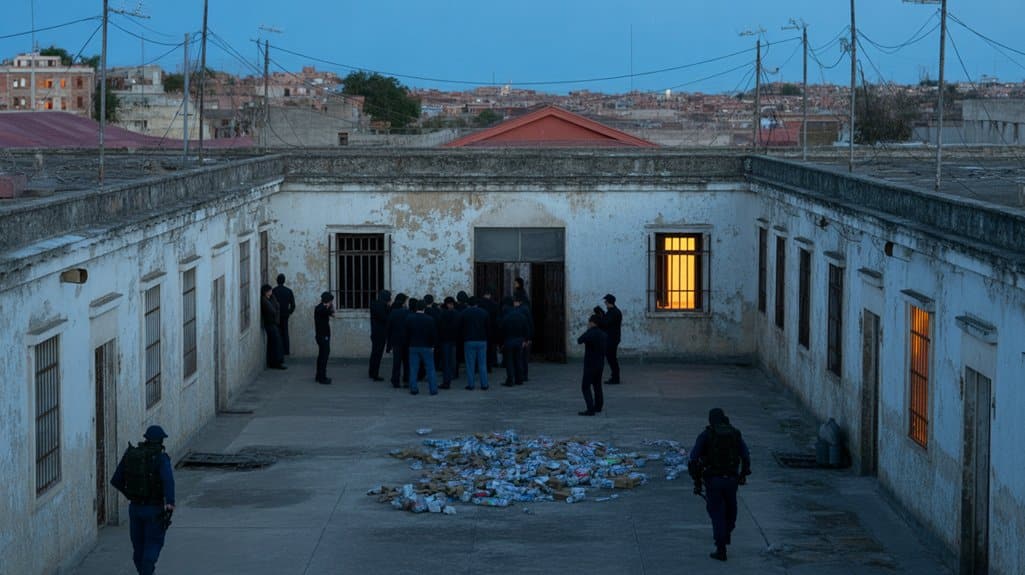
Behind concrete walls and razor wire, criminal operations continue without pause. Uruguayan prisons have changed into command centers where gang leaders orchestrate street-level crime. The prison dynamics reveal a troubling reality: incarceration doesn’t stop these networks. Brazilian groups like PCC recruit from behind bars, expanding their reach. The crime correlation between prison populations and outside violence grows stronger daily.
| Prison Activity | Impact |
|---|---|
| Gang coordination | Street crimes planned |
| Member recruitment | Network expansion |
| Strategy sessions | Territorial conflicts |
Without proper rehabilitation programs, facilities inadvertently nurture criminal enterprises. Leaders communicate freely, directing drug operations and territorial disputes from their cells.
Youth Recruitment: Minors Drawn Into Criminal Networks
As criminal organizations tighten their grip on vulnerable neighborhoods, children become their most valuable assets. Youth vulnerability in areas like Casavalle creates perfect conditions for gang influence. These groups target kids who need money, belonging, or protection. They offer what families can’t always provide.
How gangs recruit young individuals:
- Promise quick cash for simple tasks like lookout duty
- Provide sense of family and protection in dangerous areas
- Exploit economic hardship facing struggling households
- Use older teens to befriend and mentor younger children
Once involved, escape becomes nearly impossible. Communities watch helplessly as their children disappear into criminal networks.
Political Responses and the State’s Struggle Against Infiltration
When President Yamandú Orsi took office, he inherited a country at a crossroads. Security dominated the 2024 elections, reflecting deep public concern. Citizens demanded political accountability as violence touched more neighborhoods. The challenge feels enormous—organized crime threatens to infiltrate state systems through prisons and corruption.
Reform strategies must address multiple fronts simultaneously. Prevention programs, stronger borders, and prison rehabilitation all need attention. A referendum on nighttime police searches failed in October 2024, showing citizens value privacy despite rising crime. Orsi faces a delicate balance: protecting freedoms while stopping cartels from gaining stronger footholds in Uruguay’s institutions.