
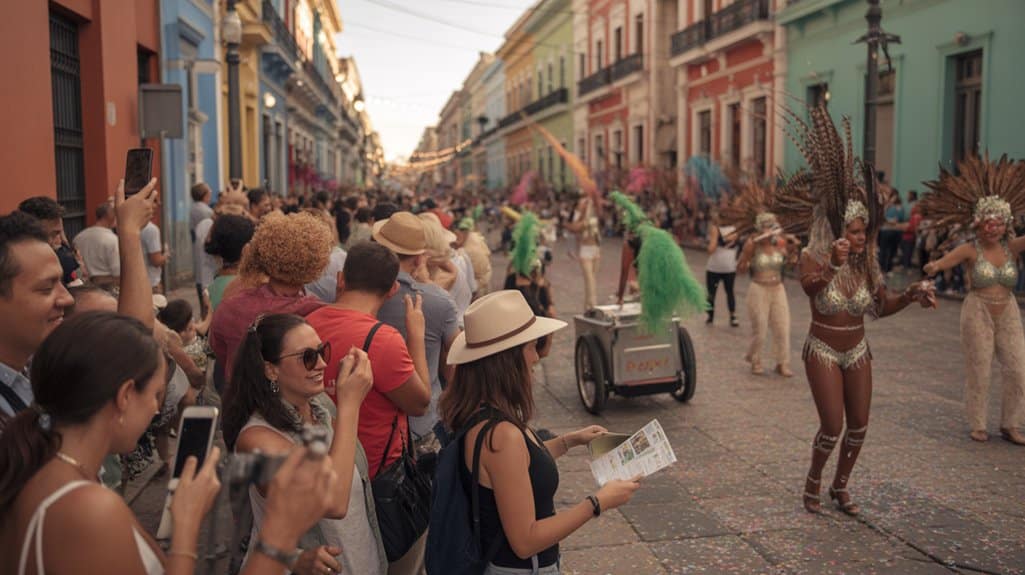
Uruguay’s 2026 Carnival drew massive crowds that transformed the country into a bustling tourist destination. More than 1,200 buses transported visitors to Montevideo during the festival’s busiest periods, creating traffic patterns the capital hadn’t seen since pre-pandemic celebrations.
Hotels across Uruguay reported occupancy rates climbing sharply as international visitors joined locals for the monthlong festivities. Restaurant owners saw their busiest February in years, while street vendors and craft makers found steady customers throughout the carnival season. The influx came primarily from Argentina and Brazil, though European tour groups also made their mark on attendance figures.
This year’s celebration stood apart because of its timing and scale. Carnival fell later in February than usual, coinciding with Argentina’s school holidays and Brazil’s extended summer vacation period. The overlap meant families from both countries could attend without disrupting work or education schedules.
Local tourism boards credit improved infrastructure and expanded performance venues with attracting larger audiences. Montevideo added three new stages for neighborhood competitions, while Punta del Carnaval, the festival’s coastal extension, featured beach performances that hadn’t existed in previous years. These changes gave visitors more options and spread crowds across wider areas of the city.
The economic impact reached beyond traditional tourism sectors. Public transportation saw record ridership, taxi services operated at capacity, and even small grocery stores in carnival neighborhoods reported sales increases of 40-60% compared to typical February figures.
Key Takeaways
Montevideo’s Tres Cruces terminal handled more than 1,200 long-distance bus services during the busiest day of Uruguay’s 2026 Carnival season. The main transportation hub saw steady streams of visitors arriving from across the region as the country’s biggest cultural celebration drew crowds from neighboring Argentina and Brazil.
Transportation activity climbed 5% from the previous year’s festivities. The terminal recorded over 3,300 arrivals and departures during the peak weekend alone, reflecting the festival’s growing appeal among regional tourists who traditionally visit Uruguay’s beaches and participate in the month-long celebration.
Accommodation reached capacity limits across the country. Montevideo hotels maintained occupancy rates between 70-80% throughout the extended summer season from December through March, while coastal and border destinations saw rooms fill up completely during Carnival week.
Room rates jumped significantly in tourist hotspots. Punta del Este, Uruguay’s premier beach resort, saw hotel prices increase 30-50% above normal rates. Similar price surges occurred in the northern border cities of Artigas and Rivera, where visitors cross over from Brazil to join the festivities.
Paysandú, the country’s third-largest city, welcomed 5% more visitors than the previous Carnival season. Local restaurants reported packed dining rooms throughout the celebration period, while shops and service businesses experienced their strongest sales figures of the year during the festival weeks.
Uruguay Carnival 2026 Travel Numbers Break Records
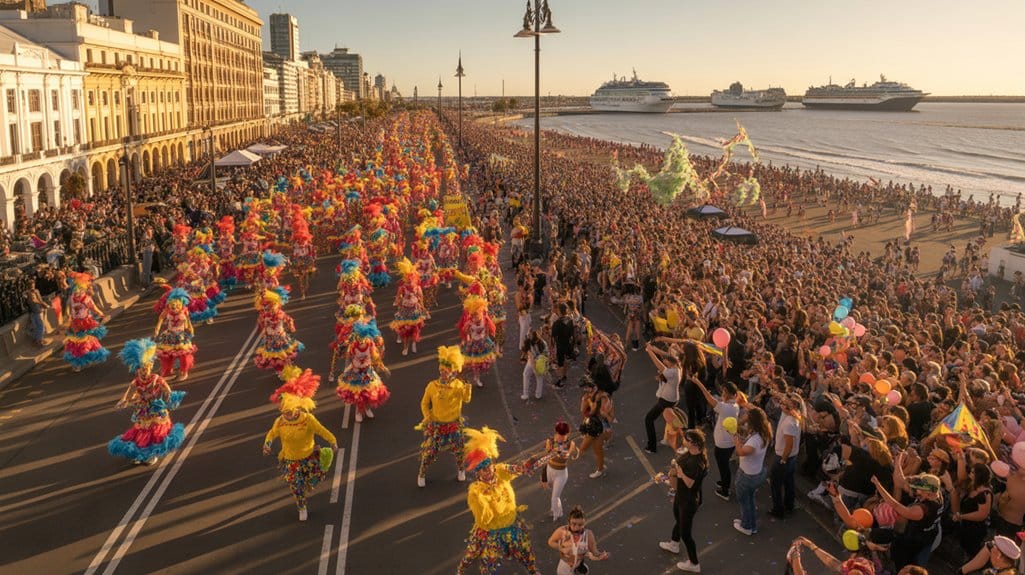
Uruguay’s 2026 Carnival season pulled crowds from every corner of the country, and the transportation data tells the real story of this cultural celebration. Montevideo’s Tres Cruces terminal handled over 1,200 long-distance bus services on its peak day. That weekend alone brought more than 3,300 arrivals and departures through the station.
The numbers represent a 5% jump from 2025, showing that Carnival keeps growing its pull on Uruguayans. People packed buses heading to coastal towns for traditional murga performances and crossed into border cities where Brazilian-influenced parades light up the streets. This isn’t just tourism, it’s families reconnecting with traditions that stretch back generations.
Hotels across the country hit capacity while local restaurants served packed dining rooms. Local artisans and food vendors reported increased sales throughout the Carnival period, benefiting from the domestic tourism surge. The travel patterns reveal something deeper than entertainment: Carnival acts as the cultural thread that weaves Uruguay’s communities together, from Montevideo’s historic barrios to small interior towns hosting their own celebrations. Transportation companies had been preparing for months, adding extra services to handle the predictable surge that comes when an entire nation decides to celebrate at once.
Where Uruguay Carnival Tourists Traveled in 2026
Uruguay’s 2026 Carnival drew visitors to destinations that showcased the country’s diverse celebration styles. Punta del Este’s coastline became a magnet for those wanting beach days paired with evening festivities at the resort town’s casinos and beachfront venues. The east coast location offered a more relaxed carnival experience compared to the capital’s intense street celebrations.
Montevideo concentrated the festival’s most authentic energy, with traditional parades flowing down Av. 18 de Julio while neighborhood tablados – temporary outdoor stages – hosted competitions between murga groups and candombe drummers. These local venues gave tourists direct access to Uruguay’s carnival traditions without the commercialized atmosphere found in other South American cities. The Las Llamadas parade became a particular draw for international visitors seeking immersive cultural experiences during the multi-night celebration.
Colonia del Sacramento attracted a different type of visitor entirely. This UNESCO World Heritage border town drew people planning dual-country trips, since its location across the Rio de la Plata from Buenos Aires made Argentine day trips simple via ferry connections. The colonial cobblestone streets provided an intimate carnival setting that contrasted sharply with the large-scale productions in Uruguay’s bigger cities.
Eastern Coastal Resort Destinations
Eastern Coastal Resort Destinations
Uruguay’s 2026 Carnival season drew holiday travelers to the nation’s eastern coastline, where sun and celebration created the perfect combination. Punta del Este attracted jet-setters alongside middle-class Argentine families who flocked to its beaches, historic lighthouse, and the famous hand sculpture that emerges from the sand. Beach activities blended naturally with the carnival atmosphere while hotels reached nearly full occupancy.
La Paloma and Piriápolis offered alternatives for visitors wanting quieter coastal experiences. These towns appealed to families who prioritized clean beaches and safe environments for their children. The distinctive white architecture of Casapueblo provided cultural attractions that complemented the beach experience. The carnival celebrations themselves extended over several weeks, integrating leisure and tourism throughout the coastal region.
Transportation data reveals the scale of this eastward migration: over 3,300 bus services carried passengers to coastal destinations during the Friday-to-Sunday period. This represented a 5% increase in passenger numbers compared to the previous year, showing how Uruguay’s Atlantic coast continues growing as a carnival destination for travelers from across the region.
Border Cities Drew Crowds
Border Cities Drew Crowds
Uruguay’s northern border cities became unexpected carnival destinations during the 2026 season, drawing visitors away from traditional beach spots. These towns naturally blend Uruguayan customs with neighboring Brazilian and Argentine traditions, creating distinct celebration styles.
Border celebrations attracted significant participation:
- Artigas organized nine samba schools featuring 6,500 performers, mimicking Rio’s carnival format
- Rivera hosted free street parades that mixed customs from both sides of the Brazil-Uruguay border
- Salto integrated Argentine music and dance styles, reflecting its proximity to Argentina
- Paysandú recorded a 5% increase in visitors compared to previous years, directly benefiting local craftspeople and street vendors
Thousands of people traveled to these northern departments specifically for cross-cultural carnival experiences. The events demonstrated that tourists appreciate cultural variety alongside traditional beach tourism, bringing measurable economic gains to regional accommodation providers, restaurants, and local businesses. Melo’s participation in the carnival circuit further enhanced the northern regions’ appeal, expanding tourism opportunities beyond the major border cities.
Montevideo’s Carnival Hub Activity
Montevideo serves as Uruguay’s beating heart during carnival season, and 2026 proved no exception. As the country’s capital and most populous city, it draws carnival enthusiasts from across the nation for what became a 40-night celebration that honored deep-rooted traditions.
The action kicked off with the Inaugural Parade down Av. 18 de Julio, where 7,000 spectators gathered to watch 3,500 performers fill the streets. Candombe drummers created thunderous rhythms while dancers moved to samba beats, demonstrating why these art forms remain central to Uruguayan identity. Carnival figures led the parade alongside contest winners and finalists who had earned their place in the opening spectacle.
Neighborhood tablados became the carnival’s lifeblood, hosting comedians, musicians, and dance troupes every evening. El Velódromo’s popularity meant tickets disappeared within a week of going on sale. Teatro de Verano took on a different role as the competition headquarters, where 37 groups battled for monetary awards that recognize artistic excellence.
Foreign visitors showed particular interest in the Llamadas Parade, which recreates the historical drum gatherings that once echoed through Isla de Flores street. This event connects modern celebrations to the African roots of candombe, when enslaved people used drums to communicate and preserve their culture. Each performance carries forward this legacy while energizing crowds with Uruguay’s distinctive carnival spirit.
Montevideo vs Border Cities: Which Drew Bigger Crowds?
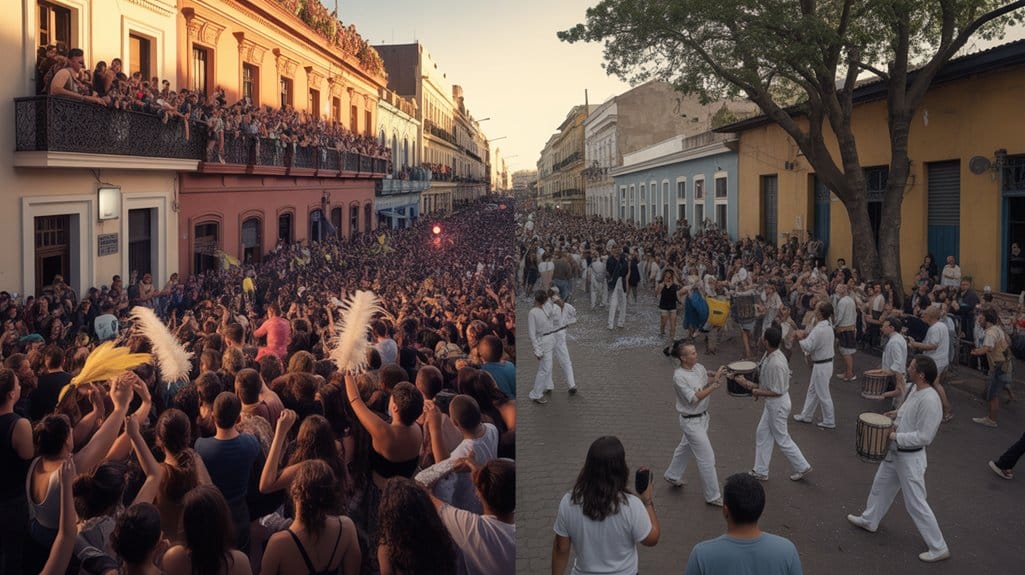
When carnival fever swept across Uruguay in 2026, crowds faced a choice between Montevideo’s established festival scene and the border cities’ unique celebrations. Montevideo’s position as the carnival capital stems from its extensive infrastructure – the Tres Cruces terminal alone can handle massive visitor influxes, while the city’s numerous venues support weeks-long festivities.
Border towns like Artigas and Rivera drew substantial crowds with their Brazilian-influenced celebrations. These cities benefit from cross-border cultural exchange, creating samba parades that blend Uruguayan traditions with Brazilian carnival elements. The proximity to Brazil means these festivals often feature musicians and performers from both sides of the border, offering experiences you won’t find in the capital.
Montevideo’s advantage lies in sheer scale and organization. The city’s carnival infrastructure has developed over decades, with established parade routes, vendor systems, and accommodation networks designed to handle large crowds. The opening parade features 42 competing groups performing various styles including murga and parodista troupes. Border cities compensate for smaller infrastructure with more intimate celebrations where visitors can get closer to performers and participate more directly in the festivities.
The choice often comes down to what type of carnival experience people want – Montevideo’s grand spectacle with professional murgas and elaborate costumes, or the border cities’ fusion celebrations that blur the lines between Uruguayan and Brazilian carnival traditions.
Montevideo’s Massive Visitor Numbers
During Uruguay’s 2026 Carnaval season, Montevideo’s main bus terminal painted a clear picture of where people actually went to celebrate. Tres Cruces Terminal handled over 3,300 bus arrivals and departures in a single weekend, with Friday alone seeing 1,200 long-distance services come and go. The numbers don’t lie about where travelers wanted to be for the festivities.
The capital’s celebration drew impressive crowds across multiple events. Nine competing samba schools brought together 6,500 dancers, musicians, and crew members for their elaborate performances. About 7,000 spectators turned out for the main parades, even though heavy rains caused delays and made conditions less than ideal.
Accommodation tells its own story about demand. Airbnb prices shot up 30-50% during the busiest dates, while hotels and guesthouses maintained occupancy rates between 70-80% throughout the entire December-March season. People clearly planned ahead and paid premium rates to secure their spots.
When you compare Montevideo’s draw to other parts of Uruguay, the difference becomes obvious. Border cities like Artigas typically see 20,000-30,000 visitors for their annual celebrations – significant numbers for smaller communities, but nowhere near what the capital manages to pull in. The festival’s 40-day duration makes it the longest Carnaval celebration in the world, giving organizers ample time to identify and reward the best performing groups. Montevideo’s infrastructure and reputation for hosting the country’s most elaborate Carnaval productions cement its position as Uruguay’s undisputed festival destination.
Border Cities’ Carnival Appeal
| City | Carnival Style | Unique Feature |
|---|---|---|
| Artigas | Rio-style samba schools | Four decades of established tradition |
| Rivera | Northeastern Brazilian-influenced | Shared festivities across the border |
| Melo | Regional celebrations | Part of the expanding carnival circuit |
The northern departments of Artigas, Rivera, Salto, and Paysandú experienced notable increases in visitor attendance during carnival season. Local craftspeople and food sellers benefited as visitors flocked to experience these cross-cultural festivities. These celebrations demonstrate that Uruguay’s carnival culture reaches well beyond Montevideo, with each northern city developing its own distinct character shaped by proximity to Brazil.
Rivera’s carnival stands out for its shared celebration with the Brazilian city of Santana do Livramento, creating a unique binational festival. Artigas has maintained its samba school tradition since the early 1980s, while Melo has gradually built its reputation as part of the interior carnival circuit that draws people from across the region. The proximity to Rio de Janeiro, with its 462 authorized blocos, has influenced the development of samba traditions in these Uruguayan border cities.
Transportation and Occupancy Rates
Every year, Montevideo’s Carnival season transforms the capital into a magnet for visitors, creating significant pressure on accommodation and transport systems. The festivities center around Av. 18 de Julio, which becomes the main parade route connecting Plaza Independencia to Plaza Cagancha.
Hotel data shows the dramatic impact of this seasonal surge. Montevideo properties regularly exceed 100% capacity during peak Carnival weeks, forcing many visitors to book alternative accommodation or stay in neighboring areas. The Pocitos neighborhood, popular for its beachfront access, maintains a steady 69% occupancy throughout the year. The short-term rental market shows median occupancy around 49%, with Airbnb properties capturing a significant portion of visitor demand during high season.
Key Carnival Statistics:
- Peak season occupancy climbs to 70-80% from December through March
- Top-performing properties maintain 87%+ occupancy year-round
- Border cities like Lavalleja see only 45% occupancy rates
- Pan de Azúcar records 23% occupancy despite charging higher nightly rates
The contrast between Montevideo and other regions reveals where tourists concentrate their visits. Border areas struggle to attract the same volume of travelers, despite often offering competitive pricing. This pattern demonstrates Montevideo’s dominance as Uruguay’s primary destination during Carnival season, when cultural events and urban festivities draw crowds that smaller cities cannot replicate.
Uruguay Carnival’s Economic Impact Hit New Highs
Uruguay’s Carnival delivers a substantial economic punch that ripples through the entire country. Hotels across the nation see their rooms fill up as visitors pour in for the festivities. Restaurants serve more meals, while buses and taxis work overtime shuttling people between events and venues.
Punta del Este, the country’s premier coastal destination, draws beach-loving carnival-goers who want to mix celebration with relaxation. Border towns buzz with activity as neighbors from Argentina and Brazil cross over to join the party. Street vendors selling traditional foods find their stalls crowded, and local craftspeople move inventory they’ve been preparing all year.
| Sector | Impact |
|---|---|
| Hotels | Marked occupancy increase |
| Restaurants | Higher customer volume |
| Artisans | Greater product demand |
| Transport | Heightened service usage |
| Performers | Expanded opportunities |
The celebration’s reach goes far beyond simple entertainment value. Services make up more than 60% of Uruguay’s total economic output, making events like Carnival crucial for the country’s financial health. Nine major samba schools coordinate 6,500 participants who perform and work throughout several weeks of festivities.
Tourism officials view Carnival as a cornerstone for building Uruguay’s reputation as a year-round destination. The event proves that cultural celebrations can drive real economic growth while preserving the traditions that make Uruguay unique.
Why Uruguay’s 40-Day Carnival Season Drew Record Tourists
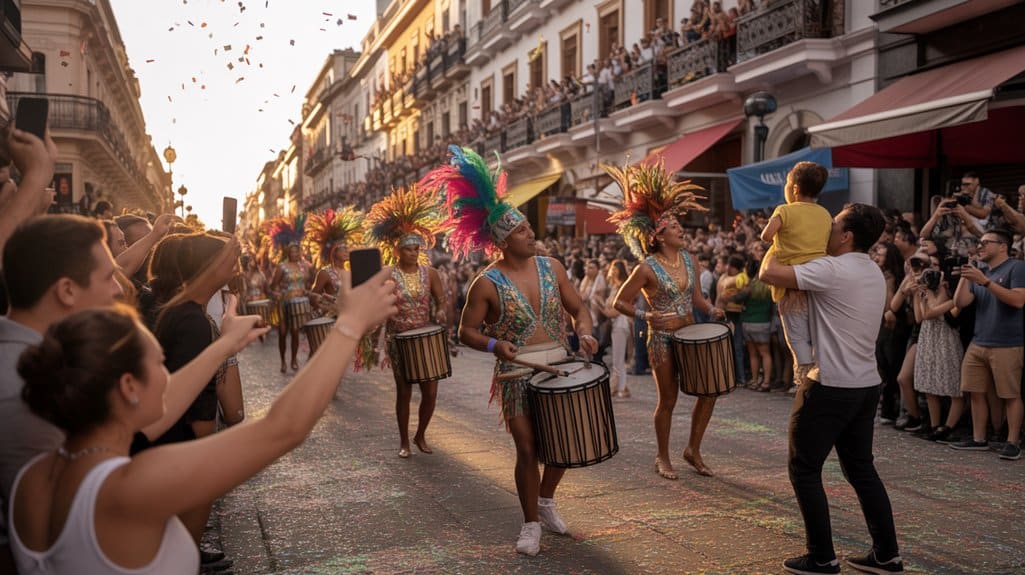
Uruguay’s Carnival runs for 40 to 50 days, earning it recognition as the world’s longest carnival celebration. This extended timeline allows visitors to explore the country’s rich cultural traditions without feeling rushed through the experience. Official holidays occur on February 16-17, 2026, though the festivities span from early February into mid-March.
The celebration’s roots trace back to 19th-century African traditions, particularly through the evolution of candombe music. Each drumbeat and dance movement carries historical significance that connects modern Uruguay to its diverse cultural heritage.
Several major events attract the growing number of international tourists:
Las Llamadas showcases large groups called comparsas, where hundreds of drummers, dancers, and singers parade through Montevideo’s streets. These performances represent the heart of Afro-Uruguayan culture and draw some of the festival’s largest crowds.
Murga theater combines sharp social commentary with music and choreography. Local groups spend months preparing satirical performances that address current events and political issues, making each show both entertaining and culturally relevant.
Candombe music forms the backbone of many celebrations. Musicians play three specific drum types – piano, repique, and chico – each producing distinct sounds that create the genre’s characteristic rhythm patterns.
Border communities near Brazil host their own parades that blend Uruguayan and Brazilian carnival traditions. These smaller celebrations offer visitors a different perspective on regional festival culture.
The lengthy season means travelers can plan visits around their schedules rather than cramming experiences into a few intense days. This flexibility appeals to both foreign tourists seeking authentic cultural immersion and locals who want to participate in multiple events throughout the extended celebration period. Montevideo serves as the central hub for Carnival festivities, concentrating the largest performances and attracting the highest visitor numbers during the celebration.
Hotel Prices Jumped 30-50% in Carnival Hotspots
Hotels across Uruguay’s carnival destinations bump up their rates when festival season rolls around. Prices jump 30-50% in the busiest spots along the Atlantic Coast and near the borders. Punta del Este, Artigas, and Rivera hit travelers hardest between Saturday and Tuesday of Carnival week.
Rooms disappear quickly once February’s festivities kick off. Coastal resorts and border towns pack to capacity as people flock to what’s become the world’s longest carnival celebration. Beach spots like La Paloma face the same crunch for available beds.
Booking ahead saves money and guarantees a place to stay. Public holidays falling on February 16-17, 2026 stretch out travel time even longer, pushing demand higher. Regional businesses count on this annual tourism windfall – carnival season can make or break their yearly earnings. Price increases have become a common trend across the tourism industry, affecting accommodations and services during peak travel periods.
Tres Cruces Terminal Processed 3,300+ Buses in Three Days
Buses packed Montevideo’s Tres Cruces terminal during Carnival weekend, as thousands of travelers headed across Uruguay for the country’s biggest celebration. The transportation hub handled over 3,300 arrivals and departures from Friday through Sunday, with Friday recording more than 1,200 long-distance services alone. Pablo Saravi, the terminal’s control tower supervisor, noted passenger numbers jumped 5% from the previous year.
Operations ran smoothly despite record traffic:
- Schedules coordinated departures to eastern beach towns
- Boarding processes kept moving even with holiday crowds
- Routes connected travelers directly to Punta del Este and coastal areas
- Traffic flow remained steady for services heading to border cities
Travelers found reliable connections to reach Carnival celebrations throughout the country. The majority headed east to seaside resorts, taking advantage of Uruguay’s extensive bus network to join the nationwide festivities. The terminal’s performance during this peak period demonstrates how public transportation adapts to handle seasonal demand spikes that can double or triple normal passenger volumes. Uruguay’s roughly 40-day Carnival season, among the longest in the world, creates extended opportunities for visitors to experience celebrations that run from late January into March.
References
- https://www.travelandtourworld.com/news/article/thousands-flock-to-uruguays-carnival-how-the-countrys-largest-festival-drives-tourism/
- https://english.news.cn/20260217/f8622ac513604143a6076d5b7d199633/c.html
- https://www.travelandtourworld.com/news/article/uruguays-tourism-triumph-a-million-visitors-in-two-months-as-argentinas-middle-class-reclaims-the-coast/
- https://www.eskimo.travel/en/blog/uruguay-public-holidays
- https://nationaltoday.com/uruguay-carnival/
- https://www.osac.gov/Content/Report/559162b4-2baa-41f6-85d4-1d10cec93a34
- https://www.riotimesonline.com/uruguay-hits-a-million-tourists-in-two-months-as-argentinas-middle-class-returns-to-the-beach/
- https://www.argentina.travel/en/news/holidays-in-uruguay-2026-which-ones-to-take-advantage-of-to-visit-argentina
- https://derechadiario.com.ar/us/argentina/tourism-record-carnival-mobilized-3-million-people-and-left-more-than-1-trillion-throughout-the-country
- https://thelatinvestor.com/blogs/news/airbnb-montevideo