
Rental prices in Uruguay have been climbing steadily at 5, 6% annually, and that trend shows no sign of reversing. Whether you’re a local family or an expat arriving with a fixed budget, the market will test your expectations quickly if you haven’t done your homework.
A studio apartment runs around USD 500 per month on a national average, but that number shifts significantly depending on where you’re looking. Montevideo’s more desirable neighborhoods and coastal spots like Punta del Este push that figure considerably higher, sometimes double or more during peak season. It’s worth factoring that in early rather than after you’ve fallen in love with a property.
What many people underestimate is the layer of costs sitting on top of the listed rent. Insurance, common fees, and municipal taxes routinely add another 20, 25% to your actual monthly outlay. A place advertised at USD 600 can quietly become USD 750 once everything is accounted for.
The gap between rural towns and urban centers remains wide, and for some, that gap represents a genuine opportunity to stretch a budget further. Smaller cities and inland communities often offer solid rental value, though they come with their own trade-offs in terms of services and connectivity.
Honest, detailed budgeting isn’t optional here , it’s the difference between a sustainable move and one that unravels within a few months. Taking the time to understand the full cost structure before signing anything will always work in your favor.
Key Takeaways
Uruguay’s rental market has been climbing steadily at 5, 6% annually, and lease renewals tend to reset rents another 6, 7% higher , something worth factoring into any long-term budget before signing. That compounding effect catches a lot of people off guard.
Prices vary considerably by location. A studio nationwide averages around USD 500 per month, but a one-bedroom in Punta del Este can reach USD 2,500. Montevideo sits comfortably in between, though neighborhoods like Pocitos and Carrasco push toward the higher end of that range.
The listed rent is rarely the full picture. Condo fees, utilities, municipal taxes, and insurance typically add another 20, 25% on top, so building that buffer into your numbers from the start makes a real difference when comparing options.
Supply constraints are keeping pressure on the market. Low vacancy rates, limited new construction, and consistent foreign investment , particularly in coastal areas , give landlords considerable leverage on pricing. That dynamic isn’t easing anytime soon.
For budgeting purposes, single expats generally land between USD 1,500, 2,000 per month in total living costs, while couples settling in Montevideo or Punta del Este should plan for closer to USD 2,800, 3,000. Coming in with realistic expectations about what different price points actually offer in each city will save a lot of time during the search.
What Does Rent Actually Cost in Uruguay Right Now?

Rental prices across Uruguay reflect some clear patterns worth understanding before you commit to anything. Studios sit around USD 500 per month on average nationwide, though Montevideo nudges that closer to USD 575, which honestly isn’t surprising given the demand in the capital. If budget is your primary concern, smaller towns can bring that figure down to roughly USD 415, though you’ll be trading convenience and infrastructure for the savings.
One-bedroom apartments in city centers typically fall between USD 625 and USD 750, with suburban alternatives running USD 550 to USD 675. That gap matters more than people initially realize, especially when you factor in transport costs and daily commuting time. Punta del Este plays by entirely different rules, where one-bedroom luxury units start at USD 700 and can easily reach USD 800, reflecting both seasonal demand and the resort-town premium that never quite disappears even off-season.
Two-bedroom properties average around USD 875 nationally, but expect city center options to climb toward USD 1,100. That jump is significant, and it’s something worth planning around rather than discovering after you’ve signed. For reference, two-bedroom units in areas like Parque Miramar are currently listed at USD 1,250 per month, offering around 87 square meters with amenities such as a terrace and garage included.
The market itself has been growing at 5% to 6% annually, which means sitting on a decision rarely works in your favor here. Prices move consistently upward, and good properties at reasonable prices tend to go quickly. Knowing the numbers ahead of time puts you in a much stronger negotiating position.
What Extra Fees Actually Add to Your Monthly Uruguay Rent?
Renting in Uruguay involves more than just the number on the listing, and knowing what sits beneath that figure makes a real difference when you’re budgeting. Gastos comunes alone , covering building maintenance, shared amenities, and HOA-style administration , typically add 20 to 25% on top of base rent. In high-demand spots like Punta del Este, those charges can climb to around $1,000 USD monthly, particularly in buildings offering quasi-hotel-level services.
Then there’s the layer of recurring costs that accumulate quietly: utilities, internet, and municipal taxes together run roughly $180 to $260 USD per month depending on consumption and location. These aren’t optional extras , they’re simply part of living here.
What catches many people off guard is the rental guarantee insurance requirement. Providers like ANDA or Porto Seguro are commonly used, and the upfront premium tends to fall between 50,000 and 65,000 Uruguayan pesos. It’s a one-time cost, but it lands at signing , exactly when cash is already stretched across deposits and moving expenses.
Put it all together and the real monthly cost of renting in Uruguay can look quite different from what the initial listing suggests. Factoring these charges in from the start gives you a much clearer picture of what a property actually costs to live in, not just to secure. For broader context, a single person’s monthly living costs without rent average around $915, which underscores just how significantly housing expenses stack on top of everyday spending.
Condo Fees and Utilities
Base rent is just the starting point , what actually lands in your account each month tends to be a different story. In neighborhoods like Pocitos or Punta Carretas, gastos comunes (condo fees) typically run between $150 and $250 monthly, and that figure climbs to $400, $600 for luxury waterfront properties. It’s one of those costs that surprises people the most when they’re budgeting for the first time.
Utilities stack on top of that. A couple living in a standard apartment can expect to pay around $85 monthly on electricity alone, with combined utility bills generally landing between $150 and $200. Water charges are worth a separate conversation with your landlord , they’re often excluded from common fees and quietly add another $20, $30 each month. Getting clarity on exactly what’s covered before signing saves a lot of friction down the line.
Municipal taxes bring in a minimum of roughly $12.50 per month, which sounds small but is worth factoring in alongside everything else. When you add it all up , gastos comunes, utilities, water, and taxes , the real monthly cost typically runs 20, 25% above whatever rent figure you first saw listed. Knowing that going in makes the whole process a lot smoother. For those wanting to stay connected, internet service runs around $37 per month for a basic fiber-optic plan delivering speeds of 400 Mbps down and 30 Mbps up.
Insurance Premiums Added
Insurance premiums have a way of sneaking up on tenants, and I’ve seen plenty of people underestimate them when putting together their monthly budget. Basic rental liability in Uruguay typically runs between $10 and $30 monthly, but that range shifts quickly depending on the property type, location, and what the landlord requires in terms of coverage.
In established Montevideo neighborhoods, the numbers get more specific. Pocitos, for example, tends to average around $18, 22 monthly, while two-bedroom apartments in Punta Carretas regularly climb to $28. Bring high-value furnishings into the picture and expect an additional 15, 20% on top of the base premium , something worth factoring in if you’re moving in fully furnished or bringing quality pieces from abroad.
Luxury penthouses sit in a different category altogether, with premiums ranging from $35 to $45 monthly. For anyone managing a tight budget, that figure deserves serious attention before signing anything. Paying annually upfront , which many landlords in Uruguay prefer , adds another $120 to $360 to your initial outlay, compressing financial flexibility right at the moment you need it most.
One thing I always make clear to clients: these costs are non-negotiable in the vast majority of Uruguayan leases. Understanding the full picture from the start, rather than discovering fees after the fact, is what separates a smooth rental experience from an expensive surprise. Comprehensive insurance is actually a widely accepted alternative to the traditional cash deposit, with a typical premium running around 30,000 Uruguayan pesos annually and raising your total monthly housing cost by roughly 17%.
High-Demand Area Costs
Premium insurance is just one piece of the puzzle. What landlords advertise rarely reflects what you’ll actually pay once neighborhood demand, HOA fees, and municipal taxes enter the picture , and in Uruguay’s coastal and urban markets, those additions stack up fast.
Punta del Este is the clearest example. One-bedroom units there typically run $1,000, $2,500 USD monthly, and HOA fees alone can push past $1,000 USD on top of that. It’s a lifestyle market, and the pricing reflects it. Montevideo’s city center is more measured, with one-bedrooms generally landing between $650, $750 USD monthly, though utilities and municipal taxes will add to that before long.
Salto and Paysandú tell a different story. Rents there run 15, 40% lower than the major urban centers, and that gap translates into real, monthly savings , not just a number on paper. For anyone prioritizing long-term financial stability, these cities deserve serious consideration.
Across the board, total housing costs in Uruguay tend to exceed base rent by 20, 25%. That’s a consistent pattern I’ve seen play out across every price range and region. The headline number gets attention, but the full picture is what determines whether a rental genuinely fits your budget. In Montevideo specifically, a one-bedroom apartment in a well-connected neighborhood carries a true baseline monthly cost closer to 28,500 UYU once maintenance and municipal taxes are factored in alongside rent.
How Do Montevideo Rents Compare to Coastal and Rural Areas?
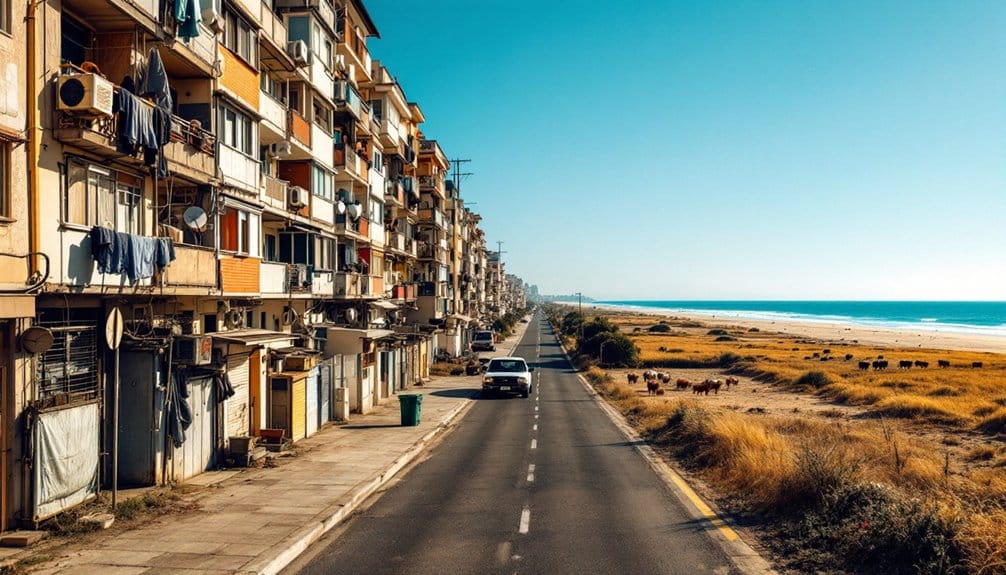
Rental prices across Uruguay tell a story that’s worth understanding before you commit to a lease. The coastal Pocitos and Punta Carretas neighborhoods in Montevideo sit at the premium end of the capital’s market, with one-bedroom units reaching around $1,048 monthly , and the finishes and amenities in those areas genuinely justify much of that cost. Punta del Este operates in its own category entirely, where one-bedrooms hit $1,800 monthly, running 30, 50% above Montevideo’s top-tier neighborhoods. That gap reflects seasonal demand, international buyers, and a resort-driven economy that simply doesn’t soften much even in the off-season.
Central Montevideo brings things back to earth, with one-bedrooms ranging between $546 and $596 monthly. For people prioritizing access to services, infrastructure, and urban convenience without paying coastal premiums, this part of the city delivers solid value. The trade-off is that you’re in a denser, busier environment, which suits some lifestyles better than others.
Moving into the rural interior , cities like Salto and Paysandú , one-bedrooms start around $400 monthly, sitting 15, 40% below coastal rates. These markets offer genuine affordability, though the rental inventory is smaller and turnover slower, so timing your search matters more there.
The choice ultimately comes down to what you need from your surroundings. Uruguay rewards people who understand its regional differences, and matching your budget to the right location from the start saves a lot of frustration down the road.
Is Uruguay Rent Truly Affordable Compared to U.S. Prices?
Rent in Uruguay runs 66, 67% lower than in the United States, and those numbers carry real weight when you sit down and look at them honestly. The national average in the U.S. hovers around $1,636 monthly , in Uruguay, that figure drops to roughly $286 when averaged across the country. That gap is not a rounding error; it reflects a genuinely different cost structure that I’ve watched attract serious buyers and long-term renters to this market for years.
- A one-bedroom in Montevideo typically lands between $550, $625, not the $1,600+ many Americans pay without a second thought
- Studios open at around $350, which gives modest earners actual financial flexibility
- Overall living costs run 38.3% lower, and rent is a significant part of that equation
- Couples here live comfortably on $2,500, $3,500 monthly , a number that many U.S. singles can’t sustain on their own
What those figures tell you, practically speaking, is that your money behaves differently here. A salary that feels tight in Chicago or Los Angeles can support a genuinely comfortable life in Montevideo , with room to save. That’s not a selling point I invented; it’s something clients confirm after their first full month of living here. Geography currently determines a great deal of financial breathing room, and Uruguay happens to sit on the right side of that equation.
Why Are Uruguay Rents Climbing 5, 6% Every Year?
Uruguay’s rental market moves at 5, 6% per year, and if you want to understand why, you need to look at inflation first. The Consumer Price Index consistently lands between 5.5% and 6.0% annually, and that number isn’t just economic background noise , it’s the legal benchmark that sets how much rents can actually move. Landlords don’t get to decide unilaterally; the adjustment ceiling is tied to the lower of CPI or URA movements, which keeps pricing from spiraling the way you might see in less regulated markets.
What that means in practice is that real, inflation-adjusted rent growth still comes in at roughly 4.9% to 5.5% per year. That’s a steady, predictable climb , not driven by speculation or aggressive landlord behavior, but by the structure of the system itself. For anyone planning to rent or invest here, that distinction matters. You’re not dealing with a volatile market; you’re dealing with one that grows methodically within its own legal framework, year after year.
Inflation Drives Rent
Inflation is the engine driving rent increases in Uruguay, and after years in this market, I can tell you that relationship runs deep. The country ties rent adjustments directly to the Consumer Price Index, which means when inflation hit 5.67% in March 2025, rents moved in lockstep, rising between 5% and 6% across the country. That is not a coincidence , it is the legal framework doing exactly what it was designed to do.
- A family paying UYU 20,000 monthly can find themselves at UYU 23,000 within a single adjustment cycle
- Construction costs rise with inflation, and landlords fold those increases into rental pricing without delay
- Purchasing power shrinks at the same time rent obligations grow, squeezing household budgets from both sides
- The regulatory caps provide structure, but tenants still absorb every percentage point the index delivers
What makes Uruguay’s system worth understanding is that this is not arbitrary pricing , landlords are largely following a structured, legally sanctioned mechanism. That said, renters should factor annual CPI adjustments into their long-term budget planning from day one. Signing a lease here means committing to a figure that will move with inflation, year after year, without exception. Knowing that going in changes how you approach negotiations, lease terms, and the neighborhoods where your budget actually has room to breathe.
Stable Market Growth
Rent increases in Uruguay don’t happen in isolation , they’re driven by a combination of factors that feed into each other over time. Low vacancy rates, steady foreign buyer interest, and limited new construction all shift leverage firmly toward landlords, and that dynamic isn’t changing anytime soon.
The regulatory framework does offer tenants some structure. Annual adjustments tied to CPI and URA coefficients keep increases predictable, but predictable doesn’t mean small , consistent 5, 6% yearly growth is still the norm within those boundaries. When leases expire, landlords typically reset to current market rates, and in Montevideo especially, those resets often land between 6, 7% above the previous figure.
Uruguay’s broader economic stability plays a real role here too. It draws international buyers who see long-term value in the market, which tightens available stock and puts additional upward pressure on pricing. Gross rental yields sitting between 4.9% and 6.7% give landlords a clear financial incentive to price aggressively, and that continues to outpace wage growth in ways that make affordability a genuine concern for local residents looking to rent.
If you’re navigating this market , whether as an investor or as someone searching for a place to live , understanding these compounding pressures helps you make sharper decisions about timing, location, and what to realistically expect when a lease comes up for renewal.
What Do Expats and Remote Workers Actually Spend Monthly?

Living in Uruguay comfortably requires honest numbers, not hopeful ones. Single expats typically spend between $1,500 and $2,000 monthly, though regular dining out and weekend leisure can push that figure closer to $2,200 without much effort. Couples settling into desirable neighborhoods around Montevideo or Punta del Este should realistically plan for $2,800 to $3,000, and families with children in international schools or private activities can find themselves well past $4,500 , sometimes closer to $7,000 once everything is accounted for.
- Single remote workers can get by on $1,500, but a genuinely comfortable lifestyle costs more
- Dining out frequently adds several hundred dollars monthly, and Uruguay has excellent restaurants worth visiting
- Couples in sought-after neighborhoods face monthly realities around $2,800
- Family budgets can stretch past $7,000 when schooling, activities, and larger housing needs are factored in
After years of helping people find homes here, the ones who settle in most successfully are those who budget for what life will actually look like, not a stripped-down version of it. Uruguay offers remarkable quality of life, strong property rights, and genuine stability , and those things carry real value. Coming in with accurate expectations protects that investment from the start.
When Does Buying a Home in Uruguay Beat Renting?
Buying in Uruguay makes sense, but only when the numbers actually work in your favor , and that depends almost entirely on how long you plan to stay and how you’re financing the purchase. Most buyers hit their break-even point somewhere between seven and ten years out, assuming the property holds its value and no major building assessments come through. That’s a reasonable window, but it’s not a short one.
How you structure the purchase changes everything. Foreign buyers coming in with 40% to 50% down are carrying heavier monthly costs from day one, and the interest rate exposure alone can stretch that break-even timeline considerably. Cash buyers have a real advantage here , fewer layers of friction, lower total cost, and a faster path to the point where ownership genuinely outperforms renting.
One thing people sometimes underestimate before they sign is transaction cost. In Uruguay, you’re looking at 7% to 10% added to the purchase price right upfront. That’s not a rounding error , it’s a meaningful weight on the timeline that you need to account for honestly.
The calculation does have natural tailwinds. Rental prices in Montevideo and the coastal markets have been climbing steadily, and well-located properties have appreciated reliably over the past decade. Both factors pull the break-even point earlier for buyers who chose the right asset. Still, if you’re financing a significant portion of the purchase, patience isn’t optional , it’s part of the strategy. Going in with clear eyes about the commitment is what separates buyers who thrive here from those who don’t.
References
- https://internationalliving.com/countries/uruguay/cost-of-living-in-uruguay/
- https://www.pacificprime.com/blog/cost-of-living-in-uruguay.html
- https://thelatinvestor.com/blogs/news/average-rent-uruguay
- https://wise.com/au/cost-of-living/uruguay
- https://www.youtube.com/watch?v=RDhVgKcOsMI
- https://www.laciteuruguay.com/news/cost-of-living-in-uruguay-in-2025-monthly-breakdown-for-foreign-buyers
- https://www.liveandinvestoverseas.com/country-hub/uruguay/cost-of-living-in-uruguay/
- https://thelatinvestor.com/blogs/news/uruguay-rents
- https://globalcostdata.com/cost-of-living/uruguay/
- https://www.jarniascyril.com/expatriation/moving-to-uruguay-complete-guide-for-expats/cost-of-living-uruguay-expats-budget-housing-food/