
Latin America’s split over Venezuela runs deeper than most people realize. You’ve got countries like Colombia and Brazil backing Washington’s moves, while Mexico and Uruguay are pushing back hard against any foreign interference.
The divide isn’t random—it follows clear patterns. Countries with conservative governments tend to support U.S. pressure on Maduro’s regime. Progressive leaders, especially those who remember past American interventions, are drawing red lines around sovereignty.
Take Uruguay’s position, for example. The country has consistently opposed external military action in regional disputes since the 1980s democratization. This stance stems from Uruguay’s own experience with foreign-backed coups during the Cold War era.
When Venezuelan refugees started crossing into Uruguay in 2018, the government offered humanitarian aid but refused to join calls for regime change.
Economic interests muddy the waters further. Countries dependent on Venezuelan oil imports face different calculations than those competing for energy markets.
Brazil’s state oil company Petrobras has billions invested in Venezuelan projects, making any instability costly.
Historical grievances shape reactions too. Many Latin Americans still remember the 1973 Chilean coup, the invasion of Grenada, and interventions in Central America. These memories make even legitimate concerns about Venezuelan democracy sound like pretexts for regime change.
The fractures go beyond Venezuela itself. They reflect competing visions of how Latin America should relate to global powers.
Some countries want closer ties with Washington for economic benefits. Others prefer building regional institutions that can solve problems without outside help. This fundamental disagreement will outlast whatever happens in Caracas.
Key Takeaways
Major Latin American nations slammed the U.S. operation as a clear violation of international law. Argentina broke ranks and backed the intervention, abandoning the region’s usual stance of staying neutral in these situations.
Oil money played a huge role in splitting opinions across the region. Venezuelan reserves represent some of the world’s largest proven oil deposits, and certain business groups saw this crisis as a chance to get in on future deals. Governments found themselves torn between condemning foreign interference and recognizing potential economic opportunities down the road.
The region’s memory runs deep when it comes to American military actions. Panama’s 1989 invasion still shapes how many Latin Americans view U.S. interventions today. That skepticism colors every discussion about Washington’s true motives in Venezuela.
Right-leaning governments framed their support around protecting democratic institutions from authoritarian rule. Left-leaning administrations focused on sovereignty rights and worried about setting a precedent that could justify future foreign meddling in domestic affairs. Uruguay’s position reflects this broader ideological split – we’ve consistently emphasized diplomatic solutions over military ones.
Security experts warn about what happens when power structures collapse suddenly. Criminal networks already operate across Venezuelan borders, and a complete breakdown could hand them even more territory to exploit. The displacement crisis has already forced over seven million Venezuelans to leave their country – the largest migration in Latin America’s modern history. Military intervention risks making that humanitarian disaster even worse.
Which Latin American Governments Condemned or Supported the U.S. Operation?
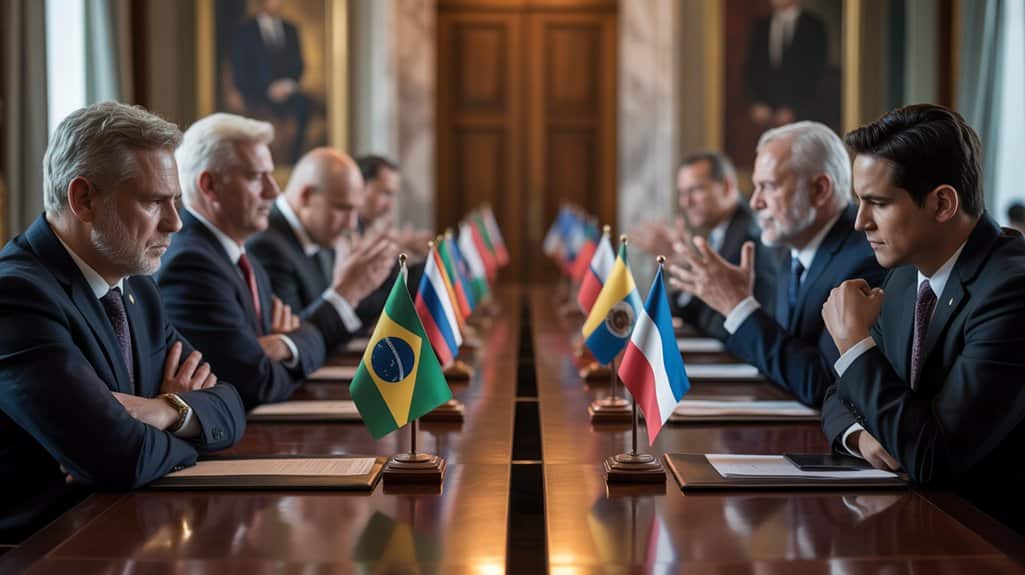
When news of the U.S. military operation in Venezuela broke, Latin American governments split into two clear camps. The division cut straight to the heart of long-standing regional tensions about foreign intervention and national sovereignty.
Brazil, Mexico, Chile, Colombia, and Uruguay formed a unified bloc condemning the strike. These five nations issued a joint statement declaring the action violated international law. Their position wasn’t surprising—each country has historically opposed military interventions by outside powers in Latin America, dating back to Cold War-era conflicts. Uruguay’s Foreign Ministry specifically cited the principle of non-interference that has guided the country’s foreign policy since the 1980s democratic transition.
Argentina broke ranks completely. President Milei’s administration openly backed the operation, viewing it as necessary to remove what they called an illegitimate regime. This stance aligned Argentina directly with Washington’s position, marking a sharp departure from the country’s traditionally neutral approach to regional conflicts.
The economic angle shaped much of the debate. Business groups in several countries, particularly in Argentina and Colombia, saw potential opportunities in a post-Maduro Venezuela. Oil sector analysts pointed to Venezuela’s massive reserves as a prize worth billions in future investment deals.
Human rights organizations couldn’t agree on a single response. Groups like Human Rights Watch had documented extensive abuses under Maduro’s government, creating internal debates about whether the intervention’s goals justified the methods. Venezuelan exile communities across the region largely celebrated the news, while indigenous rights groups worried about the precedent of foreign military action solving domestic political crises. Trump’s revival of the Monroe Doctrine, which he rebranded as the “Don-roe Doctrine”, suggested broader ambitions for asserting U.S. dominance throughout the Western Hemisphere.
How Past U.S. Interventions Fuel Regional Skepticism Today
Critics of Washington’s Venezuela policy often cite the 1989 Panama invasion as a cautionary tale. The operation successfully removed dictator Manuel Noriega from power, but U.S. Southern Command documented 516 Panamanian military deaths and 202 civilian casualties, though local human rights groups reported significantly higher civilian tolls. Entire neighborhoods in Panama City sustained heavy damage from military operations.
These historical precedents shape current regional attitudes toward U.S. intervention. Latin Americans who lived through the Cold War era recall when Washington regularly deployed military force across the hemisphere under the Monroe Doctrine. Between 1898 and 1994, the United States conducted over 40 military interventions in Latin America, from the occupation of Haiti to the invasion of Grenada. In Nicaragua, US military intervention lasted from 1912 to 1933, following a request from conservative leaders to stabilize political control.
The pattern creates lasting wariness among regional populations. When U.S. officials speak about protecting democracy or human rights in Venezuela today, many Latin Americans interpret these statements through the lens of past interventions that prioritized American strategic interests over local sovereignty. This skepticism transcends political boundaries—both leftist and conservative governments in the region have expressed reservations about potential U.S. military action in Venezuela.
Panama 1989 Precedent Recalled
Latin American leaders get nervous when Washington mentions intervening in Venezuela, and Panama explains why. Back in December 1989, U.S. forces rolled into Panama City with Operation Just Cause. The Bush administration said they needed to arrest Manuel Noriega, restore democracy, and cut drug trafficking routes.
The reality on the ground looked different. Combat destroyed entire sections of El Chorrillo neighborhood, leaving around 15,000 people homeless according to human rights groups. Panama’s economy, already weakened by sanctions, took another hit as businesses shut down and infrastructure got damaged. Banks stayed closed for weeks. The drug trade? It just shifted routes through other countries.
What really stuck with regional governments was how quickly Panama’s independence vanished. One day Noriega was running the show, the next day American troops controlled the capital and installed Guillermo Endara as president. Sure, Endara had probably won the previous election before Noriega canceled it, but getting power through foreign tanks sent a clear message about who called the shots.
Countries like Uruguay, Brazil, and Mexico watched this unfold and drew their own conclusions. They saw that American-style democracy promotion came with conditions – the new government had to play by Washington’s rules on everything from trade policy to military bases. Endara’s administration became heavily dependent on U.S. aid and advice.
Fast-forward to today’s Venezuela crisis, and those same leaders remember Panama’s lesson. When U.S. officials float the idea of military action against Maduro, neighboring presidents think about burning neighborhoods and economic chaos. They wonder if Venezuelan civilians would actually benefit or just become collateral damage in someone else’s geopolitical game. The Panamanian precedent makes them skeptical of Washington’s true motives, no matter how noble the stated goals sound. The United Nations General Assembly condemned the invasion as a violation of international law, a rebuke that still resonates across Latin America today.
Monroe Doctrine’s Modern Revival
The Monroe Doctrine continues shaping U.S.-Latin American relations almost 200 years after President Monroe warned European powers against interference in the Western Hemisphere. This 1823 declaration gradually became Washington’s rationale for regional dominance. Theodore Roosevelt expanded it in 1904, claiming America could intervene to correct “chronic wrongdoing” by Latin American governments. This opened the door to U.S. military occupations in Haiti, Nicaragua, and the Dominican Republic during the early 1900s.
Recent administrations have dusted off Monroe Doctrine rhetoric, particularly regarding Venezuela. The Trump White House explicitly referenced the doctrine when discussing potential action against the Maduro government. Such language brings back uncomfortable memories for countries like Uruguay, which witnessed decades of American interventions throughout the region during the Cold War.
Uruguay’s experience offers perspective on these historical patterns. Despite being one of Latin America’s most stable democracies, Uruguay remembers when larger neighbors faced U.S.-backed coups and invasions. The country maintained its democratic institutions during the 1970s military dictatorship period, yet even Uruguay felt pressure from Washington’s regional security concerns during those years.
Today’s discussions about migration flows, drug trafficking routes, and energy security echo past justifications for intervention. Latin American governments, including Uruguay’s leadership, approach renewed Monroe Doctrine language cautiously. They recognize that appeals to hemispheric security often precede more direct forms of pressure on sovereign decision-making. The doctrine’s credibility grew substantially by the early 20th century, when U.S. military capabilities finally matched the ambitious scope of Monroe’s original 1823 proclamation.
Democracy Rescue or Illegal Invasion? The Two Competing Narratives
The United States says it stepped in to save democracy, calling the operation a targeted action to remove an illegitimate leader and give power back to the people. Washington cites questionable election results, widespread human rights abuses, and decades of authoritarian rule as evidence that Maduro forfeited his legitimacy to lead.
Regional governments tell a different story. They view this as an unauthorized military intervention that violated national sovereignty, struck government facilities, and removed a democratically elected president without United Nations backing. South American leaders, particularly those who remember their own struggles with foreign interference, see dangerous precedents being set.
From Uruguay’s perspective, this conflict hits close to home. The small nation has long championed diplomatic solutions and respect for sovereignty – principles that guided its own transition from military dictatorship to democracy in the 1980s. Uruguayan officials worry that military interventions, regardless of their stated intentions, destabilize the entire region and undermine the international legal framework that protects smaller countries from more powerful neighbors. The Non-Aligned Movement, representing 125 member states, has formally condemned the intervention as a violation of international law.
Justifying Force: The U.S. Case
When American forces descended on Caracas to seize Nicolás Maduro, two completely different narratives emerged about what had actually taken place.
U.S. Justification Strategies characterized the mission as democracy’s last stand. Washington’s officials described their actions as large-scale law enforcement—arresting a criminal rather than toppling a government. They cited documented instances of ballot manipulation and voter intimidation during Venezuela’s contested elections, claiming military intervention simply removed obstacles preventing Edmundo González from taking his legitimately won office.
The White House built its case around Venezuela’s Political Crisis: documented human rights violations, international election observer reports questioning vote counts, and mass emigration data showing millions fleeing economic collapse. American supporters drew parallels to past interventions in Panama and Grenada, where U.S. forces removed authoritarian leaders. They distinguished this operation from traditional regime change by pointing to González’s electoral victory, which multiple international bodies had recognized despite Maduro’s refusal to release detailed voting records.
This framing positioned America as enforcing democratic norms rather than imposing them. Officials argued they were simply helping Venezuelans implement a decision they’d already made at the ballot box, removing a leader who’d lost legitimacy by clinging to power through force rather than popular mandate. Supporters also highlighted how the operation might disrupt cocaine flow into the U.S., citing Maduro’s alleged connections to narcotics trafficking networks.
Regional Critics Reject Legality
Governments and legal experts throughout Latin America saw things completely differently. They pulled out the OAS and UN charters, showing how Washington had broken basic rules that protect countries from outside interference. The operation didn’t have Security Council backing or an OAS vote, making it look more like the old days when powerful countries just changed governments they didn’t like.
Legal scholars brought up the International Court of Justice ruling on Nicaragua, which made clear that forcing your way into another country stays illegal even when you’re fighting dictators. The Inter-American Democratic Charter supports democracy, but it draws a hard line against any country acting alone with military force.
The U.S. tried claiming self-defense, but that argument didn’t work since no one had actually attacked them. Their humanitarian reasons didn’t stand up either because international law requires proper approval for these kinds of operations. The ICJ Nicaragua case had already settled this question decades earlier.
Legal experts across the region worried about what this meant for the future. They’d spent years building a system where countries followed the same rules and respected each other’s borders. One unilateral action could tear down that progress and take the hemisphere back to an era where might made right. The current international climate appeared increasingly lawless, diminishing adherence to the established norms that had governed relations between nations.
Why Venezuela’s Oil Reserves Are Central to Regional Reactions
Caribbean countries got hooked on Venezuela’s cut-rate oil deals that let them pay over years instead of upfront. When these arrangements wobble, island nations scramble to find affordable energy elsewhere.
Refineries from the Gulf Coast down to Brazil were designed around Venezuela’s thick, heavy crude. Switching to lighter oil from other sources means expensive equipment overhauls that can take months and cost millions.
Energy costs spike across Central America whenever Venezuelan production drops. Guatemala and Honduras see their import bills jump 20-30% during supply disruptions, forcing governments to either absorb losses or pass costs to consumers.
Brazil’s Petrobras and Mexico’s state oil company now compete directly with U.S. refiners for customers Venezuela used to supply reliably. This scramble drives up prices and creates supply gaps that ripple through regional markets.
Politicians from Jamaica to Nicaragua built their energy policies around cheap Venezuelan fuel. Any threat to this arrangement becomes a domestic crisis since voters blame leaders when gas prices surge or power grids strain. Venezuela’s reported reserves tripled to 300 billion barrels largely through reclassification rather than new discoveries, raising questions about long-term reliability.
Whoever controls Venezuela’s oil reserves shapes energy policy from Miami to São Paulo. Countries that seemed energy-secure suddenly find themselves vulnerable when this single supplier falters.
The Maduro Removal Created New Security Risks for Neighboring Countries
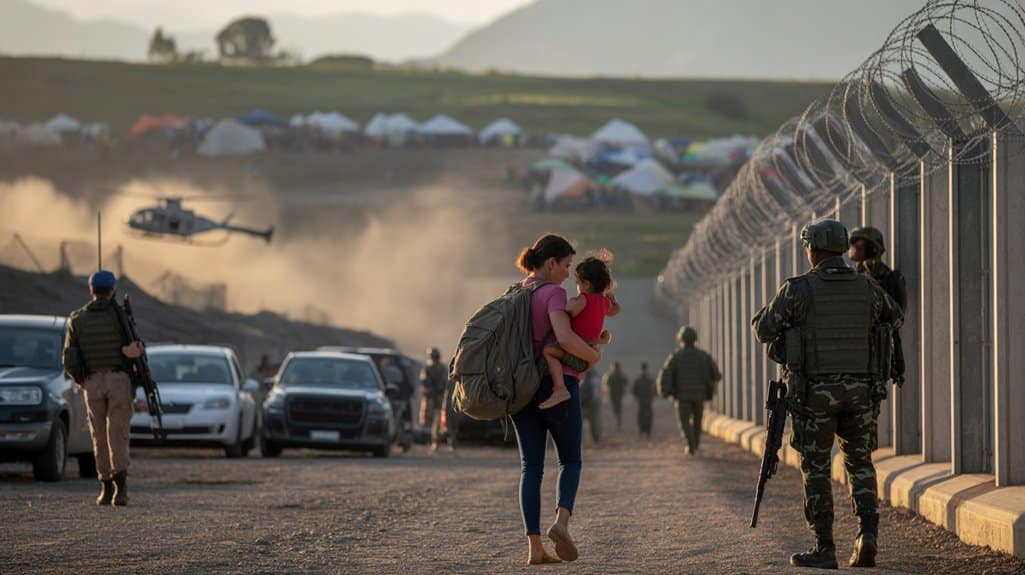
Maduro’s fall created a power vacuum that criminal organizations were quick to exploit. Groups like Tren de Aragua and remnants of former guerrilla movements expanded their operations into Venezuela’s border regions, establishing control over territories where state authority had effectively disappeared. These areas became hubs for kidnapping rings and drug trafficking networks that posed direct threats to neighboring nations.
The collapse triggered a massive exodus of Venezuelan civilians seeking safety. Countries like Colombia, Brazil, and Peru found themselves dealing with sudden surges of displaced people on top of the millions they had already taken in during previous waves of migration. Uruguay, despite its distance from Venezuela’s borders, saw its own smaller but steady stream of Venezuelan arrivals increase as families sought stable destinations throughout the region.
Border communities in Colombia and Brazil reported sharp increases in violent crime as these armed groups used Venezuelan territory as safe havens for cross-border operations. Local authorities struggled to distinguish between genuine refugees and individuals with ties to criminal networks, complicating security screening processes at official crossing points. Businesses with Eastern European assets began reviewing their contingency plans as analysts warned that the Venezuelan crisis could serve as a template for understanding how power vacuums create cascading regional security challenges.
Armed Groups Fill Power Vacuum
Armed groups moved quickly to fill the void as Venezuela’s central government lost control across vast territories. When state institutions collapsed, multiple criminal organizations and militias established parallel authorities that now govern large swaths of the country.
The situation mirrors what we’ve seen in other Latin American contexts where weak governance creates opportunities for non-state actors. Different types of armed groups now exercise territorial control:
Armed colectivos operate as pro-government militias in urban areas, particularly around Caracas. These groups receive weapons and funding from state sources while maintaining neighborhoods through intimidation and violence against opposition supporters. Armed loyalists continue their activities in the streets even after Maduro’s removal, creating persistent instability.
Drug trafficking organizations have expanded their presence along the Colombian and Brazilian frontiers. The weakening of border controls allowed cartels to establish processing facilities and smuggling corridors that generate millions in revenue.
Guerrilla remnants from Colombia’s conflict found refuge in Venezuelan territory. ELN fighters and FARC dissidents who rejected peace agreements now control remote areas where government forces rarely venture.
Criminal mining syndicates dominate illegal gold extraction in the Orinoco Mining Arc. These organizations exploit workers and export precious metals through networks that stretch across South America.
Military commanders operating independently have transformed their units into profit-making enterprises. They tax businesses, control checkpoints, and engage in contraband while maintaining the appearance of legitimate authority.
These groups don’t simply compete – they often negotiate territorial arrangements and business partnerships. Local populations pay taxes to whichever organization controls their area, seek permission for travel, and bring disputes to armed leaders who act as de facto judges. Constitutional rights mean little in territories where guns determine the rules.
Migration Surge Strains Regional Capacity
Venezuela’s economic collapse triggered something unprecedented—nearly eight million people packed up and left their country between 2016 and 2023. This massive exodus created the biggest displacement crisis our hemisphere has witnessed, with most families heading to neighboring South American nations that were already dealing with their own financial struggles.
Border communities and capital cities found themselves completely unprepared for what hit them. Local schools suddenly had classrooms bursting with new students they couldn’t properly accommodate. Medical facilities ran out of essential supplies and space as patient loads doubled or tripled overnight. Rent prices shot up while available housing disappeared, making life harder for both newcomers and longtime residents.
Colombia and Brazil absorbed the largest numbers, doing what they could with limited resources. Even their most well-intentioned programs couldn’t keep pace when tens of thousands of people showed up at their borders every few weeks. The math simply didn’t work—too many people needing help, not enough infrastructure or funding to provide it.
The desperation became clear in places like the Darién Gap, where families chose to risk their lives crossing one of the world’s most dangerous jungle passages. Migration officials recorded over 300,000 people making this treacherous journey in just the first nine months of 2023 alone, many of them Venezuelan parents carrying young children through terrain that claims lives regularly. Venezuelans accounted for 60% of crossings through the Darién Gap during this period, making them the largest nationality attempting the route.
How Migration and Crime Could Spiral Across Latin America’s Borders
Since 2015, over 7.7 million Venezuelans have fled their homeland, reshaping migration flows throughout Latin America. Colombia bears the heaviest burden with 2.9 million displaced persons, while Peru provides refuge to another 1.5 million. These unprecedented numbers overwhelm local infrastructure—schools can’t accommodate new students, hospitals struggle with increased patient loads, and labor markets become saturated.
Border communities absorb the most severe impacts. In Colombian cities like Cúcuta and Peruvian towns such as Tumbes, makeshift settlements emerge almost overnight as families seek any available shelter. Desperate migrants who can’t secure legal employment become easy targets for gang recruitment. Criminal organizations flourish in areas where police resources are stretched thin, establishing smuggling operations that exploit vulnerable populations.
These networks demand substantial payments to facilitate border crossings, creating lucrative illegal enterprises. Extortion schemes proliferate within shadow economies where migrants work without documentation or legal protections. The cycle intensifies when governments delay processing work authorization documents, forcing people into underground employment where criminal groups maintain control.
Border restrictions worsen rather than resolve these problems. Tighter controls don’t prevent human movement—they simply redirect it through more dangerous channels dominated by organized crime. Migrants still cross borders, but now they depend on criminal facilitators who charge higher fees and expose them to greater risks.
From Uruguay’s perspective, this crisis demonstrates how restrictive immigration policies can backfire. Our relatively stable democracy and economy have attracted Venezuelan migrants, though in smaller numbers than our northern neighbors. The key lesson lies in providing legal pathways for integration rather than forcing people into irregular situations where they become vulnerable to exploitation. Migration in the region has become increasingly unpredictable and multidirectional, with governments struggling to manage flows not only of Venezuelans but also Haitians, Nicaraguans, and Cubans seeking refuge across multiple borders.
The Deep Ideological Split Between the Region’s Left and Right
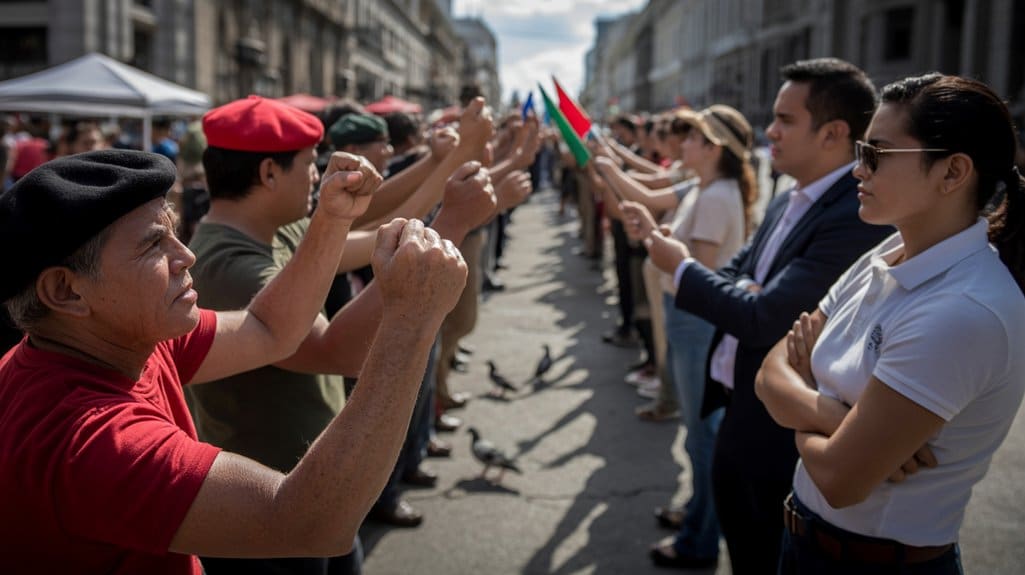
Conservative governments see the operation differently – they’re defending democracy against dictatorship. The sovereignty question splits people down the middle: Should countries protect authoritarian neighbors from outside interference, or do governments that systematically crush their own people lose that protection?
This goes way beyond normal political disagreements. We’re looking at completely different ways of seeing the world – how power should work, what self-determination actually means, and what it takes to be truly free. The Trump administration’s rejection of democratic opposition leader María Corina Machado has further complicated regional responses to the intervention.
Why Colombia and Brazil Fear Long-Term U.S. Military Presence
Governments that quietly celebrated Maduro’s downfall now find themselves wrestling with uncomfortable questions about what follows. Colombia and Brazil, Venezuela’s immediate neighbors, see potential threats emerging from any extended U.S. military involvement in their region.
Specific concerns shaping regional calculations:
- Armed groups could exploit border instability to expand operations
- U.S. military installations might outlast their stated temporary purpose
- Mass population movements could strain already stretched social services
- Criminal networks may adapt quickly to capitalize on disrupted territories
- Regional powers risk becoming pawns in broader geopolitical competition
Historical precedent weighs heavily on decision-makers in both countries. U.S. military interventions in Panama (1989), Haiti (1994, 2004), and elsewhere across Latin America created lasting complications that outlived their original justifications. Intelligence assessments from Bogotá and Brasília consistently highlight how temporary missions often become permanent fixtures.
The political arithmetic proves challenging for leaders who must balance multiple pressures. Presidents Petro in Colombia and Lula in Brazil depend on domestic coalitions skeptical of U.S. military expansion while maintaining crucial economic relationships with Washington. Trade data shows both countries rely heavily on American markets—Colombia exports 27% of its goods to the U.S., while Brazil maintains $40 billion in annual bilateral commerce.
Public opinion surveys across both nations reveal growing wariness of foreign military presence in South America. Polling by regional firms shows 68% of Colombians and 71% of Brazilians oppose permanent U.S. bases in neighboring countries, viewing such arrangements as threats to regional autonomy rather than security guarantees.
Border security officials in Colombia face particular complications given that the ELN maintains presence in at least 40 municipalities across eight Venezuelan states, positioning the group to potentially exploit any power vacuum created by intervention.
How the OAS and CELAC Failed to Produce a Unified Response
When the crisis hit, Latin America’s two biggest diplomatic voices couldn’t find common ground. The OAS rushed to hold emergency talks, but members split down the middle. Countries like Colombia and Brazil saw Washington’s moves as protecting democratic values, while Mexico and Bolivia denounced them as foreign interference. This stalemate left the organization unable to pass any meaningful resolution.
CELAC faced the same problem when Colombia’s president organized a virtual summit of all thirty-three member states. The goal was straightforward: issue a joint statement criticizing U.S. involvement. Argentina had other plans, though, rallying nine additional countries to block the proposal entirely. Since CELAC requires unanimous consent for official declarations, the meeting ended without any collective position.
The divisions reflected deeper political realities across the region. Conservative governments in countries like Chile and Ecuador weren’t about to defend Maduro’s government, pointing to documented cases of political prisoners and electoral irregularities. Even traditional allies like Uruguay had grown uncomfortable with Venezuela’s human rights record. Neighboring nations also expressed mounting anxiety regarding potential refugee surges that could destabilize their own borders. What should have been Latin America’s moment to speak with one voice instead exposed just how far apart these nations had drifted on fundamental questions about democracy and sovereignty.
What This Precedent Means for Future U.S. Actions in the Hemisphere
What This Precedent Means for Future U.S. Actions in the Hemisphere
The diplomatic fallout raises a tougher question: what precedent has Washington set for future interventions? This matters because it changes how the U.S. justifies military action across Latin America. Past operations like Panama in 1989 and Grenada in 1983 relied on different legal reasoning, but this case breaks new ground by mixing drug enforcement with political objectives.
The strategy creates a playbook that other leaders in the region are already studying. When you combine law enforcement language with regime change tactics, traditional diplomatic rules get thrown out the window. Countries that once felt secure behind sovereignty principles now see how quickly things can shift when Washington decides a leader has crossed the line.
Looking ahead, U.S. operations will likely follow this pattern:
- Drug trafficking accusations provide legal cover for targeting hostile governments
- Small-unit operations avoid the political costs of full invasions
- Interim government agreements skip normal diplomatic channels
- Extradition demands serve as code for regime removal
- Executive branch decisions sidestep congressional oversight
Regional allies face a difficult choice. Countries like Colombia and Brazil have their own relationships with Washington, but they also worry about setting precedents that could come back to haunt them. Uruguay’s position as a small, democratic nation gives us a unique perspective on how these power dynamics play out when you’re not the one calling the shots. The invocation of a new Monroe Doctrine by the Trump administration signals an era where U.S. dominance in the Western Hemisphere takes priority over traditional multilateral frameworks.
The hemisphere’s political landscape has fundamentally changed. Leaders who once felt protected by international law now calculate their survival based on Washington’s shifting priorities and their own usefulness in broader U.S. strategic goals.
Frequently Asked Questions
Will the U.S. Lift Sanctions on Venezuela After Maduro’s Removal?
The U.S. won’t rush to drop all sanctions once Maduro’s gone. Think of it like removing a cast from a broken bone – you do it gradually to make sure everything’s healing properly.
Right now, Washington’s already started easing some restrictions on Venezuela’s oil industry. This makes sense since oil revenues could help stabilize the country’s economy, which has been in free fall for years. The Venezuelan economy shrank by over 75% between 2013 and 2020, making it one of the worst economic collapses outside of wartime.
The complete removal of sanctions will depend on how well Venezuela’s democratic transition goes. U.S. policymakers want to see real elections, respect for opposition parties, and functioning democratic institutions before they fully open the economic taps again.
There’s also the humanitarian angle. Sanctions have made life harder for ordinary Venezuelans, even though they were designed to pressure the Maduro government. Over 7 million Venezuelans have left their country since 2015, creating the largest migration crisis in Latin America’s recent history. The U.S. recognizes that lifting sanctions could help reduce this suffering and potentially encourage some emigrants to return home.
This cautious approach reflects lessons learned from other sanctions regimes. Quick removal without proper safeguards can sometimes benefit the same corrupt networks the sanctions were meant to weaken in the first place.
Which Venezuelan Officials Will Face Trial in U.S. Courts?
Several high-ranking Venezuelan officials are set to face legal proceedings in American courtrooms on serious criminal charges. Nicolás Maduro, the country’s president, stands accused alongside his wife Cilia Flores and their son Nicolasito in a New York federal court. The charges against them include corruption schemes that allegedly diverted millions from Venezuela’s state coffers and narco-terrorism activities tied to drug cartels operating across South America.
Two other prominent figures in Venezuela’s government also face prosecution. Diosdado Cabello, who serves as president of the National Assembly, and former intelligence chief Ramón Rodríguez Chacín are currently fighting extradition requests from Washington. Both men face drug-trafficking allegations that prosecutors say involve coordinating cocaine shipments from Venezuela through Central America into the United States.
The cases stem from a broader U.S. investigation into what officials describe as a criminal enterprise operating at the highest levels of Venezuelan government. Federal prosecutors have assembled evidence they claim shows these officials used state institutions to facilitate drug smuggling operations while enriching themselves through various corruption schemes.
How Will China and Russia Respond Militarily or Economically?
China’s going to double down on what it does best in Latin America – writing big checks for infrastructure projects. We’re talking about ports, roads, and energy facilities that create long-term economic ties without putting Chinese soldiers anywhere near the region. Beijing learned from watching other powers that economic influence lasts longer than military threats, and it’s cheaper too.
Russia’s playing a different game entirely. Moscow doesn’t have China’s economic firepower, so it’s sticking with arms deals and sending military advisors to countries that’ll still work with them. These moves are more about showing they’re still relevant than building real strategic advantages. Think of it as diplomatic theater – Russia needs to look like it’s pushing back against Western influence, even if the actual impact stays pretty limited.
The smart money says China’s approach will have more staying power. When you build someone’s electrical grid or their main highway, that relationship runs deep. Russia’s military partnerships might grab headlines, but they don’t create the same kind of lasting influence that comes from economic interdependence.
Can International Observers Guarantee Free Elections in Venezuela Now?
No. Watching elections can’t fix Venezuela’s deeper problems. The government has taken control of courts, election boards, and other key institutions that should be independent. Think of it like trying to referee a soccer match where one team owns the stadium, picks the other referees, and can change the rules mid-game.
International observers face real limits on what they can actually see and do. Venezuelan authorities restrict where monitors can go, limit their access to voting data, and control much of the electoral machinery. The 2018 presidential election had observers present, yet opposition candidates were banned, media access was severely limited, and vote buying was widespread.
Free elections need more than just people watching on election day. Citizens must be able to organize, speak freely, and access independent media for months before voting begins. Venezuela’s government has shut down opposition media outlets, arrested political leaders, and made it nearly impossible for civic groups to operate normally.
The vote counting process remains largely opaque despite observer presence. Venezuela’s electoral council, stacked with government loyalists, controls the electronic voting system and rarely allows meaningful audits. Compare this to Uruguay’s transparent paper ballot system where any citizen can observe the entire counting process at their local polling station.
Real electoral reform would mean rebuilding these broken institutions from the ground up – something that requires political will from Venezuela’s current leadership, which has shown little interest in genuine democratic competition.
What Compensation Will U.S. Provide for Civilian Casualties in Caracas?
The U.S. hasn’t announced any official compensation program for civilian casualties in Caracas. Looking at how these situations typically play out, affected families would most likely receive what’s called “ex gratia” payments—basically condolence money that serves as a humanitarian gesture. These payments don’t involve the U.S. admitting any legal responsibility for what happened.
This approach follows a pattern we’ve seen in other conflicts. The military usually offers these one-time payments to families who lost loved ones or suffered injuries, but it’s quite different from full-scale reparations programs. The amounts tend to be relatively modest, and there’s no formal legal process involved—it’s more about acknowledging human suffering than settling legal claims.
What makes this situation particularly complex is that any compensation would need to navigate the broader diplomatic tensions between Washington and Caracas. The current sanctions regime and lack of formal diplomatic relations could complicate how such payments would even reach affected families.
References
- https://www.brookings.edu/articles/the-global-implications-of-the-us-military-operation-in-venezuela/
- https://afsc.org/news/what-you-need-know-about-us-attack-venezuela
- https://theweek.com/politics/us-interventions-latin-america-caribbean-post-world-war-two
- https://www.brookings.edu/articles/making-sense-of-the-us-military-operation-in-venezuela/
- https://www.tpr.org/2026-01-04/venezuela-is-the-latest-in-the-u-s-s-long-history-of-interventions-in-latin-america
- https://www.statista.com/chart/35630/countries-in-latin-america-and-the-caribbean-that-have-experienced-us-involvement/
- https://globalinitiative.net/analysis/what-are-the-implications-of-the-us-intervention-in-venezuela-for-organized-crime/
- https://www.belfercenter.org/quick-take/us-intervention-venezuela-what-happens-next
- https://www.foxnews.com/politics/trump-embraces-us-interventionism-venezuela-he-sets-sights-cuba-colombia-next
- https://www.euronews.com/2026/01/04/spain-and-5-latin-american-countries-reject-us-attack-on-venezuela-in-joint-communique