
Uruguay’s water infrastructure tells a different story from many developed nations. While countries like the United States face crumbling century-old pipe networks requiring hundreds of billions in repairs, Uruguay modernized its water systems through strategic public investment over the past two decades.
The country’s state-owned water utility, OSE (Obras Sanitarias del Estado), serves 98% of the urban population with treated water. This coverage reaches rural areas too, where decentralized treatment plants process water locally rather than relying on massive, aging central systems that plague other nations.
Water rates in Uruguay have remained relatively stable because the government prioritized infrastructure maintenance over profit margins. OSE reinvests revenue directly into pipe replacement and treatment facility upgrades, preventing the deferred maintenance crisis seen elsewhere. This approach keeps costs predictable for families while maintaining system reliability.
The key difference lies in Uruguay’s integrated water management model. Instead of fragmenting responsibility across multiple private companies and municipal agencies, one entity oversees everything from source protection to household delivery. This coordination allows for long-term planning and consistent quality standards across the entire 176,000-square-kilometer territory.
Recent investments focus on climate resilience rather than emergency repairs. New pipelines connect different water sources, so drought in one region doesn’t trigger shortages elsewhere. Treatment plants now handle both traditional purification and emerging contaminants, ensuring safe drinking water as environmental challenges evolve.
This proactive maintenance philosophy costs less than reactive emergency fixes. While other nations scramble to fund massive infrastructure overhauls, Uruguay’s steady investment approach demonstrates how strategic planning prevents water system collapse.
Key Takeaways
America’s water systems need $625 billion in upgrades over the next two decades, creating annual funding shortages that will hit $153 billion by 2040. Think of it like a massive plumbing repair bill for an entire country – except the pipes carry drinking water to millions of homes and businesses.
Congress took a significant step in 2021 when it passed the Infrastructure Investment and Jobs Act, setting aside $55 billion specifically for water systems. This package earmarks $15 billion just for replacing dangerous lead pipes that still connect many American homes to their water supply.
These investments create substantial employment opportunities. By 2040, water infrastructure projects will generate nearly one million jobs each year – roughly 15 positions for every million dollars spent on repairs and upgrades. Picture entire communities benefiting as crews rebuild aging treatment plants and replace corroded pipelines.
Better infrastructure delivers cleaner water while helping utilities meet federal safety standards. Upgraded systems reduce the chance of contamination reaching rivers and lakes, which protects fish populations and other wildlife that depend on healthy waterways.
Residents are already seeing the financial reality of these necessary improvements on their monthly bills. Denver homeowners watched their water costs jump 52% between 2023 and 2025 as the city funds critical system overhauls. While painful for household budgets, these increases reflect the true cost of maintaining safe, reliable water service that many communities have deferred for decades.
America’s Water Systems Are Short $625 Billion
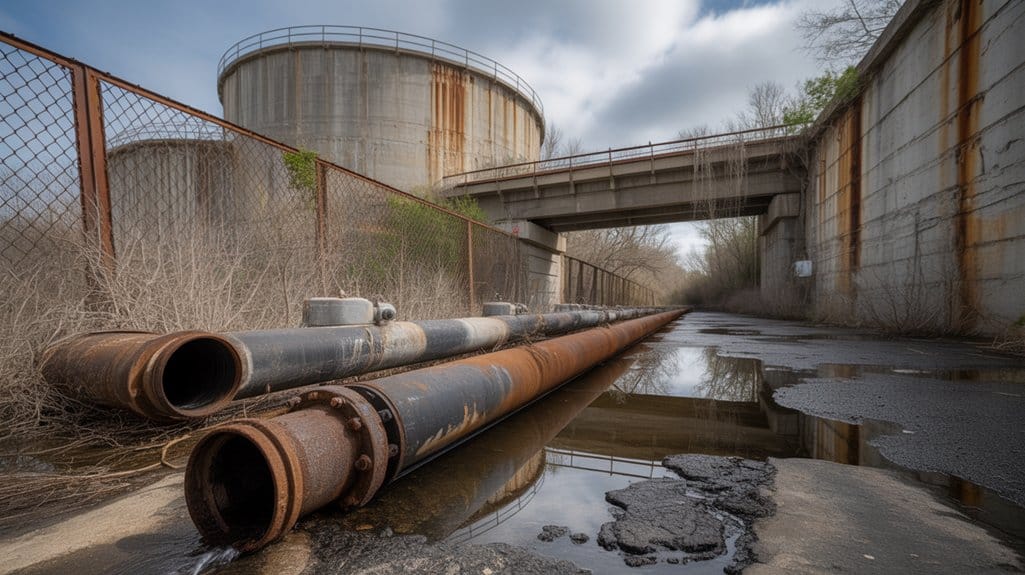
America’s water infrastructure sits on shaky financial ground, with the EPA documenting a $625 billion funding gap that’ll span the next two decades. Current annual spending of $41 billion falls $82 billion short of what’s actually needed, and projections show this shortfall ballooning to $153 billion by 2040.
You can see the consequences every time a water main bursts down the street. These breaks happen 260,000 times yearly across the country because much of our pipe network dates back generations. The math is stark: only about one-third of necessary projects will receive funding over the next decade.
Communities can’t simply hope this problem resolves itself. Water systems that fall further behind today become exponentially more expensive to fix tomorrow. Clean, reliable water access forms the backbone of public health and economic stability—making this funding crisis one that touches every household, business, and institution that depends on turning a handle and getting safe water. The Infrastructure Investment and Jobs Act currently allocates about $8 billion annually for water projects, but this funding only extends until 2026.
What the $55 Billion Infrastructure Act Delivers for Water Systems
The 2021 Infrastructure Investment and Jobs Act allocates $55 billion in federal funding for water systems across the United States. This money targets problems that communities haven’t been able to fix due to budget constraints and aging infrastructure.
State Revolving Funds receive the biggest chunk—$23.4 billion. Nearly half of this money comes as grants, which means communities don’t have to pay it back. Think of it like the difference between a loan and a gift from the federal government to fix your local water pipes.
PFAS contamination gets $10 billion in dedicated funding. These chemicals, nicknamed “forever chemicals,” stick around in the environment and drinking water for decades. They’re expensive to remove, so most small towns couldn’t afford the specialized treatment equipment until now.
Water utilities can apply for annual grants to fix leaky pipes, install better water meters, and upgrade old equipment. Leak detection technology helps find underground breaks before they waste thousands of gallons, similar to how early detection prevents bigger problems in any system. Small water systems serving underserved communities receive $50 million in dedicated funding from 2022 to 2026.
Tribal communities get their own dedicated funding stream for safe water projects. Many reservations have struggled with basic water access for generations, so this creates a separate pot of money specifically for those needs.
Low-income families receive $500 million to help pay water bills. High water costs can force families to choose between clean water and other necessities, so this assistance program removes that burden.
This represents the largest federal investment in water infrastructure since 2009’s economic stimulus. Local water companies can now fix and modernize their systems without forcing customers to absorb all the costs through higher monthly bills.
Distribution Pipes and Lead Lines: Where 67% of Funding Must Go
When water leaves a treatment plant clean and safe, it faces a long journey through miles of underground pipes before reaching your kitchen tap. This journey creates major problems for water systems across the country.
Two-thirds of the $625 billion drinking water infrastructure need goes toward fixing distribution and transmission systems. These pipes carry water from treatment facilities to homes and businesses. The massive funding requirement reflects years of putting off essential maintenance, with water systems now losing 14 to 18 percent of treated water through leaks every day.
| Investment Category | Amount Needed | Time Frame |
|---|---|---|
| Pipeline Replacement | $422.9 billion | 20 years |
| Lead Service Lines | $15 billion federal | Ongoing |
| Total Distribution Need | 67% of $625B | 20 years |
| Annual Federal Support | $8 billion | Through 2026 |
Local governments shoulder 95 percent of water infrastructure costs, which strains municipal budgets. Many communities struggle to balance the immediate need for pipe repairs against other pressing priorities like schools and roads. Elected officials often hesitate to raise water rates for capital projects due to fear of losing electoral support.
Smart funding approaches combine federal grants with local revenue streams to help communities upgrade their aging pipe networks. These strategies allow water systems to replace dangerous lead service lines and fix deteriorating infrastructure while keeping water bills affordable for residents.
How Water Infrastructure Repairs Generate 1.3 Million Jobs
Every million dollars spent on water infrastructure repairs creates 15.5 jobs across Uruguay’s communities. By 2040, these investments will support 956,000 positions annually throughout the country.
The work spans construction crews fixing aging pipes, maintenance teams keeping systems running, and treatment facility operators ensuring clean water reaches every household. Most positions require hands-on skills rather than advanced degrees, making them accessible to workers from different backgrounds.
Train-to-hire programs connect unemployed residents directly with active repair projects. Participants learn pipe fitting, equipment operation, and water quality testing while earning wages on real infrastructure work. Local municipalities partner with these programs to fill immediate staffing needs.
Water systems operate year-round in every town, creating steady employment that doesn’t disappear when projects end. Unlike seasonal construction work, these positions provide consistent paychecks since communities always need clean water and functioning sewage treatment. The water sector employs approximately 1.7 million people nationwide, with competitive salaries that have increased in recent years.
Your neighborhood benefits twice: improved infrastructure and local job creation that keeps workers close to home.
Why Water Utility Costs Jumped 52% Between 2023-2025
Water bills in Denver and nearby areas crept up steadily from 2023 through 2025, with annual rate bumps ranging between 4% and 11% depending on your local provider. The increases fell short of the dramatic 52% spike that grabbed headlines.
Denver Water tacked on an extra $2 to $3 per month to customer bills in 2025. That money feeds into a hefty $1.7 billion infrastructure overhaul planned for the next ten years. The utility needs this cash to fix crumbling pipes, swap out dangerous lead connections, and beef up systems that deliver water to 1.5 million people daily.
Your actual bill increase depends on how much water your household uses and what size meter you’ve got installed. Most families burn through about 73,000 gallons per year and saw their annual water costs climb by roughly $40. The price hikes stem from real cost pressures – construction materials cost more, energy bills keep rising, and the pipes underground are getting old and need replacing. CEO Alan Salazar pointed to the legacy of foresight from past leadership as a guiding principle for managing the rate adjustments responsibly. These adjustments help guarantee your tap keeps running clean water for decades to come.
References
- https://fmicorp.com/insights/thought-leadership/whats-coming-in-the-next-five-years-for-water-infrastructure-investing
- https://uswateralliance.org/wp-content/uploads/2023/09/Economic-Impact-of-Investing-in-Water-Infrastructure_VOW_FINAL_pages_0.pdf
- https://infrastructurereportcard.org/cat-item/drinking-water-infrastructure/
- https://www.epa.gov/dwsrf/epas-7th-drinking-water-infrastructure-needs-survey-and-assessment
- https://www.bluefieldresearch.com/waters-tipping-point-five-forces-redefining-u-s-water-management/
- https://sevenseaswater.com/water-and-wastewater-infrastructure-trends/
- https://www.wef.org/publications/news/wef-news/investing-in-water-americas-trillion-dollar-opportunity/
- https://www.franklintempleton.lu/articles/2025/clearbridge-investments/infrastructure-outlook-ai-decarbonization-and-policy-tailwinds-in-2026
- https://smartwatermagazine.com/news/smart-water-magazine/water-infrastructure-report-highlights-trillions-economic-gains-long-term
- https://www.governing.com/infrastructure/the-water-infrastructure-investments-states-will-need