
Major Investment Announcement Meets Environmental Concerns
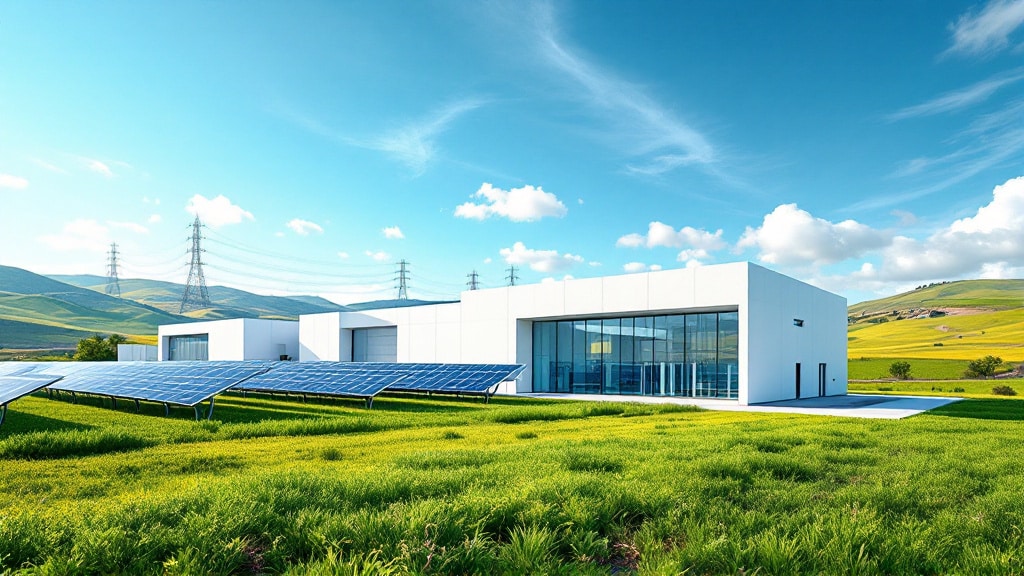
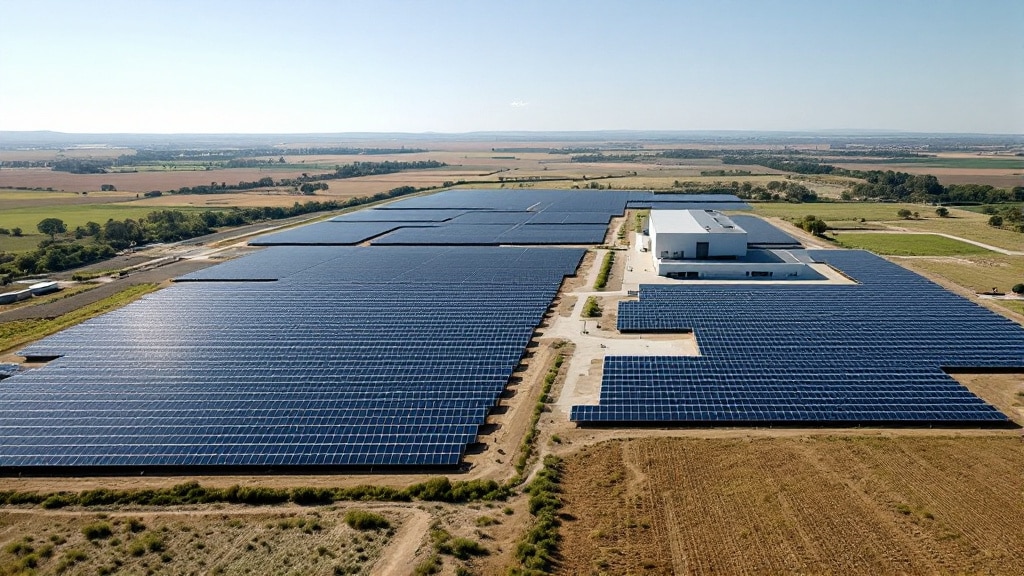
Uruguay announced a US$5.7 billion data center and solar power agreement with Spain’s Solaria on October 14, 2026, marking the country’s largest single investment ever. President Yamandú Orsi signed the deal, which includes plans for up to 500 MW of data centers and 350 MW of solar power capacity. Just eight days later, opposition Senator Sebastián da Silva filed a bill on October 22 to ban new data centers over two strategic aquifers, setting up a potential conflict between infrastructure growth and water resource protection.
The proposed legislation would prohibit new data center construction and expansions over the Guaraní and Raigón aquifers, as well as the Libertad zone in San José department. Existing installations with legal approval would be exempt. The Ministry of Environment would define protected boundaries using official hydrogeological maps. The bill applies regardless of cooling technology or water usage methods.
Investment Scale and Timeline
Solaria, a Spanish solar producer led by Chief Executive Arturo Díaz Tejero, has stated a total Uruguay plan worth US$11.65 billion. The US$5.7 billion figure announced by President Orsi represents the first phase. The state utility UTE requires an additional US$120 million to bring forward power infrastructure investments needed to support the data center’s electricity demand.
Political Context and Opposition
Senator da Silva belongs to the National Party, a historic center-right party currently in opposition to President Orsi’s left-wing Frente Amplio government. The Frente Amplio holds 16 of 30 Senate seats and 48 of 99 seats in the Chamber of Deputies, two short of a majority in the lower house. A Cifra poll published on October 15, 2026, found 24% approving of Orsi’s performance and 57% disapproving, based on surveys conducted from September 30 to October 12, 2026.
Da Silva stated at a press conference that Uruguay must preserve “absolutely strategic assets” for future generations. He described data centers as facilities that use substantial electricity and water, and said “let them go somewhere else.” On social media platform X, he wrote “prever es gobernar” (to foresee is to govern).
Practical Implications for Property and Infrastructure
Site Selection Constraints
If the bill advances, technology companies including Google, which has announced plans for a data center in Uruguay, would face geographic restrictions. The Guaraní aquifer is one of the world’s largest groundwater reserves, extending beneath parts of Argentina, Brazil, Paraguay, and Uruguay. The Raigón aquifer serves as a drinking water source for parts of southern Uruguay. No information is currently available on whether any planned Solaria sites lie over the named aquifers.
| Element | Capacity/Value | Status | Timeline |
|---|---|---|---|
| Data centers | Up to 500 MW | Announced | Not specified |
| Solar power | 350 MW | Announced | Not specified |
| Investment value | US$5.7 billion | Signed Oct 14 | Phase one |
| UTE grid upgrade | US$120 million | Required | To be advanced |
| Aquifer bill | N/A | Filed Oct 22 | No committee date |
Legal and Constitutional Basis
The bill cites Article 47 of Uruguay’s Constitution, which addresses environmental protection and water resources, and Law 18,610 on national water policy. The explanatory note acknowledges the data center sector as an opportunity for investment and new development but states that growth must protect groundwater. The aquifers are described as strategic for drinking water, farming, industry, and future generations. No committee hearing date or government response has been announced.
Long-Term Outlook for Property Values and Development
Regional Infrastructure Demand
The US$5.7 billion investment represents a substantial infrastructure commitment for Uruguay, a country that ranks seventh of 14 nations in The Rio Times Latin America Power Index with 45.9 points as of October 2026. Data center development typically drives demand for industrial real estate, power transmission corridors, and worker housing. The 500 MW data center capacity and 350 MW solar generation would require significant land allocation and grid connections.
Water Resource Management
Uruguay’s water policy framework under Law 18,610 establishes public ownership of water resources and prioritizes human consumption. The proposed ban would create permanent exclusion zones over the Guaraní and Raigón aquifers, affecting site selection for industrial facilities requiring high water or energy inputs. The Ministry of Environment would use official hydrogeological maps to define protected boundaries, though no draft maps or technical criteria have been published. The bill’s passage would require approval in both legislative chambers, where the Frente Amplio government lacks an outright majority in the Chamber of Deputies.
Quellen
- Uruguay Data Centre Bill Targets 2 Aquifers | The Rio Times
- Senador Da Silva presentó proyecto de ley para prohibir instalación de centros de datos sobre los acuíferos Guaraní y Raigón
- Uruguay Politics Explained, Who Holds Power in 2026 | The Rio Times
- El Partido Nacional presentó un proyecto para prohibir los data centers sobre acuíferos estratégicos
- Uruguay Data Centre Needs US$120 Million More Power | The Rio Times