

Uruguay’s real estate market closed the first seven months of 2025 with USD 1.4 billion in total sales and 27,533 transactions recorded , a 1.3% increase over the same period last year. Those aren’t dramatic numbers, but in this market, steady growth is exactly what you want to see.
Montevideo and Maldonado continue to drive the bulk of national activity, together accounting for more than half of all transactions. That split makes sense to anyone who knows the country well. Montevideo holds the business infrastructure, the rental demand, and the long-term residential base. Maldonado, anchored by Punta del Este and the surrounding coastal areas, attracts a different buyer profile , seasonal and international , but with increasing year-round interest.
What’s sustaining this momentum is worth paying attention to. Demand has remained consistent, currency conditions have stayed favorable for dollar-denominated purchases, and sellers have largely held to disciplined pricing rather than chasing inflated valuations. That combination tends to produce durable markets, not fragile ones.
This isn’t growth built on speculation. Uruguay’s legal stability, dollar-based property transactions, and transparent ownership structures give buyers confidence that doesn’t exist in many other regional markets. When activity rises here, it tends to reflect genuine purchasing intent , people relocating, investing, or securing assets with a long view in mind.
The current trajectory points toward continued measured growth, particularly in well-located urban and coastal properties where supply remains tight and qualified demand keeps building.
Key Takeaways
Uruguay’s real estate market has been performing exceptionally well, closing the period with USD 1.4 billion in total sales , USD 1.17 billion of which moved through in the first half of 2025 alone. That kind of volume tells you this isn’t a market sitting still.
Between January and July 2025, buyers completed 27,533 purchase transactions, a 1.3% increase over the same period last year. Modest as that sounds, consistent year-over-year growth in this market is exactly the kind of signal worth paying attention to. Uruguay doesn’t spike , it builds steadily, and that’s what makes it reliable for both local buyers and foreign investors.
Montevideo accounted for 34.4% of national transactions, which makes sense given its role as the country’s economic and cultural hub. Maldonado followed at 17.9%, largely fueled by Punta del Este , a market that continues to attract international buyers looking for lifestyle properties alongside solid long-term value.
Analysts are projecting annual real appreciation of 3, 5%, with foreign investment expected to grow 6, 8% per year. Those figures align with what I’ve observed on the ground: buyers aren’t rushing in and out , they’re committing, which reflects genuine confidence in the market’s fundamentals.
What stands out most is the overall balance , moderate price growth, strong liquidity, and demand that holds steady from both domestic and international buyers. That combination doesn’t happen by accident. Uruguay offers legal security, political stability, and a transparent purchasing process, and the market reflects all of that.
Uruguay’s Real Estate Market Hits $1.4 Billion
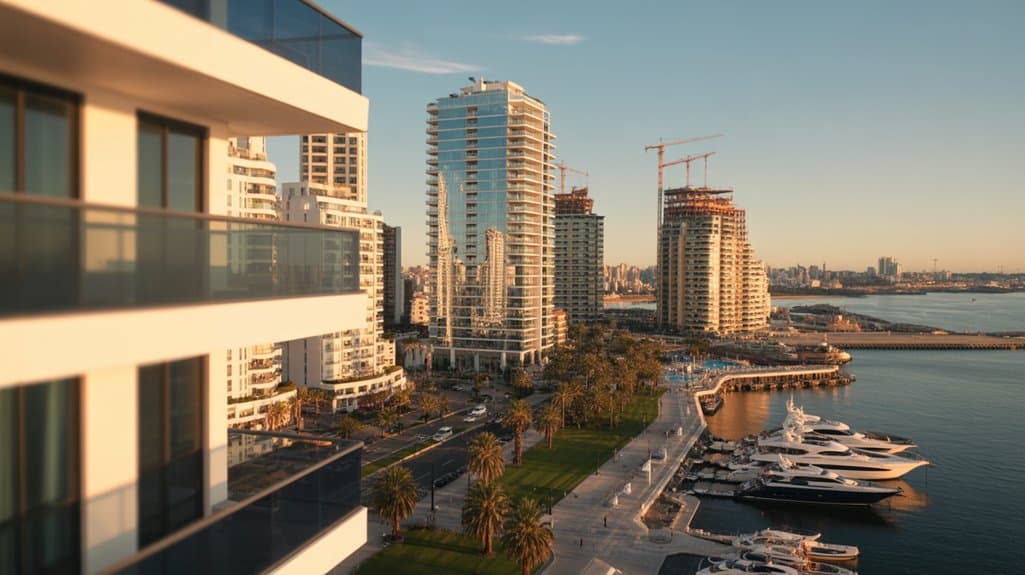
Uruguay’s property market has reached $1.4 billion, and the numbers keep climbing. More than $1.17 billion changed hands in just the first half of 2025, already surpassing what we saw over the same period last year. That kind of momentum is worth paying attention to.
What makes this market particularly interesting is its character. This isn’t speculative heat, it’s measured, consistent growth driven by real demand. Prices are moving, yes, but moderately, and liquidity remains strong across the board. In my years working this market, I’d call it what the sector is calling it: active stability and consolidation. That’s not a phrase we use lightly.
Currency conditions have been favorable, and the buyer profile has shifted in ways that matter. Tax-residency seekers and wealth-preservation buyers are increasingly drawn to Uruguay, and for good reason. Punta del Este, in particular, has seen property prices climb by 10% over the past year as foreign buyers drive demand. The legal framework is clear, property rights are solid, and the country offers a quality of life that’s hard to match in the region. These aren’t buyers chasing short-term returns. They’re making deliberate, long-term commitments, and that’s exactly the kind of demand that sustains a healthy market over time.
If you’re watching Uruguay from the outside, the picture here is straightforward: the fundamentals are sound, the buyers are serious, and the market is rewarding those who approach it with the same mindset.
How Transaction Volume Climbed to 27,533 Sales in 2025
Uruguay’s residential market recorded 27,533 purchase transactions through the first seven months of 2025 , a solid mid-year reading, not a final count. That puts the market on a trajectory consistent with 2024’s full-year total of just over 52,000 sales, and the 1.3% year-over-year gain, while modest, tells you something important: demand is holding up without overheating. Prices across most of the residential segment have stayed relatively flat, yet buyers are still moving , which in my experience usually points to a market driven by genuine need rather than speculation. That’s the kind of stability Uruguay tends to reward over time. Total sales value from these transactions reached at least $1.17 billion in early 2025, underscoring the market’s substantial scale even amid steady, unspectacular growth.
Seven-Month Sales Snapshot
From January through July 2025, Uruguay’s property market logged 27,533 transactions nationwide , a figure that nudges ahead of the same stretch in 2024 and, frankly, one worth sitting with for a moment. This builds on a full-year 2024 total of 52,246 transactions, which itself marked a 3.3% increase over 2023. Volume like this doesn’t happen by accident. It reflects buyers who are genuinely committed, not just browsing, and sellers who are pricing with enough realism to close deals.
What stands out beyond the raw number is the rhythm. Activity stayed consistent month after month rather than clustering around a single event or season, and that kind of steady pace is usually a healthier sign than a short burst followed by silence. For anyone deciding when to list or make an offer, that pattern matters more than most people realise.
| Metric | Figure | Context |
|---|---|---|
| Transactions | 27,533 | Jan, Jul 2025 |
| Montevideo Share | 34.4% | Leading region |
| Maldonado Share | 17.9% | Second largest |
| H1 Value | $1.17B | Tax-derived estimate |
Montevideo’s 34.4% share is no surprise , the capital concentrates demand, infrastructure, and liquidity in ways the interior simply can’t match yet. Maldonado’s 17.9% does deserve a closer look, though. Between Punta del Este and the surrounding areas, that region continues to attract both domestic buyers and foreign investment, and its share of national volume reflects that pull. Together, these two departments account for more than half of all transactions, which tells you exactly where pricing power sits right now.
Year-Over-Year Growth Rate
Growth here has been steady, and that’s worth paying attention to. Uruguay recorded 27,533 transactions in the first seven months of 2025, a 1.3% increase over the same period in 2024. That figure won’t turn heads among investors hunting for rapid appreciation, but after years of working this market, I can tell you that measured growth like this is actually one of Uruguay’s most reliable signals.
- 27,533 sales confirm that buyers remain active and engaged across the market.
- 1.3% growth points to incremental momentum, the kind that builds quietly without overheating.
- Sentiment is anchored in stability, which historically has attracted serious, long-term buyers to Uruguay.
- Demand patterns are consistent, meaning the market isn’t being pushed by speculation or short-term pressure.
What this data really tells you is that Uruguay continues to move at its own deliberate pace, which is precisely what has made it attractive to buyers who prioritize security over short-term gains. There’s no artificial urgency here, no inflated promises. Analysts expect this pattern to continue, with baseline real appreciation projected at 3-5% annually over the coming years. Just a market doing what it has done for years: offering a solid, transparent environment where decisions can be made with confidence.
Comparing 2024 and 2025 Trends
What two years of data show you here is a market that rewards patience over speculation. In 2024, 52,246 transactions closed with a 3.3% gain over the prior year , buyers were active, demand held firm, and nothing suggested a slowdown was coming. Seven months into 2025, 27,533 sales have already been recorded alongside $1.17 billion in total value, with that 1.3% uptick reflecting something I’ve seen matter enormously to foreign buyers: peso stability tied to a disciplined monetary policy that Uruguay has maintained for decades.
| Metric | Figure |
|---|---|
| 2024 Total Transactions | 52,246 |
| 2025 Transactions (7 months) | 27,533 |
| 2025 Sales Value | $1.17 billion |
| Montevideo Market Share | 34.4% |
Montevideo’s 34.4% market share tells you where the concentration sits, though coastal departments like Maldonado and Rocha continue drawing buyers who want space and lifestyle over urban density. Foreign investment continues to grow at 6, 8% annually, led notably by Argentine and Brazilian buyers. What these numbers collectively describe isn’t a market chasing peaks , it’s one adding depth year after year, shaped by real demographic movement rather than short-term speculation. For anyone weighing a purchase, that consistency is precisely the signal worth paying attention to.
Montevideo and Maldonado Lead Uruguay’s Property Sales
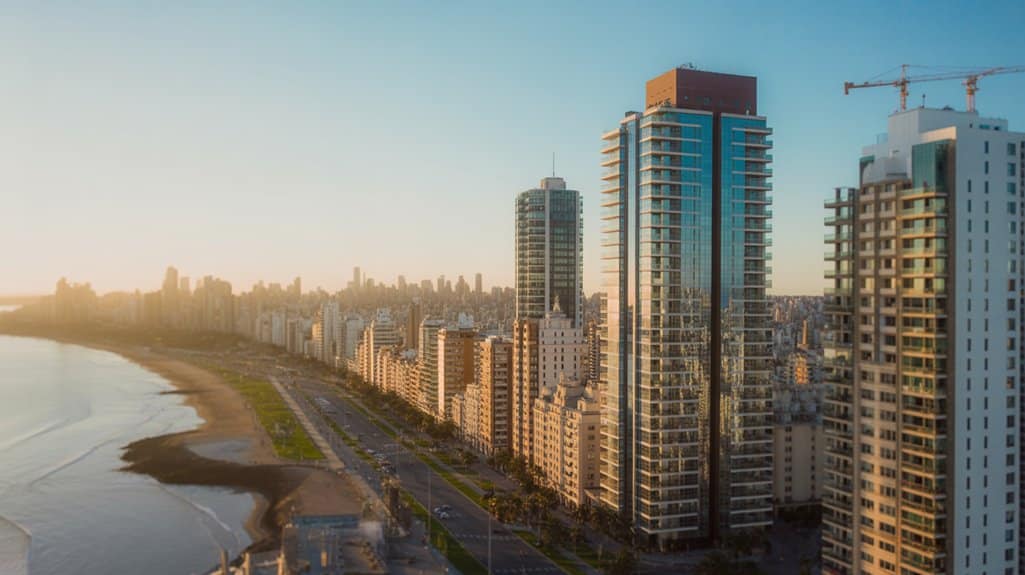
If you’re watching where real estate money moves in Uruguay, keep your eyes on two departments: Montevideo and Maldonado. Between them, they shape the national market in ways that no other region comes close to matching.
Montevideo brings consistent volume. Buyers are always active in Pocitos, Carrasco, and Cordón, drawn by urban infrastructure, strong rental demand, and the kind of liquidity that lets properties move without sitting for months. Maldonado plays a different game entirely , Punta del Este and José Ignacio attract seasonal buyers, foreign investors, and high-net-worth clients looking at beachfront and premium lifestyle properties. The price points there can shift national averages on their own.
What that means practically is that the rest of the country’s departments are essentially working with what’s left after these two claim the bulk of total sales value. That’s not a criticism of places like Colonia or Rocha, which have their own appeal, but the concentration is real and worth understanding before you make any decisions about where to buy or invest.
If your goal is capital appreciation or rental income with predictable demand, those two departments are where the fundamentals consistently hold up. Knowing that from the start saves you from chasing opportunities in markets that, while promising on paper, simply don’t have the buyer depth to back them up.
Montevideo’s Market Dominance
Montevideo punches well above its weight in Uruguay’s property landscape, and the numbers from the first half of 2025 make that clear. Alongside Maldonado, it accounts for just over 52% of all national transactions , a remarkable concentration given that the country spans nineteen departments. What sustains that kind of pull? A dense mix of government institutions, corporate headquarters, and universities that keeps residential demand consistently strong, regardless of broader economic cycles.
Pricing here reflects real complexity. The median sale value sits close to $160,000, with a per-square-meter rate of around $2,806 , figures that tell you the market has genuine depth, not just volume. August 2026 data recorded 2,054 active listings, which speaks to solid liquidity for both buyers and sellers navigating the market at any given time.
- Apartments dominate the activity, with 1,468 listings and a benchmark of $3,286/m²
- Monthly sales run near 1,500 units , consistent turnover that keeps the market moving
- Entry points exist across price brackets, making it accessible whether you’re buying your first property or expanding a portfolio
That turnover matters. Around 1,500 sales per month isn’t a spike , it’s a rhythm, and it tells you this market doesn’t stall. Whether you’re drawn to a compact apartment in a well-connected neighborhood or something with more room to grow, Montevideo tends to deliver options that match a range of financial goals and lifestyles.
Maldonado’s Coastal Appeal
Maldonado is Uruguay’s second most powerful real estate market, and that status rests almost entirely on what Punta del Este and its surrounding coastline represent to buyers. The strip from La Barra through Manantiales to José Ignacio is not just scenic, it is consistently one of the most sought-after stretches of Atlantic shoreline in South America.
Prices reflect that demand clearly. While the national average sits around USD 2,400 per square meter, Maldonado’s coastal corridor runs closer to USD 2,900, Punta del Este proper pushes USD 4,000, and sea-view towers regularly exceed USD 7,000. Those figures have held firm because buyers here are not responding to trends, they are responding to something more durable: the ability to own a first-line property, generate strong seasonal rental income, and access the beach within minutes of an inland base.
Laguna del Sauce airport strengthens that case considerably. For Brazilian, Argentine, and international buyers especially, the ability to fly in directly makes ownership feel practical rather than aspirational. That convenience translates directly into transaction volume, and early 2025 data showing Maldonado accounting for nearly 18% of national real estate activity confirms the market is not softening.
If anything, the diversification across micro-markets gives buyers more entry points than the headline Punta del Este numbers might suggest, which is worth factoring in when evaluating where along this coast your investment makes the most sense.
Regional Sales Breakdown
Uruguay’s market doesn’t spread evenly across the map , it clusters, and the numbers make that clear. Montevideo and Maldonado together captured just over half of all transactions in 2025’s partial-year data, closely mirroring their combined 53% share in 2023. That’s not a coincidence. Decades of infrastructure investment, population density, and the country’s well-established pattern of coastal migration have cemented these two departments as the dominant forces in any serious conversation about where real estate activity actually happens.
The rest of the country trails at a meaningful distance:
- Canelones , 13.2% in 2025, down slightly from 14% in 2023, still a firm third place thanks to its proximity to the capital.
- Rocha , 5.9% in 2025, up from a steady 5% in 2023, quietly gaining ground as buyers look east.
- Colonia , 5.2% in 2025, consistent with 5% in 2023, holding its niche as a cross-river lifestyle destination.
- San José , 2.5% in 2025, following a reported 21% drop, a market worth watching but one that requires patience right now.
The takeaway here is straightforward: capital moves where infrastructure, lifestyle, and demand converge. Opportunities exist across every department, but understanding where the weight of the market sits shapes every smart buying or investment decision.
What’s Driving Uruguay’s Real Estate Growth?
Uruguay’s real estate market is moving on solid ground, and understanding what’s behind that matters if you’re thinking about where to put your money. Falling interest rates have genuinely opened doors for buyers who were sitting on the sidelines, making financing more accessible without the need to wait for banks to soften their conditions. That shift alone has brought a new wave of activity to the market.
What keeps this market worth watching is that the growth isn’t inflated. Montevideo’s price appreciation stays tied to real demand, supported by stable employment, low inflation, and steady economic performance. Those aren’t marketing points , they’re the reason values hold even when other markets wobble.
Policy has played a bigger role than most people realize. The Vivienda Promovida program drove construction activity for well over a decade, and its effects are still visible across the city’s newer developments. That said, the program’s wind-down and the new US$2 million threshold introduced under Budget Law 20.446 are worth factoring into your planning, particularly if you’re looking at promoted housing projects. Conditions are tightening, and knowing that ahead of time puts you in a better position.
Beyond the numbers, Uruguay offers something harder to quantify. Infrastructure investment, a genuine tourism sector, and a growing tech industry are shaping demand in ways that go beyond short-term cycles. This is a market built on fundamentals, and that’s exactly the kind of foundation that rewards buyers who take the long view.
Why Foreign Buyers Keep Choosing Uruguay
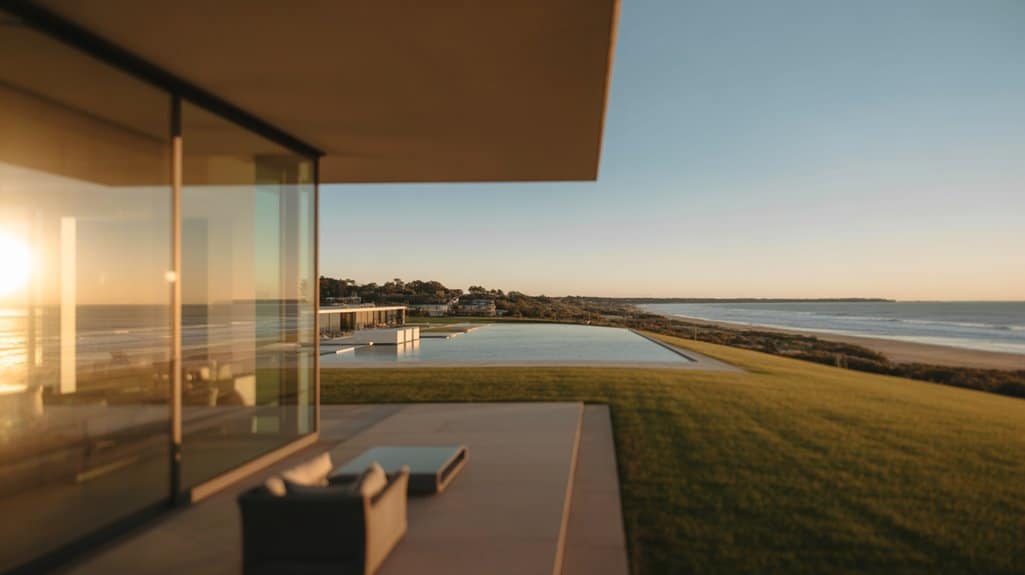
Foreign buyers consistently choose Uruguay because the legal framework genuinely treats them as equals. There are no permits to chase down, no residency requirements to satisfy before signing, and no nationality-based restrictions limiting what you can purchase or where. The same rules that apply to Uruguayan citizens apply to you, and that clarity tends to resonate strongly with buyers who’ve dealt with complicated ownership structures in other markets.
- Legal parity: Domestic and foreign buyers operate under identical regulations, reinforced by Uruguay’s investment protection law , a detail worth understanding before comparing markets in the region.
- Straightforward process: A valid passport, a licensed notary, and remote closing options mean you can complete a purchase without setting foot in the country if your schedule demands it.
- Financial transparency: Properties are priced in USD, and closing costs follow a predictable structure, which makes budgeting accurate rather than approximate.
- Long-term value: Rental yields in key areas remain competitive, the tax environment rewards foreign investment, and the path to permanent residency , and eventually citizenship , gives buyers something beyond a property deed to work toward.
Uruguay doesn’t need to oversell itself. The combination of legal security, operational simplicity, and genuine investment upside does that work quietly and consistently. For buyers who want straightforward ownership in a stable country, the decision tends to become obvious fairly quickly.
Inside Punta Del Este’s Luxury Property Boom
Punta del Este’s luxury market has shifted gears in ways I haven’t seen in decades of working this coastline. Transaction volume above USD 500,000 climbed 18% year over year in early 2026, and that’s not a seasonal spike , that’s structural demand reshaping how this stretch of Uruguay gets built and sold.
Pricing reflects exactly where buyers want to be. José Ignacio consistently commands USD 6,000, 10,000+ per square meter, driven by land scarcity and a lifestyle that’s harder to replicate than people assume. La Barra and Manantiales follow closely, each carving out their own identity for buyers who want proximity to the energy without sitting inside it.
Branded residences have moved from novelty to expectation at the upper end. Cipriani Punta del Este anchors a USD 500, 700 million mixed-use development with 260 units, and Fendi Château brings two towers backed by USD 150 million to the market. These aren’t simply apartments with famous names attached , they’re fully managed ecosystems. The Rock reinforces this with 25 apartments starting at USD 4.5 million, each backed by concierge infrastructure that today’s buyer treats as a baseline, not a bonus.
Capital is flowing in from Argentina, Brazil, and with growing consistency, North America. That last group tends to do their homework carefully, and what keeps bringing them back is Uruguay’s legal stability and the integrity of the coastline itself. Coastal conservation requirements are pushing developers toward smarter design rather than simply larger footprints, which protects the very asset that makes this market worth entering in the first place.
What’s Next for Uruguay’s Property Market?
When the speculative chatter dies down, what you’re left with is a market that runs on fundamentals. Uruguay’s macroeconomic stability isn’t a talking point , it’s a track record, and demographic demand, both local and foreign, keeps building on it quietly and consistently. Steady growth, not dramatic swings, is what this market delivers, and that suits the buyers who tend to do well here.
Breaking it down practically:
- Montevideo’s well-located neighborhoods are holding firm, with gains in the 3% to 5% range for properties positioned correctly.
- Coastal and premium zones are doing better than that , consistently pushing past 5%, sometimes meaningfully higher depending on the asset.
- Horizontal developments continue to outperform in secondary markets where flat prices are the norm, which rewards buyers willing to be selective rather than reactive.
- Rental yields remain solid in core areas, underpinned by the kind of demand that doesn’t spike or vanish with the news cycle.
What this market asks for is patience and a clear head. The buyers who come in chasing headlines tend to leave disappointed. The ones who take the time to understand Uruguay’s rhythm , its legal framework, its currency dynamics, its genuinely livable cities , are the ones building real, lasting value here.
References
- https://www.globalpropertyguide.com/latin-america/uruguay/price-history
- https://www.jarniascyril.com/international-real-estate/invest-in-real-estate-uruguay-market-guide/uruguay-real-estate-market-trends/
- https://www.jarniascyril.com/international-real-estate/invest-in-real-estate-uruguay-market-guide/
- https://thelatinvestor.com/blogs/news/uruguay-real-estate-market
- https://www.jarniascyril.com/international-real-estate/invest-in-real-estate-uruguay-market-guide/impact-tourism-real-estate-market-uruguay/
- https://www.riotimesonline.com/punta-del-este-uruguay-luxury-wealth-hub-cipriani-2026/
- https://propertyinuruguay.com/uruguay-real-estate-market-overview/
- https://gatewaytosouthamerica-newsblog.com/uruguays-residential-real-estate-market-robust-growth-amid-regional-stability/
- https://www.statista.com/map/central-and-south-america/uruguay/real-estate
- https://www.realestate-in-uruguay.com/blog/smart-homes-at-the-end-of-the-world-tech-integration-uruguay-real-estate/