
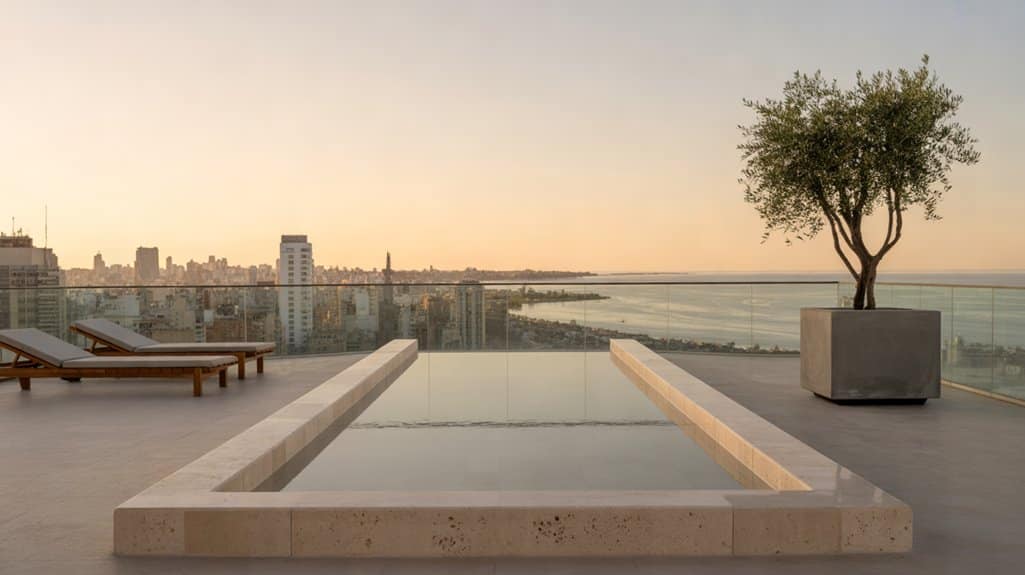
With land in Uruguay running at a median of USD 3,307 per square meter, developers are building smaller apartments and putting their money into shared spaces. Before you fall for a rooftop render, ask what the amenity will cost you every month in gastos comunes. That number tells you more than the brochure ever will.
The features you’ll use all year are the ones that earn their keep. A secure cochera, controlled entry, and a dependable encargado make a difference every week, whether you’re coming home late in Cordón or leaving for a long weekend in Punta del Este. Pools are the opposite case. Most people swim for about three months a year, yet a pool can add UYU 2,000-5,000 per unit each month, and that’s before maintenance surprises.
Some extras do pay off, though. Solar panels, wellness spaces, and easy access to nature all support resale value and day-to-day comfort, and they tend to lower costs or improve daily life instead of just adding to the monthly bill. The numbers behind each of these choices follow below, so you can compare them side by side.
Key Takeaways
Uruguay Building Amenities in 2026: Quality Now Beats Quantity
Land in Uruguay is expensive, so developers are skipping larger floor plans and costly pools. They’re putting their money into shared spaces people actually use, like a coworking room or a quincho with a parrillero, where a Sunday asado doesn’t mean squeezing twelve people into your living room.
Be skeptical when a building leads with its pool. It adds UYU 2,000 to 5,000 per unit every month before heating and repairs, and most years you’ll swim for about three months. Features you use every week pay you back far more: a secure cochera, controlled entry, a washer/dryer in the unit, package lockers, and an encargado who picks up when you call.
Gastos comunes show the difference clearly. In a standard building they run around 15% of rent, while amenity-heavy towers reach 25, 30%. If you’re renting, ask for the itemized statement before you sign and check what each line covers.
Look ahead to resale as well. Efficient systems, solar microgeneration, and easy access to nature, whether the rambla or a nearby park, all add value. Still, solid security and a dependable encargado protect your investment better than a showy rooftop pool.
Why Do Uruguay Buildings Favor Amenities Over Space?
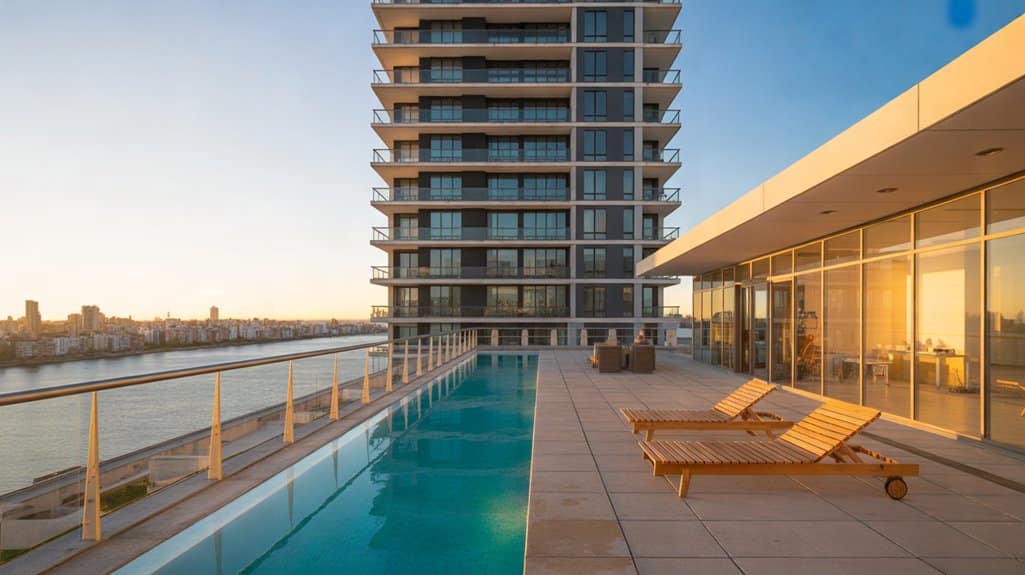
Walk through Montevideo with a developer and you’ll hear the same thing: land is expensive, and every private square meter shows up in the price. The median sits around USD 3,307 per square meter, and in Carrasco, Punta Carretas, and Pocitos it climbs to USD 4,405. Builders know buyers will think twice before paying for bigger floor plans, so they put their money into shared spaces that add value for everyone in the building.
You can see it in what people ask for. Coworking rooms are the fastest-growing request, since so many people now work from home, and the quincho with its parrillero is still the favorite. It costs little to build, and it gets used almost every weekend, which is very much how Uruguayans live. Pools are a different story. They’re pricey to build and maintain, and in a country where they’re really only used a few months a year, they often sit idle.
If you’re buying, ask what you’ll actually use before you fall for a long list of amenities. Look at the gastos comunes, which usually run USD 110 to USD 270 a month, and check what each service adds to that figure. Keep in mind that the figures you compare are based on asking prices, not final transaction or closing prices, so the real cost of a building may differ from what the listings suggest. A smaller apartment with a well-run shared space can give you more daily comfort than extra square meters you’ll rarely use, so the best purchase is the one where you’re paying only for what you’ll enjoy.
Which Building Amenities Are Worth Paying For?
If you’re comparing buildings in Montevideo, Ciudad de la Costa, or Punta del Este, start with what you’ll use every week: a secure cochera, controlled entry, a washer and dryer inside the unit, package lockers, and an encargado who picks up the phone when a pipe leaks. These features give back time and money, and they spare you risks you never signed up for. Most of what’s left on the brochure deserves a harder look before it lands in your gastos comunes.
Pools, saunas, spas, and sports courts are the usual culprits. Someone has to clean, heat, insure, and staff them, and that bill often slides onto tenants who barely set foot there. A pool in Punta del Este that sits empty from April to November still gets paid for in July. Ask the administración for itemized statements and read them line by line, especially anything vaguely labeled “varios” that nobody can explain.
Your lease should work in your favor too. If you move out after a year, you shouldn’t keep funding a sauna you never booked, so settle what’s included before you sign. Ask whether each amenity comes with a monthly amenity fee or a reservation charge, because any extra-cost feature needs enough real use to justify the added expense. If you’re buying, think ahead to the day you resell. In my experience, buyers trust a building with solid security and a dependable encargado far more than one with a showy rooftop pool that’s always under repair.
Do Solar and Wellness Features Raise Property Value?
Not every amenity drains the budget. A few can raise what a property is worth, as long as you judge them by what they return. Solar and wellness both fit that description when they’re done properly, since buyers here have grown tired of paying for decoration.
- Solar: Electricity in Uruguay isn’t cheap, and UTE’s microgeneration scheme lets owners feed surplus energy back into the grid. A good system lowers monthly bills and shields the owner from tariff increases, which is easy to show on paper to a prospective buyer.
- Wellness: Savills found that comprehensive specifications sold at a 7% to 11% premium, with private pools and gyms leading the way. In places like Punta del Este or José Ignacio, where the season is short, a well-built pool earns its place.
- Nature access: Parks, trails, and open space have shown premiums between 3% and 20%. Think of a home near the rambla in Montevideo or a lot with green space in Canelones.
The properties that stand out in Uruguay combine efficient systems, outdoor space people actually use, and wellness features built with care. Piling on extras rarely helps. Buyers who treat the home as a performance environment also value a dedicated meditation space, which adds roughly 1% to 2% to resale value and is rising. Most buyers I meet want to know what a home will cost to run, so start there and let the rest support it.
What Do Amenities Cost in Montevideo Condos?
Cuando se trata de amenities en Montevideo, los *gastos comunes* son donde se ve el precio real, y muchos compradores lo descubren recién después de firmar. Los números son bastante claros. Un edificio básico, con ascensor, seguridad, parrillero y mantenimiento, suele cobrar entre UYU 3.000 y 6.000 por mes. Si tiene portería part-time, el rango sube a UYU 6.000-12.000. Con piscina, gimnasio y coworking, se ubica entre UYU 12.000 y 25.000, y a veces más.
Lo que empuja esas cifras es el personal y el mantenimiento. Una portería de 24 horas le cuesta al edificio entre UYU 150.000 y 250.000 por mes, algo así como UYU 3.750-6.250 por apartamento en una torre de 40 unidades. La piscina agrega otros UYU 2.000-5.000 por unidad, y eso sin contar la climatización ni las reparaciones. Además, la piscina se usa de verdad apenas tres meses al año, entre diciembre y febrero.
Conviene medir el gasto común contra el alquiler. En edificios corrientes representa alrededor del 15%, mientras que en torres con muchos servicios llega al 25-30%. Es un costo fijo que no desaparece, lo uses o no. Antes de decidir, pedí los últimos recibos de gastos comunes, preguntá por el fondo de reserva y por obras pendientes, y pensá con honestidad si vas a usar el gimnasio o la piscina. Si la respuesta es “alguna vez”, un edificio más sencillo en Cordón o Parque Rodó puede dejarte más margen cada mes.
Which Neighborhoods Charge the Most for Amenities?
Si se pone el mapa de los gastos comunes más altos de Montevideo al lado del de precios por metro cuadrado, casi se superponen. Por eso hay poco lugar para sorpresas.
Los focos de gastos por servicios se concentran en el este, donde el corredor costero sostiene cuotas altas en torres con prestaciones completas. Cada piscina y cada guardia tienen su reflejo en el recibo mensual, y la liquidación del edificio muestra cuánto se paga por ellas. En los datos de venta de agosto, Carrasco encabeza el ranking de apartamentos con US$ 4,599 por m², seguido de Puerto Buceo con US$ 4,526.
- Golf: US$4,423/m² en septiembre de 2026, con el paquete de servicios más caro de la capital.
- Carrasco y Barra de Carrasco: playa, baja densidad y torres de alta gama suben la carga mensual.
- Puerto Buceo, Punta Carretas y Pocitos: piscinas, gimnasios y seguridad empujan los gastos, aunque el precio no siempre lo justifica.
Antes de firmar, pedir las liquidaciones de los últimos doce meses y compararlas con las de un edificio vecino ayuda a ver qué parte de la cuota responde a servicios que de verdad se van a usar.
References
- https://www.globalcitizensolutions.com/living-in-uruguay/
- https://www.expatlife.ai/uruguay/housing
- https://getwherenext.com/blog/complete-guide-to-moving-to-uruguay
- https://www.liveandinvestoverseas.com/country-hub/uruguay/
- https://www.expat.com/en/guide/south-america/uruguay/
- https://www.missionpointholdings.com/market-uruguay
- https://www.countrytolive.com/country/uruguay
- https://thelatinvestor.com/blogs/news/uruguay-expat-guide
- https://www.benoitproperties.com/news/the-rise-of-uruguay-why-u-s-and-european-buyers-are-flocking-to-south-americas-most-stable-market/
- https://www.jarniascyril.com/international-real-estate/invest-in-real-estate-uruguay-market-guide/secondary-home-market-uruguay-rental-yield-investment/