
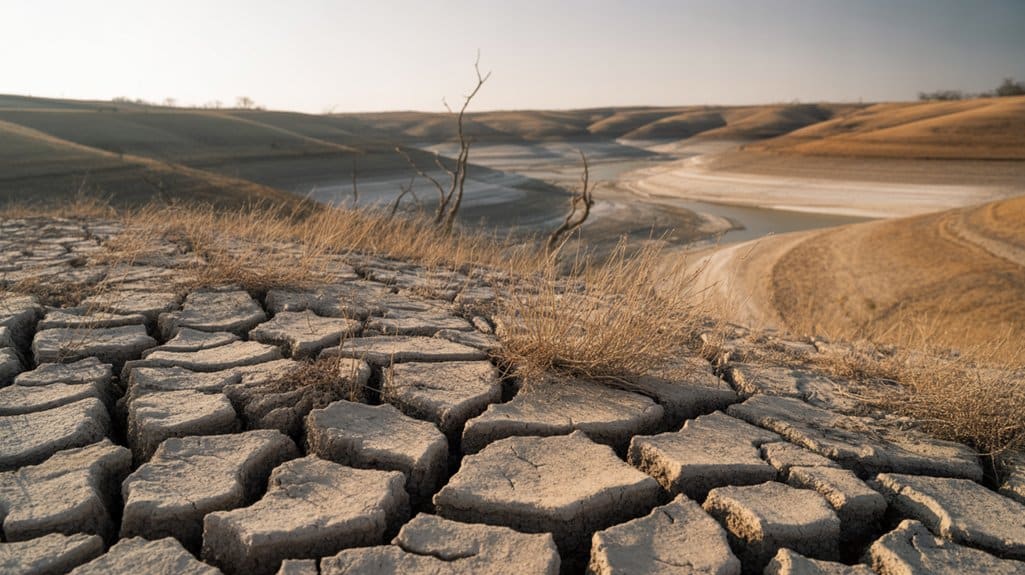
Uruguay is experiencing something most countries never face, a water crisis so severe that nearly half the nation has run dry. The worst drought in a century has gripped this small South American country for over three years. Rainfall has dropped significantly below normal levels, causing reservoirs to reach dangerously low levels. Close to two million residents now face uncertainty about accessing clean drinking water.
This crisis exposes what happens when extreme weather pushes a modern society beyond its limits. Uruguay’s main water source, the Santa Lucía River, which supplies the capital Montevideo and surrounding areas, has seen its flow reduced to critical levels. The Paso Severino reservoir, a key component of the country’s water infrastructure, dropped to just 2% of its capacity by mid-2023.
The government has implemented emergency measures, including mixing brackish water from the Río de la Plata estuary with the remaining freshwater supplies. While this approach keeps taps running, it has resulted in water with salt levels that exceed World Health Organization recommendations. Many residents have turned to bottled water, creating additional strain on household budgets and supply chains.
Agricultural producers, who make up a significant portion of Uruguay’s economy, face mounting losses as pastures turn brown and livestock require emergency water provisions. The dairy industry, which generates substantial export revenue, has been particularly affected as cattle productivity declines under these conditions.
Climate scientists point to La Niña weather patterns combined with long-term climate shifts as the primary drivers of this extended dry period. The situation demonstrates how even well-developed water infrastructure can become inadequate when faced with prolonged extreme weather events.
Key Takeaways
Uruguay is enduring its most severe drought in a century, with the country receiving 25% less rainfall than usual since 2020. This prolonged dry spell has created a water crisis that touches every corner of the nation.
The drought’s reach expanded dramatically between 2022 and 2023, when more than 60% of Uruguay’s territory fell under drought conditions. This widespread scarcity left nearly 2 million residents without access to safe drinking water for 70 consecutive days. During this period, sodium concentrations in the water supply climbed to dangerous levels, making it unsafe for consumption.
The economic toll has been staggering. Agricultural losses alone reached $2 billion as the drought decimated livestock operations and prevented farmers from harvesting 2.5 million tons of crops. Cattle ranchers watched their herds shrink while crop farmers faced barren fields where productive harvests once grew.
Climate forecasts paint an even grimmer picture for the months ahead. Meteorologists predict summer rainfall could plummet to 40-60% below typical levels, suggesting Uruguay’s water troubles are far from over. The country now faces the challenge of managing resources during what may become an extended period of unprecedented aridity.
What’s Happening in Uruguay’s Worst Drought in 100 Years?
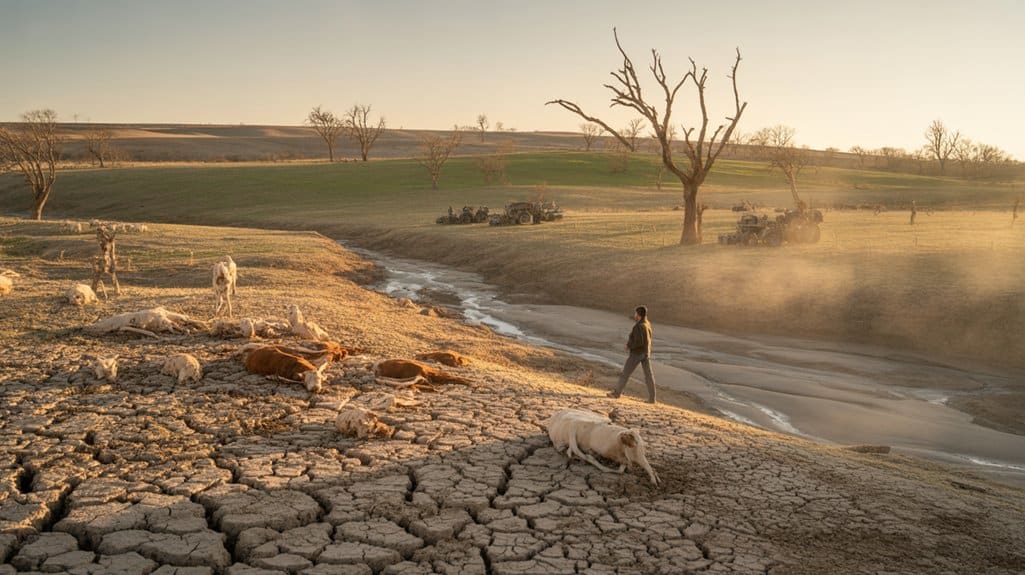
How does a country known for abundant rainfall suddenly find itself running out of water? Uruguay faces its worst drought in nearly a century. Three and a half years of bone-dry conditions have gripped the nation since 2020, pushing this typically water-rich country to its limits.
The numbers tell a stark story. Rainfall has dropped 25% below normal levels across the country. Some regions recorded their hottest temperatures in over 40 years, creating a punishing combination of heat and water scarcity that caught even meteorologists off guard.
The crisis hit hardest where people live. The Paso Severino Reservoir, Montevideo’s primary water source, dropped to just 1.7% of its normal capacity. Picture a massive lake shrinking to little more than puddles, that’s what residents watched happen to their main water supply. Nearly 1.9 million people, representing 60% of the metropolitan area’s population, suddenly faced the prospect of turning on taps with nothing coming out.
Government officials declared a national emergency in June 2023. Free bottled water distribution began immediately for the most vulnerable residents, while tax exemptions made water supplies more affordable for struggling families. These measures represented the first time in modern Uruguayan history that the state had to intervene so drastically in basic water provision. Sales of bottled water increased threefold in supermarkets as residents scrambled to secure drinking supplies.
How 2 Million Residents Survived 70 Days on Salt Water
The government’s emergency declaration marked the start of Uruguay’s most serious water crisis in decades. Nearly 2 million people lived without safe drinking water for 70 days as sodium levels in the tap supply climbed from 200 mg/L to over 420 mg/L, well beyond the World Health Organization’s recommended maximum of 200 mg/L.
This contamination created serious health risks across the population. Pregnant women received medical advice to avoid tap water completely due to potential complications. Parents had to find alternative water sources for preparing baby formula, since high sodium levels can be particularly dangerous for infants’ developing kidneys. People managing heart disease, hypertension, and kidney conditions faced increased health threats from the elevated salt content.
Officials distributed two liters of clean water daily to 21,000 families identified as most vulnerable. The government also eliminated taxes on bottled water to make it more affordable. These measures helped, but they couldn’t fully address the scale of the problem.
Picture an entire metropolitan area, roughly half of Uruguay’s population, unable to drink, cook with, or give their children water from the tap. Supermarket shelves emptied as residents bought whatever bottled water they could find. Families rationed their daily supply, using it only for drinking while continuing to use contaminated tap water for washing and cleaning. Bottled water sales tripled as 94% of affected individuals turned to commercial sources for safe consumption.
Uruguay Drought Damage: From Broken Lab Equipment to Dead Livestock
Uruguay’s drought emptied water reservoirs and devastated the nation’s agricultural backbone, costing the economy nearly 2 billion dollars. Over 12 million cattle faced critical conditions, forcing farmers to sell their animals 21% faster than usual. The livestock sector alone suffered 287 million dollars in losses as fewer calves survived and productivity collapsed.
Crop failures matched the scale of livestock devastation. Dryland farmers watched 58.4% of their soybeans and corn wither, that’s 2.5 million tons left rotting in parched fields. Wheat and soy harvests were slashed by half compared to normal years. Dairy operations absorbed a 136 million dollar blow as milk yields dropped and disease spread among weakened herds.
The crisis extended far beyond farm gates. Clean drinking water became unavailable for 75,000 people, while another 409,115 faced severe shortages. Rural communities that form the backbone of Uruguay’s economy found themselves struggling with the most basic necessity for survival. Forestry operations recorded 162 million dollars in losses as trees died and timber quality deteriorated across affected regions.
What Scientists Say: Why Uruguay’s Drought Will Get Worse
While farmers struggled with immediate losses, meteorologists delivered troubling news about what lies ahead. Climate models paint a stark picture of worsening water scarcity across Uruguay.
Meteorologist Nubel Cisneros warns that January and February will bring significant shortages. The numbers tell a concerning story: summer rainfall will drop 40-60% below normal levels, with northern regions facing a 40% chance of below-average precipitation. La Niña’s influence continues to reduce water availability.
The Uruguayan Institute of Meteorology links these patterns to La Niña events, which previously triggered major droughts in 2008, 2018, and 2023. Rising temperatures compound the water stress. State Waterworks activated emergency measures on December 30th, signaling that citizens should prepare for challenging months ahead.
This pattern isn’t random. La Niña occurs when cooler-than-normal sea surface temperatures in the Pacific Ocean disrupt global weather patterns. For Uruguay, this means less moisture reaches the region, creating drier conditions that can last for months. When you combine reduced rainfall with higher temperatures, water evaporates faster from reservoirs, rivers, and soil, creating a double blow to the country’s water supply. The drought that began in 2018 has affected over 60% of Uruguay from 2022 to 2023.
How the Government Is Responding to Uruguay’s Water Crisis
When taps across Uruguay started delivering brackish water in 2023, government officials scrambled to respond. They supplied 1.7 million people with a mix of fresh and salt water for more than two months while the state water company, OSE, activated emergency protocols and tracked reserves to prevent complete shortages.
The government’s current approach centers on permanent fixes rather than stopgap measures. Officials allocated $130 million to restart the Casupá Dam project, which should be completed by 2029. They also canceled the previous administration’s Rio de la Plata intake plant, arguing it violated constitutional requirements.
Water conservation continues to play a critical role as the country braces for ongoing challenges. La Niña weather patterns bring reduced rainfall and higher temperatures, prompting authorities to encourage careful use of drinking water. Authorities recommend that residents avoid using hoses for washing facades and vehicles to help preserve water reserves. New treatment facilities are designed to handle the country’s needs through 2045, giving Uruguay better preparation for future drought conditions.
References
- https://blue-community.net/2026/01/uruguay-securing-fresh-water/
- https://www.science.org/content/article/uruguay-water-crisis-upending-research
- https://dialogue.earth/en/water/uruguays-intricate-path-to-securing-fresh-water/
- https://science.nasa.gov/earth/nasa-data-trainings-help-uruguay-navigate-drought/
- https://www.tridge.com/news/uruguay-another-drought-they-warn-of-a-60-pr-ypwiuf
- https://phys.org/news/2025-09-nasa-uruguay-drought.html
- https://noticiasambientales.com/environment-en/uruguay-faces-water-deficit-in-nearly-half-of-its-territory-almost-50-of-the-country-is-in-a-critical-situation/
- https://go.ifrc.org/emergencies/6330
- https://www.imf.org/en/publications/wp/issues/2025/01/10/the-macroeconomic-impact-of-droughts-in-uruguay-a-general-equilibrium-analysis-using-the-560565
- https://www.developmentaid.org/news-stream/post/166073/worst-drought-in-uruguay