
The modern agricultural sector stands at a fascinating crossroads of tradition and innovation. From GPS-guided tractors dancing across amber waves of grain to AI systems predicting pest outbreaks, farming has evolved far beyond its simple roots. Yet, beneath the high-tech veneer, age-old challenges persist: volatile markets, unpredictable weather, and the ever-present need to feed a growing world. These intersecting forces create an environment where success requires equal measures of wisdom and technological savvy.
Market Forces Shaping Current Agricultural Trends
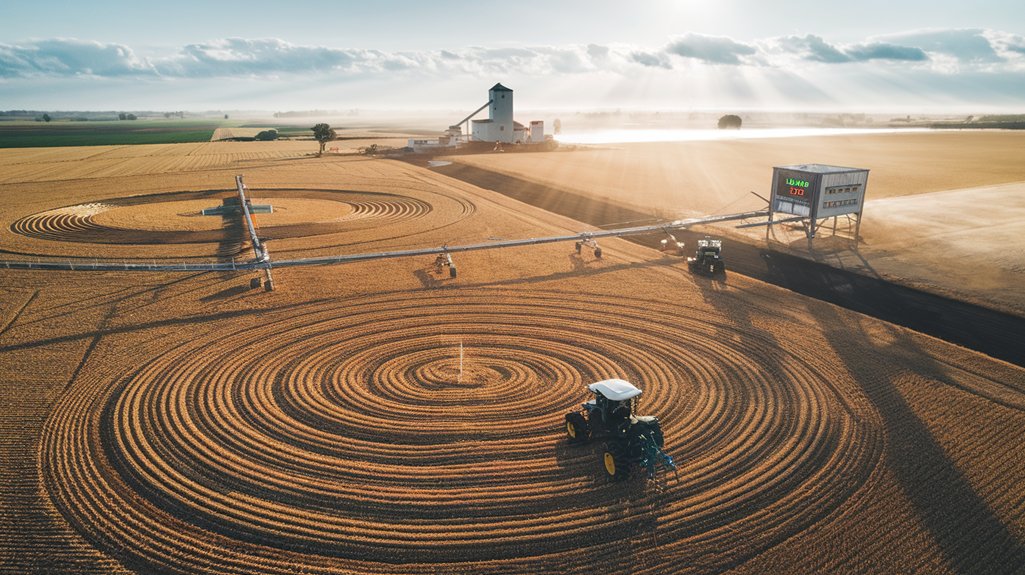
While geopolitical tensions and weather patterns continue to influence agricultural markets, several key factors are converging to shape the current agricultural environment. The interplay between favorable harvest conditions and uncertain global trade dynamics has created a complicated setting for producers. Commodity pricing remains responsive to U.S. tariff policies and the ongoing Russia-Ukraine conflict, while strong livestock demand drives corn markets upward. Despite challenges like waterlogged soils, anticipated record yields in soybeans and positive prospects for winter crops, particularly rapeseed and wheat, suggest resilient market opportunities for adaptable agricultural enterprises.
Summer Harvest Performance and Pest Management
The remarkable summer harvest season has delivered exceptional results across major crop categories, particularly in soybeans and corn production. Consistent rainfall patterns since mid-January have created ideal growing conditions, though they’ve also presented challenges for pest resistance strategies. While corn crops showed resilience against leafhoppers, soybean fields required vigilant management of spider mites and thrips. Recent precipitation has heightened concerns about summer crop diseases, prompting farmers to deplete stocks of vital insecticides like Virantra. Despite these obstacles, the sector maintains strong momentum, with growers adapting their management approaches to maximize yields.
Strategic Planning for Winter Crop Success
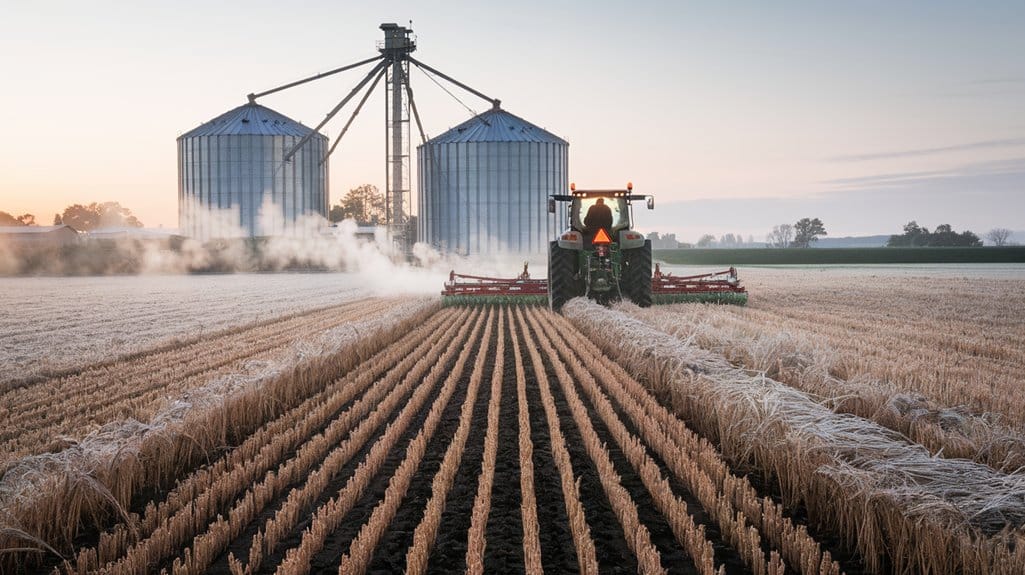
As winter crop planning gains momentum, agricultural experts project significant growth potential across multiple crop varieties, particularly in rapeseed and wheat production. Strategic crop rotation decisions will be essential for maintaining soil health, especially given recent weather patterns and waterlogged conditions.
Farmers who successfully maneuver their soybean harvest timeline will find themselves well-positioned to capitalize on winter planting opportunities. The stable barley outlook, combined with expanding rapeseed areas, offers growers flexible options for diversifying their operations. While geopolitical uncertainties linger, strong livestock market demand continues to drive positive sentiment across the winter crop sector.
Critical Challenges in Weed and Disease Control
Managing persistent weed and disease challenges remains essential for agricultural success, with glyphosate-resistant ryegrass emerging as a particularly formidable threat to crop yields. The battle against weed resistance has intensified, prompting farmers to adopt comprehensive strategies including effective graminicides like Axial. Recent heavy rains have heightened concerns about potential disease outbreaks, making broad-spectrum seed treatments vital. Forward-thinking agriculturalists are turning to carboxamide-based fungicides while implementing pre-emergence herbicide programs. These adaptable approaches, coupled with innovative solutions from industry leaders, offer promising pathways for maintaining crop health and maximizing production potential.
Technology and Innovation in Modern Farming
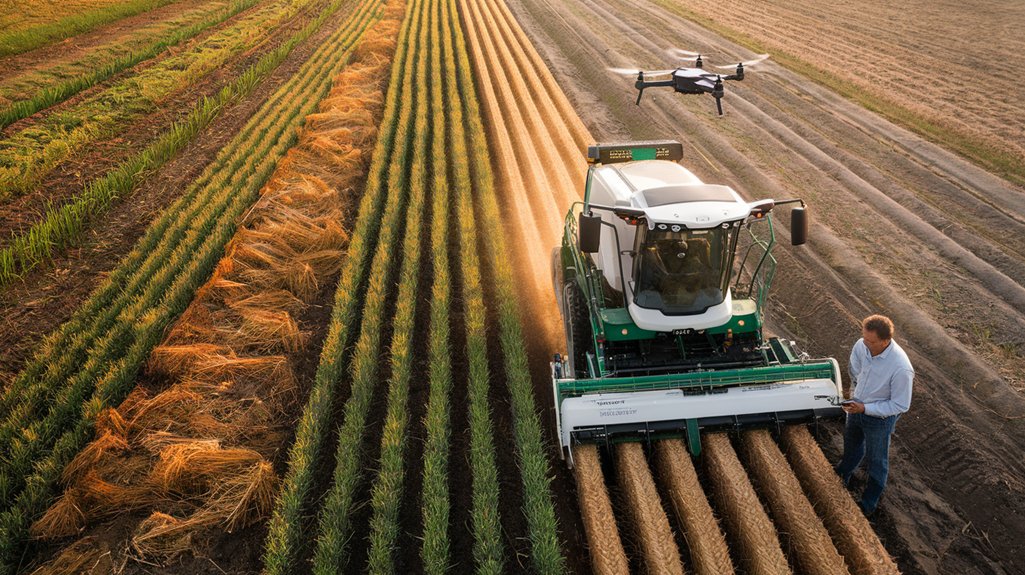
Technical advancements in modern agriculture have converted traditional farming practices into sophisticated, data-driven operations. Precision agriculture now enables farmers to optimize yields while implementing sustainable practices through innovative technologies.
| Technology | Application | Impact |
|---|---|---|
| GPS Mapping | Field Planning | Reduced Resource Waste |
| Drone Systems | Crop Monitoring | Enhanced Pest Detection |
| IoT Sensors | Soil Analysis | Water Conservation |
| AI Analytics | Yield Prediction | Improved Decision Making |
| Smart Sprayers | Input Application | Decreased Chemical Use |
These solutions allow farmers to make informed decisions while maintaining environmental stewardship, marking a significant shift from conventional methods to data-driven agricultural management.