
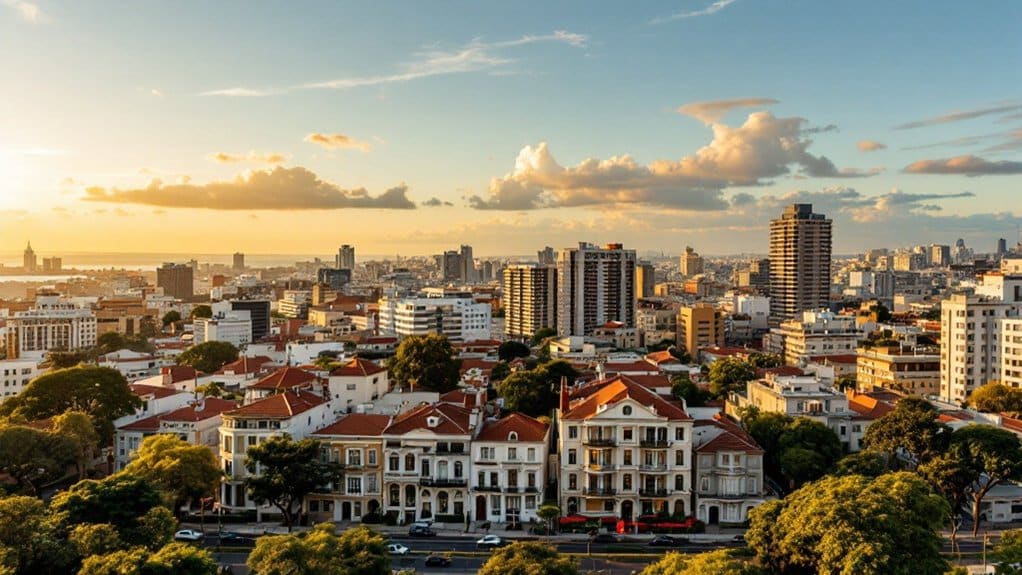
Montevideo’s property market splits into two distinct worlds, and knowing which one you’re entering makes all the difference. Prices range from around $1,200 per square meter in Cordón to well above $4,350 in Carrasco , a gap wide enough to shape your entire investment strategy before you even visit a single property.
Coastal neighborhoods like Carrasco, Punta Gorda, and Pocitos carry those higher price tags for clear reasons. Proximity to the Rambla, access to leading private schools, and a concentration of embassies and corporate tenants create sustained demand that rarely softens. Buyers in these areas are typically purchasing stability as much as square meters.
Inland barrios tell a different story. Cordón, Reducto, and La Blanqueada offer genuine entry points for first-time buyers and investors chasing stronger rental yields. The infrastructure is solid, public transport connections are reliable, and rental demand from students and young professionals stays consistent throughout the year.
What many buyers overlook is how inventory levels shift the balance of negotiating power. In high-demand coastal zones, sellers hold most of the leverage and move quickly when offers come in. In less pressured inland markets, there’s room to negotiate , sometimes significantly , especially on properties that have been listed for more than sixty days.
Uruguay’s relative market stability compared to neighboring countries makes Montevideo attractive across all price tiers, but knowing the specific neighborhood dynamics is what separates a smart purchase from an expensive lesson.
Key Takeaways
Carrasco continues to sit at the top of the market, with prices ranging from $4,200 to $4,350 per square meter, and that gap against more affordable barrios like Cordón , which hovers around $1,200 per square meter , tells you everything about how differently each neighborhood functions as an investment. That’s roughly a threefold difference, and it’s not arbitrary.
The coastal strip explains a lot of it. Punta Carretas and Punta Gorda regularly push past $4,000 per square meter, and buyers there are paying for more than a view , they’re paying for consolidated infrastructure, low vacancy rates, and the kind of demand that holds steady even when the broader market softens. Geography here is a genuine pricing factor, not just a marketing point.
Step back from the coast and the picture shifts. Tres Cruces and Malvín sit in that $1,500, $2,200 range and genuinely deserve more attention than they get. Strong transport links, established services, and improving stock make them solid entry points for buyers who want real value without retreating entirely from the city’s core dynamics.
Yield is where things get interesting for investors. Peñarol is pulling above 8%, while the city average barely reaches 4%. That kind of spread means your choice of neighborhood is essentially your investment thesis , they behave like different markets entirely.
Inventory confirms it. Carrasco might have five studio listings at any given moment; Centro will have 150. That’s not a minor detail , it shapes negotiation leverage, time on market, and the kind of buyer or renter you’re actually targeting.
Montevideo’s Most Expensive Neighborhoods and What Drives Their Prices
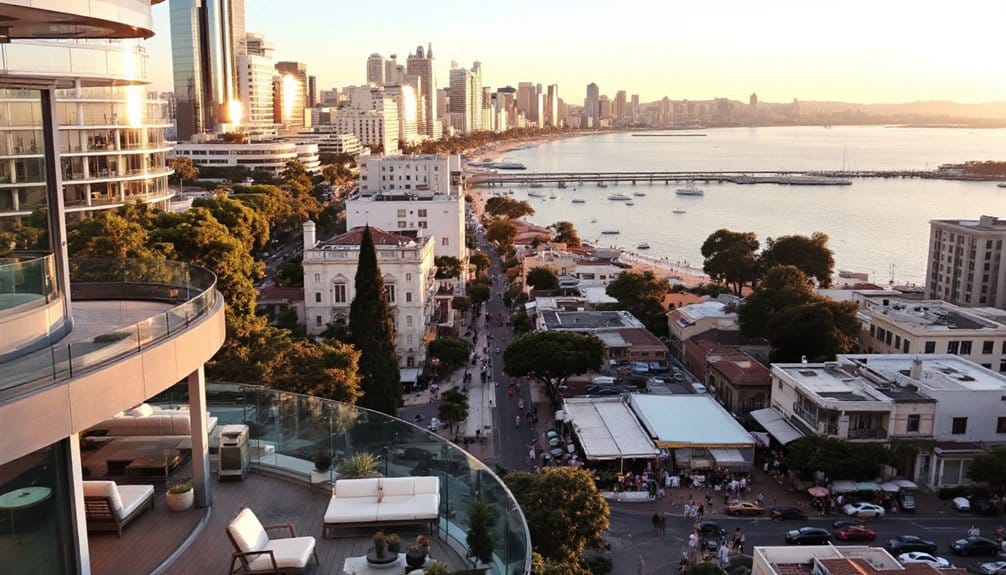
Carrasco sits at the top of Montevideo’s market for good reason, with prices running between $4,200 and $4,350 per square meter. Beach proximity and genuine coastal exclusivity do most of the heavy lifting there , it’s a combination that simply doesn’t replicate itself anywhere else in the city. Puerto Buceo follows at $4,269 per square meter, and Villa Biarritz holds steady around $4,145, both drawing serious strength from their school catchment areas. In Uruguay, proximity to elite education is not a soft factor , it directly supports long-term price stability in ways that hold up even through slower market cycles.
Punta Carretas and Punta Gorda consistently breach the $4,000 per square meter mark, underpinned by quality infrastructure and direct access to the coastline. These aren’t just prestigious addresses , they’re neighborhoods where the fundamentals are genuinely solid.
What the eastern coastal strip tells you, if you’re reading the market carefully, is that geography and institutional quality are doing the real work here. Buyers who position themselves along that corridor are not simply paying for a postcode , they’re buying into a set of conditions that inland districts have not been able to match. That gap has persisted for years, and there’s little in the current market suggesting it will close anytime soon. Across the coastal segment as a whole, price fluctuations remain minimal at around ±2%, reinforcing the picture of a mature market that offers stability rather than volatility for property owners.
Mid-Range Montevideo Neighborhoods With the Best Value Per Square Meter
Coastal properties get all the attention, but they price out most buyers before the conversation even starts. The mid-range neighborhoods are where the real opportunities sit, and a few of them consistently outperform expectations.
Cordón is worth a serious look at around $1,200 per square meter. The commercial density and mixed-use zoning there keep demand steady year-round, which matters more than most buyers initially realize. Tres Cruces runs between $1,500 and $1,800, and the transport connectivity alone justifies that range , major bus lines fan out across the city from there, making it attractive to a wide tenant pool.
Malvín and Ciudad Vieja both come in under $2,200 per square meter, with entry points typically between $100,000 and $200,000. That’s an accessible range for buyers who want a foothold without overextending. La Blanqueada and the Parque Batlle edges draw consistent rental interest from both locals and international residents, which tends to smooth out vacancy periods considerably.
Pocitos and Buceo deserve mention for buyers who want coastal proximity without the Punta Carretas price tag. Annual yields there typically land between 4% and 6%, which holds up well against what you’d expect from a market of this size and stability.
These zones genuinely reward careful buyers. Malvín in particular stands out for investors prioritizing income, with gross yields reaching 6.68% placing it above most comparable coastal-adjacent neighborhoods in the city. You keep your financial flexibility and still position yourself in areas with long-term demand fundamentals behind them.
The Most Affordable Montevideo Neighborhoods for Budget Buyers
Cordón is where I’d tell most budget buyers to start looking. At $1,200 per square meter, it carries the lowest purchase price in the city, and that translates directly into real numbers , studios sitting around $95,000 and two-bedroom apartments averaging $160,000. Monthly rentals hold at $450, which is as affordable as Montevideo gets, and the central location means public transport is genuinely convenient rather than technically available.
Centro deserves a closer look as well, especially Ciudad Vieja, where studios average $100,000 and the appreciation story still holds up. The neighborhood has been steadily attracting younger buyers and small investors, which tends to move values in the right direction over time.
La Comercial is a different kind of proposition. The prices are reasonable, but what keeps buyers coming back is the atmosphere , active streets, a tight-knit community, and an energy that the coastal areas simply don’t replicate. For first-time buyers especially, that livability factor matters more than people expect.
Tres Cruces rounds out the picture well. Strong transport connections, solid healthcare access nearby, and pricing that coastal zones can’t come close to matching. Buyers who prioritize practical infrastructure over beachside appeal consistently find better value here, and that gap isn’t closing anytime soon. The tenant base here skews toward commuters and service workers, which keeps vacancy rates low and turnover predictable for landlords.
Rental Yields Across Montevideo Neighborhoods: What Investors Actually Earn
Gross yields in Montevideo can look impressive at first glance , Manga hovering near 13%, Casabó close to 12% , but those numbers don’t tell the full story. Once you account for taxes, management fees, and vacancy periods, the picture shifts considerably. Established neighborhoods tend to land between 3.5% and 4.5% net, with the citywide average settling around 4.0%. That’s still a reasonable return, but it’s a long way from the headline figures.
Peñarol is worth a closer look. Net yields there exceed 8%, with capital recovery in roughly nine years , figures that stand out even by regional standards. It’s not a neighborhood that makes every investor’s shortlist, but the numbers are hard to ignore for those willing to look beyond the more traditional barrios.
Unit size also plays a bigger role than most buyers expect. Small apartments and studios consistently outperform larger units, generating gross yields between 5.5% and 6.6%. In a market like Montevideo, where rental demand is driven heavily by young professionals and students, that dynamic makes a lot of sense.
The investors who do well here are the ones who dig into the net figures before committing. Vacancy impact alone can erode returns significantly depending on the neighborhood and property type. Well-priced apartments in central neighborhoods typically rent within 2 to 6 weeks, limiting the drag that empty units can place on annual returns. Compare carefully, run the real numbers, and make sure what you’re buying actually performs , not just on paper, but in practice.
How Inventory Levels Shape Your Buying Options by Neighborhood
Yields paint an incomplete picture , what you can realistically buy depends on what’s actually sitting on the market, and inventory across Montevideo’s neighborhoods varies enough to completely change how you should approach your search.
Carrasco is a prime example of a tight market. With only 15 active listings for large estates and inventory down 22% last quarter, serious buyers are typically waiting around 89 days to close. That’s not a market where you walk in with lowball offers , it’s one where preparation and decisiveness matter more than negotiating tactics.
Ciudad Vieja tells a different story altogether. With 110 active properties listed, median prices settle around $1,500 per square meter, and buyers regularly pull discounts of up to 8%. More supply means more room to maneuver, plain and simple.
The contrast sharpens further when you look at smaller units. Centro carries roughly 150 small apartment listings at any given time, while Carrasco offers just 5 studios. Those aren’t comparable markets , they require completely different buyer strategies.
Timing adds another layer to all of this. Summer consistently shrinks total listings by around 18%, while winter opens things up by roughly 25%. Uruguayans tend to move during the cooler months, which quietly shifts the balance of power toward buyers who plan ahead.
Across the broader market, total active listings have climbed 90.91% year over year, giving buyers in less supply-constrained neighborhoods considerably more negotiating leverage than they had just twelve months ago.
The buyers who come out ahead are almost always the ones who understand inventory before they start negotiating , not after.
References
- https://ingar.com.uy/en/blog/ranking-precios-barrio-montevideo
- https://tolatam.com/en/countries/uruguay/housing
- https://thelatinvestor.com/blogs/news/montevideo-housing-prices
- https://www.engelvoelkers.com/uy/en/properties/res/sale/house/montevideo-department
- https://www.globalpropertyguide.com/latin-america/uruguay/price-history
- https://thelatinvestor.com/blogs/news/montevideo-property-buying-guide
- https://ingar.com.uy/en/blog/guia-primera-vivienda-montevideo
- https://www.realtor.com/international/uy/montevideo/
- https://thelatinvestor.com/blogs/news/montevideo-best-neighborhoods
- https://www.laciteuruguay.com/news/average-property-prices-in-montevideo-and-punta-del-este-a-guide-for-foreign-buyers-la-cite-real-estate