
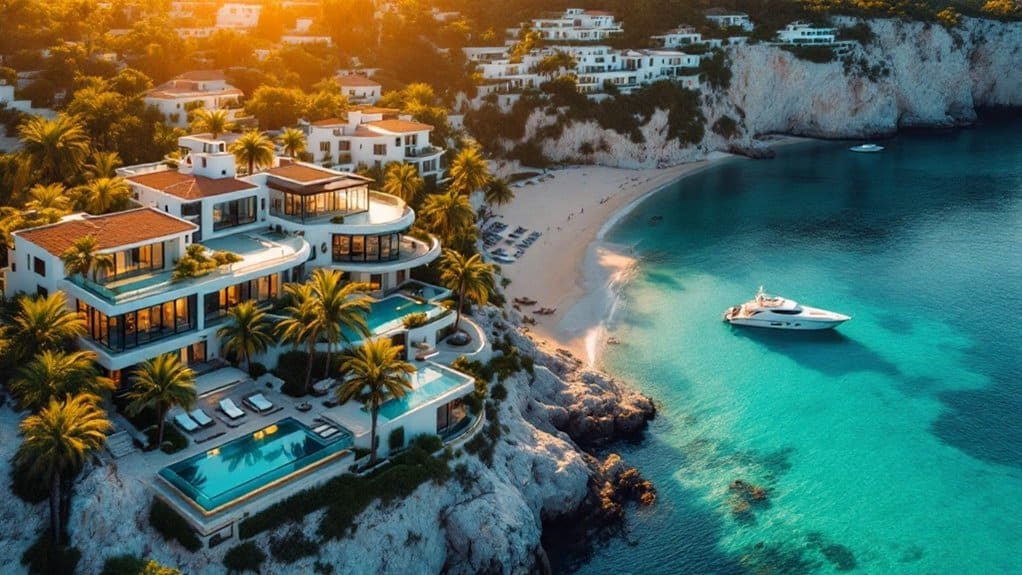
Luxury coastal properties in Uruguay are telling a story worth paying close attention to in 2026. Single-family villas along Punta del Este, José Ignacio, and La Paloma are climbing roughly 10% in value, while the broader residential market moves at a much quieter 1.5%. That gap isn’t accidental.
The coastline here is finite , something buyers often underestimate until they’ve spent a few seasons trying to find the right plot. Strict zoning along the Rambla and protected dune areas in Rocha department keep new supply genuinely tight, and many of the most desirable properties stay within the same families for generations, rarely surfacing on the open market.
When something does become available, cash buyers move fast. We’re seeing serious interest from Argentine and Brazilian investors alongside buyers relocating from Europe and North America, many of whom are drawn by Uruguay’s political stability and favorable tax residency rules.
Oceanfront properties here are now commanding premiums of 76 to 128% over comparable inland homes , a figure that reflects global seafront demand, but also Uruguay’s own reputation as one of South America’s most secure and livable destinations.
José Ignacio in particular has shifted from a quiet fishing village to a reference point for international luxury real estate, with year-round demand replacing what was once purely seasonal activity.
If you’re watching this market, the inventory constraints aren’t easing anytime soon. Understanding where the pressure points are , and which micro-locations are still undervalued , makes all the difference.
Key Takeaways
Luxury coastal villas in Uruguay are telling a clear story right now. Single-family homes in the high-end segment rose 10.3% in May 2026 , that’s nearly seven times the 1.5% growth seen in non-luxury properties, and the gap is only widening.
José Ignacio and La Barra continue to lead the market, posting annual gains between 8% and 14%. Anyone familiar with these areas understands why: buildable land is genuinely scarce, and it’s not a temporary condition. Coastal protection regulations combined with strict single-family zoning make new supply nearly impossible to bring to market, so existing properties carry real pricing power that compounds year over year.
Pending luxury sales have climbed over 22%, which points to sustained buyer conviction rather than a short-term spike. Demand isn’t cooling, and with supply this constrained, there’s little reason to expect prices to soften in the near term.
Cash buyers are driving the bulk of high-end transactions, and that dynamic matters practically. Deals move faster, sellers negotiate more confidently, and buyers who come prepared with liquidity are securing pre-construction discounts of 8% to 12%. In a market moving at this pace, that kind of positioning makes a meaningful difference to your final numbers.
Why Coastal Luxury Prices Are Outpacing the Market in 2026
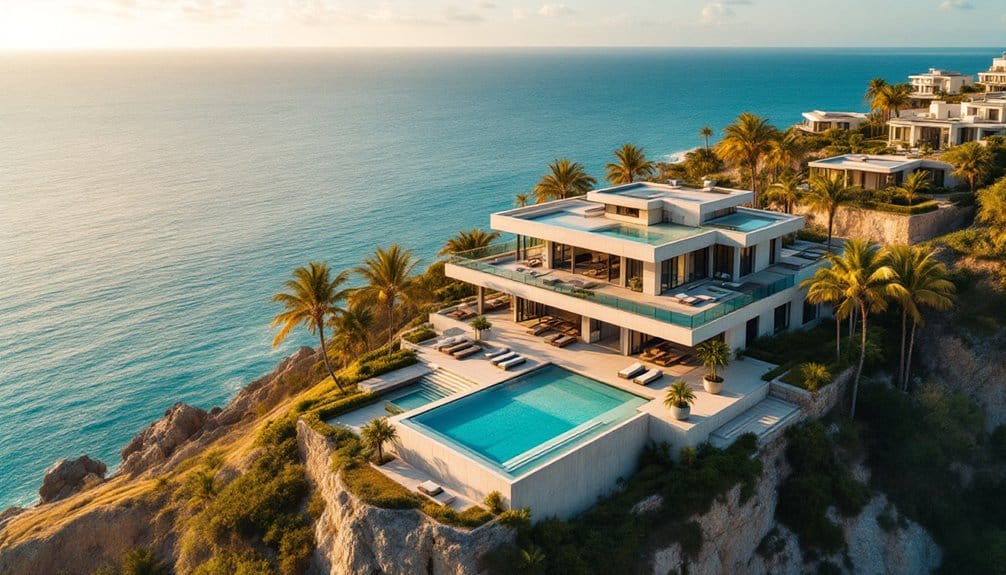
Coastal luxury real estate in Uruguay is telling a very different story from the broader market right now, and the gap is wide enough that it’s worth paying close attention. While general residential prices have edged up modestly, luxury single-family properties along the coast climbed 10.3% in May alone. Non-luxury segments managed just 1.5% growth during the same period. Those aren’t small differences.
What’s driving this in Uruguay specifically comes down to something any experienced local agent will recognize immediately: scarcity. Punta del Este, José Ignacio, and La Barra have a fixed coastline, a finite number of premium lots, and a buyer profile that isn’t particularly sensitive to interest rate cycles. When inventory is capped by geography, prices respond accordingly. Top-tier properties in these markets are regularly transacting between $25 million and $50 million-plus, and demand hasn’t softened to justify expecting those ceilings to drop.
Pending luxury sales data reinforces this. Markets comparable to Uruguay’s resort zones have posted jumps of over 22% in pending transactions, which typically signals sustained price pressure in the months ahead. This mirrors a broader dynamic seen elsewhere, where wealthy buyers unaffected by borrowing costs continue pushing high-end prices upward even as affordability concerns weigh on the mainstream market. The Uruguayan luxury buyer, whether from Buenos Aires, São Paulo, Europe, or North America, is purchasing a lifestyle that simply isn’t replicable elsewhere in the region. Political stability, legal security for foreign ownership, and an incomparable natural coastline make this a very deliberate choice, not a speculative one.
That combination of constrained supply and conviction-driven demand is precisely why this segment keeps outperforming, regardless of what the broader market does.
Palm Beach’s High-Rise Boom and the Rise of Cash Buyers
Montevideo’s skyline has been quietly transforming, and what’s happening along the Rambla and in Punta del Este is worth paying close attention to if you’re thinking about where the market is headed. New developments in Pocitos and Buceo are setting fresh benchmarks for waterfront value, much the way premium towers have redefined expectations in other coastal markets. A similar catalyst effect took hold in South Florida, where the completion of The Bristol in 2019 is widely credited with kicking off a new wave of luxury condominium development along the waterfront. The buyers fueling this shift are largely coming in with cash, many of them Argentines and Brazilians seeking stability in Uruguay’s peso-backed economy and its well-established legal protections for foreign ownership.
These aren’t primary residence purchases in most cases. Uruguay’s favorable tax residency rules, combined with its political stability and the appeal of José Ignacio as a seasonal destination, make it a natural fit for buyers adding a third or fourth property to their portfolio. That dynamic bypasses the traditional financing conversation almost entirely, which is part of why the market has been so resilient.
Median prices in premium zones are climbing steadily, and the fundamentals supporting that trend are real. Uruguay’s consistent rule of law, its transparent property registration system, and the country’s openness to foreign buyers create conditions that don’t exist in many neighboring markets. Supply concerns are worth monitoring, particularly in Punta del Este where new towers continue to come online, but demand from international cash buyers has so far absorbed that inventory without significant pressure on pricing.
Luxury High-Rises Reshape Pricing
Montevideo’s skyline has been quietly rewriting its own rules, and anyone paying attention to Punta del Este already knows where this is heading. The kind of vertical luxury that once seemed exclusive to Buenos Aires or Miami is now taking shape along Uruguay’s coast, with new high-end residential towers redefining what premium living actually looks like here. A similar transformation has unfolded in South Florida, where $1 trillion in assets under management has relocated to the region since 2020, turning once-quiet waterfront cities into premier financial hubs. Projects tied to internationally recognized brands are bringing private marina access, concierge services, and amenity packages that function more like a five-star resort than a traditional residence , and the market is responding accordingly.
Pricing reflects that shift. Well-positioned two-bedroom units in these developments start around USD 2 million, while penthouse floors in the most sought-after buildings reach USD 70 million. The sweet spot for most serious buyers sits between USD 3 million and USD 8 million, typically at USD 1,200 to USD 2,000 per square meter depending on views, floor height, and finishes. Pre-construction entry remains one of the smarter plays available right now, offering discounts in the 8, 12% range for buyers willing to commit early , and in a market moving at this pace, that window closes faster than most expect.
Uruguay’s fundamentals make this more than a trend worth watching. Luxury segment prices climbed 11% last year, more than double the national average, while pending sales jumped 30% year-over-year. The country’s political stability, transparent property laws, and genuine openness to foreign ownership continue drawing capital that values security as much as lifestyle , and that combination is exactly what keeps this market moving upward with confidence.
Cash Buyers Drive Rebound
Cash is running the show in Uruguay’s high-rise market right now, and if you’ve been watching this space as long as I have, you’ll know that sellers in Montevideo’s Pocitos and Punta Carretas neighborhoods , and certainly along the Punta del Este coastline , have fully adjusted to this reality. Buyers with liquid capital set the pace, pushing for fewer contingencies and tighter closing windows, and the rest of the market simply has to work harder to keep up.
Financed offers aren’t out of the game, but they need to show up stronger , cleaner terms, heavier deposits, and a clear signal of commitment. The leverage sits with whoever can close without conditions, and that’s something Uruguay’s market has made increasingly visible since the post-pandemic boom brought a wave of regional capital, particularly from Argentina and Brazil, into the mix.
This shift isn’t temporary. The executives tied to what many now call “Wall Street South” , financial and corporate professionals anchoring themselves in Montevideo’s booming business district , are buying with institutional backing and treating these assets as long-term holds. That kind of buyer changes the dynamics of a building, a neighborhood, and frankly the entire upper segment of the market. A similar pattern is unfolding along Flagler Drive, where buyer focus has shifted toward line, exposure, and floor plate rather than the building alone.
What many buyers overlook is that cash also opens the door to pre-construction pricing, where discounts of 8, 12% are genuinely on the table for those willing to commit early and wait out delivery timelines. Uruguay’s developers, particularly in premium developments along Rambla República de México or in the José Ignacio corridor, respond well to certainty.
If your financing structure is complex, the move is to simplify it, tighten your offer, and come prepared , because this market rewards speed and clarity above everything else.
Median Prices Hit Millions
Palm Beach offers a useful reference point for what sustained cash-driven demand does to a market over time. Median thresholds there have crossed firmly into multi-million dollar territory, with certain months registering $5 to $6 million figures that genuinely stretch the meaning of the word “median.” Average home values sit at $2,065,076, even with a modest annual dip factored in, and price per square foot holds at $1,870 despite a 3.7% yearly decline. West Palm Beach has recently been ranked the No. 1 all-cash home buying market in the entire country.
| Metric | Value | Change |
|---|---|---|
| Avg Home Value | $2,065,076 | -1.8% YoY |
| 3-Month Median | $2.6 million | , |
| Price/Sq Ft | $1,870 | -3.7% YoY |
| PBC Single-Family Median | $675,000 | +5.47% YoY |
Uruguay is following a comparable trajectory, shaped by the same underlying force: liquid capital searching for stable, tangible assets. What took Palm Beach decades to build, Uruguay is compressing into a much shorter window, partly because the entry prices still make sense and partly because the legal framework here genuinely protects foreign ownership without conditions. That combination does not stay quiet for long, and the buyers arriving now are not arriving by accident.
Global Seafront Markets Commanding Million-Dollar Premiums
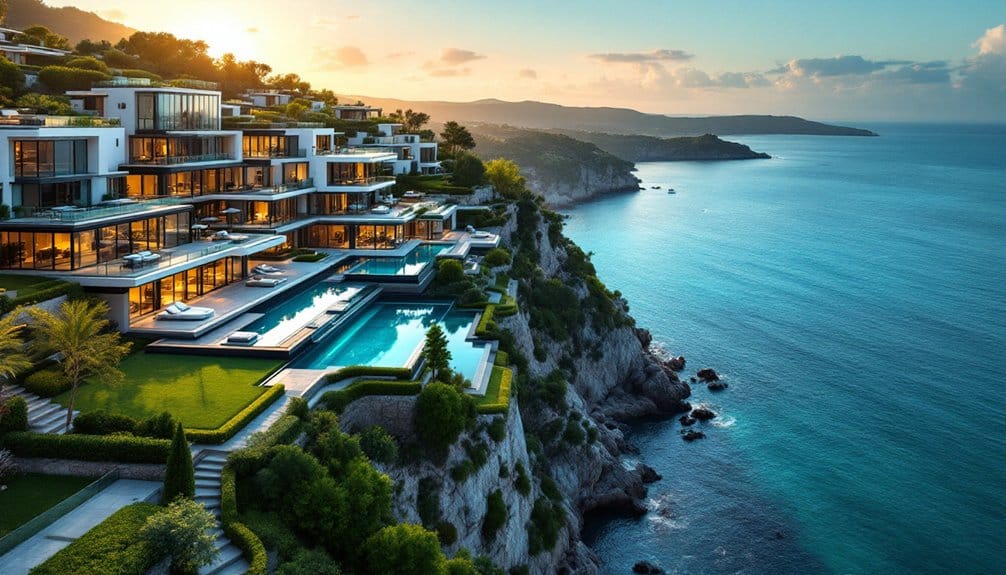
Seafront property in Uruguay doesn’t follow the same rules as inland real estate, and that distinction matters more than most buyers initially realize. The coastline between Montevideo and Punta del Este is finite, and once you understand that, the premium conversation starts to make a lot more sense.
Global data puts this in perspective. Sydney waterfront commands a 118% premium over comparable inland properties, Dubai sits at 128%, and the worldwide beachfront average lands around 76%. Auckland and Perth come in at 58% and 53.2% respectively. These aren’t arbitrary figures , they reflect the same supply constraint we see playing out right here along the Uruguayan Rambla and the beaches stretching east toward José Ignacio.
Dubai is actually a useful case study for what happens when premium coastal inventory tightens sharply. Units under construction there are projected to fall from 4,261 to 848 by 2031, and prices are responding accordingly. Uruguay’s premium seafront stock has its own version of that story, particularly in Punta Ballena and La Barra, where buildable beachfront land has become genuinely scarce.
The buyer profile driving global coastal demand , UK, US, Canadian, German, French, Swiss, and Australian investors , maps closely onto who we’re seeing actively purchasing here. Uruguay’s political stability, transparent property ownership laws, and lack of foreign buyer restrictions make it one of the few coastal markets where international capital moves without friction. That combination is difficult to find elsewhere in the region, and sophisticated buyers are aware of it.
Inland Uruguay offers flexibility and value. The coastline offers something that can’t be manufactured or relocated, and that’s precisely why the premium holds.
Where Luxury Appreciation Is Strongest in 2026
Luxury appreciation in Uruguay doesn’t spread itself thin. It pools in specific places, and after years of working this market, the pattern becomes unmistakable.
Punta del Este continues to lead, particularly in José Ignacio and La Barra, where annual appreciation on premium properties is running between 8-14% for well-positioned homes. Scarcity drives that number more than anything else. There simply aren’t many beachfront lots left, and what exists rarely comes to market twice. Pricing in the stronger corridors is pushing past 4,000-8,500 USD/sqm for finished product, with some signature builds well above that ceiling.
Montevideo’s Carrasco and Punta Gorda neighborhoods are also holding strong, consistently clearing the 4% annual growth threshold and attracting buyers who want Uruguayan residency benefits alongside a genuinely livable city.
What’s shifting in 2026 is the weight buyers are placing on what I’d call quality-of-life positioning. Rocha’s coastline, the quieter stretches near Cabo Polonio and Aguas Dulces, is drawing serious interest from people who aren’t chasing yield on paper. They want privacy, direct water access, and architecture that fits the land rather than fights it. Uruguay’s political stability and transparent property laws make that kind of emotional purchase feel rational too.
- José Ignacio/La Barra: 8-14% appreciation, supply-constrained
- Premium Punta del Este: 4,000-8,500 USD/sqm pricing
- Carrasco/Punta Gorda: exceeding 4% steady growth
- Rocha coastline: lifestyle-driven demand gaining momentum
New Developments and Concierge Amenities Driving Luxury Premiums
Scarcity alone stopped moving properties along Uruguay’s coast some time ago. What’s driving premiums now is the combination of irreplaceable land positions and the kind of layered amenity programming that buyers used to associate with markets like Dubai’s Palm or Emaar’s waterfront towers. Solaya’s 234 residences spread across nine buildings is a clear example of where the local market is heading , waterfront exclusivity needs to be backed by architectural distinction, not simply a prestigious address in Punta del Este or La Barra.
| Development | Signature Amenity |
|---|---|
| Bayview by Emaar | Infinity pools, floor-to-ceiling windows |
| Beach Isle | 28 units, expansive balconies |
| Palm Jebel Ali Phase 2 | 550 villas, yacht club access |
Buyers who have outgrown the generic, high-density developments that cropped up along the Rambla during the last cycle are specifically looking for something tailored , private cabanas, curated dining, thoughtful common spaces that reflect the lifestyle, not just the location. Emaar Beachfront’s towers sitting at 15, 25 percent completion are worth watching as a benchmark for construction momentum, because that pipeline tells you something real about where demand is anchored. In Uruguay’s coastal market, these amenities have shifted from selling points to baseline expectations for anyone writing a serious check for oceanfront living.
What’s Fueling the Coastal Luxury Supply Squeeze
Coastal luxury supply in Uruguay stays tight for reasons that go deeper than simple market cycles. Families who own prime frontage along Punta del Este, José Ignacio, or La Pedrera tend to hold those properties across generations , these aren’t assets people trade lightly, and that cultural attachment to the land is something I’ve seen consistently throughout my career here.
Zoning regulations add another layer to the equation. Uruguay’s coastal protection laws, particularly those governing the *franja costera*, place strict limits on what can be built and where, which is genuinely good for preserving the coastline but leaves almost no room for new supply to enter the market. Permitting for new luxury construction moves slowly, and beachfront land with the right approvals is increasingly rare to find.
What this creates for buyers is a competitive environment with very few exits. Demand from Argentine, Brazilian, and international buyers remains strong , Uruguay’s political stability, tax advantages, and lifestyle appeal continue to draw high-net-worth purchasers who know exactly what they want and are prepared to move when the right property appears. The pool of available homes simply doesn’t grow fast enough to absorb that interest.
Prices reflect all of this directly. When serious buyers outnumber quality listings by the margins we’re currently seeing, values don’t plateau , they climb. Anyone watching this market with real intent should be thinking about positioning now rather than waiting for conditions that aren’t likely to materialize.
Limited Turnover, Long-Term Ownership
Punta del Este, José Ignacio, and La Pedrera draw attention from international buyers every season, but the coastal properties that matter most , the ones with direct beach access, mature landscaping, and real privacy , almost never appear on the market. That’s not an accident. Families who bought in Manantiales or along the Laguna Garzón corridor twenty years ago aren’t selling, and their reasons go well beyond sentimental attachment.
A significant portion of these properties sit inside Uruguayan family trusts or *fideicomisos*, structures specifically designed to transfer wealth across generations without forcing a sale. Uruguay’s political stability, strong property rights, and straightforward foreign ownership laws make it an ideal place to hold real estate long-term rather than trade it. For the Argentine, Brazilian, and European buyers who make up much of this market, coastal land here functions as a permanent store of value , not an investment to exit when conditions shift.
- Owners treat beachfront villas as multigenerational assets, not short-term positions
- Privacy, service infrastructure, and land quality create genuine reasons to hold
- Legal ownership structures in Uruguay actively support long-term retention
- Wealth preservation, not speculation, drives the decision-making of serious buyers here
What this means practically is straightforward: inventory stays thin, well-located properties trade at a premium when they do appear, and waiting for the right moment to buy often costs more than moving when something real surfaces.
Protected Zoning, Restricted Supply
Zoning policy, not just the shape of the coastline, is what keeps beachfront property in Uruguay so scarce and so valuable. In places like Punta del Este, La Paloma, and Piriápolis, single-family classifications have been locked in for decades, effectively blocking multi-unit development in the exact areas where buyer demand peaks. Layer onto that the restrictions specific to coastal zones , prohibitions on accessory dwelling units, expanded setbacks, height caps, and minimum lot sizes , and what you get is a sharp rise in the land cost each unit must absorb.
| Restriction | Effect | Scope |
|---|---|---|
| Single-family zoning | Limits multi-unit land use | Coastal municipalities |
| ADU prohibition | Reduces achievable density | Coastal zones |
| Setbacks & height limits | Raises per-unit land cost | Coastline-wide |
| Streamlined development | Touches only a fraction of available land | Statewide coastal zone |
Legislators are aware of the tension this creates, which is why recent proposals have begun pushing toward aligning density incentives with coastal land-use frameworks. That said, the ground-level reality is that streamlined development still applies to a very small share of the total coastal zone. For anyone looking to build or invest along the Uruguayan coast, understanding these layered restrictions before committing to a site is not just useful , it directly shapes what a project can realistically become.
Affluent Demand Outpacing Inventory
Zoning along Uruguay’s coast has always been tight, and that’s no accident. Municipalities like Punta del Este, La Barra, and José Ignacio have deliberately kept density low, which means the existing stock of coastal properties is absorbing an extraordinary amount of global capital right now. Buyers arriving from the US, the Middle East, and elsewhere aren’t waiting for new inventory to materialize , they’re competing hard for what’s already standing, and that competition is pushing an already thin market into genuinely difficult territory.
Preferences have sharpened considerably over the past few years. Buyers want privacy, generous land, and clean sightlines to the water , and anything that falls short of those benchmarks gets passed over quickly. That narrowing of acceptable criteria is compounding the supply problem in ways that aren’t always visible from the outside.
A few dynamics worth keeping in mind as you navigate this market:
- Single-family homes are consistently outperforming attached properties, both in transaction volume and price appreciation
- South-facing terraces with unobstructed sea views are commanding the steepest premiums, particularly in Manantiales and Oceanía del Polonio
- Ultra-prime estates above €30M are scarce by design and rarely come to market twice
- Stabilizing mortgage rates have brought international buyers back with renewed confidence and stronger purchasing positions
The fundamentals here are straightforward: demand isn’t cooling, and the supply side has no structural mechanism to respond. Knowing which properties are quietly available before they’re formally listed is where the real advantage lies.
References
- https://mikeivancevic.com/blog/what-are-the-projected-real-estate-trends-shaping-palm-beach-luxury-homes-in-2026/
- https://www.youtube.com/watch?v=WQtB5amMoH4
- https://www.realtor.com/news/trends/best-beaches-2026-home-prices/
- https://www.beachhouse.com/guides/top-beach-communities-2026/
- https://www.luxuryhomemarketing.com/assets/LMR_NorthAmerica.pdf
- https://www.realtor.com/research/january-2026-luxury/
- https://www.idealista.com/en/news/luxury-real-estate-in-spain/2026/04/27/889338-spain-s-beachfront-renaissance-from-eu500-000-to-eu1-million-and-beyond
- https://www.luxuryspanishhomes.com/en/marbella-market-report-2026
- https://www.cotedazur-sothebysrealty.com/en/news/details/1416/ultra-prime-real-estate-report-french-riviera-2026/
- https://www.redfin.com/news/housing-market-predictions-2026/