
Uruguay’s recent election day stands as a masterclass in democratic participation, shattering expectations with its remarkable 87% turnout. In an era where many democracies struggle to mobilize voters, this South American nation has proven that robust civic engagement isn’t just possible—it’s achievable. The day’s success raises intriguing questions about the role of compulsory voting, the future of democratic systems, and whether other nations might benefit from studying Uruguay’s electoral playbook.
Record-Breaking Voter Participation in Uruguay’s Local Elections
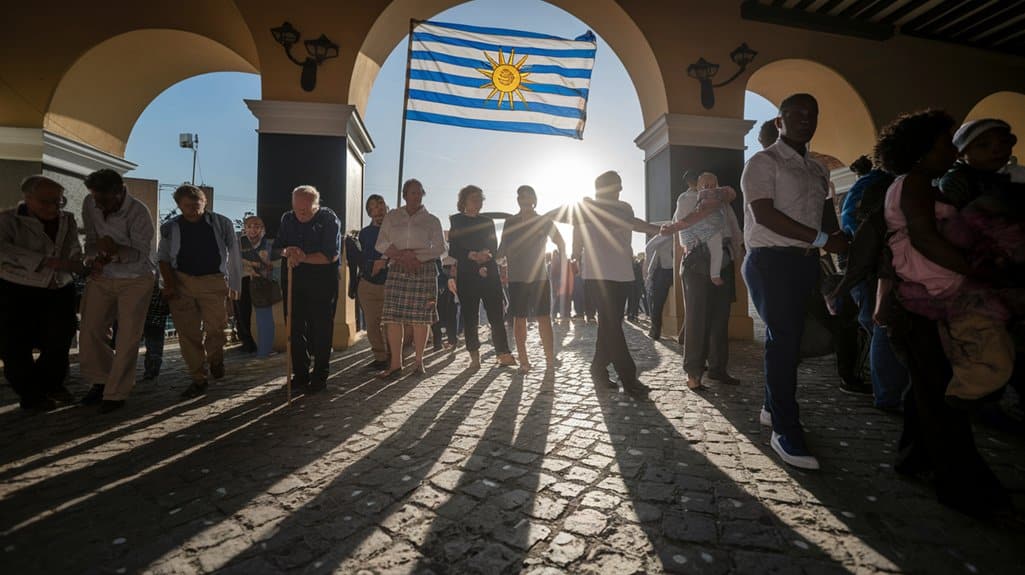
Uruguay’s 2025 departmental and municipal elections witnessed unprecedented voter engagement, with a remarkable 87% turnout among the country’s 2.7 million eligible voters. This robust participation, bolstered by the nation’s compulsory voting system, highlighted citizens’ deep commitment to local governance.
Despite voter fatigue following the 2024 national elections, Uruguayans demonstrated their democratic spirit by flocking to polling stations from dawn till dusk. The high turnout had significant election implications, particularly in closely contested departments like Lavalleja, where every vote proved essential in determining local leadership for the 2025-2030 term.
Key Regional Victories and Political Power Shifts
Several major shifts marked the political terrain of the 2025 departmental elections, with the Frente Amplio maintaining its stronghold in Montevideo and Canelones while the Partido Nacional secured victories across 13 predominantly rural departments.
The emergence of regional alliances played a crucial role, particularly in Salto where the Coalición Republicana clinched a surprising victory. Voter demographics revealed interesting patterns, with urban centers continuing to lean left while rural areas maintained their conservative preferences. A notable exception emerged in Río Negro, where the Frente Amplio regained control, and Lavalleja witnessed an unprecedented technical tie between competing factions.
Frente Amplio’s Continued Dominance in Metropolitan Areas

While political fortunes shifted across much of the country, the Frente Amplio‘s grip on Uruguay’s metropolitan centers remained resolute, with particularly strong showings in Montevideo and Canelones.
The party’s success in metro areas reflected well-executed strategies focusing on urban development and social services. In Montevideo, Mario Bergara secured the FA’s eighth consecutive victory with 51% of the vote, while Francisco Legnani continued the party’s winning streak in Canelones. These victories bolstered FA’s understanding of metro area dynamics, where their progressive policies resonated strongly with urban voters, maintaining their stronghold in Uruguay’s most populous regions.
Electoral Process and Democratic Engagement
How effectively a nation adopts its democratic responsibilities often reveals itself in voter turnout, and the May 2025 elections showcased Uruguay’s enduring commitment to civic participation. With an impressive 87% turnout among 2.7 million eligible voters, electoral integrity remained paramount throughout the peaceful process. Polling stations operated efficiently from dawn to dusk, while President Orsi’s characterization of the day as a “celebration of democracy” reflected the nation’s mature approach to civic responsibility. Despite voter fatigue from the previous year’s elections, Uruguayans once again demonstrated their dedication to democratic principles through robust participation.
Looking Ahead: Impact on Uruguay’s Political Landscape

Following the 2025 departmental elections, Uruguay’s political terrain reflects both enduring patterns and subtle shifts in regional power dynamics. The results paint a nuanced picture of the nation’s evolving democratic framework, with implications for future policies and governance.
- Frente Amplio‘s continued dominance in urban centers suggests progressive policies will shape metropolitan development
- Partido Nacional‘s grip on rural dynamics remains strong, influencing agricultural and infrastructure decisions
- Coalición Republicana‘s advancement in Salto signals potential for new political alignments
- Regional power distribution indicates a balanced approach to national-local governance relationships
This political mosaic sets the stage for collaborative policymaking while preserving Uruguay’s tradition of democratic stability.



9 Responses
How can we call this a success when not everyone wants to vote? Compulsory voting is just forcing people!
87% turnout? That’s great, but does it really reflect people’s opinions? Just because they showed up doesn’t mean they were excited about it.
I don’t see how compulsory voting is a good thing. It feels more like a chore than a right. People should want to vote, not be forced.
Sure, high turnout looks nice on paper, but what about the quality of the votes? Are people informed or just ticking boxes?
While I admire Uruguay’s participation, I’m not convinced that forced voting leads to better democracy. People should engage voluntarily!
‘Celebration of democracy’? More like a celebration of obligation! Let’s see if these votes actually change anything meaningful.
‘Deep commitment to local governance’? How can we know if people really care when they’re just doing it because they have to?
“Voter fatigue” sounds real! Maybe compulsory voting isn’t the answer if people are tired of elections so soon after another one.
‘Political power shifts’ are cool and all, but let’s see how long those changes last before we celebrate them.