
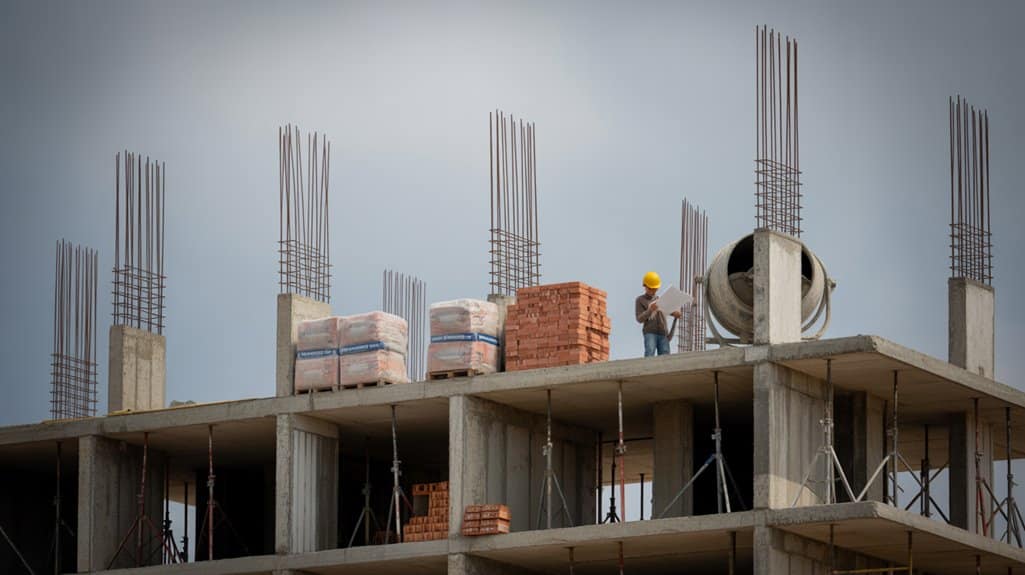
Construction costs in Uruguay have been climbing steadily, and July’s 2.97% single-month increase pushed the year-over-year figure close to 8%. That’s not a number to take lightly, especially if you’re currently evaluating a development or planning a purchase.
A large part of what’s driving this is structural. Imported materials are priced in dollars, which means any movement in the peso-dollar exchange rate feeds directly into project budgets. Add to that labor and social charges, which typically absorb around 54% of total project costs, and you’re looking at a cost base that’s both sticky and sensitive to external pressures.
Developers are responding the way they always do when margins tighten , slowing timelines and adjusting prices upward. For buyers, that translates into fewer units coming to market and less room to negotiate. Supply is contracting at exactly the moment when pricing pressure is already elevated.
Uruguay’s market has always had its own rhythm, shaped by its dollar-linked economy, strong labor protections, and a construction sector that doesn’t easily absorb shocks. These aren’t temporary distortions. The conditions behind this trend , currency exposure, labor costs, imported inputs , are built into the fabric of how building works here.
If you’re on the fence about timing, that fence is getting harder to sit on comfortably. The direction these numbers are pointing is worth paying close attention to right now.
Key Takeaways
Construction costs in Uruguay have climbed nearly 8% year-over-year, with July alone registering a 2.97% monthly increase , figures that anyone active in this market should take seriously before committing to a new development.
A big part of what’s driving these numbers is the exposure to dollar-denominated materials. Steel and aluminum are priced in USD, so every time the exchange rate shifts, local project budgets feel it directly. That’s a variable most buyers and developers underestimate until it hits them mid-project.
Labor costs compound the pressure. Wages and social contributions account for roughly 54% of total construction spending, and BPS charges alone reach 71.8%. Uruguay has strong labor protections , that’s not changing , so these figures need to be built into any realistic budget from day one.
What this means in practice is that new builds are now running 10% to 25% above comparable resale properties across the country. That gap matters enormously when you’re advising a client on whether to buy off-plan or go with an existing unit. In many cases right now, the resale market offers significantly better value per square meter.
Developers are responding by slowing timelines and reducing unit sizes rather than absorbing losses. That decision tightens available inventory over time, which puts upward pressure on pricing across the board , new and used alike. If you’re considering entering the market, moving sooner rather than waiting for costs to stabilize is worth serious thought.
How Fast Uruguay’s Construction Costs Are Rising
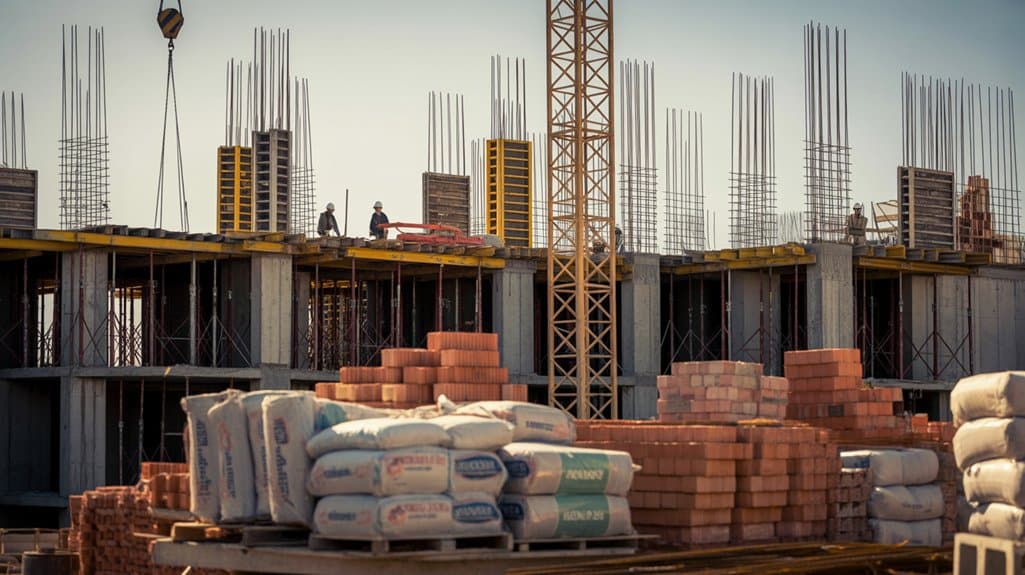
Uruguay’s construction cost index rose 0.41% in June 2026, and that number matters more than it might seem at first glance. We saw 0.35% in May and 0.36% in April, so what we’re looking at is three consecutive months of steady upward movement, no dramatic jumps, but no breathing room either. That trend accelerated sharply in July, when the index climbed by 2.97% in a single month.
For anyone weighing a build right now, that consistency is the real story. A spike you can plan around. A grind like this one works quietly against your budget, month after month, and Uruguay’s market doesn’t always give you the luxury of waiting it out. Land in Montevideo, Punta del Este, and the coastal corridors has held its value through far rougher cycles than this, which means delaying a project to “see what happens” often costs more in the end than the index itself does.
These figures come without seasonal adjustment, so what you’re seeing is the actual pressure hitting materials, labor, and logistics on the ground. Builders across the country are absorbing this in real time, and those costs flow directly into final pricing for new homes and investment properties.
If you’re planning to develop or purchase a newly built property in Uruguay, build this trend into your projections now. The numbers aren’t alarming, but they are persistent, and persistent is exactly what you need to account for before you sign anything.
Why Materials Drive Uruguay’s Construction Costs Higher
Materials are where budgets quietly come apart, and after years of working with buyers and developers across Montevideo and the interior, I can tell you this is the line item that catches people off guard most often. Uruguay imports a significant share of its key building supplies , steel, aluminum, fittings , and their prices move with the peso, which means a currency dip can reprice an entire order before the delivery truck arrives. Aluminium, one of those imported inputs, climbed to 118.077 on the cost index in June 2026, up from 117.648 the month before, showing just how quickly these price swings can compound.
The numbers behind this are worth knowing. Portland cement runs around 1,103.57 pesos per bag, 12 mm iron sits at 108.78 pesos per kilogram, and aggregates come in at roughly 6,153.60 pesos per cubic meter. Those figures form the floor that everything else gets built on, literally and financially. Materials account for 28.14% of the cost index, and apartment projects pull from more supply categories than standard single-family builds, so the exposure is wider.
What compounds this further is the logistics side. When delivery delays hit , and in Uruguay they do, particularly for projects outside the capital , contractors often can’t absorb the wait and end up sourcing smaller batches at higher unit costs. That workaround protects the timeline but eats into the margin. Buyers financing a development or purchasing off-plan should factor in this pattern, because it’s not an exception to how things work here. It’s closer to the baseline.
How Labor and Payroll Costs Squeeze Construction Budgets
Labor and payroll costs are one of the first things I walk developers through when they’re sizing up a project here. In Uruguay, labor and social-law costs already account for roughly 54% of total construction spending, and once you layer in BPS contributions , which can reach around 71.8% of taxable labor in direct-works settings , the payroll burden becomes one of the heaviest line items in any budget.
Wages also shift considerably depending on where you’re building and what trades you need. A general helper in Montevideo earns around 30,000 UYU, while a machinery operator in Punta del Este can command close to 72,000 pesos. That gap matters when you’re projecting costs across a multi-year apartment development, especially since collective bargaining agreements lock in wage increases well in advance, leaving very little room to recalibrate if market conditions change.
What makes this particularly tight for apartment projects is their reliance on skilled, formal labor , exactly the category where social charges hit hardest. Adding to this pressure, the latest sector agreement is binding nationwide on all companies regardless of size, with no company-size exemptions built into its terms. Each additional obligation, whether a wage adjustment or a new social contribution, chips away at the pricing flexibility that developers depend on to stay competitive. Knowing this going in, and building those increases into your financial model from day one, is what separates projects that hold their margins from ones that don’t.
Regional Wage Comparisons
Wage comparisons across the region tell a pretty clear story, and it’s one worth understanding before you commit to a development budget. Skilled construction workers in Uruguay earn between 25% and 40% more than their equivalents in Argentina and Brazil, and the minimum wage gap reinforces that point , roughly 540 USD here against 189 USD across the border. Masons and electricians typically take home between 800 and 1,200 USD monthly, well above the 400 to 600 USD range common in neighboring markets.
What makes this particularly relevant for apartment developers is the asymmetry it creates. Materials can often be sourced regionally or internationally, giving you some flexibility on that side of the ledger. Labor costs don’t move that way , they’re fixed locally, tied to Uruguay’s wage structure, and they show up in every line item. That combination of mobile material markets and anchored labor costs means tighter margins are simply part of the equation here, and trying to offset them purely through procurement strategy has real limits.
Knowing this going in lets you plan more accurately and avoid the kind of budget drift that catches developers off guard mid-project. This tracks with broader industry figures, where the average gross salary for construction-related roles in Uruguay sits at roughly $553,588 per year.
Social Contribution Burdens
Social contribution burdens are something every developer and investor needs to understand before breaking ground in Uruguay. The unified rate sits at 71.8% over wages paid on-site, covering pensions, health coverage, and BSE insurance in a single, non-negotiable calculation. There’s no workaround here , BPS registration must happen within 48 hours of starting any construction work, and that clock starts ticking from day one.
| Contribution Component | Rate |
|---|---|
| Employer + Personal Charges | 26.9% |
| Salary-Linked Charges | 29.9% |
| Health + BSE Insurance | 15% |
What I always tell clients is to run their numbers with labor and social charges already baked in, because combined they routinely reach 50% of total project cost. Beyond the unified rate, employers must also account for additional required contributions such as the Complemento de Cuota Mutual. That’s not a risk factor , it’s a baseline. Building it into your apartment budget from the start is the difference between a project that performs and one that quietly bleeds margin.
Impact on Pricing Flexibility
Pricing an apartment in Uruguay has never been a straightforward exercise, and anyone who has spent time in this market knows exactly why. Developers are working against wages running 25%, 40% above what competitors in neighboring countries pay, payroll burdens hovering near 72% of gross pay, and labor indices that keep creeping upward with no real ceiling in sight. Before a single tile goes down, those costs have already eaten into what little room existed to maneuver on price.
When labor absorbs more than half of direct costs, the margin conversation gets uncomfortable fast. Discounts become difficult to justify, delays become genuinely dangerous, and the developer’s ability to respond to market conditions shrinks considerably.
Four pressure points define where things stand right now:
- Wages that consistently outpace neighboring markets, hitting every budget line simultaneously.
- Payroll multipliers that can dramatically inflate what a base salary actually costs to carry.
- Labor indices showing no meaningful sign of stabilizing.
- Breakeven prices pushing toward US$2,200 per square meter in many segments.
What this means practically is that the traditional levers buyers expect developers to pull , price reductions, flexible terms, absorption of finishing upgrades , are genuinely harder to offer. The numbers simply leave less room. Understanding that context helps set realistic expectations on both sides of a negotiation, which ultimately leads to cleaner deals and fewer surprises down the line.
The Dollar’s Impact on Imported Construction Materials
Keeping an eye on the dollar is simply part of doing business in Uruguayan real estate, and the construction side of this market makes that especially clear. So many of the materials that go into a build here come from abroad , processed industrial supplies alone reached US$3,142 million in 2024, accounting for nearly 29% of goods imports outside oil and energy. Machinery and equipment added another US$1,284 million to that figure, covering everything from vehicles to the tractors you see moving earth on active sites.
What makes this particularly relevant for anyone planning a construction project is where those materials originate. Cement articles, structural parts, and prefabricated components come in from Portugal, Spain, Brazil, China, and Argentina, all priced in dollars from the outset. That means the exchange rate is already baked into every invoice before it even reaches a local contractor.
The peso-dollar relationship has a very direct effect on final costs. When the peso softens against the dollar, contractors end up paying more pesos for the exact same shipment , there’s no negotiating around it. Timing adds another layer of exposure, since the gap between placing an order and making payment can quietly push costs higher if the currency moves in the wrong direction. For materials with no viable local substitute, that exposure has nowhere to go except into the project budget.
What Rising Construction Costs Mean for Apartment Prices
When construction costs climb in Uruguay, the effect on apartment prices is almost immediate , and buyers who understand this dynamic are always better positioned to make smart decisions. Developers working across Montevideo, Punta del Este, and emerging markets like Canelones are dealing with rising land valuations, imported material costs tied to dollar fluctuations, and a labor market that has tightened considerably over the past few years. Those pressures don’t get absorbed quietly; they get passed along.
Off-plan purchases are where this shows up most visibly. Developers price future cost increases into those listings early, which means buyers are essentially locking in a number that already accounts for tomorrow’s expenses. That can work in your favor if the market keeps moving, but it also means there is less room to negotiate on new developments than there was even three or four years ago.
The broader reality is that Uruguay’s construction sector operates within a fairly specific set of constraints , import dependencies, union agreements, and land scarcity in premium zones like Pocitos or Carrasco all feed into a cost structure that keeps developers operating on tighter margins than most buyers realize. When margins compress, prices adjust upward, and that cycle tends to move faster than buyers expect. Watching cost trends before committing to a purchase, especially in actively developing corridors, gives you a meaningful edge.
Higher Costs, Higher Prices
Construction costs in Uruguay don’t stay on the builder’s balance sheet for long. Labor and materials have climbed nearly 8% year over year, and developers move quickly to protect their margins, which means new apartments now carry price tags running 10% to 25% above comparable resale properties. In Montevideo’s prime neighborhoods, that gap translates directly into numbers buyers feel at the counter , we’re talking $4,260 per square meter in the most sought-after areas.
What happens next is predictable if you’ve watched this market long enough. Developers slow down active projects rather than absorb losses, which tightens supply exactly when demand needs relief. Buyers who came in expecting to negotiate find themselves with less leverage than before, and many start reconsidering resale homes that offer more square meters for the same budget.
The practical reality here is that waiting rarely works in your favor when cost pressures are structural rather than seasonal:
- Construction costs jumped nearly 8% year over year.
- New builds now cost 10% to 25% more than resale homes.
- Prime Montevideo apartments reach $4,260 per square meter.
- Buyers lose bargaining power as prices climb higher.
Knowing where you stand in this market , whether new build or resale fits your priorities , makes a real difference when every percentage point is already working against your budget.
Margins Under Pressure
Every price tag on a new Montevideo apartment reflects a developer working through some very uncomfortable numbers. Uruguay’s housing construction cost index reached 113.536 in October 2025, and that steady climb puts real pressure on gross margins. Cement, steel, labor, finishes , when all of these rise month after month, the break-even price moves up with them, and the room to negotiate with buyers shrinks accordingly.
Fixed-price pre-sales feel this most acutely. Developers who locked in revenue months or even years before costs finished rising now find themselves absorbing the difference. Add financing charges and permit fees on top, and the margin picture gets tight quickly.
The response you’ll see from many developers is predictable: smaller units, simplified finishes, delayed launches. Each of these moves protects their returns, but the trade-off lands squarely on buyers who want space, quality, and flexibility , and who aren’t necessarily willing to pay a premium for all three at once.
Knowing this dynamic helps you read the market more clearly. When a developer is working with compressed margins, the negotiation landscape shifts, the finish quality changes, and the timing of a project can become unpredictable. These are the kinds of signals worth paying attention to before committing to a purchase.
Future Apartment Price Outlook
The gap between new builds and resale prices isn’t closing anytime soon, and that’s something worth factoring into any purchase decision. Construction costs keep climbing here in Uruguay, pushing new apartments well beyond what older stock commands, and the market has shown no real appetite for changing direction. In Montevideo especially, where land is increasingly hard to come by, developers simply transfer those costs to buyers , and buyers keep absorbing them.
Coastal areas like Punta del Este and José Ignacio handle that pressure differently, drawing buyers who are willing to pay for lifestyle and scarcity. Secondary markets, though more accessible, tend to trail behind and move at their own pace.
Green retrofits are becoming more relevant in this conversation too. They add upfront cost, but for buyers thinking beyond the next few years, the long-term savings on utility bills and the independence from energy price swings make a real difference , and sellers are starting to price that in.
- New builds carrying premiums of 10% to 25% over older stock, with construction economics giving no reason for that to shrink.
- Montevideo values growing at 3% to 5% per year, steadily narrowing what’s affordable.
- Coastal markets running at 5% to 8%, where early buyers have consistently come out ahead.
- Over a ten-year horizon, projected gains of 55% to 80% , the kind of numbers that make waiting a costly choice.
Where Uruguay’s Construction Costs Are Headed Next
Apartment construction costs in Uruguay are climbing, and that trend is not reversing anytime soon. Labor agreements negotiated through the *Consejos de Salarios* keep pushing wage floors higher each cycle, materials stay exposed to global commodity swings, and buyers increasingly expect premium finishes that add real money to every project budget.
The demand side tells its own story. Montevideo and the coastal corridors are densifying fast, which means apartment towers are absorbing most of that pressure. The problem is that policy incentives, including the ones tied to *Vivienda Promovida*, have not kept pace with what labor and materials actually cost right now. The gap between available incentives and real construction expenses is widening, not narrowing.
Developers are working with straightforward numbers here. Costs rise consistently, and without a meaningful policy response or a shift in global input prices, buyers will carry more of that weight heading into 2027 and beyond. Anyone planning a purchase in the next few years should factor this into their timeline and budget rather than waiting for prices to soften on their own.
The freedom to choose a location, a building, and a layout that genuinely fits your life is one of the real advantages of the Uruguayan market. That advantage remains, but accessing it will cost more with each passing construction cycle. Moving with solid information and clear priorities is what makes the difference right now.
References
- https://www.jarniascyril.com/international-real-estate/invest-in-real-estate-uruguay-market-guide/renovate-property-uruguay-complete-guide/
- https://sitio.ccu.com.uy/wp-content/uploads/2024/06/Informe-Costos-de-Construccion-Dato-a-Abril-2024.pdf
- https://www.gub.uy/instituto-nacional-estadistica/comunicacion/publicaciones/anuario-estadistico-nacional-2023-volumen-n-100/91-precios/916-indice
- https://www.gub.uy/instituto-nacional-estadistica/comunicacion/publicaciones/anuario-estadistico-nacional-2025-vol-102/91-precios/916-indice-del
- https://www.ceicdata.com/en/uruguay/housing-construction-cost-index
- https://sitio.ccu.com.uy/wp-content/uploads/2024/03/Informe-Costos-de-Construccion-Dato-a-Febrero-2024.pdf
- https://www.uruguayxxi.gub.uy/uploads/informacion/05d3bff84e2f9b7cea285209ef8e2ece6094e1fd.pdf
- https://www.gub.uy/instituto-nacional-estadistica/comunicacion/publicaciones/indice-costo-construccion-vivienda-iccv-junio-2026
- https://thelatinvestor.com/blogs/news/uruguay-good-time
- https://www.elpais.com.uy/negocios/noticias/se-van-a-encarecer-las-viviendas-por-el-nuevo-convenio-en-la-construccion-lo-que-dicen-los-desarrolladores