
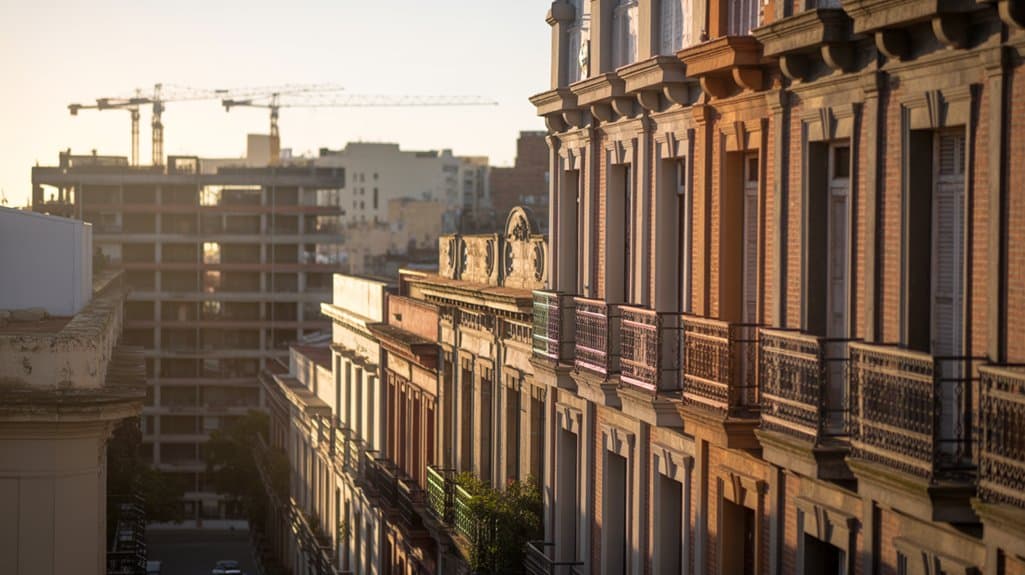
Uruguay’s Ministry of Housing and Land Use is moving forward with a plan to bring 1,000 new homes to Montevideo’s Ciudad Vieja , and from where I stand, this is exactly the kind of structural push the area has needed for years.
Rather than letting underused public buildings and vacant lots sit idle, the Ministry is putting them to work through a mix of new construction and rehabilitated structures.
What’s worth paying attention to here is the target demographic. This isn’t being designed around short-term rentals or tourism demand , it’s built for permanent residents, which tells you something meaningful about the long-term vision for the neighborhood.
Ciudad Vieja has always carried tremendous character, but sustaining that requires people actually living there, not just passing through.
Financing runs through the BHU, covering up to 95% of a unit’s value, with prices capped below the market median. For buyers who’ve been priced out of other Montevideo neighborhoods, that structure opens a real door.
Construction is set to begin in 2026, with full completion projected for 2033 , a realistic window given the scale involved.
If you’re thinking about this from an investment or residency angle, the timeline gives you room to plan carefully. Neighborhoods with this kind of coordinated public investment tend to shift in value well before the last unit is finished.
Ciudad Vieja already has the bones; this initiative is what fills them in.
Key Takeaways
Uruguay’s Ministry of Housing (MVOT) is moving forward with an ambitious plan to bring 1,000 new homes to Ciudad Vieja, combining ground-up construction with the rehabilitation of existing buildings. For anyone watching Montevideo’s central real estate market, this is a significant signal worth paying attention to.
The first developer call is already taking shape around four public properties , three formerly managed by DNV and one previously under the Education Ministry. These sites give the project a concrete starting point, and the use of existing public land keeps things moving without the usual delays tied to acquisitions.
Not every property in the pipeline will be easy to repurpose, though. Several key sites along the 25 de Mayo corridor carry heritage protections and active institutional uses, which naturally limits what can be done with them. Ciudad Vieja’s architectural character is part of what makes it attractive, so working within those constraints makes sense for long-term value.
From 2026, ANV will run competitive calls for private developers, initially targeting 100 to 150 units. That’s a measured entry point , enough to test market appetite while maintaining quality control over what gets built.
The broader framework here is Uruguay’s Plan Quinquenal de Vivienda y Hábitat 2025, 2029, which prioritizes redensifying central Montevideo rather than expanding outward. Ciudad Vieja has been underutilized for years relative to its location and infrastructure, and this kind of institutional backing tends to pull private investment along with it.
Why Ciudad Vieja Was Chosen for 1,000 New Homes
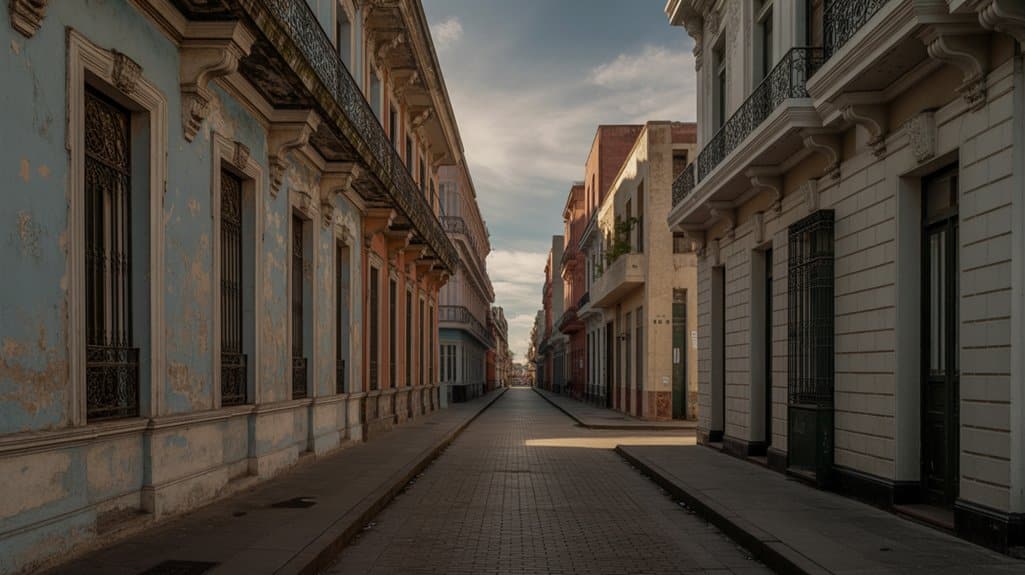
Ciudad Vieja makes a lot of sense when you look at what Montevideo actually needs right now. The city can’t keep pushing its boundaries outward indefinitely, and the Ministry of Housing and Territorial Planning clearly understands that. Targeting this neighborhood means working with infrastructure and services that are already in place , water, sewage, transport connections , which translates directly into lower costs and faster delivery compared to building on the periphery from scratch.
What’s easy to overlook is just how much usable space sits idle here. Public land, vacant buildings, underutilized plots , these aren’t abstract policy concerns, they’re real opportunities for development that the Ministry is finally moving to activate. From a market perspective, that’s significant, because land acquisition in established urban areas typically drives up project costs considerably. Here, that barrier is reduced. The pilot program’s first phase alone is expected to call for private investors to build on eight unused state lots in the neighborhood.
The neighborhood’s cultural weight is genuine, and it does attract tourism year-round, but residential density has dropped off sharply over the decades. That imbalance , economically active but demographically thin , is exactly what 1,000 new homes are designed to correct. Bringing permanent residents back into the historic core stabilizes the local economy in a more sustainable way than visitor traffic alone ever could.
For anyone watching the Uruguayan property market, Ciudad Vieja represents the kind of regeneration play that tends to reward early movers. The bones are strong, the location is irreplaceable, and now there’s institutional weight behind its recovery.
Which Public Properties in Ciudad Vieja Will Become Housing First
Four public properties have been earmarked for the first round of private developer calls in Ciudad Vieja, and these are not vague commitments , they are titled parcels with clear ownership. Three of them sit along the 25 de Mayo street axis, all under the Dirección Nacional de Vivienda, and a fourth comes from the Ministry of Education and Culture. Together, MVOT estimates they could generate between 100 and 150 homes, which is a meaningful starting point for a neighborhood that has been underdeveloped for decades.
Anyone watching this market closely knows that Ciudad Vieja has long carried more potential than actual results. These four sites change that conversation in a concrete way, and developers looking at Montevideo’s urban renewal pipeline would do well to pay attention to how this first call is structured before the next round opens. A separate, complementary program has already drawn strong developer interest, with 20 formal project entries submitted within its first six months of operation.
Three Sites on 25 De Mayo
Walking the stretch of 25 de Mayo, you get a clear picture of why the city’s plan for 1,000 new homes faces some real friction in this corridor. The buildings that define this street aren’t vacant lots waiting for a developer’s vision , they’re active, functioning institutions with deep roots in Montevideo’s urban fabric. This same street is also part of the monthly cultural cycle “Sábados en Ciudad Vieja,” which includes additional activation on 25 de Mayo and Bacacay streets.
Take number 174: Hospital Maciel is very much open and operational. That’s not a site quietly waiting to be repurposed. At 428, Casa Montero falls under heritage conservation as part of the Museo Histórico Nacional, with its salons and patio regularly receiving visitors. Touching that kind of asset is a long, layered process in Uruguay , the heritage protections alone make any residential conversion a serious undertaking. And at 512, the Mexican Embassy is actively programming cultural events, including exhibitions like “Ancestras,” which signals a diplomatic mission that’s engaged, not dormant.
Three addresses, each with its own institutional weight and none of them confirmed for residential development. For anyone tracking where the housing plan will actually land, this stretch of 25 de Mayo is worth watching closely , but right now, the numbers simply aren’t there. In a market where protected heritage status and active institutional use shape what’s possible, it pays to understand what each building is before assuming what it could become.
Former Education Ministry Property
While three institutional buildings along 25 de Mayo continue operating at full capacity, the former Ministry of Education and Culture property has already moved , transferred to the MVOT specifically for housing conversion. That’s a meaningful distinction worth paying attention to. Undersecretary Christian Di Candia presented these project developments to the public.
This site, bundled together with three DNV terrains, forms the first concrete package being offered to private developers, with projections sitting between 100 and 150 combined housing units. In Uruguay’s current market, where price-capped housing remains genuinely scarce in central locations, that framing matters. Officials are positioning this as an accessible housing initiative rather than a speculative play, and based on how MVOT has handled similar reconversions, that commitment tends to hold , though it’s always worth tracking how tender conditions are ultimately written.
Community consultation hasn’t been formally announced yet, which is something buyers and local stakeholders should keep an eye on. Public land transfers in Montevideo occasionally move faster on the administrative side than on the communication side, and understanding the social context around a development site is part of doing due diligence properly.
The 2026 bidding timeline appears firm, and given MVOT’s recent push to cut through institutional delays, that date carries more weight than it might have a few years ago. Anyone watching this space , whether as a potential developer, investor, or prospective resident , should start positioning now, because heritage conversions in this corridor don’t come around often.
What Homebuyers Will Pay Under Ciudad Vieja’s Price Caps
If you’re looking at Ciudad Vieja’s new units, don’t expect to see a price tag plastered on a listing. The program works differently, and knowing how it’s structured will help you plan your finances realistically.
The purchase price sits below Montevideo’s open market median, kept in check by a cap the authorities set rather than advertise publicly. What matters more to most buyers I work with is the entry cost, and here the numbers are genuinely favorable. Financing reaches up to 95% of the unit’s value, which brings your down payment down to around 5%. Anyone who’s tried to buy in Pocitos or Punta Carretas lately knows that kind of leverage is rare.
Monthly payments get additional breathing room through subsidies covering up to 30% of each installment. That figure isn’t fixed across the board, so your household’s specific file determines what you actually receive. It’s worth preparing your documentation carefully before applying.
One thing worth being clear about: this isn’t a program with workarounds for investors or secondary properties. It’s designed exclusively for first-home buyers who intend to live in the unit. Some of these new developments even offer promoted housing law benefits like a 10-year property tax exemption, which can further ease the long-term cost of ownership.
| Cost Component | Coverage/Cap | Buyer’s Reality |
|---|---|---|
| Purchase Price | Capped, undisclosed | Below market median |
| Down Payment | ~5% of value | Entry barrier lowered |
| Financing | Up to 95% | Reduced upfront burden |
| Monthly Payment | Subsidy up to 30% | Case-by-case relief |
How BHU Financing and Subsidies Make These Homes Affordable
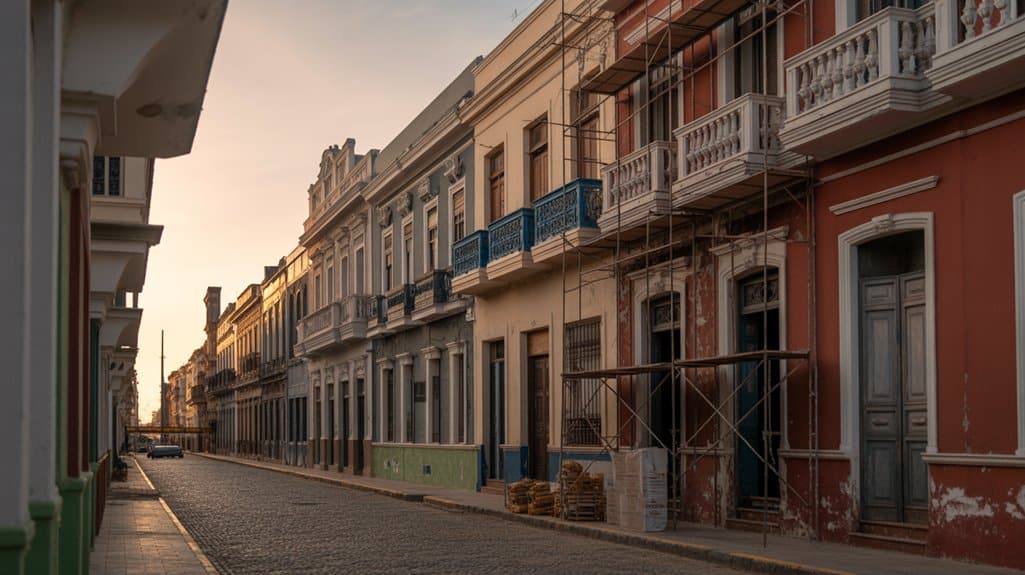
The way these units stay within reach comes down to two things working together: BHU financing and MVOT’s subsidy program. BHU credit lines are denominated in UI, ranging from 100,000 to 2,800,000 UI, repaid over 25 years at 6% annual interest. For Ciudad Vieja specifically, financing can cover up to 95% of a property’s value , a meaningful advantage compared to the 70, 80% ceiling that applies in most other cases. The Entre Todos subsidy then layers directly onto monthly payments rather than the purchase price, which is what makes the real difference for buyers who don’t have significant savings upfront. You’re not reducing what you pay on paper; you’re reducing what leaves your account each month.
That said, none of this bypasses the standard requirements. Buyers still need to bring proper documentation, verifiable income, and a credit profile that holds up under BHU’s evaluation process. The structure is designed to expand access without loosening the financial logic behind it , and in a market like Uruguay’s, where long-term stability matters, that balance is actually worth appreciating.
How the MVOT Will Recruit Private Developers for Ciudad Vieja
The MVOT isn’t moving on this alone , the Agencia Nacional de Vivienda is the one running the public calls to bring private developers into Ciudad Vieja, which makes sense given their experience managing these processes. The first call is scheduled for 2026 and focuses on three Dirección Nacional de Vivienda lots along 25 de Mayo, plus a parcel transferred from Educación y Cultura. Together, they’re projected to generate between 100 and 150 homes, and officials are treating this as the program’s flagship pilot.
What makes this worth watching is how the incentive structure is set up. Developers coming in through Ley de Vivienda Promovida get meaningful tax exonerations, which removes a lot of the hesitation that typically slows private investment on state-adjacent projects. The state also keeps ownership terms clearly defined, so there’s no ambiguity about accountability down the line. For anyone tracking opportunities in Montevideo’s historic center, this is exactly the kind of public-private model that can move idle land into actual construction without the usual delays.
When Construction and Delivery Are Expected in Ciudad Vieja
Ciudad Vieja moves at its own pace, and that’s worth understanding before you start picturing yourself with keys in hand. The full development timeline spans seven to eight years, which is actually quite typical for a historic district regeneration of this scale in Montevideo , these things take time, and the results tend to be worth it.
The earliest delivery milestone lands in 2026, when a developer call goes out for four public sites targeting 100 to 150 units. 2027 brings the start of the Escuela de Enfermería conversion, adding another 200 to 248 homes to the pipeline. Additional public parcels are expected to move through interinstitutional review sometime between 2027 and 2028, with full completion of around 1,000 units projected for 2033 to 2034.
| Phase | Timing |
|---|---|
| First Call (4 sites) | 2026 |
| Enfermería Conversion | 2027 |
| Additional Public Parcels | 2027, 2028 |
| Full 1,000-Unit Completion | ~2033, 2034 |
Buyers who plan ahead tend to come out ahead here. Getting in early on a project like this , well before the construction cranes arrive , usually means better pricing and more selection. The timeline is long, yes, but Uruguay’s regulatory framework and the involvement of public institutions actually add a layer of certainty that purely private developments don’t always offer.
How Ciudad Vieja Fits Into Uruguay’s Housing Strategy
Ciudad Vieja is the centerpiece of Uruguay’s push to bring people back to central Montevideo, and it’s worth understanding what that really means for anyone watching this market. The Ministry of Housing has built its strategy around a straightforward premise: there’s a significant stock of underused public land and vacant state-owned buildings sitting in historic urban cores, and those assets can be converted into first-occupancy housing rather than left to deteriorate. Eight state-owned padrones are already in the pipeline, with the potential for roughly 500 additional units as more public properties get folded into the program.
What makes this significant is the scale of the thinking behind it. This isn’t a patch applied to one struggling neighborhood , it’s a national framework that treats abandoned public assets as the raw material for repopulating city centers across the country. Ciudad Vieja is where that framework is being tested first, which tells you something about both the neighborhood’s strategic importance and the confidence the government has placed in its potential. For buyers and investors paying attention to where Uruguay’s housing policy is heading, that context matters quite a bit.
Reviving Central Urban Areas
Ciudad Vieja sits on that narrow strip of land between the Bahía de Montevideo and the Río de la Plata, and anyone who has worked this market long enough knows it carries weight well beyond its square footage. This barrio has historically supported the urban, metropolitan, and national centrality of the entire country , and that’s not a small thing when you’re thinking about where to invest or where to put down roots.
The Plan Especial de Ciudad Vieja is worth paying close attention to right now. It’s being updated precisely because the 2003 framework no longer reflects what the district needs , the instruments are outdated, and the area has outgrown them. What’s being built here is a vision for a neighborhood that functions simultaneously as residential, culturally rich, tourist-friendly, accessible, and economically productive. That combination is rare, and it drives long-term value.
What makes this plan particularly serious is its refusal to treat heritage and development as competing priorities. The goal is deliberately both: preserve the architectural and cultural legacy while creating a district that works for the people living and doing business there today. In a market like Uruguay’s, where buyers increasingly look for authenticity alongside livability, that balance matters more than ever. Ciudad Vieja isn’t being managed as a museum , it’s being positioned as a living, functioning part of the city, and that distinction is exactly what gives it staying power.
Linking Public Land and Housing
Getting housing built in a place like Ciudad Vieja takes more than good intentions , it takes land, and the city actually has it. Eight public padrones sitting idle under state ownership are now the foundation of something real: a plan that puts those parcels to work instead of leaving them to deteriorate behind layers of administrative delay. I’ve seen plenty of projects stall because the land question never got resolved, so starting with public ownership already in hand is a genuine advantage.
The structure here is worth understanding. ANV manages the calls to private investors, which keeps the process competitive while the state retains control of what gets built and for whom. Families aren’t waiting on the market to open a door , the ground is already provided, and developers come in to do the construction side. Ministries are also coordinating to expand the public land inventory over time, so this isn’t a one-off intervention.
What makes Ciudad Vieja the right testing ground is that it’s already carrying the weight of both heritage and density. New builds paired with rehabilitated structures means the neighborhood’s character stays intact while actual housing gets added , something that matters a lot to buyers and renters who choose that area specifically for what it is. If the model holds here, redensification across the city becomes a much more credible conversation.
- Eight public padrones as the starting foundation
- ANV managing calls to private investors
- Ministries coordinating on expanding public land inventory
- New builds paired with rehabilitated structures
- Ciudad Vieja as the testing ground for citywide redensification
Part of a Broader Strategy
This project is one piece of a much bigger picture, and understanding that context helps when evaluating what’s actually happening in Ciudad Vieja. The Plan Quinquenal de Vivienda y Hábitat 2025, 2029 sets the national framework, targeting around 69,334 households through a mix of ownership, social rental, cooperatives, and self-construction. That’s not a small ambition, and it shapes how individual projects get prioritized and funded.
Ciudad Vieja fits into that framework through an urban governance approach that favors density over outward expansion, leaning on the reuse of existing stock rather than building on the periphery. The Segunda ENASU reinforces this by mobilizing idle public and private land, with a clear preference for locations that are already serviced and well-connected. For a district where heritage conservation is a constant consideration, that’s a meaningful shift , rehabilitation carries the same weight as new construction, which opens up possibilities that didn’t exist before.
What the strategy makes clear is that central neighborhoods aren’t meant to be preserved as untouchable relics, nor treated as blank slates. The focus is on permanence, equity, and genuine access, and that has real implications for buyers, investors, and anyone thinking about the long-term value of property in this part of Montevideo. Knowing where a project sits within that larger policy structure tells you a lot about its viability and its staying power.
References
- https://www.caf.com/en/currently/news/caf-finances-pilot-plan-to-promote-sustainability-in-uruguayan-homes/
- https://uclg-cisdp.org/en/news/montevideo-presents-fincas-urban-renewal-project-aimed-transforming-abandoned-properties
- https://webimages.iadb.org/publications/english/document/Are-Uruguayan-Housing-Policies-Reaching-the-Poor-An-Assessment-of-Housing-Deficit-Housing-Informality-and-Usage-of-Housing-Programs-in-Uruguay.pdf
- https://www.mvrdv.com/news/4384/ziel-montevideo-green-social-porous
- https://theconversation.com/what-the-world-can-learn-from-uruguay-as-the-global-housing-crisis-deepens-258342
- https://www.gub.uy/presidencia/comunicacion/noticias/vivienda-ciudad-vieja-plan-mvot-redensificacion-dicandia
- https://www.gub.uy/presidencia/comunicacion/noticias/cooperativas-mvot-sorteo-cupos-para-300-viviendas
- https://mediospublicos.uy/el-ministerio-de-vivienda-proyecta-hasta-mil-viviendas-en-ciudad-vieja/
- https://www.gub.uy/ministerio-vivienda-ordenamiento-territorial/Entre Todos
- https://www.sociedaduruguaya.org/2026/08/mvot-adjudico-financiamiento-para-440-viviendas-cooperativas-y-avanza-hacia-las-1500-previstas-para-2026.html