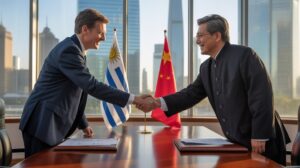
Uruguay’s real estate market is experiencing significant shifts. Foreign investors are attracted to stable regulatory frameworks, dollar-denominated transactions, and low corruption risk.
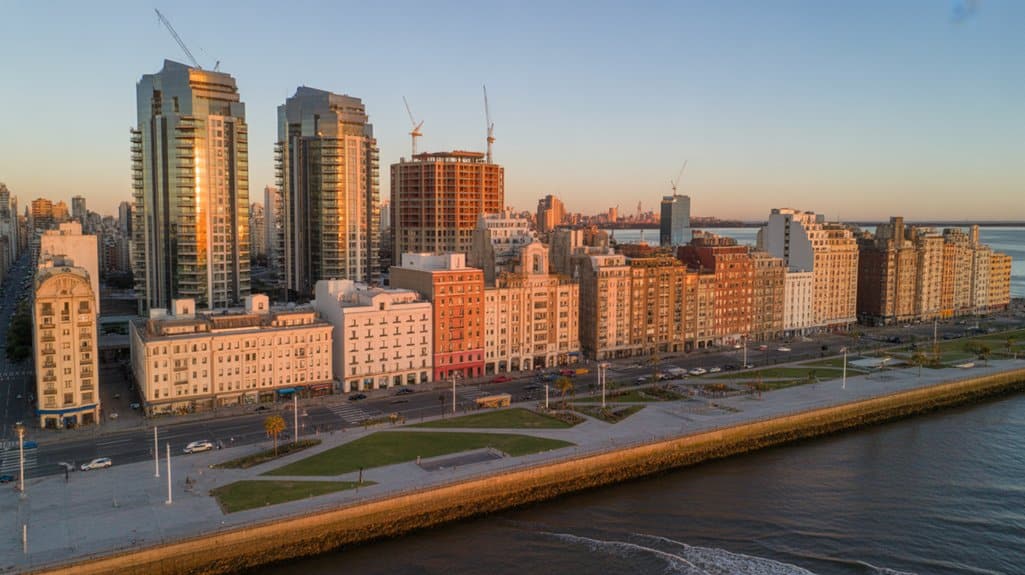
Mixed-use developments are expanding in prominent locations including Punta del Este and Montevideo’s waterfront district. Rental rates are increasing while vacancy rates decline rapidly. Sustainability considerations are becoming a primary driver in project development and investment decisions.
Key Takeaways
- Foreign investment in Uruguayan real estate reached USD 3.42 billion in 2023, driven by currency controls in neighboring countries and political stability.
- Mixed-use developments in Punta del Este and Montevideo integrate residential, commercial, and tourism spaces, characterized by strong rental demand and low vacancy rates.
- Foreign buyers possess identical ownership rights to citizens without residency requirements, enabling straightforward property acquisitions through power-of-attorney and notarized documentation.
- USD 500 million in infrastructure investments modernizing transport and port facilities directly enhance property values in both residential and commercial sectors.
- Sustainability initiatives encompassing green design, smart-city technology, and eco-friendly layouts distinguish Uruguayan developments while minimizing environmental impact.
Foreign Investment Reshapes Uruguay’s Real Estate Landscape
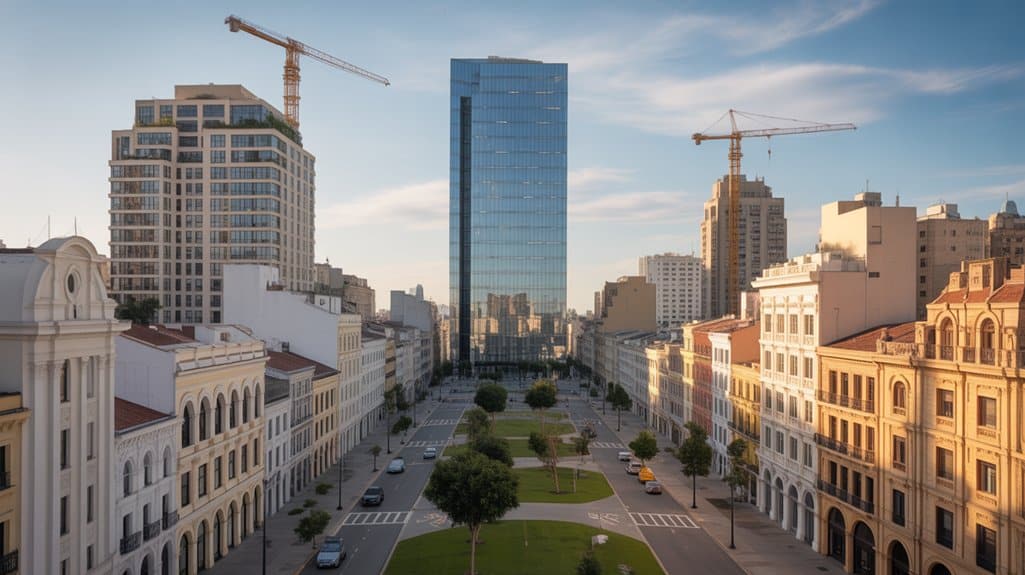
Uruguay’s property market is undergoing fundamental transformation. Regional buyers from Argentina and Brazil have been displaced by European and North American investors seeking stable, transparent real estate opportunities. This shift results from deliberate policy choices and market forces that have positioned Uruguay as one of the Americas’ most accessible investment destinations.
Foreign capital inflows demonstrate the market’s appeal. Foreigners accounted for USD 3.42 billion in real estate transactions during 2023. Uruguay’s regulatory framework actively facilitates foreign investment. Investors receive identical ownership rights as citizens without residency requirements, can complete transactions through power of attorney with notarized documents, and face no restrictions on property types, farmland, coastal property, and urban developments remain unrestricted. The transparent title verification process conducted by escribanos reviewing 30-year property records ensures transaction security and investor confidence.
Economic and geopolitical conditions drove this reorientation. Currency controls in Argentina and Brazil redirected capital flows. Uruguay’s political stability, conservative banking sector, and established anti-corruption measures offered the security international investors required. Coastal towns including Punta del Este and Colonia del Sacramento attract seasonal tourism investors. Montevideo appeals to those prioritizing rental income and urban development potential.
Government strategy deliberately encourages foreign participation. Tax incentives for foreign residents, simplified purchase procedures, and 11-year exemptions on foreign investment income reflect active competition for international capital. The resulting market operates with atypical transparency and efficiency for Latin America. Mixed-use developments, residential projects, and commercial ventures increasingly involve foreign investors alongside local participants.
Foreign Capital Drives Mixed-Use Projects
International investors are reshaping Uruguay’s real estate market through strategic acquisitions of mixed-use developments, leveraging favorable regulations and stable investment conditions.
Foreign buyers from North America and neighboring countries enjoy unrestricted property ownership rights equivalent to those of local citizens. Transactions conducted in US dollars eliminate currency risk and streamline cross-border deals, removing traditional barriers to international investment.
The government’s pro-investment framework and minimal property taxes have accelerated capital inflows into coastal regions. Punta del Este and José Ignacio have become focal points for mixed-use projects, with developers responding to demand for adaptable spaces combining residential, commercial, and hospitality functions.
Crystal View Residences in Punta del Este exemplifies this trend, earning International Property Awards recognition for its mixed-use development design. Such complexes integrate offices with complementary services, addressing evolving workplace requirements within established urban environments.
Montevideo’s waterfront and revitalized neighborhoods attract premium mixed-use investments that command higher rents with consistently low vacancy rates. Downtown repositioning initiatives converting historical buildings into coworking spaces and boutiques demonstrate renewed commercial appeal. Climate adaptation plans and territorial planning frameworks have reinforced sustainable urban development as a strategic priority, attracting environmentally conscious investors.
Infrastructure investments totaling billions support this expansion. A $500 million Inter-American Development Bank credit modernizes metropolitan transportation, while railway projects and port terminal extensions enhance accessibility to emerging developments. These improvements directly increase property values across residential and commercial segments.
Regulatory certainty, infrastructure development, and foreign capital availability have established Uruguay as a preferred destination for mixed-use real estate investment in South America.
Sustainability Defines Future Growth
Forward-thinking developers across Uruguay are building with environmental responsibility in mind. Green design and passive solar techniques reduce energy consumption naturally. Buildings capture sunlight and heat without mechanical systems, lowering electricity costs and emissions.
Mixed-use developments integrate residential, commercial, and office spaces. This layout encourages walking over driving, decreasing harmful emissions. Green roofs collect rainwater for gardens and landscaping purposes. These integrated developments generate synergistic effects that maximize sustainability outcomes beyond what individual components could achieve alone.
Smart city projects such as “+Colonia” combine technology with nature-focused planning. Water recycling systems protect local ecosystems while supporting building vegetation. Native forests remain preserved as developments protect natural areas.
Sustainable construction practices create healthier neighborhoods that attract residents and investors alike.
References
- https://latincarib.com/uruguay/
- https://www.laciteuruguay.com/news/how-to-buy-property-in-uruguay-and-earn-rental-income-2025
- https://www.jarniascyril.com/international-real-estate/invest-in-real-estate-uruguay-market-guide/real-estate-financing-uruguay-foreigners/
- https://www.realestate-in-uruguay.com/blog/buying-property-in-uruguay-in-2024/
- https://www.van-bevern.com/en/about-uruguay/buying-property-in-uruguay/
- https://www.lloydsbanktrade.com/en/market-potential/uruguay/investment
- https://www.ibanet.org/document?id=FDI-Guide-Uruguay-2022
- https://erinboissonaries.com/blog/why-invest-in-uruguay
- https://www.henleyglobal.com/residence-investment/uruguay
- https://www.jarniascyril.com/international-real-estate/invest-in-real-estate-uruguay-market-guide/urban-development-projects-uruguay/