
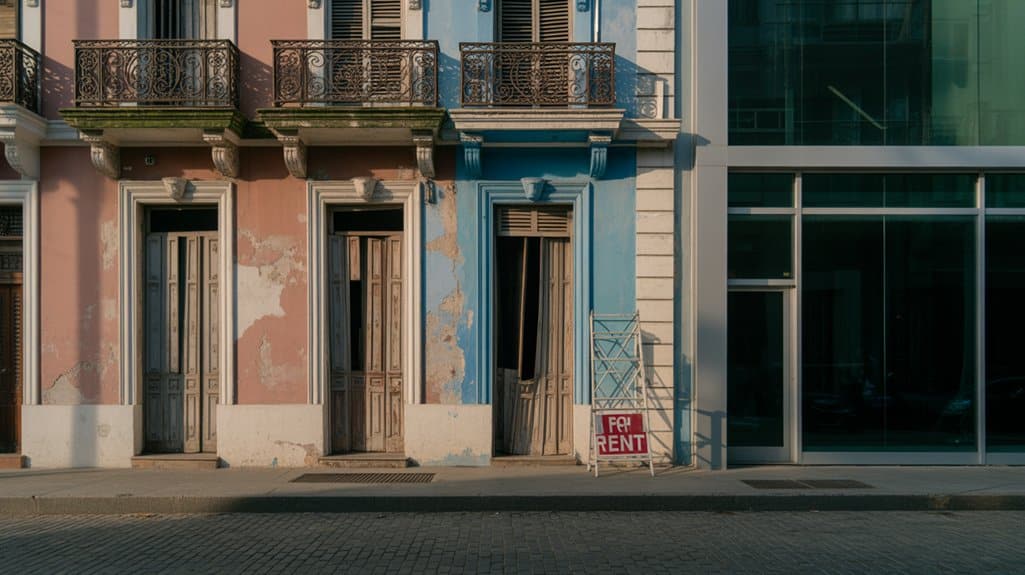
Uruguay’s housing market carries a tension that anyone working in it for long enough learns to read quickly. More than 323,000 homes sit vacant across the country, close to 20% of total housing stock, yet renters hunting for space in Montevideo’s prime coastal zones are navigating vacancy rates as low as 3% to 5%.
That gap doesn’t happen by accident. Owners are making a deliberate calculation, holding units off the market and banking on appreciation rather than rental income, which quietly squeezes supply exactly where demand is most concentrated.
What this creates on the ground is a competitive environment where renters are effectively bidding against patient capital. Gentrification pressures build not just from new development or rising incomes, but from the strategic absence of available stock. The families and professionals looking to rent in Pocitos, Punta Carretas, or Carrasco aren’t losing out to other renters alone, they’re losing out to locked doors.
Understanding what’s feeding this imbalance, and what’s starting to push back against it, matters for anyone navigating the market right now, whether buying, selling, or renting. The fractures run deeper than headline numbers suggest, and they’re worth examining carefully before making any move.
Key Takeaways
Uruguay’s housing market tells a frustrating story: roughly 20% of the national housing stock sits empty while Montevideo’s rental vacancy hovers between 3% and 5%. That gap isn’t accidental. In coastal neighborhoods like Pocitos, Punta Carretas, and Carrasco, many owners intentionally leave units unoccupied, betting on long-term capital appreciation rather than rental income. It’s a strategy that works well for patient investors but creates real hardship for renters competing over a shrinking pool of available properties.
The pressure on residential supply doesn’t stop there. Short-term rental platforms have quietly reshaped neighborhoods like Ciudad Vieja, Pocitos, and Cordón, pulling units away from long-term leases and tightening availability even further. When vacancy rates in premium areas compress below 5%, the effects ripple outward , rents climb, longtime residents get priced out, and the character of these neighborhoods shifts in ways that are difficult to reverse.
What this means practically is that anyone searching for a long-term rental in Montevideo’s desirable zones is working against market dynamics that favor speculation over occupancy. Understanding which neighborhoods are most affected, and timing your search accordingly, makes a genuine difference in what you’ll find and what you’ll pay.
Why Uruguay Has Empty Homes and Rising Rents
Uruguay’s housing market carries a contradiction that anyone working in this industry learns to explain quickly: over 323,000 homes sit vacant according to the 2023 census, representing nearly 20% of total stock, yet rental vacancy in Montevideo hovers between 3% and 5%. This tight availability helps explain why gross rental yields across the city average around 4% to 6% depending on the neighborhood. Those two numbers tell very different stories.
The empty units are not what most people picture. A large share are seasonal properties in Punta del Este, used a few weeks per year and deliberately kept off the long-term rental market. Others are mid-renovation, caught between one use and the next. Many belong to owners holding out for capital appreciation rather than monthly income, which is a perfectly rational individual decision that creates a collective problem. None of those properties are going to help a working family looking for an apartment in the capital.
What the market actually needs is some mechanism to redirect that idle stock toward genuine housing demand, whether through rental subsidies, expanded public housing, or incentives that make long-term leasing more attractive to reluctant landlords. Right now, that gap between theoretical supply and practical availability is doing real damage, pushing rents upward and pricing out ordinary residents who have nowhere else to go. Understanding this distinction, vacant versus unavailable, is essential before drawing any conclusions about where prices are headed or what solutions could realistically move the needle.
Where Rents Are Climbing Fastest in Montevideo
Pressure shows up earliest in the places you’d expect , along the rambla and in the neighborhoods that have always drawn the highest demand. Carrasco, Punta Carretas, and Pocitos continue to set the ceiling, with two-bedroom units running between UYU 45,000 and 70,000 per month. Carrasco is posting the sharpest growth among those premium barrios, somewhere in the 3.4% to 3.6% range, and Puerto Buceo has already pushed past UYU 73,000. Coastal proximity still commands a real premium, and that gap isn’t closing anytime soon.
The dynamic shifts when you move inland, though the urgency doesn’t. Cordón, Centro, and Tres Cruces are leasing at a pace that surprises even seasoned landlords, with Cordón studios turning over in roughly 11 days. University demand near Cordón and Parque Rodó is driving absorption rates 20% to 30% above the city average, which means good units simply don’t wait. The price points are lower than the coast, but the competition is just as real , sometimes more so.
Taken together, renters are getting squeezed from both ends. Citywide vacancy sits near 6%, but that figure drops to just 3% to 4% in prime coastal pockets while climbing to 8% to 10% in less central areas, underscoring just how uneven the pressure really is. Whether you’re weighing a coastal address or a well-located unit near the university corridor, acting on solid information quickly is what separates a good outcome from a frustrating one in this market.
Why Investors Are Chasing Montevideo Rental Yields
Montevideo’s rental market is genuinely compelling right now, and the numbers back that up. Central barrios like Centro and Cordón consistently outperform expectations, largely because acquisition costs remain reasonable while rental demand stays strong. That balance between price and return is harder to find than most people realize, and it’s exactly what serious investors should be tracking.
Carrasco and Punta Carretas tell a different story. Premium pricing in those neighborhoods compresses baseline yields, so buyers who go that route typically rely on short-term rental strategies to make the figures work. Tourists and business travelers keep occupancy healthy enough to justify the entry cost, but it requires more active management than a long-term lease arrangement.
What’s worth watching across the city is vacancy. Supply is tight, and that scarcity is pushing some buyers toward a speculative approach, holding units and banking on continued appreciation in both rents and resale values. It’s a reasonable thesis given current conditions, though it does carry more risk than a straightforward income-focused strategy. Even amid this uncertainty, smaller units continue to outperform larger ones on yield, thanks to a broader tenant pool and lower purchase price relative to rent. Understanding which approach fits your goals before committing capital makes all the difference here.
Central Neighborhood Yield Advantage
The numbers tell a clear story, and after years of watching Montevideo’s market move, I’d encourage anyone serious about yield to look at what the center keeps delivering. Centro, Cordón, Tres Cruces, La Blanqueada, Ciudad Vieja, and Aguada have held up consistently well , entry prices remained accessible while the tenant pool, students, young professionals, workers starting out , stayed deep and reliable. INGAR’s median gross yield sits at 6.6%, with Centro tracking close to 6.4%, and that’s not an accident. It reflects genuine demand meeting realistic pricing.
| Neighborhood | Gross Yield | Occupancy/Notes |
|---|---|---|
| Centro | 6.4%, 7.6% | 94%, 95% occupancy |
| Cordón/Aguada | ~5%, 7% | Strong demand |
| Punta Carretas | 4.5%, 5.5% | Yield compression factors evident |
| Carrasco | 3.5%, 4.5% | Price outpaces rent |
Coastal neighborhoods like Carrasco and Punta Carretas attract buyers for good reasons , lifestyle, prestige, long-term capital appreciation , but those qualities come with compressed yields. The purchase price simply runs ahead of what the rental market will support. Adding to this dynamic, Punta Carretas maintains low supply levels, which keeps prices elevated even as rental yields compress. For an investor prioritizing monthly return over a prestigious address, the math points firmly inland, where occupancy rates stay high and the numbers work in your favor.
Coastal Short-Term Rental Returns
Coastal neighborhoods like Pocitos, Punta Carretas, Buceo, and Carrasco tend to surprise investors who only look at gross yields on paper. Once you factor in nightly rates running between $55 and $105, along with solid occupancy management, annual returns climb 20% to 40% above what a standard long-term lease would generate during peak periods. Net yields settle in the 3.8% to 5.0% range, which clears the 3% to 4% ceiling that long-term contracts typically hit. This pattern is consistent with 2026 market data drawn from analysis of over 2,400 properties across Uruguay.
That one-to-two-point difference carries real weight when acquisition costs keep rising, and it’s worth understanding why the income here holds up year-round rather than spiking in summer and fading the rest of the time. Demand in these neighborhoods is driven as much by business travelers and extended-stay guests as it is by beach tourism, which pushes occupancy consistently near 66% to 67%. For investors used to the volatility of resort markets, that steadiness is one of the more underrated advantages of buying along Montevideo’s coastline.
Vacancy Fuels Speculative Holding
Montevideo’s numbers tell a story worth paying attention to. Close to one in ten dwellings sat empty in 2023, and nationally that figure climbs to 19.5% , a striking contrast to what renters actually encounter when they start searching. In neighborhoods like Pocitos, Punta Carretas, and Carrasco, vacancy drops below 5%, meaning the overall emptiness isn’t distributed where demand lives.
What you’re looking at is economic vacancy in action. Owners in prime barrios aren’t leaving units idle by accident , they’re making a calculated decision to hold. When appreciation alone covers your costs, the urgency to place a tenant simply isn’t there. Gross yields hovering around 5, 6% are respectable, and in peripheral zones they can push toward 13%, but rental income isn’t always the point. In the neighborhoods renters want most, price growth has consistently rewarded patience over occupancy, so many owners wait it out.
For anyone trying to rent in those areas, that dynamic creates real friction. You’re not just competing with other renters , you’re up against landlords who genuinely don’t need your monthly payment right now. Knowing that helps frame your search more realistically and points toward where the actual availability sits across the city.
How Vacant Properties Fuel Gentrification in Prime Areas
Vacant apartments in Pocitos and Punta Carretas rarely sit empty because nobody wants them. Owners often make a deliberate choice to hold off, banking on appreciation rather than rental income , and that patience comes at a cost for the market. With vacancy rates already sitting between 3% and 5% in these neighborhoods, every unit pulled from long-term circulation puts real pressure on prospective tenants.
Short-term rental platforms are sharpening that pressure. When owners run the numbers and see stronger returns from tourists and temporary visitors than from traditional leases, the math tends to win. The result is a residential supply that keeps shrinking in the districts where stable, affordable housing is needed most.
If you’re investing in these areas, it’s worth thinking beyond short-term gains. Uruguay’s rental regulations and the steady demand from local residents and expats alike make long-term leasing a far more resilient strategy than many people realize. A well-priced unit in Pocitos or Punta Carretas rents quickly and holds its tenant , that’s consistent income with far less turnover than the vacation rental model typically delivers.
Speculative Vacancy Holding Patterns
Uruguay’s national vacancy rate of 19.5% tells only part of the story. The neighborhoods that matter most , Pocitos, Punta Carretas, and central Montevideo , are playing by an entirely different set of rules. Owners in these areas are holding units empty on purpose, timing the market with the expectation that appreciation will outpace whatever rental income they might collect. It’s a calculated position, not an oversight.
Prime coastal zones sit at vacancy rates between 3% and 4%, which tells you just how tight the actual supply is for people who want to live there. At those levels, owners know they hold real leverage. Selling at the right moment often delivers stronger returns than years of rental income, and without the friction of tenant relationships, many simply choose to wait. Real estate here functions as a wealth-storage vehicle as much as it does housing , a place to park capital in an asset that historically holds its value in Uruguay’s relatively stable economy.
The downstream effect is predictable. Residents competing for a shrinking pool of available homes face a market that rewards patience in owners and punishes urgency in buyers and renters alike. Understanding that dynamic is essential before entering any negotiation in these neighborhoods, because the pricing pressure you’re feeling isn’t accidental , it’s structural.
Short-Term Rentals Displace Residents
Short-term rentals have quietly reshaped how landlords think about their properties , and not just through patience. Many owners skip long-term leases entirely, letting platforms like Airbnb do the heavy lifting. In Montevideo, that shift is very real: thousands of active listings, solid occupancy rates, and nightly returns that routinely outpace what a traditional tenant would pay monthly.
The neighborhoods feeling this most are the ones you’d expect , Ciudad Vieja, Pocitos, Punta Carretas, and Cordón. These are the areas where good units move fast, vacancy sits below 5%, and long-term residents find themselves competing with tourist budgets they simply can’t match.
| Neighborhood | Vacancy Pressure |
|---|---|
| Pocitos | Below 5%, tourist-heavy |
| Punta Carretas | Below 5%, high demand |
| Cordón | Tight, centrally located |
| Ciudad Vieja | Competitive, investor-driven |
That kind of pressure doesn’t stay abstract for long , it shows up in families relocating further from the city center, in younger renters priced out of established barrios, and in the slow erosion of what makes these neighborhoods worth living in. Rental reforms could change the calculus here, but without them, the trend points in one direction: more short-stay inventory, less stable housing, and neighborhoods that increasingly serve visitors over residents.
Uruguay’s Plan to Seize Debt-Idle Properties
Uruguay’s housing market has been showing signs of strain for some time now, and this proposed legislation is worth understanding carefully , especially if you own property or are thinking about investing here.
The Senate passed the bill unanimously, which tells you something about the political will behind it. The measure targets properties carrying unpaid fiscal or municipal debt, with the state able to offset that debt against any compensation paid to the owner. That’s a meaningful detail, because it means the process isn’t simply confiscation , there’s a financial mechanism built in.
What stands out from a property perspective is the urgency clause. Authorities can pursue faster possession timelines for buildings considered unsafe or in serious disrepair. Uruguay has always taken urban planning seriously, and with over 97,000 idle cadasters on the books, the government is clearly signaling that sitting on deteriorating assets carries real risk now.
The procedural protections matter here too. Technical reports are required before any intervention moves forward, and provisional deposits are part of the process, giving owners a degree of procedural fairness. The Chamber of Deputies still needs to approve the bill, so there’s time to follow how those safeguards hold up in debate.
For anyone with property in Uruguay , particularly older buildings in secondary locations that may have accumulated municipal debt , this is the moment to review your obligations and get your documentation current. The bill is framed around urban decay, not a broad challenge to private ownership, but staying ahead of compliance is always the smarter position.
Cooperative Housing as Uruguay’s Affordability Alternative
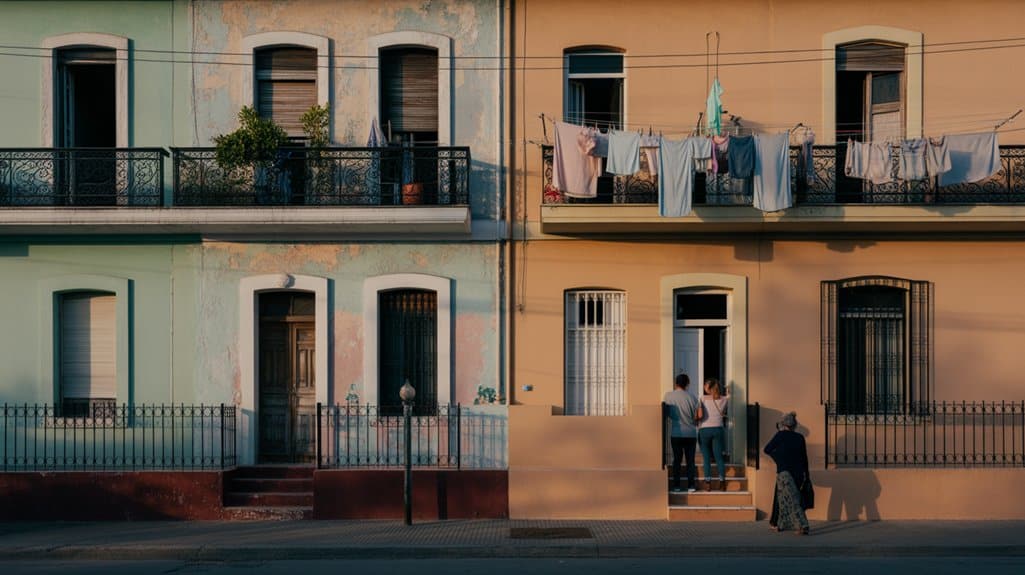
Few housing models hold up for fifty-plus years, but Uruguay’s cooperative system has done exactly that , and frankly, it’s worth understanding if you’re navigating today’s market. Legally recognized since 1968, the system now spans more than 2,000 cooperatives and 38,000 families, accounting for 5.2% of national housing stock. That’s not a footnote; that’s a meaningful slice of how Uruguayans actually live.
What makes it work day-to-day is the financial structure. Members pay predictable monthly fees rather than chasing a market that moves against them. There’s no private title involved , instead, residents hold an inheritable right of use, which gives real personal security without sacrificing the collective framework that keeps costs in check. Decisions stay with the members themselves, not with distant developers or landlords whose interests rarely align with the people living in the building.
The numbers behind construction are where things get genuinely interesting. A combination of sweat equity and state-backed credit covering up to 90% of costs brings construction expenses down by 30 to 50%. For families feeling the pressure of rising rents in Montevideo or any of the interior cities, that kind of reduction changes the entire conversation about what’s affordable and what’s out of reach.
This isn’t a subsidized charity model , it’s a structural alternative to speculative housing. If you’re advising clients who feel locked out of traditional ownership, cooperative housing deserves a serious place in that conversation.
References
- https://www.globalpropertyguide.com/latin-america/uruguay/price-history
- https://thelatinvestor.com/blogs/news/montevideo-rents
- https://thelatinvestor.com/blogs/news/uruguay-buy-rent-out
- https://www.pdelc.com.uy/en/news/notary/real-estate-review-and-outlook/
- https://www.internationalre.org/guides/montevideo-rental-yield-analysis-2026.html
- https://ladiaria.com.uy/opinion/articulo/2025/12/la-vivienda-como-politica-de-suelo-hacia-una-gestion-activa-de-la-vacancia-urbana/
- https://ladiaria.com.uy/economia/articulo/2025/5/el-drama-de-las-viviendas-vacias-una-economia-ociosa-que-podria-dar-solucion-a-las-personas-en-situacion-de-calle/
- https://www.reddit.com/r/uruguay/comments/1ixtq8k/por_que_1_de_cada_5_casas_en_uruguay_esta/
- https://www.globalpropertyguide.com/latin-america/uruguay/rent-price-trends
- https://www.riotimesonline.com/cost-of-living-montevideo-expats-2026/