
Uruguay’s success in quality of life rankings tends to catch individuals off guard, which is somewhat puzzling given the country’s consistent track record in education, healthcare access, and social stability. While neighboring nations struggle with inequality and infrastructure gaps, this small nation of 3.5 million manages universal healthcare coverage, a 98% literacy rate, and remarkably low corruption levels. The question isn’t whether Uruguay excels, it’s how such a modest economy pulled it off when wealthier countries couldn’t.
Uruguay Tops South America’s Quality of Life Rankings
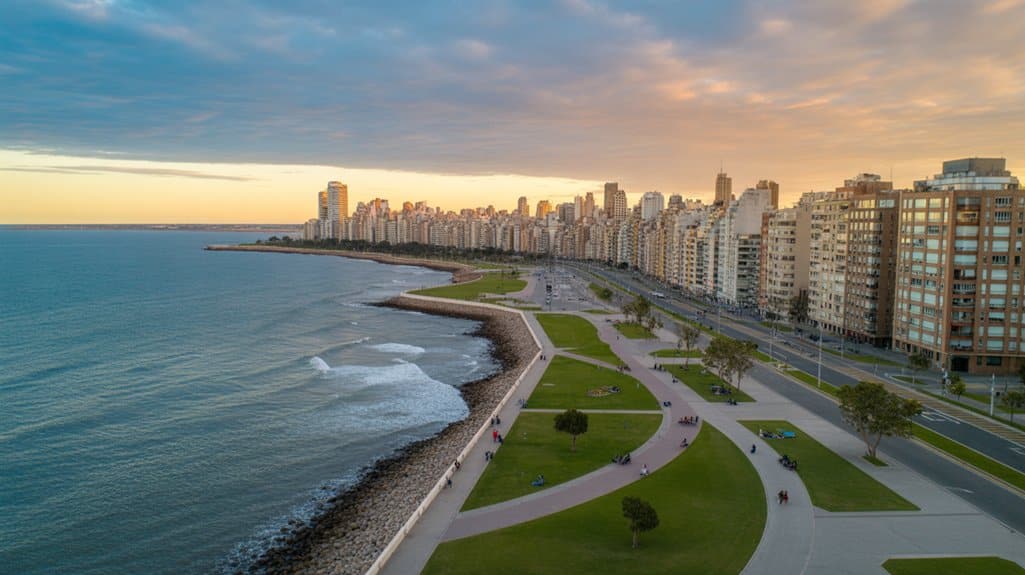
While most individuals assume that economic powerhouses naturally provide the best quality of life, Uruguay has quietly claimed the top spot in South America without the massive GDP or population size that typically defines regional leaders. The country achieves this through Uruguay culture that values social harmony over competition, quality cuisine sourced from sustainable practices, and natural beauty accessible through urban parks and outdoor activities. Local festivals celebrate vibrant arts without commercialization, creating authentic community experiences. This balanced approach, prioritizing freedom and well-being over pure economic metrics, demonstrates that smaller nations can outperform larger neighbors through thoughtful policy and cultural cohesion.
Education, Healthcare, and Equality as National Priorities
Because Uruguay recognized early on that social stability cannot exist without educated, healthy individuals who feel the system works for them, the government structured its core priorities around education, healthcare, and equality rather than chasing flashier economic indicators that look good in international reports but do little for actual individuals.
The country demonstrates this commitment through:
- Substantial education funding that reaches rural communities, not just urban centers
- Universal healthcare access without the bankrupting costs common elsewhere
- Policies ensuring women and minorities participate fully in economic life
- Environmental protections incorporated into development planning
- Social security systems covering more than political talking points
Safety and Security in Montevideo and Beyond
Social investments mean little if individuals cannot walk home at night without looking over their shoulders, which explains why Uruguay’s emphasis on safety ranks alongside its healthcare and education commitments rather than appearing as an afterthought tacked onto policy documents. Montevideo distinguishes itself as one of South America’s safest cities, a designation supported by strong infrastructure, environmental standards that actually get enforced, and high levels of civil liberties that encourage community engagement. The focus extends beyond capital borders through neighborhood safety initiatives that recognize security as foundational to freedom, not contradictory to it.
How Uruguay Compares to Regional Neighbors
When the 2025 Quality of Life rankings for South America placed Uruguay at the top, followed by Ecuador, Argentina, Brazil, Colombia, and Chile in descending order, the results challenged the comfortable assumption that economic powerhouses or countries with larger populations automatically translate their advantages into better living conditions for actual individuals.
Uruguay’s approach demonstrates that cultural diversity combined with steady economic growth matters more than sheer size:
- Balanced development trumps rapid expansion
- Healthcare accessibility exceeds regional standards
- Educational investment produces measurable outcomes
- Environmental commitments remain non-negotiable
- Social equality policies actually get implemented
The smaller nation simply outperforms its larger neighbors consistently.
Sustainable Development and Environmental Excellence
While most countries treat environmental commitments as aspirational goals to be discussed at international summits and then quietly shelved when economic pressures mount, Uruguay actually restructured its entire energy grid to run on renewables, reaching over 95% clean energy production by the mid-2020s without destroying its economy or requiring massive foreign loans to accomplish it. These sustainable practices demonstrate what happens when environmental policies receive genuine political backing rather than performative lip service. The country invested heavily in wind and solar infrastructure, proving that transitioning to clean energy doesn’t require choosing between economic stability and environmental responsibility, though this apparently remains a controversial concept elsewhere.
Political Stability and Strong Social Security Systems
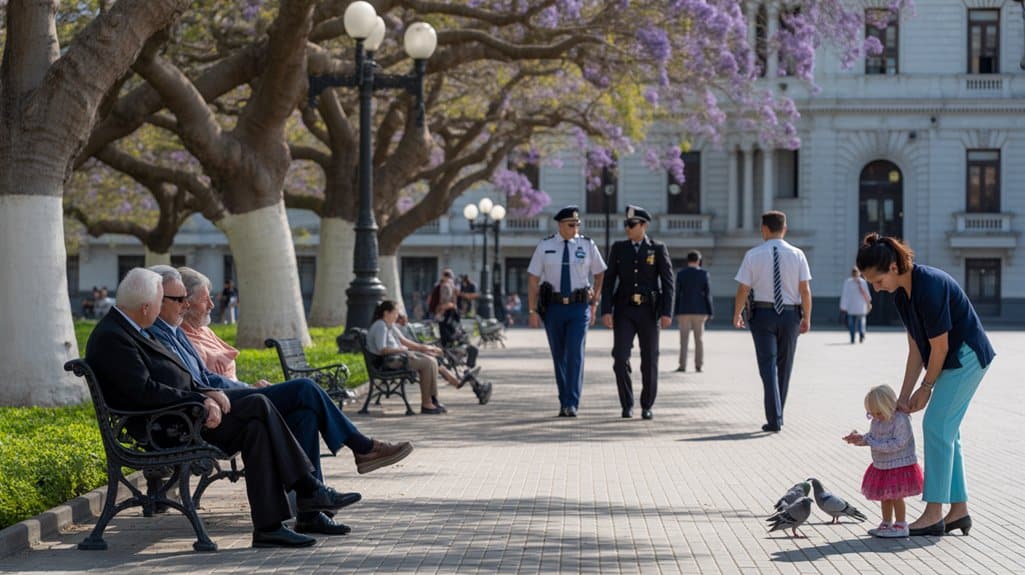
Unlike nations that experience dramatic political swings every election cycle where entire bureaucracies get purged and replaced with loyalists who then spend their first year in office figuring out where the bathrooms are, Uruguay maintains a functional democracy where power transfers peacefully between parties without dismantling the institutional knowledge that actually keeps a government running.
This stability enables consistent social policies and economic stability:
- Comprehensive pension systems remain intact across administrations
- Healthcare access continues regardless of which party holds power
- Educational funding maintains predictable trajectories
- Labor protections survive political transitions
- Infrastructure projects actually get completed
Citizens enjoy actual security, not just campaign promises.
Global Recognition for Outstanding Living Standards
Uruguay’s combination of political stability and consistent social programs has attracted the attention of international organizations that actually measure quality of life instead of just counting GDP and pretending that means anything about how regular individuals experience their daily existence. The country ranks among the world’s most admired nations, which makes sense when you consider its commitment to global health standards, accessible healthcare systems, and cultural richness that stems from genuine social inclusion rather than performative diversity initiatives. Environmental sustainability and clean energy investments demonstrate long-term thinking, creating living conditions that prioritize human flourishing over short-term economic metrics.
Small Nation, Big Impact: Redefining Success in South America
Despite having a population smaller than many individual cities in neighboring Brazil, Uruguay manages to outperform nations with vastly larger economies and resource bases, which suggests that the conventional wisdom about needing massive scale to achieve high living standards might be missing something fundamental about how societies actually function.
Uruguay’s approach demonstrates that social progress and cultural richness don’t require massive populations:
- Prioritizes quality over quantity in policy implementation
- Maintains strong democratic institutions despite limited resources
- Invests heavily in education and healthcare accessibility
- Adopts sustainable practices without economic compromise
- Focuses on citizen well-being rather than GDP growth alone
Small doesn’t mean insignificant, apparently.