

Renting in Uruguay has gotten noticeably more expensive over the past year. The Nationwide Rental Price Index rose 4.97% interannually, which means it’s climbing faster than general inflation , and that gap matters more than it might seem at first glance.
What we’re seeing on the ground reflects exactly that. Furnished apartments, especially in Montevideo’s Pocitos, Punta Carretas, and Cordón neighborhoods, are commanding significantly higher prices as demand from both locals and foreign residents continues to grow.
Meanwhile, the stock of genuinely affordable unfurnished units keeps tightening, leaving renters with fewer real choices in their budget range.
A few things are pushing this. Seasonal demand from Punta del Este and coastal areas spills into the broader market. Foreign investment , particularly from Argentine buyers , keeps pulling properties toward short-term rentals or sale, reducing long-term rental supply.
Construction costs have also risen sharply, which discourages new development and limits any relief on the supply side.
For anyone currently renting or planning to, locking in a longer contract now, before the next adjustment cycle, is worth serious consideration.
Uruguay’s rental agreements typically index to inflation through the INE, but the starting price you negotiate matters enormously. The difference between signing today versus six months from now could represent a meaningful cost over the life of a two or three-year lease.
The market is moving, and understanding which direction it’s heading , before it arrives , is what makes the difference.
Key Takeaways
Uruguay’s rental price index has climbed 4.97% interannually, a figure worth paying close attention to if you’re navigating the market right now , whether you’re a tenant, landlord, or investor. This growth is running ahead of general inflation, which tells us something important: the housing market is under real structural pressure, and that’s not shifting anytime soon.
Montevideo is driving much of this momentum. In neighborhoods like Pocitos and Punta Carretas, annual rent increases are surpassing 14%, which reflects just how competitive demand has become in premium locations. These areas have always attracted strong interest, but the pace we’re seeing now is notable even by historical standards.
The pressure isn’t confined to the capital. Cities like Salto and Rivera are recording increases of around 5.4%, which shows this is a nationwide dynamic rather than a Montevideo-specific story. That said, the national average of 4.97% does require some context , across the 100 largest cities, the median increase sits at just 1.73%, meaning the higher figures are being pulled up by specific, high-demand markets.
What’s sustaining all of this? Construction costs remain elevated, and new housing stock simply isn’t entering the market fast enough to meet demand. Until that supply side catches up, rent levels will keep reflecting the imbalance. If you’re making decisions in this environment, understanding where you sit within these figures , not just the headline number , makes all the difference.
Why German Asking Rents Are Rising Faster Again
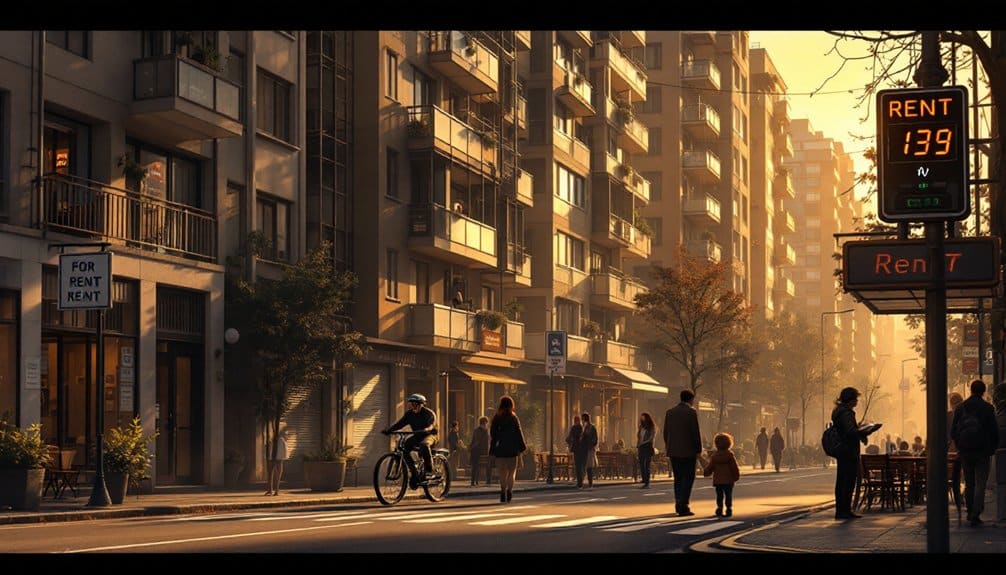
Rents across Uruguay are climbing again , and faster than most people anticipated. In 2025, asking rents rose 4.5% compared to the previous year, well above general inflation. If you’re thinking about renting or investing right now, it’s worth understanding what’s actually driving this.
Two forces are shaping the market. Migration pressure has picked up considerably, with more people , including regional arrivals and skilled professionals , moving into Montevideo and other urban centers where available housing is already limited. More demand against a constrained supply pushes prices up. It’s straightforward, but the impact is real.
Construction costs tell the other side of the story. Building has slowed dramatically because materials, labor, and financing have all become more expensive. With fewer new units entering the market, existing stock has to absorb demand it simply wasn’t built to handle.
Existing apartments in major cities like Montevideo and Punta del Este are feeling this most acutely , up 6.1% in asking rents. These aren’t temporary fluctuations. The structural pressures behind them are persistent, which means anyone waiting for the market to ease before making a move may find themselves waiting a long time.
Whether you’re a tenant or an investor, the smart play right now is to act with good information rather than hope the situation resolves itself. Investors are increasingly drawn to one- and two-bedroom city apartments, where rental yields of 5-6% can make bank loan repayments largely self-financing.
Are German Rents Actually Beating Inflation?
German rents are an interesting benchmark to keep in mind when thinking about Uruguay’s market, and the comparison is worth unpacking.
In Q2 2025, German asking rents rose 3.4% nominally year on year. That figure sounds solid on paper, but once inflation is factored in, real growth landed at just 1.3%. Quarter on quarter, rents actually dipped 0.2% in real terms. Germany, with its highly regulated rental framework and dense urban markets, still couldn’t fully outpace consumer price growth.
Uruguay operates differently, of course. Our market has historically been indexed to inflation through UI-based contracts, which means nominal gains can look impressive while real purchasing power stays roughly flat. That’s a dynamic worth watching closely before interpreting a rent increase as genuine growth.
What this tells us is that a 3% to 4% nominal gain , whether in Montevideo, Punta del Este, or anywhere in between , doesn’t automatically translate into stronger returns. The question any serious property owner or investor should be asking is what that figure looks like after inflation does its work. Across Germany’s eight largest cities, average rents ranged from €10.10 per square meter in Leipzig to €22.82 in Munich, illustrating how dramatically location shapes the real value behind any headline number.
Nominal numbers tell one side of the story. Real growth tells you whether your investment is actually moving forward.
Which Cities Feel the Rent Surge Most?
Rents in Uruguay have been climbing steadily, and some cities are feeling that pressure far more than others. Montevideo continues to lead the surge, with certain neighborhoods like Pocitos and Punta Carretas seeing annual increases that catch even seasoned renters off guard. Punta del Este follows closely, though its fluctuations tie heavily to seasonal demand and foreign investment, which makes its market behave quite differently from the capital.
What makes Uruguay’s situation worth watching closely is how interior cities like Salto and Rivera are now entering the conversation. Historically overlooked for investment, these cities are attracting attention as remote work reshapes where people choose to live, pushing rents upward in markets that were never built to absorb that kind of demand.
If you are renting or considering a move, paying attention to these shifts early gives you a real advantage. The gap between signing a lease today versus six months from now can be significant in areas experiencing this kind of growth. Uruguay’s rental market rewards those who act with good information rather than those who wait for certainty. This mirrors trends seen in the United States, where San Francisco led all major cities with a striking 13.94% year-over-year rent increase, bringing average rents to $3,830 in 2026.
Urban Rent Hotspots
Montevideo and other cities in the interior are seeing rent increases that are worth understanding before making any decisions. Montevideo tops the list with increases that, in some neighborhoods such as Pocitos and Punta Carretas, exceed 14% year-over-year, rising from average monthly rents of $35,000 to nearly $40,000 pesos for two-bedroom apartments. For any budget, that’s a considerable jump.
The differences between cities are becoming increasingly pronounced. Inland cities such as Punta del Este and Colonia del Sacramento are seeing increases of 6.5%, while Salto and Rivera show more moderate increases of 5.4%. This clearly reflects how affordability varies greatly depending on the region of the country.
Uruguay’s most expensive markets are concentrated along the southern coast and in the metropolitan area. Montevideo, Punta del Este, Colonia del Sacramento, Maldonado, and Canelones rank among the highest-value markets, with sustained demand showing no signs of slowing down.
The overall average among the country’s 50 largest cities rose by just 1.73%, meaning that the real pressure is concentrated in a few specific markets. Anyone considering renting or investing should look closely at these figures before signing any contract. Globally, cities like Miami have seen rental increases of nearly $1,000 in just five years, a trend that highlights the cumulative impact of failing to act in a timely manner.
Cities Leading Increases
Montevideo topped all city comparisons in 2026, with a 14% jump from $3,362 to $3,830 per month. For those who rent there, that increase is immediately felt in their monthly budget, especially considering that the capital has the highest demand for rentals in the country.
The pressure on rents wasn’t limited to Montevideo. Cities such as Punta del Este and Colonia del Sacramento saw increases of 6.5%, while Maldonado and Salto rose by 5.4%. Canelones, Rocha, and Rivera followed closely behind, with increases of around 5%, a figure that’s by no means insignificant given the overall market context.
It’s worth putting this into perspective: the average increase among the country’s 100 largest cities was just 1.73%. These cities more than tripled that rate, which warrants attention.
What is notable is that the phenomenon spread across the southern coast, the western coast, the interior, and the border regions. No single region accounts for the trend; tenants in different parts of the country felt the impact. In markets like Uruguay’s, where the historical stability of the real estate sector is often a distinguishing feature, this type of widespread movement is a signal that should not be ignored.
Why Are Record Numbers of Listings Furnished and Fixed-Term?

Something worth paying attention to in Uruguay’s rental market right now is the steady rise of furnished and fixed-term listings, particularly in Montevideo, Punta del Este, and Colonia del Sacramento. Since around 2015, furnished listings have more than tripled nationally, while traditional unfurnished rentals have fallen by roughly 22%. That shift matters more than most renters realize.
A big part of what’s driving this comes down to how landlords are responding to rent regulations. Furnished, short-term contracts sit in a different legal category, and that gives owners more room to set their own prices. In practice, a furnished unit in Pocitos or Carrasco can run nearly double what a comparable unfurnished apartment costs. For anyone budgeting carefully, that gap is significant.
The other side of the equation is demand. Uruguay attracts a growing number of digital nomads, expats, and short-stay professionals, especially since the country’s favorable tax residency rules began drawing international attention. Many of these renters genuinely want furnished options and flexible terms, so landlords are naturally catering to that segment. The problem is that this leaves long-term local renters competing for a shrinking pool of traditional rentals, which pushes effective rents up across the board. Fixed-term contracts also give landlords the flexibility to reclaim properties for personal use or avoid the risks that come with long-term tenancy commitments.
If you’re searching for a standard unfurnished lease, starting early and working with someone who knows the local inventory well is increasingly the difference between finding something solid and settling for less.
Why German Rental Prices Have Beaten Inflation for a Decade
Germany’s rental market tells a story worth paying attention to if you’re renting in Uruguay, especially in Montevideo, where the same pressures are quietly doing their work.
Tight supply and strong tenant protections have shaped Germany’s market into one where rents consistently outpace inflation. Limited new construction keeps available units scarce, and low contract turnover slows any meaningful price correction.
| Factor | Effect | City Example |
|---|---|---|
| Supply constraints | Fewer available units | Berlin, Munich |
| Tenant protections | Low market turnover | Hamburg, Frankfurt |
| Urban migration | Higher sustained demand | Stuttgart, Cologne |
Since 2015, German asking rents have outpaced general inflation by 14%, with Berlin rents sitting nearly 70% higher than a decade ago. That’s not a market spike, it’s a structural shift, and structural shifts don’t reverse quickly.
Uruguay’s rental law offers tenants real protections, much like Germany’s framework does. Those protections are genuinely valuable, but they also reduce unit availability over time, which is exactly what’s happened in places like Pocitos and Punta Carretas. Landlords hesitant to re-enter the market means fewer options for renters, and fewer options push prices up steadily rather than dramatically, making the trend easy to miss until it’s already embedded.
Whether you’re looking to rent or invest here, understanding that dynamic changes how you read the market.
What Rising German Asking Rents Mean for Tenants
When rents rise faster than wages, tenants face real consequences. In Uruguay, that tension is increasingly visible, and it is worth understanding what it actually means for people trying to find a stable place to live.
Roughly one in three renter households in Uruguay is now stretched thin by housing costs. That is a significant share of the population, and the pressure is showing up in predictable ways , people accepting smaller spaces, moving farther from work, or staying in unsuitable housing simply because moving feels too risky financially. In Montevideo, where demand consistently outpaces supply, asking rents have climbed sharply in recent years, making the decision of where to live feel increasingly out of reach for many.
Lower-income renters carry the heaviest burden here. The shortage of genuinely affordable units , particularly in well-connected neighborhoods like Pocitos, Punta Carretas, or Cordón , is unlike anything seen in previous decades. Uruguay has implemented some regulatory tools around rent indexing, but these measures have not fully closed the gap between what landlords are asking and what many tenants can realistically afford.
Knowing your rights as a tenant matters enormously in this environment. Understanding how lease adjustments work under current Uruguayan law, and timing your search carefully, can make a meaningful difference. The market rewards those who come prepared.
References
- https://www.kielinstitut.de/fileadmin/Dateiverwaltung/IfW-Publications/fis-import/e521f10a-7baa-4543-9a9d-57a1b8a330a4-GREIX_Rental_Price_Index_update_doc_25q4_en1.pdf
- https://www.cotality.com/press-releases/national-rent-growth-cools-but-pressure-remains-on-renters
- https://fred.stlouisfed.org/series/CP041MI15ALM086NEST
- https://www.bls.gov/pir/new-tenant-rent.htm
- https://constructioncoverage.com/research/cities-with-the-largest-rent-increases-decreases
- https://fred.stlouisfed.org/series/CUUR0000SEHA
- https://www.hud.govt.nz/news/annual-rental-price-index-update
- https://www.abs.gov.au/statistics/detailed-methodology-information/information-papers/new-insights-rental-market
- https://www.apartmentlist.com/research/national-rent-data
- https://www.consumeraffairs.com/moving/state-of-rent-prices-in-america.html