
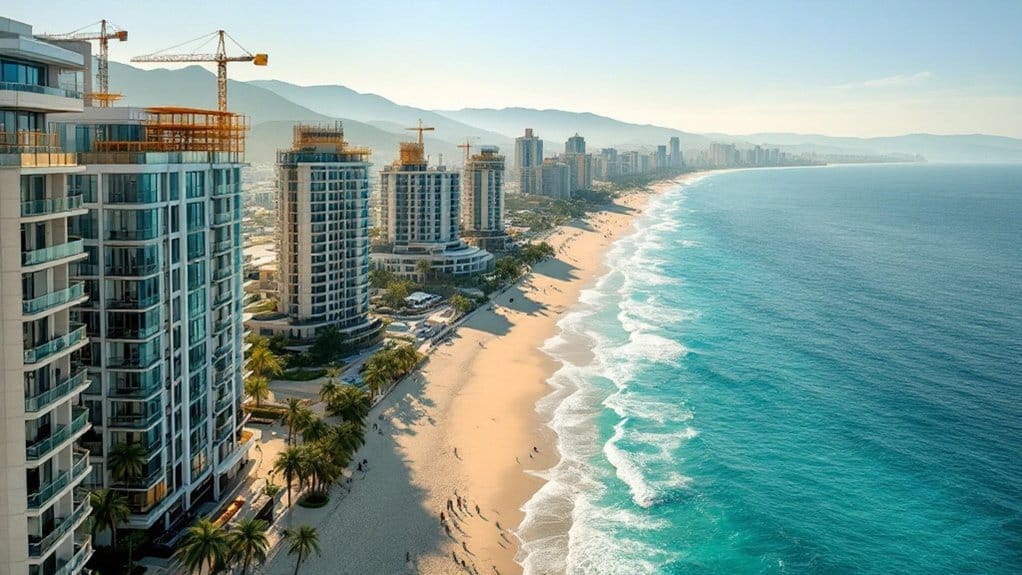
Uruguay’s eastern coastline is having a moment, and if you’ve been watching property markets in this part of the world, you already know the numbers don’t lie. Prices along this stretch have been climbing steadily, and the investor interest that was once whispered about in private circles is now very much a public conversation.
Punta del Este remains the anchor of it all , a name that carries serious weight in South American real estate and continues to attract buyers who want prestige alongside their beachfront. What’s shifted is the attention moving beyond the well-worn hotspots. José Ignacio, for instance, has quietly built a reputation that rivals far flashier destinations, drawing a discerning crowd that values privacy, design, and understated luxury over spectacle.
The real question worth sitting with is what’s actually pulling capital here. Uruguay’s political stability, transparent property laws, and the absence of restrictions on foreign ownership create a foundation that’s genuinely rare in the region.
Buyers from Argentina, Brazil, Europe, and North America have all taken notice, and that diversity of demand is a healthy sign for long-term market resilience.
Knowing where the smart opportunities sit requires looking slightly ahead of the crowd. The coastline between established names still holds pockets of real value , areas where infrastructure is improving, access is getting easier, and early buyers are positioning themselves well before the wider market catches up.
Key Takeaways
Uruguay’s eastern coastline is having a moment, and if you’ve been watching this market as long as I have, you’ll recognize the signs of something genuinely sustainable rather than speculative. Punta del Este remains the anchor, but the story stretching along the coast toward José Ignacio and La Barra is where things get particularly interesting.
Those two villages recorded 25% price growth over just three years , a figure that reflects two realities working together: intense demand from luxury buyers, many of them foreign, and a land supply that simply isn’t growing. When you can’t build outward, prices move upward, and that dynamic shows no sign of reversing.
At the premium end of Punta del Este, properties are already trading above US$7,000/m², with annual gains running between 8% and 12%. These aren’t short-term spikes. They reflect consistent foreign buyer interest, a stable legal environment, and the kind of coastal lifestyle that’s genuinely hard to replicate elsewhere in South America.
Looking ahead, broader market projections point to values reaching approximately US$5,100/m² by 2036 , a cumulative increase of around 55% over the next decade. For buyers considering entry points outside the ultra-premium segment, that trajectory deserves serious attention.
Infrastructure investment near the coast is also doing real work here. Improved access roads, utilities, and public amenities have historically added between 5% and 15% to nearby property values, and several projects currently underway are positioned to deliver exactly that kind of uplift across key coastal zones.
Why Foreign Capital Is Flowing Into Uruguay’s Eastern Coast
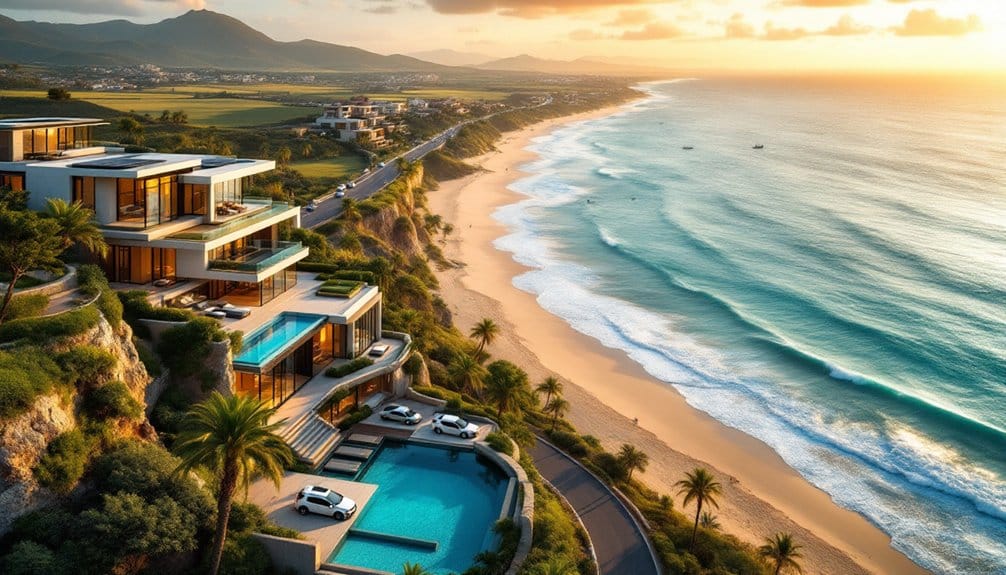
Money follows good conditions, and Uruguay has plenty of them. Full tax holidays in Free Economic Zones, equal fiscal treatment for local and foreign buyers , these aren’t minor perks. They’re the kind of structural advantages that make investors take a second look and then a third.
Political stability carries real weight here too. The legal system is reliable, political risk is minimal, and there are no restrictions on repatriating profits. That last point matters more than most people realize when they’re first exploring the market.
The numbers tell their own story. Uruguay pulled in USD 3.42 billion in FDI in 2023 , the third-highest figure ever recorded , with real estate accounting for 11.2% of total foreign investment stock. That’s not a trend. That’s a pattern worth paying attention to.
What makes Uruguay different is how few barriers stand between an overseas buyer and a clean transaction. The rules are open, the ground is stable, and the incentives are genuine. The central bank has held its key interest rate at 5.75%, providing the kind of monetary consistency that gives long-term property investors confidence in their planning horizons. For anyone looking at the eastern coast specifically, that combination is difficult to find elsewhere in the region.
Where Prices Are Rising Fastest Along the Uruguayan Coastline
Not every stretch of coastline moves at the same pace, and knowing where the momentum is concentrated makes all the difference when you’re deciding where to put your money.
| Location | Avg. Price / Appreciation | Key Driver |
|---|---|---|
| José Ignacio & La Barra | +25% over 3 years | Luxury demand, exclusivity |
| Punta del Este | USD 4,000/m², 8, 12%/yr | Foreign buyers, beachfront |
| Ciudad de la Costa | Among fastest rising in 2026 | Montevideo spillover |
José Ignacio and La Barra have delivered 25% appreciation over three years, driven by a clientele that prioritizes exclusivity and isn’t particularly sensitive to price. That’s a combination that tends to hold value well, even when broader markets soften. Punta del Este continues attracting serious foreign buyers, with beachfront properties holding at USD 4,000/m² and annual gains running between 8 and 12%. Carrasco, for its part, leads Montevideo’s residential market at USD 4,266/m², reflecting consistent demand from buyers who want urban convenience without sacrificing quality.
Ciudad de la Costa is worth watching closely. Buyers priced out of Montevideo’s established neighborhoods are moving east, and that pressure is showing up directly in prices. The national sanitation master plan and infrastructure investments are expected to deliver property value premiums of 5% to 15% for well-positioned coastal properties near completed projects. The coastline keeps offering what interior markets simply can’t, space, proximity to the water, and a quality of life that continues to attract both locals and international buyers alike.
Which Markets Between La Barra and José Ignacio Are Moving Fastest?
The stretch between La Barra and José Ignacio isn’t one market, it’s several, each moving at its own pace and for its own reasons. Understanding that distinction matters when you’re deciding where to put your money.
La Barra leads in transaction flow. Homes there sell faster, attract a broader mix of buyers, and carry the kind of product diversity, glass villas, renovated casitas, newer builds with ocean views, that keeps demand active year-round. Liquidity is real here, and for sellers, that’s meaningful.
José Ignacio is a different calculation. Volume is lower, but price growth has been sharper, values have climbed more than 25% over three years, driven by land scarcity and a buyer profile that isn’t chasing deals, they’re chasing quality. When inventory is tight and buyers are selective, prices hold even when the broader market softens.
The honest read is this: La Barra gives you movement, José Ignacio gives you leverage. Both are appreciating, but they reward different strategies. If exit flexibility matters to you, La Barra makes sense. If you’re holding long and want a name that only gets harder to buy into, José Ignacio is where that story plays out. Adding to that appeal, much of the buyer interest across both markets is arriving from Europe, North America, and Brazil, deepening the international profile of this coastline and supporting sustained demand well beyond seasonal peaks.
What Coastal Properties Actually Cost in 2025
Coastal property prices in Uruguay stretch across a surprisingly wide range, and the location makes all the difference. On the more accessible end, Costa de Oro offers beachfront houses starting around US$85,000 , a solid entry point for buyers who want coastline without the premium price tag. La Paloma sits in the middle ground, with beach houses typically falling between US$100,000 and US$250,000 depending on condition and proximity to the water.
Moving toward the more sought-after stretches, La Barra and Atlántida command US$2,500 to US$3,000 per square meter, reflecting their stronger rental demand and lifestyle appeal. Punta del Este is in a category of its own, with luxury properties regularly exceeding US$7,000 per square meter , and climbing higher for premium positions along Playa Brava or the marina.
The purchase price is only part of the picture. Acquisition costs add another 7% to 10% on top of the agreed sale price, covering transfer taxes, notary fees, and registration. Annual property taxes and ongoing maintenance round out the real carrying cost of ownership. Non-resident investors should also account for the 12% tax on net capital gains when calculating returns on any eventual sale. Buyers who go in with a clear grasp of the full financial commitment tend to make far better decisions , and enjoy their properties a lot more once the paperwork is signed.
How to Build a Strong Investment Case for Uruguay’s Coastal Market
Pricing tells part of the story, but value is where the real conversation begins , and Uruguay’s coastal market holds up well under that kind of scrutiny.
Rental performance is a good place to start. Beachfront areas like La Barra consistently generate gross yields between 6% and close to 10% during high season. That’s actual income backed by strong seasonal demand, not a projection built on optimism.
The market also works across a wide range of budgets. A buyer coming in at $200,000 has options near the water. So does someone with $5 million. Modest homes and luxury beachfront estates share the same coastline , what changes is the scale, not the access to a fundamentally sound market.
Demand here isn’t local. Foreign buyers account for roughly 75% of luxury purchases, with Argentines, Brazilians, Americans, and Europeans all consistently active. That international base keeps demand from depending on any single economy, which matters more than people sometimes realize. Prices in José Ignacio and La Barra climbed over 25% in three years , the kind of appreciation that tends to attract more buyers, which in turn sustains the momentum.
Put it together and the investment case isn’t hard to make. This market has depth, diversity, and a track record worth paying attention to. Analysts project a 55% cumulative price growth over the next decade, pointing to a price per square meter reaching around US$5,100 by 2036 , a long-term trajectory that adds weight to decisions being made today.
References
- https://www.laciteuruguay.com/news/why-the-east-coast-of-uruguay-is-gaining-global-interest-among-property-buyers
- https://www.location.uy/en/blog-con-precios-en-aumento/
- https://luxurypunta.com/en/info/punta-del-este-del-frente-oceanico-a-jose-ignacio-el-nuevo-mapa-del-boom-inmobiliario.html
- https://www.jarniascyril.com/international-real-estate/invest-in-real-estate-uruguay-market-guide/uruguay-real-estate-market-trends/
- https://thelatinvestor.com/blogs/news/uruguay-real-estate-forecast
- https://www.realestate-in-uruguay.com/blog/uruguay-luxury-real-estate-market-trends/
- https://www.realestate-in-uruguay.com/blog/uruguay-real-estate-regions-investment-punta-del-este-montevideo-rocha/
- https://www.benoitproperties.com/news/the-rise-of-uruguay-why-u-s-and-european-buyers-are-flocking-to-south-americas-most-stable-market/
- https://www.uruguayxxi.gub.uy/uploads/informacion/05d3bff84e2f9b7cea285209ef8e2ece6094e1fd.pdf
- https://thelatinvestor.com/blogs/news/uruguay-buy-property