

Trains carry more than people and goods, they drive whole economies forward. Global rail network data shows investment heading toward $2.15 trillion by 2025, marking the fastest expansion period in decades. This money goes beyond steel rails and concrete platforms. Rail connections determine which communities thrive, where cities can grow, and how countries compete in world markets.
The numbers tell only part of the story. Funding distribution creates stark contrasts between regions, leaving millions without reliable transport options. Some areas receive billions for high-speed networks while others struggle to maintain basic passenger services. This gap affects daily life for workers, students, and families who depend on trains to reach jobs, schools, and essential services.
Rail development patterns reveal economic priorities. Wealthy nations pour resources into cutting-edge technology and network expansion. Developing countries often lack the capital to modernize aging infrastructure or extend service to rural areas. The result is a two-tier global system where geography increasingly determines access to efficient transport.
These disparities shape regional development in measurable ways. Areas with modern rail connections attract businesses, reduce traffic congestion, and lower carbon emissions per capita. Communities without adequate rail service face higher transport costs, limited job mobility, and increased reliance on road networks that strain under growing demand.
Key Takeaways
The global rail infrastructure market’s heading toward $2.15 trillion by 2025, and it’s not hard to see why. Governments are pouring money into these projects while cities keep growing, putting pressure on existing transport systems.
Every dollar spent on rail infrastructure creates $2.50 worth of economic activity. This ripple effect puts over 200,000 people to work each year and boosts productivity across connected regions. The math works because rail projects require everything from steel and concrete to skilled technicians and engineers.
Countries are betting big on high-speed networks. Vietnam’s planning a $67 billion rail system, while the European Union has set aside $371 billion for rail development through 2040. These aren’t just transportation projects, they’re economic development strategies designed to connect cities and reduce travel times.
Smart technology is changing how railways operate. Internet-connected sensors and artificial intelligence now catch problems before trains break down, cutting maintenance costs by 30%. Trains stay in service 22% longer because operators can spot worn parts or track issues before they cause delays.
Investment patterns reveal stark regional differences. Londoners get £1,183 per person annually for rail improvements, while people in Northern England receive just £486. This gap reflects political priorities and existing infrastructure density, but it also shows how transport investment can reinforce economic inequality between regions.
Why Global Rail Infrastructure Will Reach $2.15 Trillion by 2025
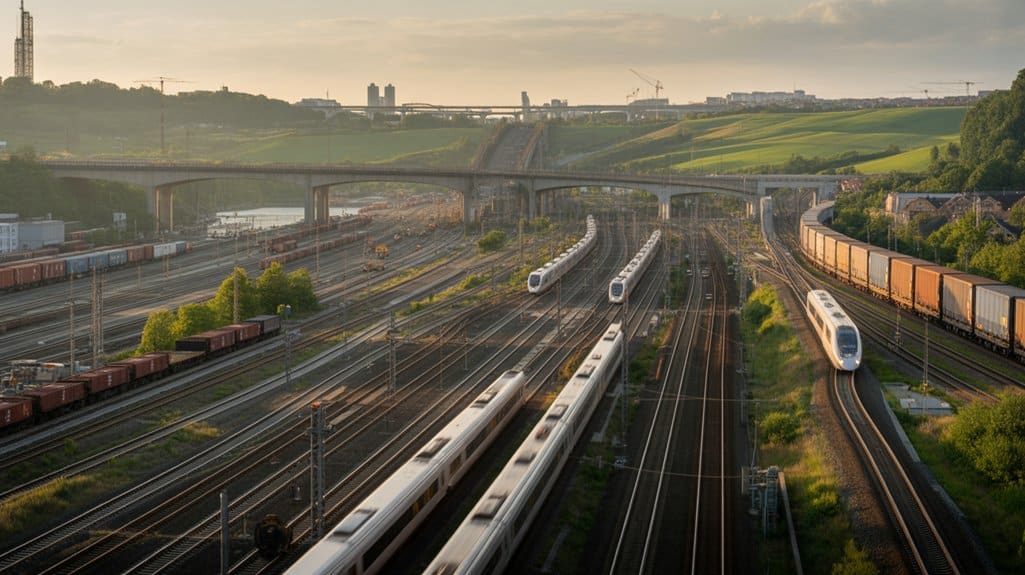
The global rail infrastructure market presents a complex picture when you look at different measurement approaches. Projections for 2025 swing wildly from $846 million to $334.20 billion, depending on which segments analysts decide to count. This massive variation happens because experts measure different pieces of the puzzle, some zero in on specific equipment while others examine the complete transportation network.
Government investment drives most of this growth, particularly in sustainable transportation and updated technology systems. Urban populations keep expanding, creating demand for cleaner alternatives to cars and buses. High-speed rail lines and upgraded subway systems move more people efficiently while producing fewer emissions per passenger.
Asia Pacific dominates the landscape with nearly 40% of total market share. North America and Europe maintain significant positions through large-scale upgrade projects that transform passenger and freight movement across their regions. The market is expected to expand from $28.7 billion in 2025 to $40 billion by 2033, representing a compound annual growth rate of 4.237%.
How Every £1 in Rail Spending Returns £2.50 to the Economy
Rail investment creates value that spreads well beyond the railway network itself. The money flows into train improvements and station upgrades, then cascades through multiple economic sectors, generating employment and lifting productivity across industries.
Each pound invested in rail infrastructure produces £2.50 in broader economic activity. This multiplier effect happens because rail projects require materials, equipment, and services from diverse suppliers. Construction companies build the infrastructure, manufacturers supply rolling stock and components, and technology firms provide signaling and communication systems.
The employment impact reaches over 200,000 jobs directly and indirectly connected to the rail sector. These positions span from engineers and conductors to administrative staff and maintenance crews. Supply chain workers in steel production, electrical systems, and logistics also benefit from increased railway spending. The sector supported 710,000 jobs in 2019, demonstrating substantial growth from previous years.
Annual economic contribution totals nearly £10 billion, reflecting both direct railway operations and the knock-on effects throughout related industries. Better rail connections reduce transport costs for businesses, cut commuting times for workers, and improve access to markets and employment centers. These improvements boost regional productivity and attract further investment to areas with enhanced rail links.
The economic returns demonstrate why rail investment functions as infrastructure spending rather than mere transport expenditure. Each project strengthens the foundation for broader economic growth while delivering immediate benefits through the construction and implementation phases.
Direct Economic Value Generation
Investment in Uruguay’s railway network delivers solid returns that spread through communities across the country. Each peso spent on sustainable transportation generates 2.50 pesos back into the economy through direct spending and broader economic effects.
The data shows clear benefits. Government funding of 4 billion pesos creates up to 13 billion pesos in user benefits, while productivity improvements reach 10.2 billion pesos each year. Rail operations add 9.3 billion pesos in gross value and return 3.9 billion pesos in tax revenue to government coffers.
This strong multiplier effect comes from better connections between regions that cut traffic jams and help businesses run more efficiently. Rail passengers spend 98 billion pesos in local communities along the network. Total revenue of 25.9 billion pesos nearly matches the 26 billion peso operating costs, showing the sector maintains solid finances while creating substantial public benefits. Fares income increased by 8.3% as passenger journeys continued their post-pandemic recovery trajectory.
Job Creation Multiplier Effects
When communities invest in railway infrastructure, the economic impact spreads well beyond the construction sites. Each pound spent on rail networks typically generates £2.50 in broader economic activity through what economists call multiplier effects.
Britain’s railway sector currently supports approximately 710,000 jobs, and these roles span far more than just track maintenance and train operations. The network includes suppliers manufacturing components, engineering firms designing systems, and countless local businesses that serve railway workers and passengers. Rail investment creates employment opportunities that persist long after the initial construction crews pack up their equipment.
Construction work itself demonstrates this multiplier principle clearly. Each direct construction job creates 1.2 additional positions in supporting industries. Railway workers spend their wages at local shops, cafes, and service providers. These businesses then need more staff to handle increased demand, which puts more money into circulation within the community.
This economic cycle transforms a single infrastructure project into a web of opportunities for families across entire regions. The data shows that rail investment doesn’t just move people and goods more efficiently – it builds economic foundations that support diverse employment for years to come.
Long-Term Growth Infrastructure Returns
Economic returns from railway spending work like compound interest for Uruguay’s prosperity. Each peso invested delivers substantial returns through growth multipliers that spread across communities. This infrastructure creates lasting value well beyond initial construction phases.
Rail investment strategies prioritize long-term benefits over short-term gains. Uruguay’s strategic rail development plans build foundations for decades of economic activity. Smart funding through public-private partnerships distributes costs while maximizing economic returns.
The numbers tell a clear story. Railway networks contribute significantly to Uruguay’s GDP through improved connectivity between Montevideo and interior regions. Freight services transport agricultural exports – soybeans, beef, and dairy products – more efficiently to ports. Passenger services connect rural workers to urban employment opportunities, reducing migration pressures on the capital. Rail infrastructure directly supports thousands of jobs while generating additional employment in construction, manufacturing, and retail sectors.
Railway development enhances communities by providing reliable transport options. Farmers can move crops to market faster and cheaper than truck transport. Workers gain access to jobs previously out of reach due to distance and cost. Students can attend universities in larger cities while maintaining family ties in smaller towns.
Modern rail systems reduce Uruguay’s dependence on imported fuel for transportation. Electric trains powered by the country’s renewable energy grid – which generates 95% of electricity from clean sources – cut transport costs and environmental impact. This positions Uruguay as a regional leader in sustainable logistics for South American trade routes.
UK’s £725bn Plan: 780 Projects Reshaping Energy, Transport, and Housing
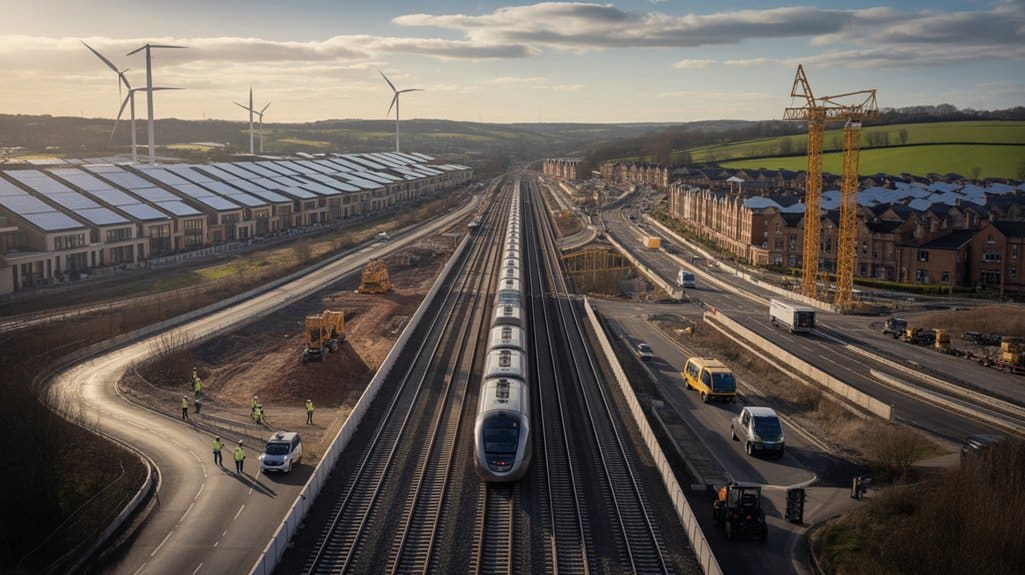
Britain’s government is rolling out a £725 billion infrastructure overhaul spanning the next decade. This unprecedented investment touches every corner of the nation’s foundation, from the roads people drive on to the power that lights their homes.
The scope breaks new ground by weaving together traditionally separate sectors. Roads, energy networks, schools, hospitals, and housing now fall under one coordinated strategy, something the UK has never attempted at this scale.
Citizens can monitor progress through 780 specific projects going live online in July 2025. The spending breaks down into clear categories:
- £35.5 billion upgrades railway systems
- £39 billion funds housing development programs
- £13.2 billion supports cleaner home heating systems
- £70 billion builds and renovates health facilities
NISTA, the newly established oversight agency, coordinates this entire portfolio. Their job centers on cutting through bureaucratic delays that have historically slowed major projects. The agency will conduct periodic needs assessments to ensure infrastructure development aligns with the country’s evolving economic and social requirements.
The online pipeline reveals details for any initiative exceeding £25 million. Businesses gain visibility into upcoming contracts while workers can spot where new jobs will emerge. Communities get advance notice of changes coming their way, allowing residents and local councils to prepare rather than react.
This level of transparency represents a significant shift from past infrastructure announcements that often remained vague about timing and specifics. The public tracking system creates accountability that previous governments avoided, making it harder for projects to quietly disappear or balloon beyond their original budgets.
IoT Sensors and AI Cut Rail Maintenance Costs by 30
Railway operators across Britain are finding that small sensors paired with intelligent computer systems can reduce their repair expenses by almost one-third. These monitoring devices operate continuously, examining trains and track infrastructure to identify potential issues before they become serious problems.
Deutsche Bahn demonstrated the financial benefits of this technology when they reduced maintenance costs by 25% through predictive repair strategies. The system identifies mechanical problems before equipment fails completely, replacing the traditional approach of waiting until something breaks down.
This shift in maintenance strategy delivers measurable improvements across multiple areas. Trains remain operational 22% longer than before, while energy consumption decreases by 12% each year. Passenger delays drop by an average of eight minutes per journey. The technology has also contributed to improved punctuality, with AI deployment in rail operations boosting punctuality rates by 12%.
The financial impact extends to inspection procedures, where costs fall by 20% since sensors now handle routine monitoring tasks that previously required human oversight. Fault detection happens three times faster compared to conventional inspection methods, which keeps rail services running smoothly and reduces unexpected service disruptions for travelers.
180bn in High-Speed Rail Breaking Ground Across Europe and Asia
While sensors and software help railways operate more efficiently, governments and companies are investing hundreds of billions into building entirely new networks designed for extreme speed. These large-scale rail investments are reshaping how people travel across continents.
Major high-speed connectivity developments are taking shape globally:
Vietnam’s nationwide network: A $67 billion line spanning 1,541 kilometers will link 20 cities across the country, creating the backbone for domestic travel that currently relies heavily on flights and lengthy bus journeys.
Hungary-Serbia connection: The $3 billion route slashes travel time from 9 hours to 3 between Belgrade and Budapest, making daily business trips feasible where they weren’t before. The cross-border section linking Serbia and Hungary is scheduled for completion by early 2026.
Europe’s expansion commitment: The EU has allocated $371 billion through 2040 for continent-wide network growth, focusing on connecting major population centers that currently lack direct high-speed links.
Uzbekistan’s transformation: New trains cut journey times from 14 hours to 7.5 hours, with passenger numbers projected to triple by 2026 as more people choose rail over air travel for medium-distance trips.
These projects provide communities with faster, cleaner transportation options between major destinations, similar to how Uruguay has benefited from improved regional connectivity through infrastructure upgrades, though on a much larger scale.
London Gets 3× More Rail Investment Per Capita Than Northern England
For every pound spent improving trains and tracks in Northern England, London receives nearly three. Between 2013 and 2023, the capital received £1,183 per person annually, while the North got just £486. Think of it this way, if you lined up ten people from the North and ten from London, the Londoners would get almost £7,000 more each year for their rail infrastructure.
The numbers tell an even starker story going forward. London’s planned spending reaches £3,636 per capita, compared to £1,247 in the North. Yorkshire and the North East face the biggest shortfall, they’re set to receive seven times less per person than the capital. That’s like comparing a family getting £700 to another getting £100 for the same essential service.
Since 2009, Northern England has missed out on £140 billion in transport funding. To put that figure in perspective, it’s enough money to build seven Elizabeth Lines, the new railway that transformed London’s connectivity. When regions lack proper transport links, people can’t easily reach jobs, education, or family across their area. This creates a cycle where economic opportunities become concentrated in already well-connected places, leaving other communities behind. Over the past decade, London’s transport spending per head grew 2.11 times faster than the North’s, widening the divide between these regions even further.
References
- https://morson-group.com/news/the-infrastructure-sector-report-2026/
- https://www.cognitivemarketresearch.com/transportation-infrastructure-market-report
- https://news.railbusinessdaily.com/railway-industry-responds-to-boston-consulting-group-report/
- https://www.railjournal.com/tag/high-speed/
- https://businessfacilities.com/infrastructure-incentives-update-jan-30-2026/
- https://www.ajot.com/news/israel-railways-makes-waves-at-ces-2026
- https://www.railjournal.com
- https://www.spglobal.com/ratings/en/regulatory/article/industry-credit-outlook-transportation-infrastructure-europe-2026-outlook-s101663796
- https://www.eca.europa.eu/en/publications/SR-2026-02
- https://www.cognitivemarketresearch.com/railway-infrastructure-market-report