

Infrastructure Investment Momentum Accelerates
Uruguay’s infrastructure sector is experiencing a notable shift in 2026, driven by large-scale project finance commitments and favorable regional trends. The government announced a $5.7 billion investment in data center infrastructure in October 2026, involving Spanish renewable energy company Solaria. This single project represents the largest infrastructure commitment in recent years and signals growing confidence in Uruguay’s investment climate.
According to the BNamericas Infrastructure Survey 2026 published in early November, nine out of ten participants across Latin America expect infrastructure investment to grow over the next three years. The survey identifies concessions and public-private partnerships (PPPs) as the primary drivers, with political uncertainty cited by 44% of respondents as the main constraint, ahead of permitting delays and fiscal limits.
Data Center Campus Details
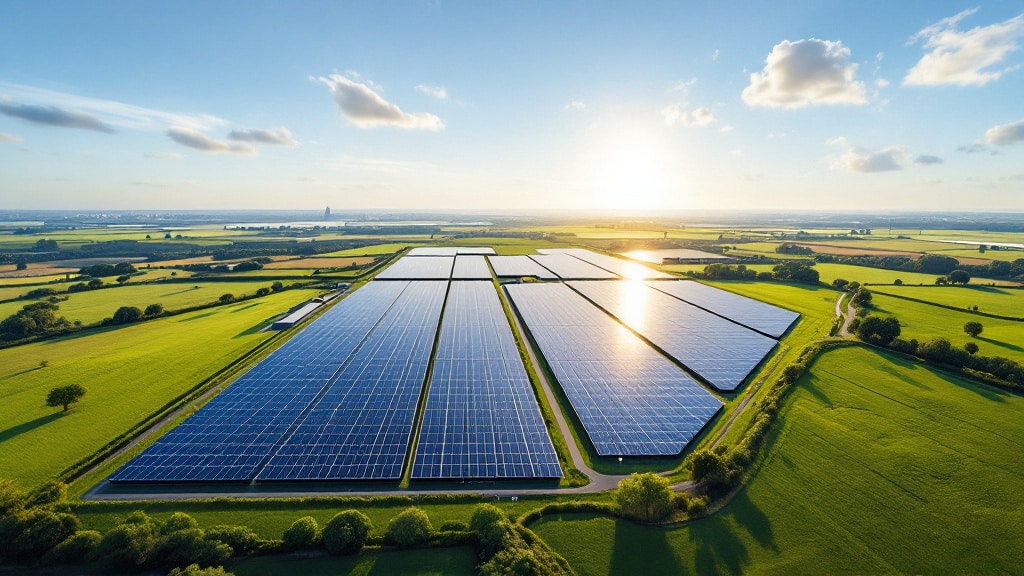
The October 14, 2026 announcement outlined a memorandum of understanding (MOU) between the Uruguayan government and Solaria for a technology campus in Canelones and San José departments, with a solar plant in Florida department. Of the total $5.7 billion, approximately $5.5 billion would fund data centers and $200 million would support a photovoltaic facility. The government projects 3,100 construction jobs and 1,500 permanent positions.
Solaria’s filing with Spain’s National Securities Market Commission (CNMV) described a technology campus of up to 500 megawatts (MW), with 350 MW of solar generation, on roughly 700 hectares of land provided by state utility UTE under a commodatum agreement. Solaria would develop the free-zone data center infrastructure and solar plant, while third-party operators would manage servers and operations. The company expects to finalize its investment decision in May 2027.
Project Finance Structure and Uncertainty
Key details remain unresolved. The identity of final data center operators, financing sources, state guarantees, and electrical grid upgrade costs have not been disclosed. UTE is reportedly studying whether to advance planned infrastructure projects and add thermal and wind generation capacity ahead of schedule to support the data center load.
Regional Project Finance Context
Uruguay’s infrastructure push occurs within a broader Latin American project finance environment showing strong activity. Brazil’s second transmission auction of 2026 awarded all eight lots, attracting 8.9 billion reais for grid expansion across seven states, with an average discount of 50.1%. André Millions, director at consultancy Thymos Capital, noted that this competition level confirms confidence in Brazilian transmission regulations.
Transmission and Energy Sector Trends
Power transmission projects continue to attract market participants across the region. The strong auction results in Brazil and Uruguay’s need to upgrade electrical infrastructure for data centers highlight the importance of transmission finance in 2026. These projects typically offer stable, long-term revenue streams backed by regulatory frameworks, making them attractive to institutional investors and project finance lenders.
Implications for Property and Investment Markets
Large infrastructure commitments have direct and indirect effects on Uruguay’s real estate sector. The announced 3,100 construction jobs and 1,500 permanent positions would create demand for residential and commercial space in Canelones and San José, departments adjacent to Montevideo. Industrial and logistics properties near the data center sites may see increased interest.
Economic Fundamentals Supporting Infrastructure
Uruguay’s industrial debt fell to 28% of GDP in 2026, a 14-year low, according to recent economic data. This deleveraging improves the country’s capacity to support large infrastructure projects without straining public finances. The Inter-American Development Bank’s IDB Lab also extended a $5 million debt facility to Paigo in November 2026 to expand data-driven credit for micro, small, and medium enterprises (MSMEs), signaling institutional confidence in Uruguay’s economic stability.
| Project Component | Investment (USD) | Capacity | Location | Timeline |
|---|---|---|---|---|
| Data Centers | $5.5 billion | 500 MW | Canelones, San José | Decision May 2027 |
| Solar Plant | $200 million | 350 MW | Florida | Decision May 2027 |
| Construction Jobs | , | 3,100 positions | , | , |
| Permanent Jobs | , | 1,500 positions | , | , |
Commercial and Industrial Property Demand
If the data center project proceeds following Solaria’s May 2027 decision, demand for commercial office space, industrial warehouses, and logistics facilities in the greater Montevideo area and surrounding departments would likely increase. Companies providing services to data center operations, telecommunications, security, facilities management, would require local premises. Residential rental markets in Canelones and San José could tighten as construction and operational workforces arrive.
Long-Term Outlook for Property Values
Uruguay’s infrastructure development trajectory in 2026 suggests a stable to positive outlook for property values, particularly in departments benefiting from large-scale projects. The combination of reduced industrial debt, expanding MSME credit access, and major infrastructure commitments creates a foundation for sustained economic activity.
However, the data center project’s impact remains contingent on final investment approval in mid-2027 and resolution of financing, client, and grid upgrade questions. Political uncertainty, the top concern in the BNamericas survey, also warrants attention, though Uruguay’s relatively stable governance and low debt levels provide some insulation. Foreign investors and local buyers should monitor project milestones, regulatory developments, and electrical infrastructure plans as indicators of whether the announced investments will materialize and support property market growth in the coming years.
Quellen
- Daily headlines: Infrastructure Survey 2026 – BNamericas
- Uruguay Industrial Debt at 14-Year Low: Investor Impact
- Uruguay. La infraestructura de la promesa – Resumen Latinoamericano
- IDB Lab's $5M Paigo Loan: Uruguay MSME Credit Signal
- Leading Project, Energy and Infrastructure Finance Partner Joo Hee Lee Joins Milbank’s Seoul Office