
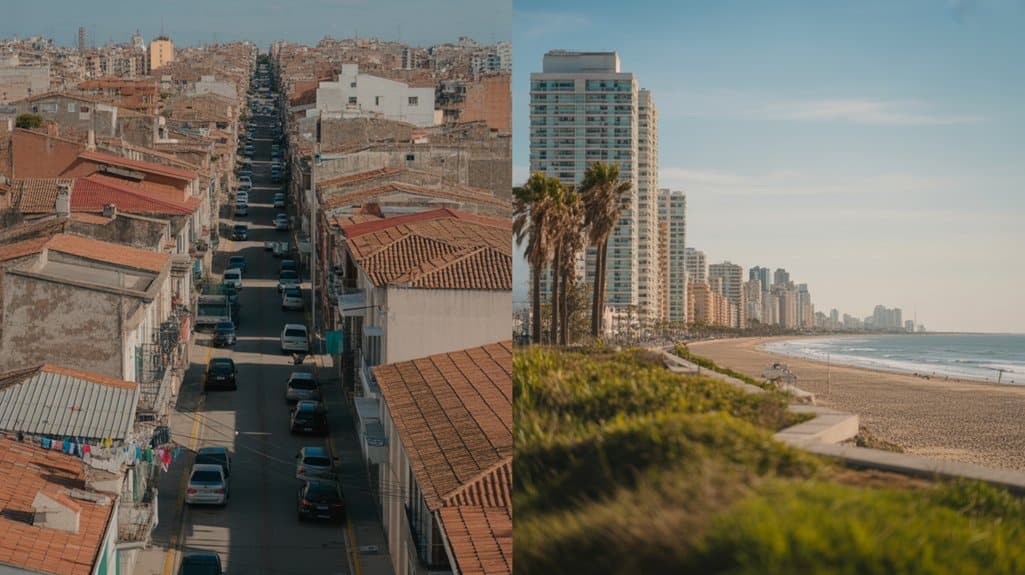
Maldonado City and Punta del Este sit fifteen minutes apart by road, yet buying or renting in one versus the other puts you in a completely different world.
Maldonado carries roughly 102,000 permanent residents and runs on real civic infrastructure , schools, hospitals, municipal services, local commerce , the kind of backbone that makes daily life predictable and affordable year-round.
Punta del Este, with just 18,193 registered residents spread across 48 km², is built around tourism, which means the energy is electric in summer and genuinely quiet the rest of the year.
That seasonal swing matters more than most buyers initially realize.
Property values, rental yields, and even neighborhood atmosphere in Punta del Este respond directly to that tourism cycle.
If you’re looking for a vacation home or a high-season rental investment, that dynamic works in your favor.
If you’re planning to live there full-time or need consistent rental income across all twelve months, Maldonado’s steady local demand tends to serve that goal far better.
The fifteen-minute drive between them is short enough that many residents do both , they buy in Maldonado for the value and practicality, and enjoy everything Punta del Este offers without paying its premium prices for square footage.
That’s a strategy worth considering seriously before committing to either side of the equation.
Key Takeaways
Maldonado City is home to around 102,000 permanent residents, and that number tells you something important , this is a place built for people who actually live here, not just visit. The civic infrastructure reflects that, with schools, hospitals, and services designed around year-round demand rather than peak-season crowds.
Punta del Este, covering 48 km², operates on a very different rhythm. It thrives during summer and quiets down considerably once the season ends, which shapes everything from local commerce to neighborhood atmosphere. That seasonal swing can be charming, but it also means the community around you changes dramatically depending on the time of year.
From a financial standpoint, Maldonado makes a compelling case. Monthly living costs average around $1,277, and groceries run roughly 27% lower than what you’d pay across the bay in Punta del Este. Entry-level rentals come in near $560 per month, giving buyers and renters alike considerably more flexibility in how they allocate their budget.
What that ultimately adds up to is a lifestyle grounded in consistency. For someone looking to put down real roots in Uruguay , neighbors who recognize you, a city that functions the same in July as it does in January , Maldonado offers something Punta del Este simply isn’t structured to provide. It’s not a compromise; it’s a different priority entirely.
Maldonado vs. Punta Del Este: Population and Daily Life
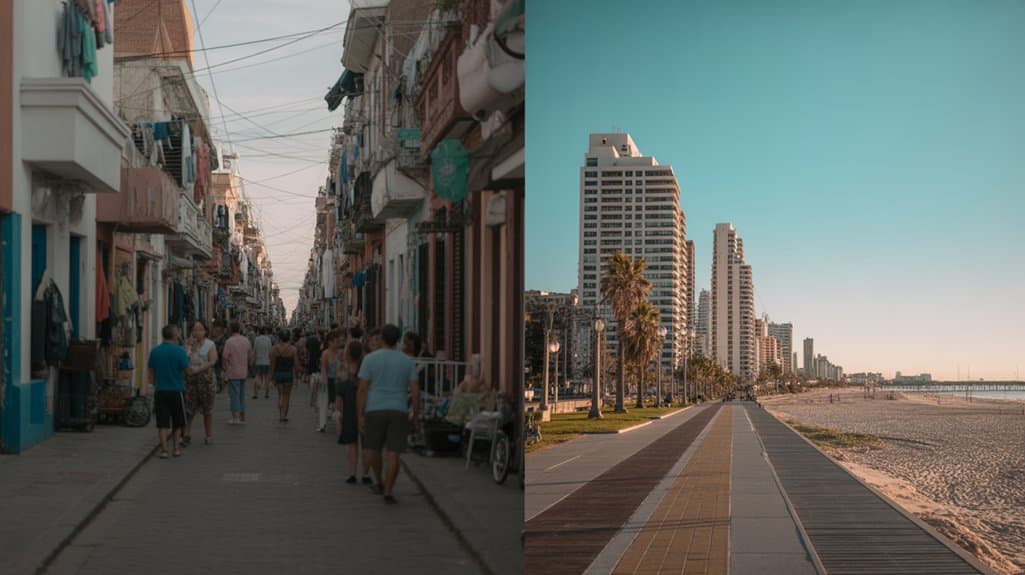
Most people touring properties here get so caught up in Punta del Este’s glamour that they never stop to look at the actual population numbers , and those numbers matter enormously when you’re making a long-term real estate decision. Maldonado city carries roughly 102,000 permanent residents against Punta del Este’s 18,193, and that gap tells you everything about where genuine, year-round urban life actually happens in this conurbation.
The department total reaches 212,951 inhabitants, but the real story is how differently each locality functions day to day. Maldonado runs on civic infrastructure , schools, healthcare, public administration, consistent transport , built specifically for people who live here through every season, not just December through March. That kind of backbone holds its value quietly and steadily.
Punta del Este covers just 48 km² and organizes itself entirely around tourism. The area also enjoys a mild oceanic climate, with a yearly average temperature of 16.4°C that keeps daily life comfortable in every season. Its rhythm swings between a genuinely peaceful off-season and an intensely crowded summer surge, which suits certain buyers perfectly and absolutely does not suit others. The two localities sit only fifteen minutes apart, yet they operate on entirely different clocks.
Knowing which clock matches your lifestyle , or your investment strategy , is the single most useful question you can bring to a property search here. Permanence and seasonal cycles each carry their own returns, their own costs, and their own demands on daily life. The right choice depends entirely on how you intend to use what you buy.
Cost of Living: Maldonado vs. Punta Del Este Compared
Once you start pricing out actual groceries and utility bills rather than scrolling through glossy listings, the numbers settle the argument fairly quickly. Maldonado runs cheaper than Punta del Este, and not by a trivial margin , something I’ve seen catch many buyers off guard when they finally sit down with a realistic monthly budget.
Food costs alone tell a compelling story. Expatistan puts groceries roughly 27% cheaper in Maldonado, with everyday staples like milk, bread, rice, and eggs all landing below what shoppers pay just across the bridge. For families or long-term residents, that difference adds up faster than most people expect.
Utilities follow a similar pattern, though the gap is worth examining carefully. Wise estimates basic bills around $160 in Maldonado compared to $107 in Punta del Este, though CityCost’s lower figures suggest the spread isn’t uniform across all households. Usage habits, property size, and seasonal demand all play into the final number , especially in a coastal market like this one. Overall, Maldonado’s average monthly cost comes in at $1,277.13, noticeably lower than what residents typically report spending in Punta del Este.
Public transport is the one category that stays close to even, with Expatistan showing Maldonado only 3% higher. That’s essentially a wash, and it’s a good reminder that no single city wins across every line item.
What it comes down to is this: if long-term financial sustainability matters to you , and in my experience, it always ends up mattering , Maldonado gives you breathing room that Punta del Este, for all its appeal, genuinely cannot match.
Rent and Housing Prices in Maldonado vs. Punta Del Este
Knowing your numbers before signing anything on the Uruguayan coast can save you from a nasty surprise. A one-bedroom in Punta del Este typically runs around USD 650 per month, with two-bedrooms averaging USD 950, though once you start moving into premium beachfront inventory, listings can climb to USD 22,000 or even USD 60,000 monthly. That range reflects just how stratified this market really is.
Maldonado city proper gives you considerably more room to work with. Entry-level rentals start near USD 560, and mid-range options generally fall between USD 571 and USD 1,107 monthly , solid value for anyone who wants coastal proximity without paying for the Punta del Este name. For context, the smallest listed unit in the broader Maldonado market comes in at 861.11 sq ft for USD 1,600 per month.
Sales pricing reinforces the same picture. Punta del Este trades between UYU 148,608 and 158,438 per square meter, while Maldonado’s broader market offers a wider range with more accessible entry points. Worth noting: most rentals here are quoted in US dollars, while sale prices are frequently listed in Uruguayan pesos, so running a clean apples-to-apples comparison takes a bit of homework.
If you’re weighing lifestyle against budget, moving a few kilometers inland from the beachfront strips away the prestige premium and puts noticeably more square meters in your hands for the same monthly outlay. That trade-off is worth thinking through carefully before committing.
Climate and Seasonality: When Each City Shines
Budget matters, but weather is what determines whether a property actually earns its keep. Both Maldonado and Punta del Este sit in a humid subtropical zone, which means mild winters, hot summers, and Atlantic breezes that prevent real extremes. Maldonado averages 17.46°C annually, and Punta del Este follows a similar pattern , warm and lively in summer, quiet and cool once winter settles in. Knowing when each city performs best is just as important as knowing where to buy.
- Summer (December, March): January and February are when the market truly activates. Beach energy peaks, rental demand surges, and seasonal tourism drives the strongest returns on coastal properties.
- Winter (June, August): July hovers around 11°C, and the pace shifts noticeably. Crowds thin out, but the cities never fully go quiet , long-term renters and year-round residents keep demand steady.
- Shoulder seasons (April, May, September): These months bring fewer visitors, windier days, and consistent rainfall. Savvy buyers often move during this window, when competition drops and negotiating room opens up. Sea temperatures during these transitional months remain quite cool, ranging from about 12°C to 18°C, which keeps beach tourism modest and pricing more negotiable.
Picking the right season to buy, rent, or list is a strategic decision, and the calendar rewards those who plan around it rather than react to it.
Maldonado or Punta Del Este: Which Fits Your Lifestyle?
Climate charts and price comparisons tell part of the story, but what really matters is what your day actually looks like once you’re living there. Maldonado runs on local rhythm , real commerce, functioning municipal services, and a pace that doesn’t hinge on whether it’s January or July. If you want to settle into Uruguayan life without riding the seasonal wave, that’s your city. Punta del Este offers something genuinely different: international energy, high-end amenities, and a visibility that attracts buyers and renters from Buenos Aires, São Paulo, and beyond. That comes with real tradeoffs, though , off-season quietude that some find peaceful and others find stark, rental markets that compress and spike, and infrastructure that’s clearly designed with peak season in mind.
Neither city loses here. The question is which one fits the life you’re actually planning to live, not just the one that looks good on paper. Buyers who want appreciation potential tied to global demand tend to lean toward Punta. Those building something more grounded , a primary residence, a long-term rental portfolio, a genuine connection to the community , usually find Maldonado delivers better value and fewer surprises. The department itself has grown by 23.7% between 2011 and 2023, the largest increase anywhere in Uruguay during that period. Uruguay rewards patience and local knowledge, and that principle applies just as much to choosing a city as it does to negotiating a purchase price.
References
- https://en.wikipedia.org/wiki/Punta_del_Este
- https://livingcost.org/cost/uruguay/maldonado
- https://thelatinvestor.com/blogs/news/punta-del-este-expat-guide
- https://wise.com/us/cost-of-living/uruguay/punta-del-este
- https://livingcost.org/cost/uruguay/punta-del-este
- https://internationalliving.com/countries/uruguay/maldonado-uruguay/
- https://www.nomadanewsletter.io/p/punta-del-este-uruguay-gringos-guide
- https://costlens.blog/cost-of-living/uruguay/maldonado/
- https://urbfact.com/city/punta-del-este
- https://weatherandclimate.com/uruguay/maldonado/punta-del-este