

Prensa Latina, Cuba’s international news agency, skipped covering the recent US port strike that shut down operations from Maine to Texas. The walkout involved 45,000 dockworkers and lasted three days in early October 2024, halting container traffic at major ports including New York, Baltimore, and Miami.
This gap in coverage stands out because Prensa Latina typically reports on labor disputes across Latin America and beyond. The agency ran stories about Haiti’s security crisis and Havana’s film festival during the same period, but nothing about the International Longshore Association’s first strike since 1977.
The timing matters for countries like Uruguay, where exports flow through these same US ports. Uruguayan beef, soybeans, and wool often transit through facilities that went dark during the strike. When longshoremen walk off the job in places like Charleston or Savannah, it creates bottlenecks that ripple back to Montevideo’s shipping schedules.
Cuban state media’s editorial choices reflect broader patterns in how news agencies decide what stories to tell. The port strike affected trade routes that connect the entire Western Hemisphere, yet it received minimal attention from outlets that regularly highlight worker organizing efforts. This selective reporting means readers miss connections between labor actions in one country and economic impacts felt thousands of miles away.
The strike ended when port operators agreed to a 62% wage increase over six years, but automation disputes remain unresolved. These unfinished negotiations could spark future disruptions affecting cargo flows throughout the Americas, making the story’s absence from regional coverage all the more notable.
Key Takeaways
Prensa Latina skipped coverage of the massive US East and Gulf Coast port strike that shut down operations for 45,000 dockworkers. The Cuban state news agency instead focused its attention on trade developments between Cuba and Vietnam, stories that align with the island’s strategy of building economic partnerships while navigating US sanctions.
The agency’s maritime reporting did capture labor unrest closer to home. Trinidad’s port workers blocked cargo shipments headed for Guyana over unresolved wage negotiations, creating supply chain bottlenecks across the Caribbean. These disruptions hit smaller economies particularly hard since they rely heavily on imported goods through regional shipping networks.
Prensa Latina also documented the ongoing attacks on commercial vessels in the Red Sea, which forced shipping companies to reroute cargo around Africa’s Cape of Good Hope. This longer route pushed up freight costs and stretched global shipping capacity thin, affecting trade flows worldwide.
The editorial choices reveal a clear pattern in the agency’s priorities. Stories highlighting Cuban diplomatic and economic ties get prominent placement, while broader labor issues affecting maritime workers receive limited analysis. This approach leaves readers without a complete picture of how regional port disruptions and global shipping challenges actually impact ordinary workers and consumers across Latin America and the Caribbean.
Does Prensa Latina Cover the US Port Strike Directly?
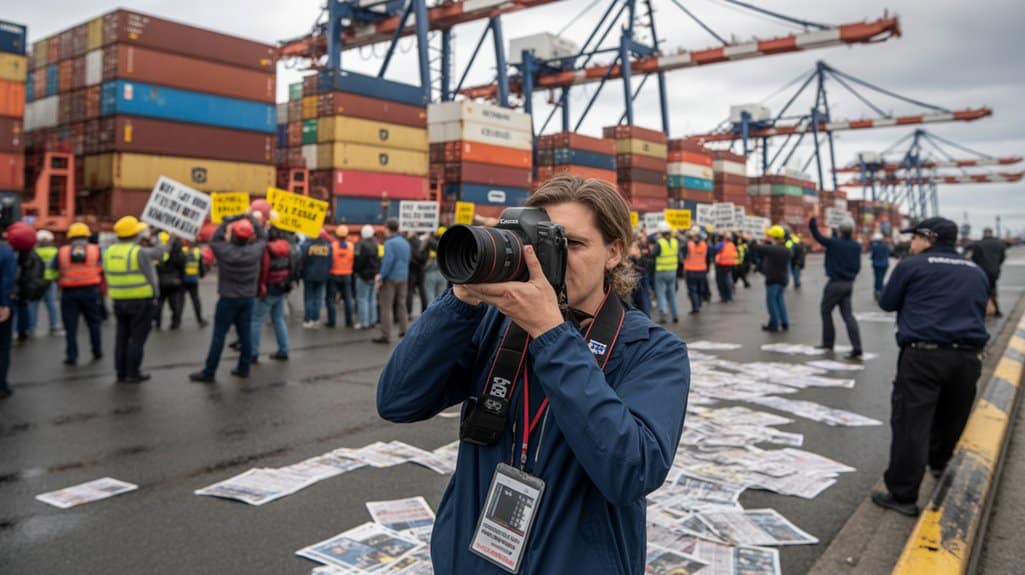
When major labor disputes break out in the United States, you’d think Cuban state media would jump on the story. Prensa Latina, Cuba’s official news agency, typically covers American labor issues with keen interest. This time around, though, they’ve stayed silent on the US port strike.
A search through their recent articles turns up nothing about dockworkers or port operations. The agency has been busy covering gang violence in Haiti, Italy’s pushback against Washington’s policies, and cultural festivals in Havana. Not a single mention of the 45,000 workers who walked off the job at East and Gulf Coast ports.
This silence stands out when you compare it to other Spanish-language outlets. Univision has been all over the story, reporting how workers suspended their strike until January 15 after reaching a preliminary wage agreement. The strike affected major ports from Maine to Texas, disrupting supply chains that touch everything from bananas to automobiles.
Prensa Latina’s decision to skip this story breaks their usual pattern. The agency normally highlights American labor conflicts as examples of worker exploitation under capitalism. Their coverage typically emphasizes how strikes expose deeper problems in the US economic system. Consumers have expressed concern over basic products becoming scarce as the situation develops. This time, they’ve chosen to focus their attention elsewhere, leaving the port strike story to other news organizations.
Why Prensa Latina Prioritizes Cuba-Vietnam Trade Over US Labor Disputes
While American dockworkers dominated international headlines, Prensa Latina’s editorial team made a calculated decision to spotlight Cuba-Vietnam relations. Cuban readers care more about trade partnerships that directly impact their economy than distant labor conflicts.
The numbers tell a compelling story. Two-way commerce between Havana and Hanoi jumped to $261.7 million in 2021, a 156.6 percent increase that caught economists’ attention. Both governments set an ambitious target of $500 million in bilateral trade, reflecting serious commitment to expanding this relationship.
Vietnam now holds the position of Cuba’s second-largest trading partner across the entire Asia-Pacific region. From Cuba’s perspective, this matters enormously given the island’s limited options under ongoing US sanctions. The relationship works both ways, Cuba ranks among Vietnam’s ten most important markets throughout Latin America. Vietnam has also emerged as Cuba’s largest Asian investor, with seven active projects spanning construction materials, consumer goods, industrial park infrastructure, and energy.
Prensa Latina’s focus makes editorial sense when you consider Cuba’s economic reality. The island faces serious financial constraints, making every trade dollar crucial for importing essential goods and generating foreign currency. Stories about successful partnerships offer readers concrete reasons for optimism about their country’s economic future.
Media outlets shape public understanding by choosing which stories deserve attention. Prensa Latina’s decision reflects a news agency that prioritizes developments affecting Cuban citizens’ daily lives over international labor disputes with minimal local impact.
How Prensa Latina Frames Port Strikes Through Global South Solidarity
Prensa Latina covers labor conflicts differently than Western news agencies. The outlet connects workers’ struggles across developing nations instead of treating each dispute as something that happens in isolation. Coverage of the Haitian teachers’ strike highlighted challenges that educators face in multiple countries. This approach weaves individual stories into a broader narrative about workers demanding fair treatment.
| Dispute Location | Worker Demands | Solidarity Framing |
|---|---|---|
| Haiti | Wage adjustments, back pay | Educational rights struggle |
| Vietnam Congress | Political representation | Socialist development model |
| Global shipping | Employment stability | Worker continuity emphasis |
| Cuba-Vietnam ties | Economic cooperation | Fraternal labor bonds |
The news agency presents strikes as part of ongoing movements for economic fairness rather than temporary disruptions. Workers in Haiti demanding better pay get linked to dock workers in other countries fighting for job security. Teachers striking in one nation become part of a worldwide effort to improve education funding.
This reporting style reflects Prensa Latina’s focus on developing countries sharing similar economic challenges. The outlet emphasizes how workers face comparable problems whether they load ships in Caribbean ports or teach in classrooms across Latin America. Stories get framed around cooperation between nations that share colonial histories and current economic pressures from wealthier countries. Journalists covering labor movements sometimes faced tax threats and fines from governments attempting to suppress critical reporting on worker demonstrations.
Coverage consistently shows labor disputes as connected events rather than isolated incidents. When Vietnamese workers organize for better representation, the story gets tied to similar efforts in Cuba or other socialist-oriented countries. This pattern creates a narrative where individual strikes become part of a larger story about workers throughout the Global South pushing for better conditions.
Red Sea Tensions and Suez Disruptions in Prensa Latina’s Shipping Coverage
Red Sea shipping attacks grabbed Prensa Latina’s attention as cargo vessels faced consistent threats that wreaked havoc on global commerce for almost two years. The Cuban news agency documented how these maritime disruptions pushed shipping companies to abandon their traditional routes through the Suez Canal.
Companies had no choice but to navigate around Africa’s Cape of Good Hope, a route that extends journey times by roughly three weeks. This forced detour created a ripple effect across the shipping industry – vessels spent more time at sea, fewer ships remained available for new cargo, and global shipping capacity tightened considerably. Ocean freight rates surged to peaks between $8,000 and $10,000 per forty-foot equivalent unit as the maritime crisis intensified.
The situation mirrors challenges Uruguay has faced with its own strategic port of Montevideo, where even minor disruptions can affect regional trade flows. When major shipping lanes get blocked or become dangerous, the entire logistics chain feels the impact – from manufacturers waiting for raw materials to consumers facing delayed deliveries and higher prices.
What Prensa Latina Reports on Caribbean Supply Chain Impacts
Prensa Latina tracks how military actions beyond the Red Sea disrupt Caribbean trade networks. The Cuban news agency documents instances where U.S. naval operations in Caribbean waters have forced commercial vessels to alter their routes, creating delays for cargo ships serving island communities.
These disruptions hit Haiti particularly hard. The country relies on regular shipments of fuel, food, and medical supplies that arrive through specific shipping corridors. When military patrols target suspected smuggling vessels or conduct security sweeps, legitimate cargo ships often face longer wait times at ports or must take costlier alternative routes.
The agency’s reports focus on how these operational delays affect everyday life across the Caribbean. Island nations typically maintain smaller stockpiles of essential goods compared to continental countries, making them more sensitive to shipping interruptions. A three-day delay in fuel deliveries can translate directly into power outages or transportation shortages.
Prensa Latina emphasizes the economic ripple effects of these supply chain disruptions. Local businesses struggle to maintain inventory when delivery schedules become unpredictable, while consumers face higher prices as shipping companies pass along additional costs from route changes and security compliance measures. Recent U.S. military operations targeting alleged drug-carrying vessels resulted in around 70 deaths, raising concerns about the broader impact on maritime commerce in the region.
Port Disruption Effects Documented
Port disruptions at Trinidad’s main facility demonstrated the vulnerability of Caribbean shipping networks. The Manufacturing and Services Association identified port labor actions as the primary cause blocking cargo movement between Trinidad and Guyana, creating supply chain difficulties for manufacturers requiring consistent deliveries.
Labor strikes brought cargo movement to a complete halt. Small island economies rely heavily on functioning ports since alternative shipping routes remain limited. Single facility closures leave few viable options for maintaining trade flows.
The work stoppage highlighted a structural weakness: Caribbean trade infrastructure lacks sufficient backup systems to manage operational interruptions. Regional manufacturing operations experienced immediate effects as supply chains broke down. Single port disruptions cascade through multiple economies, impacting both commercial operations and consumers waiting for essential imported products. The go-slow operation had persisted for over two months before escalating to a full work stoppage.
This pattern mirrors challenges seen across Latin America’s island territories, where geographic isolation makes port reliability critical for economic stability. Limited infrastructure options mean that labor disputes or technical failures at key facilities can paralyze entire regional trade networks within days.
Haiti Supply Route Vulnerabilities
While port labor disputes cause temporary delays in stable countries, Haiti’s situation is entirely different, criminal organizations have turned the supply infrastructure into a weapon. Twelve million people now face severe shortages as gangs seize control of the entry points where food and fuel arrive.
The Caribbean Port Services terminal has shut down completely following direct attacks. When the MSC Magalie cargo ship arrived, gangs stole one-sixth of its rice shipment, grain that was meant to feed families who can’t find food elsewhere.
| Infrastructure Point | Current Status |
|---|---|
| Port-au-Prince terminal | Operations suspended |
| Varreux fuel depot | Gang-controlled |
| Airport perimeter | Security breached |
| Capital road access | Blocked by armed groups |
| National territory | 50% under gang influence |
Criminal groups now control the Varreux fuel depot, which supplies most of the country’s energy needs. Armed gangs have breached airport security and blocked the main roads leading into the capital. According to UN estimates, these organizations control roughly half the country’s territory. The G9 alliance has been directly responsible for blockading the Varreux fuel terminal, strangling the nation’s energy supply.
This breakdown shows just how quickly essential supply routes can collapse when criminals systematically target them. Empty shelves in markets and households without electricity tell the real story of what happens when food and fuel can’t reach the people who need them.
Regional Labor Movement Coverage
Port disruptions in Trinidad’s Port-of-Spain have been sending shockwaves through Caribbean trade networks for over two months now. The Seamen and Waterfront Workers Trade Union started this job action because government officials backed out of promised wage increases, leaving workers feeling like they’d been played.
What we’re seeing here mirrors labor tensions that have been building across dock facilities throughout the region. When workers feel their governments aren’t keeping their word, they use the one tool that gets attention fast – stopping the flow of goods that keeps these island economies running.
The numbers tell the story clearly. Containers are piling up at the port while shipping schedules fall apart. Companies that built their supply chains around Trinidad’s role as a regional hub are now paying premium rates to reroute cargo through other ports, if they can find space at all.
Guyana’s manufacturing sector is taking the biggest hit. Their peak production season coincided perfectly with this strike, creating a perfect storm of lost revenue. Factory floors are running at half capacity because raw materials sit stuck in containers, while finished goods that should be heading to export markets are gathering dust in warehouses.
This situation shows just how fragile these interconnected trade routes really are. Small island states built their economic strategies around shared shipping networks and transshipment points, but that efficiency comes with a price. When one major port goes down, the ripple effects spread faster than anyone anticipated, and alternative routes simply can’t handle the overflow. The global container fleet is operating at nearly full capacity, with only 83 inactive vessels representing less than one percent of total capacity, making it nearly impossible to absorb these unexpected disruptions.
Prensa Latina’s January 2026 Maritime and Labor Coverage Gaps
Prensa Latina’s January 2026 coverage missed key maritime stories that directly affect working people across the region. The news agency focused heavily on container operations and Red Sea tensions but skipped over the labor disputes brewing at major ports.
Port workers from Montevideo to Buenos Aires faced mounting pressure as shipping disruptions created unpredictable schedules and increased workloads. These conditions typically spark wage negotiations and sometimes lead to work stoppages, yet Prensa Latina’s reporting didn’t connect these dots for readers.
The coverage gap becomes more significant when you consider Uruguay’s role as a regional shipping hub. Montevideo’s port handles cargo for Paraguay and parts of Brazil, making labor conditions there crucial for regional trade flows. When dock workers negotiate better conditions or go on strike, the ripple effects reach far beyond Uruguay’s borders.
Readers got plenty of details about which shipping companies rerouted vessels and how many containers sat waiting in various ports. What they didn’t get was analysis of how these disruptions affected the people actually loading and unloading those containers, or how labor organizers might leverage the chaos to push for better working conditions.
Meanwhile, Caribbean nations advanced plans for regional ferry operations that could transform how workers and entrepreneurs move between island economies. This reporting approach left a substantial blind spot in understanding how global shipping crises translate into local workplace dynamics across South America’s Atlantic coast.
Limited Port Strike Reporting
Even seasoned journalists can’t capture every developing story, and Prensa Latina’s January 2026 coverage revealed significant blind spots around port strikes and maritime labor movements. Readers who depend on comprehensive news found themselves missing crucial pieces of an evolving story that directly impacts Uruguay’s trade-dependent economy.
The outlet’s reporting showed clear deficiencies across multiple areas. Strike coverage remained superficial, with correspondents filing only brief mentions of labor actions at key ports like Montevideo and Buenos Aires. This approach left readers without concrete details about which terminals faced disruptions or how long stoppages might last.
Worker voices stayed largely absent from published pieces. Dock employees and union leaders – the people actually living through these disputes – rarely appeared in articles. Their firsthand accounts would have helped readers grasp what drove these labor conflicts and what solutions workers sought.
Economic impact analysis fell short of what Uruguay’s business community needed. Reports failed to trace how port shutdowns rippled through supply chains or affected the agricultural exports that form the backbone of Uruguay’s economy. Shipping companies, grain exporters, and logistics firms operate in an information vacuum when coverage lacks this depth.
Regional connections went unexplored despite their obvious relevance. Labor movements at Santos in Brazil or Valparaíso in Chile directly affect Uruguayan trade routes, yet coverage treated each port strike as an isolated incident rather than part of broader regional labor trends. Meanwhile, the National Shutdown strike on January 30, 2026, received virtually no attention from Prensa Latina despite its potential to disrupt port operations across multiple U.S. cities.
These gaps force informed readers to patch together information from multiple sources – international shipping publications, union websites, and regional business journals – to understand events that standard news coverage should explain clearly.
Focus on Regional Issues
Prensa Latina found itself in an awkward spot when port strikes erupted practically next door. The agency shifted its focus to maritime stories from across Latin America and the Caribbean instead. Coverage highlighted Nicaragua’s port infrastructure improvements and CARICOM’s regional shipping initiatives. Ocean conservation forums got extensive reporting, along with Mexico’s efforts to maintain control over its aviation sector.
Cuban maritime workers and their working conditions never appeared in these reports. The news service has spent sixty-five years championing Global South perspectives, yet it seemed unwilling to tackle labor issues in its immediate vicinity. Readers encountered detailed accounts of developments at distant ports while events at nearby facilities went unreported. Puerto Corinto’s planned upgrades to accommodate Panamax-class ships by late 2026 received thorough coverage in the agency’s maritime reporting.
This reporting pattern suggests editorial decisions that prioritize certain stories over others. Workers seeking media support for their cause discovered that their regional advocate had directed its attention elsewhere during a critical moment.
Where to Track Prensa Latina Port Strike Updates?
Where to Track Prensa Latina Port Strike Updates?
Finding reliable news from Cuba’s official press agency takes some detective work, especially when port strikes disrupt regional trade routes. Media blackouts and limited independent reporting make tracking these developments tricky for anyone trying to understand what’s really happening.
Your best bet for updates:
plenglish.com main site , Head straight to the news/2026/01/ section where they post articles chronologically. Look for dateline entries from places like Port-au-Prince that signal breaking developments.
International wire services , Vietnam News Agency and similar outlets often pick up Prensa Latina stories about labor solidarity movements. These partnerships give you a backdoor into coverage that might not appear elsewhere.
Caribbean regional newspapers , Island publications frequently quote Cuban agency reports about protests and work stoppages. They’ll sometimes add local context that helps you piece together the bigger picture.
Official social media accounts , State agencies run active channels for breaking news, though specific handles weren’t available. These platforms typically share updates faster than their main websites.
The challenge with following Cuban media coverage lies in its selective reporting style. Stories about labor disputes often emphasize political solidarity over practical shipping impacts. The agency’s commitment to professional cooperation with outlets like Vietnam News Agency means certain stories get broader international distribution through these established partnerships. Cross-referencing multiple sources helps you separate the operational facts from the ideological framing, giving you a clearer sense of how these strikes actually affect cargo movement and regional commerce.
References
- https://www.youtube.com/watch?v=xHS7RsmBYzc
- https://www.oas.org/en/iachr/expression/showarticle.asp?artID=590&lID=1
- https://www.prensa-latina.cu/2026/01/27/flota-mundial-de-portacontenedores-opera-casi-en-su-totalidad/
- https://en.vietnamplus.vn/prensa-latina-news-agency-launches-column-highlighting-cubavietnam-fraternity-post332799.vnp
- https://www.plenglish.com/news/2026/01/23/
- https://mid.ru/es/press_service/spokesman/briefings/2074441/?lang=en
- https://www.plenglish.com/news/2026/01/11/
- https://www.oecd.org/content/dam/oecd/en/publications/reports/2025/10/who-cares-how-to-support-and-recognize-the-caregivers-of-older-persons-in-latin-america-and-the-caribbean_835ad355/dc0029b6-en.pdf
- https://www.inlibra.com/document/download/pdf/uuid/32218596-ff7f-311a-a2b3-ffadbcea6675
- https://www.undp.org/sites/g/files/zskgke326/files/2025-05/undp_co_gob_pub_report_of_the_democracy_future_may19_2025.pdf